On the afternoon of 24/8, the National Assembly approved the investment policy for the national target program for cultural-social, rural, ethnic minority, and mountainous region development for the 2026-2035 period. This program will be implemented nationwide, prioritizing particularly disadvantaged communes and hamlets, ethnic minority and mountainous regions, border areas, and islands.
The program was formed by merging four previously approved National Assembly programs: cultural development; modernization and quality improvement of education and training; new rural construction, sustainable poverty reduction, and development of ethnic minority and mountainous regions; and healthcare, population, and development.
This consolidation will not alter or narrow the objectives, scope, beneficiaries, rights, or priority levels of the four previous programs. Ongoing tasks will continue without interruption. Ethnic minority and mountainous regions will maintain priority in investment for infrastructure, livelihood development, education, healthcare, culture, and digital transformation.
By 2030, the program aims to increase the average income of rural residents to 2.5-3 times the 2020 level, and the income of ethnic minority people to half the national average. The multidimensional poverty rate in ethnic minority and mountainous regions is targeted to decrease to below 10%. Approximately 65% of communes nationwide are expected to meet new rural standards, with about 10% achieving modern new rural standards.
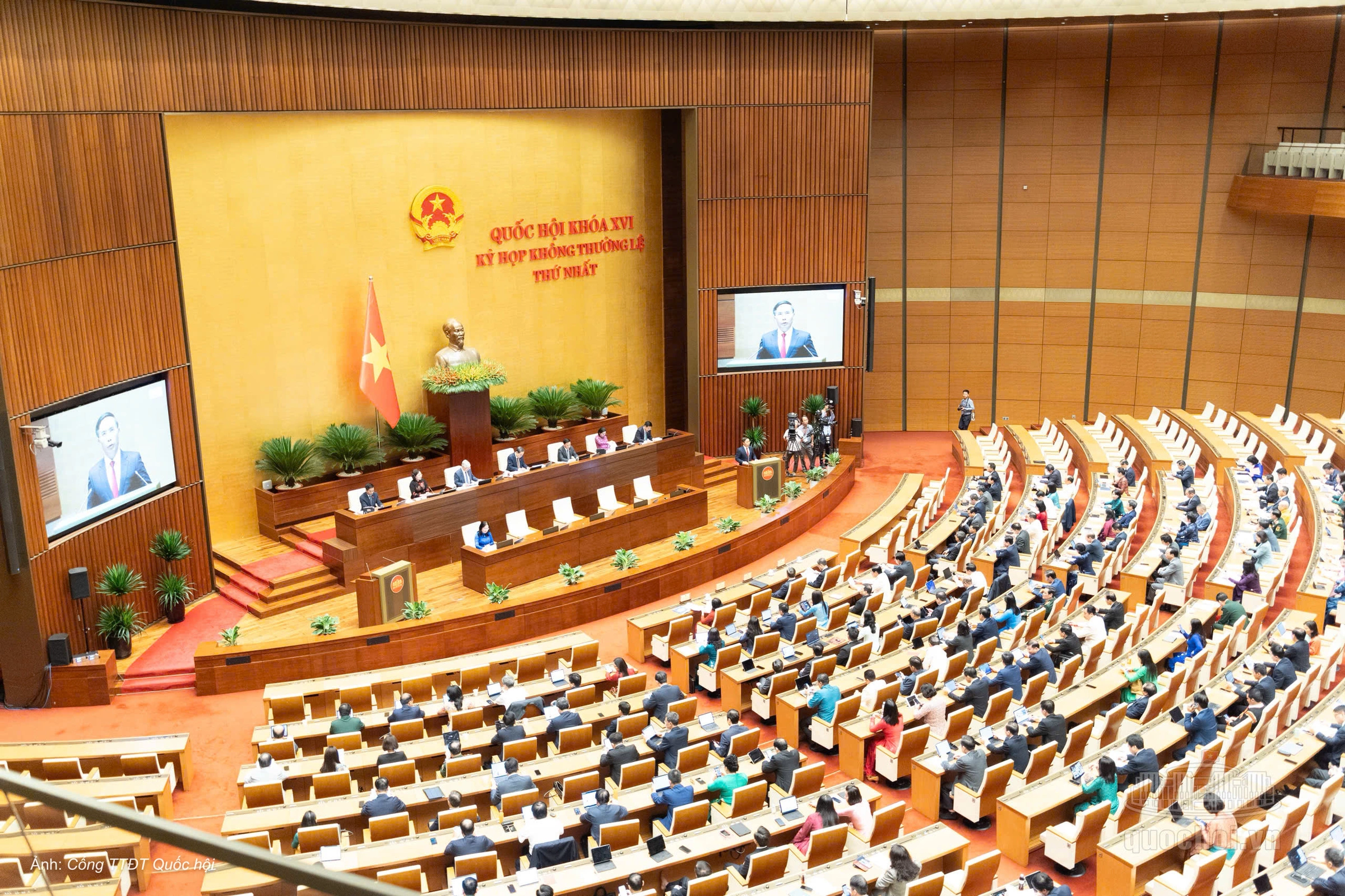 |
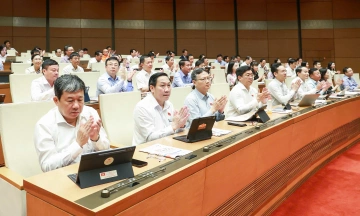
The National Assembly working at the Dien Hong Hall on 24/8. Photo: National Assembly Portal |
In the cultural sector, the program focuses on enhancing people's spiritual lives, their access to and enjoyment of culture, preserving heritage, and developing human resources in culture, arts, and cultural industries. By 2030, the goal is to restore and renovate 100% of special national relics and at least 80% of national relics. Cultural industries are expected to contribute 7% to the GDP.
For education and training, the program aims to upgrade facilities and teaching equipment, expand vocational training, modernize universities and research centers, and foster innovation. Teachers, education managers, and learners will receive training, and English will gradually become a second language in schools.
By 2035, 100% of preschool and general education institutions are targeted to meet minimum standards for facilities and teaching equipment. About 60 colleges will reach ASEAN-4 level, and six will achieve the level of developed countries in the G20 group. The program also aims for at least 12 higher education institutions to be among Asia's top 200 universities, and two among the world's top 100 in specific fields.
In healthcare, the program focuses on strengthening grassroots healthcare capacity, disease prevention, improving nutrition, enhancing population quality, and adapting to population aging.
By 2030, 100% of people are targeted to have electronic health records and lifelong health management; the rate of stunting malnutrition in children under five years old is expected to decrease to below 15%.
By 2035, the stunting malnutrition rate in children under five years old is targeted to decrease to below 13%; the sex ratio at birth is expected to be below 107 boys per 100 girls. Vulnerable groups will have increased access to social care services.
The total resources of VND 808.558 trillion for the 2026-2030 period include: the central budget contributing VND 345 trillion, comprising VND 244.2 trillion in public investment capital and VND 100.8 trillion in recurrent expenditure. Local budgets will allocate VND 395.392 trillion; the state budget will provide VND 23 trillion for policy credit implementation; universities and colleges will contribute VND 20.429 trillion in counterpart funds. Other legal mobilization sources account for VND 24.737 trillion.
Capital allocation must be focused, avoid fragmentation, and prioritize particularly disadvantaged communes and hamlets, ethnic minority and mountainous regions, border areas, and islands. Programs and projects with similar tasks in the same area are encouraged to integrate resources.
Localities can proactively select project lists, determine priorities, allocate, and adjust capital, provided they meet assigned objectives. People's Councils and People's Committees of provinces and cities can decentralize management and implementation to the commune level, while enabling public and community participation in oversight.
Son Ha