Directive 57/2025 from the Party Secretariat, focusing on enhancing cybersecurity, information security, and data security within the political system, clearly outlines the requirement to establish a unified electronic identification and authentication system in cyberspace. The identification of citizens, social media users, telecommunication subscribers, and internet resources such as domain names and IP addresses must be synchronized. The directive also calls for a complete resolution to the issue of junk SIM cards, fake accounts, and anonymous profiles.
The Party Secretariat also emphasized a strategy of self-reliance and self-sufficiency in building cybersecurity capabilities, prioritizing the development and use of domestic cybersecurity products and service ecosystems. Vietnam aims to master core technologies, advanced security solutions, and apply artificial intelligence and new technologies to protect national sovereignty in cyberspace.
The Party Secretariat requires that the collection, management, and exploitation of digital data be protected at the highest level, preventing the leakage of state secrets and sensitive data, even during testing. Cybersecurity knowledge and skills will be integrated into educational programs, alongside the implementation of network trust assessments.
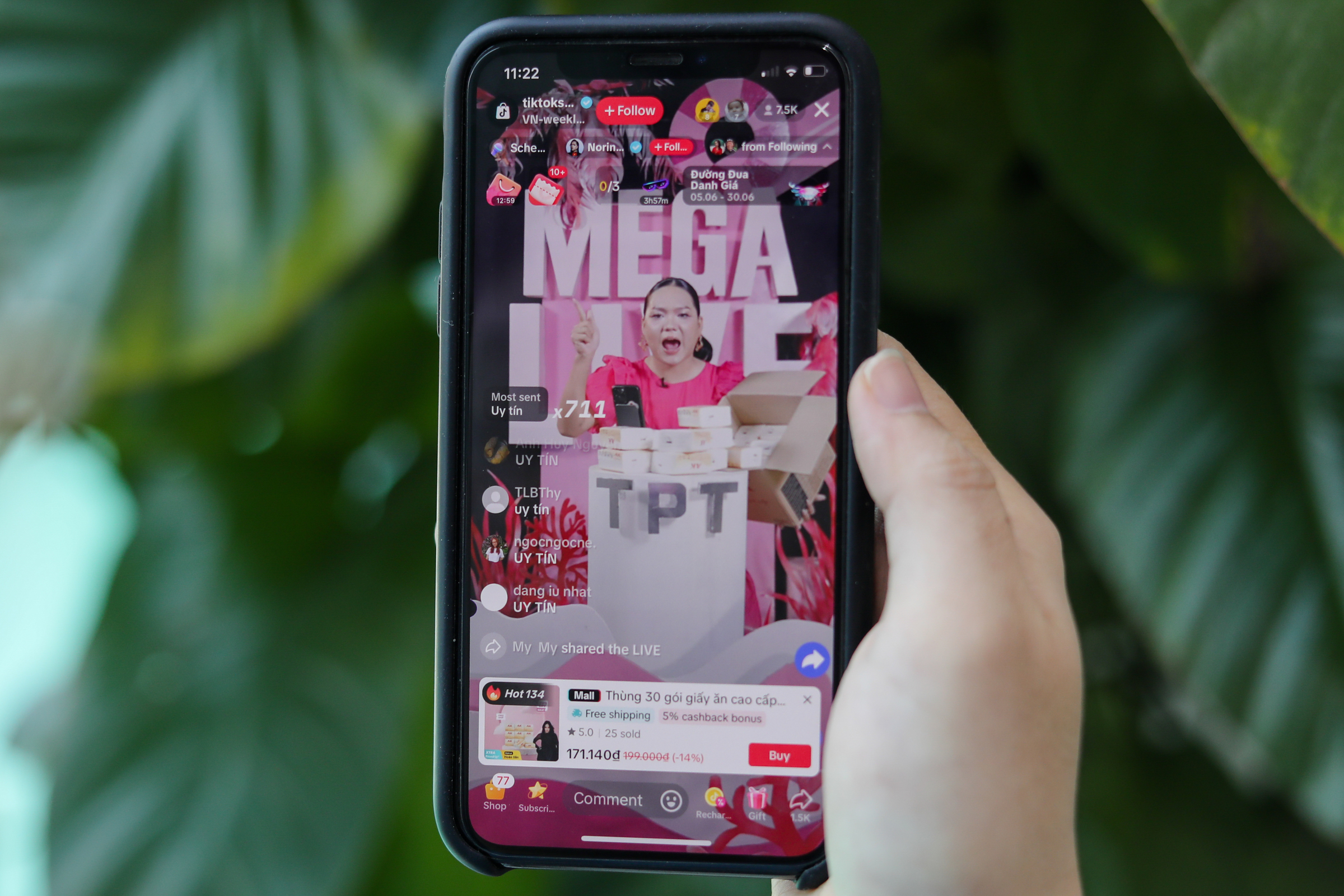 |
Consumers watch livestream sales on social media. Photo: Thanh Nguyen |
The Ministry of Public Security is tasked with leading state management of cybersecurity, information security, and data security for the information systems and databases across the entire political system, excluding military and cipher databases managed by the Ministry of National Defense. The Party Secretariat demands the completion of a legal framework to regulate the operations of online service providers, including cross-border services, and to clearly define the responsibilities of telecommunications, internet, finance, and banking companies in ensuring system security.
Vietnam will allocate resources to research and develop quantum-resistant cryptographic algorithms to safeguard state secrets, while also mastering core technologies such as cryptography and the domestic design and production of security chips. The Party Secretariat further requires prioritizing the use of domestic cybersecurity products and solutions in public investment projects, and ensuring that funding for cybersecurity and information security accounts for at least 15% of the total budget for information technology application and digital transformation.
Previously, Government Decree 147/2024 stipulated that social media service providers must verify user accounts using a Vietnamese phone number; if a phone number cannot be used, verification must be done via a personal identification number. Only verified accounts are permitted to post content such as writing articles, commenting, livestreaming, and sharing information.
The Law on Personal Data Protection, effective from early 2026, stipulates that social media platforms may not require users to provide images or videos containing full or partial identification documents as an account verification factor. Social media platforms are responsible for clearly informing users about the personal data collected immediately upon installation and use of their services.
Vu Tuan