Since mid-april, Mr. Suc from Ayun commune has ventured into coffee plantations every evening with his family, carrying sacks to collect cicada molts. On some days, they gather a few hundred grams, while on others, they collect nearly one kilogram. Larger molts are bought for 1,8-2 million dong per kilogram, and smaller ones for about 600,000-700,000 dong, allowing the family to earn an additional few hundred thousand to nearly 2 million dong each day.
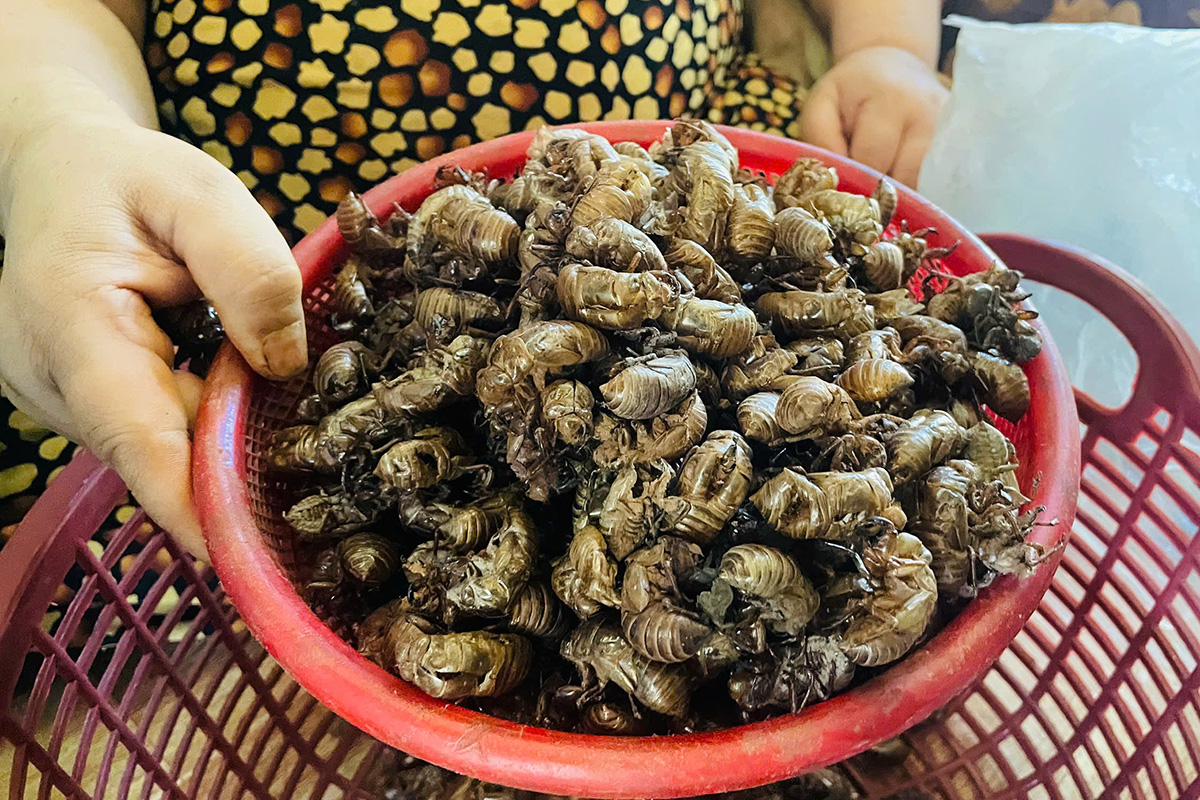 |
Cicada molts are bought by traders for nearly 2 million dong per kilogram. *Photo: Ngoc Oanh* |
According to Mr. Suc, the practice of collecting cicada molts has surged over the past three years, typically lasting one to two months during each rainy season. As cicadas begin to shed their exoskeletons, traders arrive to purchase them, prompting many residents to flock to forests and plantations in search of these valuable items.
The optimal time for collecting cicada molts is from dusk until midnight, particularly after the initial seasonal rains. Juvenile cicadas emerge from underground, crawling up tree trunks and clinging to branches to undergo molting. Molts that remain intact, with a pale yellow color and clean appearance, are considered premium goods and fetch higher prices.
In Ayun commune, the collected cicada molts are sorted by size before being bagged for shipment to northern provinces. Some primary buyers even provide advance payments to secure a consistent supply.
A local female trader reported collecting several tens of kilograms of cicada molts daily from residents. "I gather them and send them to buyers in the North for medicinal purposes," she explained.
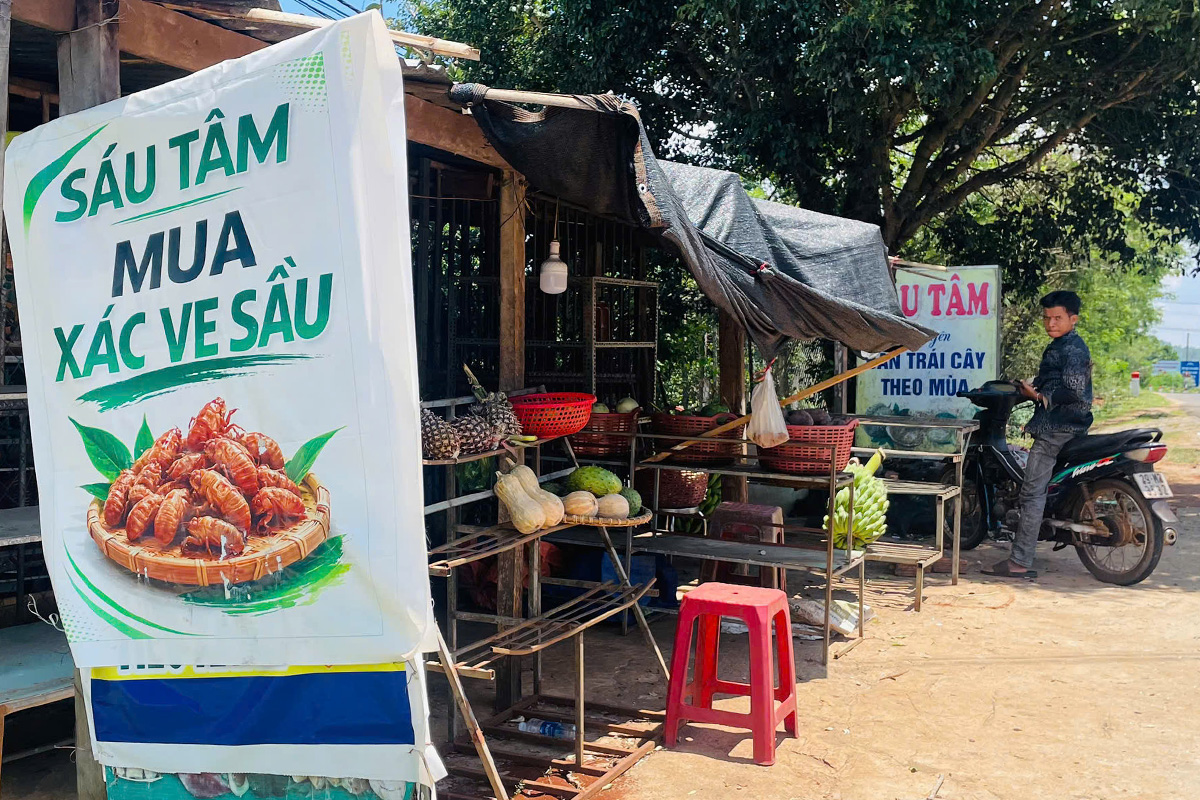 |
Local cicada molt collection point. *Photo: Ngoc Oanh* |
In Ia Khuol commune, numerous families utilize the evening hours to search forests and plantations for cicada molts, supplementing their income during the agricultural off-season. Beyond coffee and cashew groves, many individuals venture deeper into forests, seeking molts attached to large tree trunks. This activity has prompted concern among forest rangers regarding the heightened risk of forest fires during the dry season.
Doctor Nguyen Chi Hoang Phat, Deputy Head of the Department of Rehabilitation - Traditional Medicine at Hung Vuong Gia Lai Hospital, explained that cicada molts are referred to as "thuyen thoai" in traditional oriental medicine. They are frequently used to aid in treating headaches, dizziness, nocturnal crying in children, and various skin ailments.
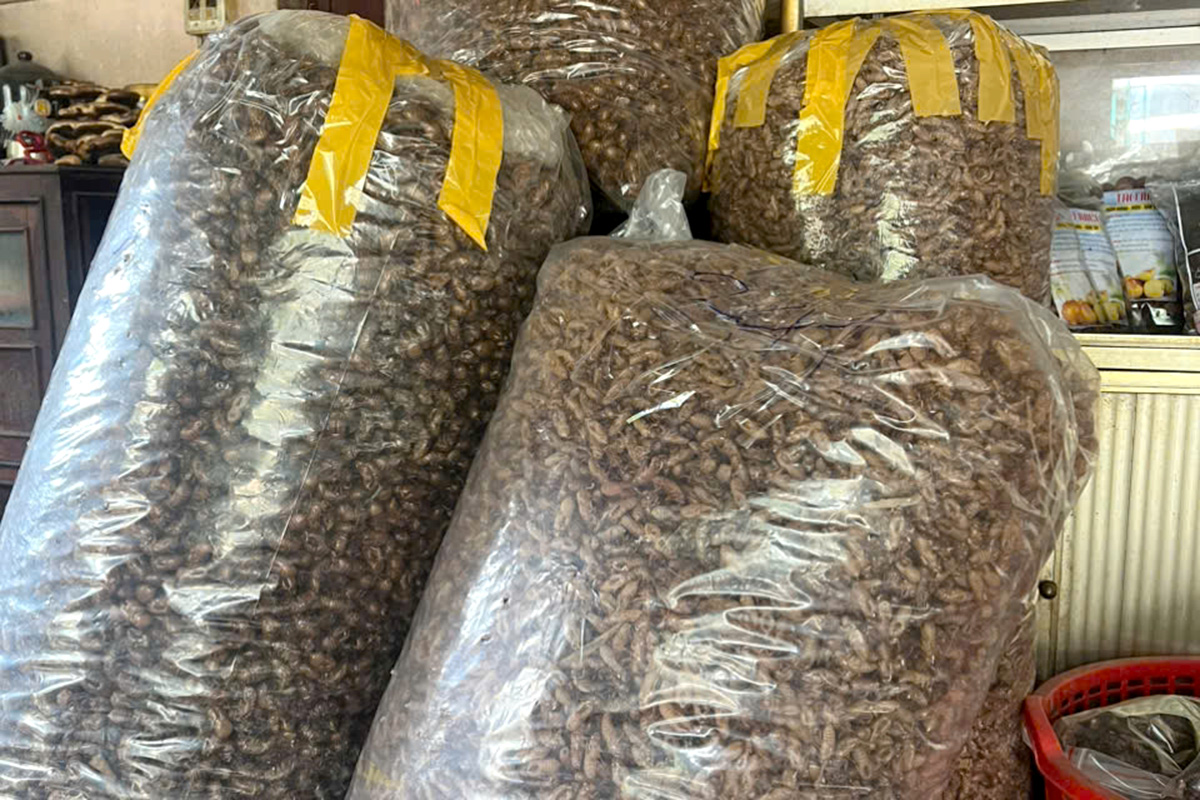 |
Traders collect cicada molts in large sacks. *Photo: Ngoc Oanh* |
"Thuyen thoai should only be used in conjunction with other medicinal ingredients and is rarely used alone. Its application requires professional medical guidance and precise dosage," Doctor Phat advised.
He also noted that the escalating price of cicada molts has led to the proliferation of counterfeit or fungus-contaminated products, posing safety risks. Consequently, he cautioned against individuals purchasing and using these products without professional advice.
Tran Hoa