Permanent Member of the Secretariat Tran Cam Tu stated that the legal framework will be strengthened to ensure transparency and democracy in personnel affairs, resolutely combating negativity and group interests. Speaking on 5/5 at a meeting with voters following the first session of the 16th National Assembly at the Trung Vuong Theater in Da Nang, Tu emphasized that the National Assembly and government will promptly institutionalize Party policies into law. This initiative aims to swiftly integrate new mechanisms and policies into daily life, particularly in science and technology, innovation, and digital transformation.
The central government will continue to refine the two-tier government model while reviewing, amending, and supplementing relevant laws. This effort will enhance decentralization and delegation of authority, coupled with robust inspection and oversight, empowering localities to foster initiative and creativity. Following the consolidation of leadership, the focus will shift to building modern, lean, and effective national governance, clearly linking accountability to individuals, especially leaders.
Tu acknowledged that recent organizational restructuring has been carried out rigorously, contributing to streamlining organizational structures and improving operational effectiveness and efficiency. However, challenges persist in personnel arrangement and administrative reform, which the central government has directed to be promptly addressed. Authorities have continued to deploy, train, and develop officials, ensuring the right person is in the right role, while also improving salary policies and benefits to ensure job security. Tu stated that mobilization and rotation are consistent policies aimed at training and developing officials, but must ensure stability and avoid disrupting work. He stressed the need for dynamic localities like Da Nang to select officials with strong capabilities, innovative thinking, and the courage to act and take responsibility.
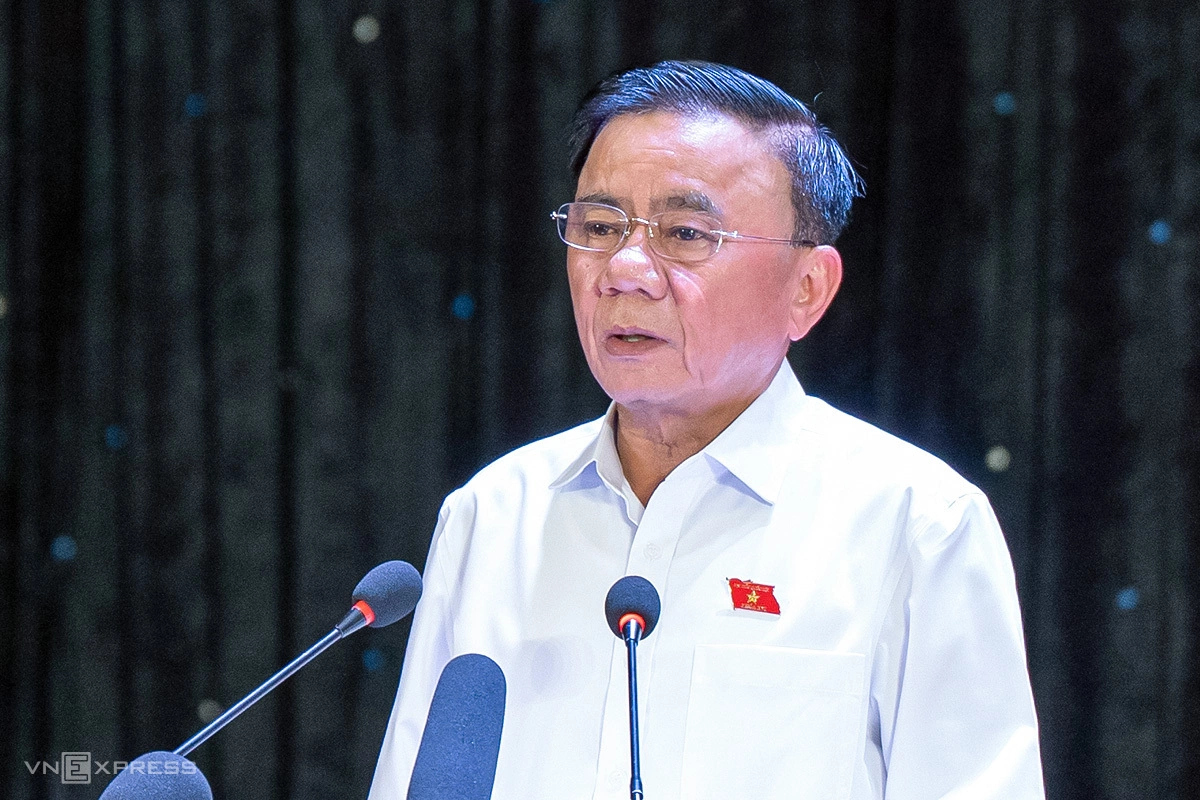 |
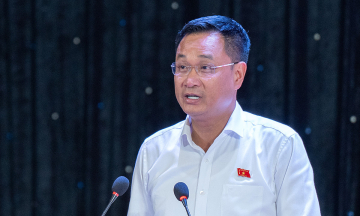
Permanent Member of the Secretariat Tran Cam Tu speaks at the conference on 5/5. *Photo: Nguyen Dong* |
Administrative Reform and Social Welfare Policies
The central government is committed to further streamlining its apparatus while maintaining organizational stability, ensuring no adverse impact on citizens and businesses. Efforts include accelerating digital transformation, implementing Project 06, and establishing data linkage to reduce administrative procedures, time, and costs. Authorities have already cut a minimum of 30% of unnecessary administrative procedures.
Regarding social welfare, Tu urged localities to organize periodic health examinations and free screenings for residents at least once a year. Implementation has shown that over 30% of residents have detected diseases early through this activity. He emphasized that this is a practical policy directly serving the people, leaving no reason for localities to delay. Furthermore, the Politburo has directed proposals to reduce certain taxes and fees on petrol and oil to stabilize the market. Simultaneously, proactive engagement with partners aims to secure supply and support production and business activities.
In education, Tu highlighted the ongoing development of the border boarding school system, with an objective to complete 100 schools in the next academic year. This initiative aims to provide continuous education for students in border regions from grade 1 to grade 12. Currently, 248 schools have been implemented nationwide as part of this project.
During the conference, Da Nang Party Secretary Le Ngoc Quang announced that the city would review the one-year implementation of the two-tier government model to make timely adjustments. The city also plans to assess its ward and commune officials to rectify imbalances of surplus or shortage, ensuring proper personnel placement.
Nguyen Dong