On the morning of 13/9, Sample Collection Team No. 10, under the Quang Ngai Provincial Border Guard Command, exhumed an unidentified fallen soldier's grave at Dak Ha Martyrs' Cemetery, Dak Ha commune. This operation aimed to collect biological samples for DNA identification, revealing several personal artifacts.
Inside the grave, authorities discovered a notebook with the word "Album" printed on it. Within the album was a photo of a woman, approximately 3x2 cm, and a one-hao banknote from the National Bank of Vietnam.
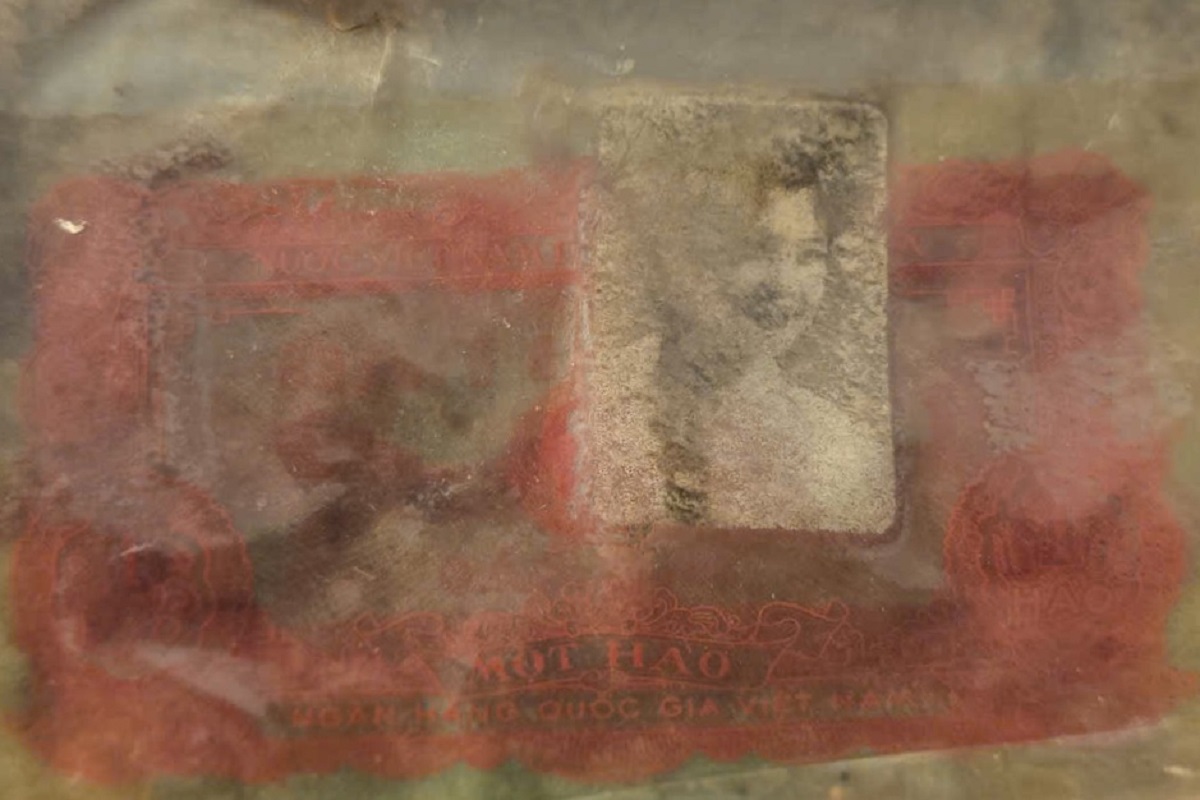 |
Photo of the girl above the banknote in the album found in the fallen soldier's grave in Dak Ha. *Quang Ngai Provincial Border Guard Command*.
Two fountain pens were also found. One was engraved with the inscription "Thanh 6/11/1971". Authorities believe this inscription is a significant clue that could help verify information about the fallen soldier.
Other artifacts recovered included a metal watch, an aluminum comb, a lighter, nail clippers, a cylindrical plastic vial about 5 cm long and one cm wide, and a metal necklace.
Following the discovery, Sample Collection Team No. 10 collected, preserved, and digitized information about the artifacts. They also took biological samples for DNA identification. The results will be cross-referenced with existing records, family gene data, and other relevant information sources to identify the fallen soldier.
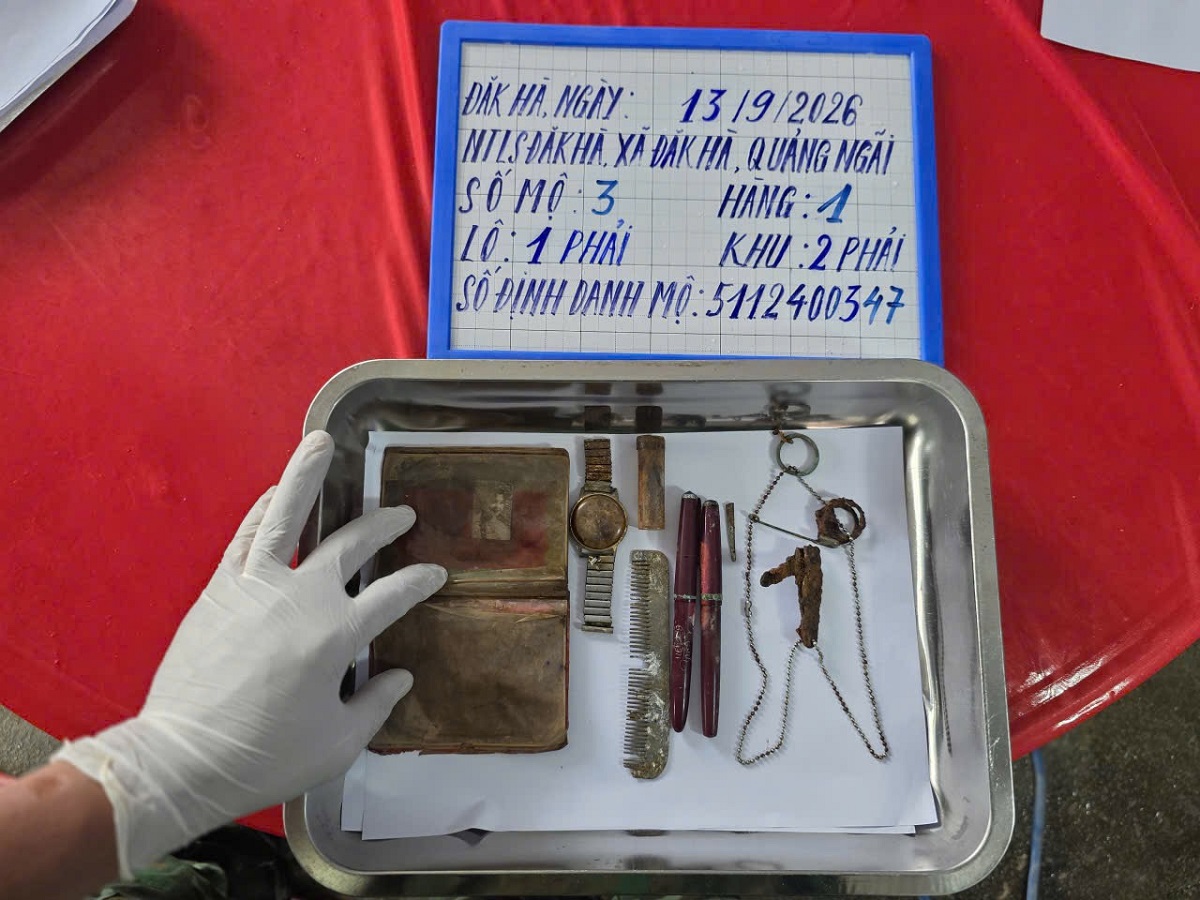 |
Album, watch, comb, pens, necklace... found in the fallen soldier's grave in Quang Ngai. *Quang Ngai Provincial Border Guard Command*.
The Quang Ngai Provincial Steering Committee for Searching, Gathering, and Identifying Fallen Soldiers' Remains requests veterans, relatives of fallen soldiers, and residents with information related to these artifacts to contact 0397.007.500.
This sampling activity is part of the "500-Day and Night Campaign to Intensify the Search, Gathering, and Identification of Fallen Soldiers' Remains." The campaign leads up to the 80th anniversary of Invalids and Martyrs' Day.
The campaign aims to search for and gather about 7,000 fallen soldiers' remains. It also plans to collect samples from approximately 230,000 unidentified graves in cemeteries, conduct DNA identification on about 18,000 remains samples, and build family gene data for cross-referencing and identification.
Pham Linh