Prime Minister Le Minh Hung issued a directive on 13/9, urging chairpersons of provincial and city People's Committees to immediately address shortcomings in the organization of boarding and half-day school meals. The directive emphasized that local authorities must not neglect management, fail to inspect or supervise, or allow unclear responsibilities when incidents occur.
Local authorities are mandated to intensify inspections of food supply, meal provisions, and cooking services. This includes strict control over the origin and quality of ingredients, as well as processing, storage, transportation, delivery, and sample retention conditions. Those organizations and individuals found in violation will face severe penalties, and any units failing to meet requirements must be replaced.
Commune-level People's Committees (UBND) are tasked with selecting and contracting meal and cooking service providers for local schools, along with overseeing implementation. This selection process must be transparent and objective, prioritizing food safety, nutritional value, supply capacity, traceability, and student welfare as core criteria. The directive explicitly states: "Do not select food supply units based solely on low price criteria."
For schools equipped to operate their own kitchens, commune-level authorities must ensure that contracts for food and ingredient supply adhere to regulations, guaranteeing clear origin, safety, and nutritional appropriateness for students. Special oversight is required for facilities supplying meals to multiple schools, serving a large student population, or those identified as having a high risk of food safety compromise.
In the event of an incident, local authorities must promptly provide emergency care and treatment. They are also responsible for tracing the origin, identifying the cause, containing, and addressing the source of risk, while simultaneously providing accurate information. The Prime Minister stressed: "There must be absolutely no delays in handling incidents that could impact the health of children and students."
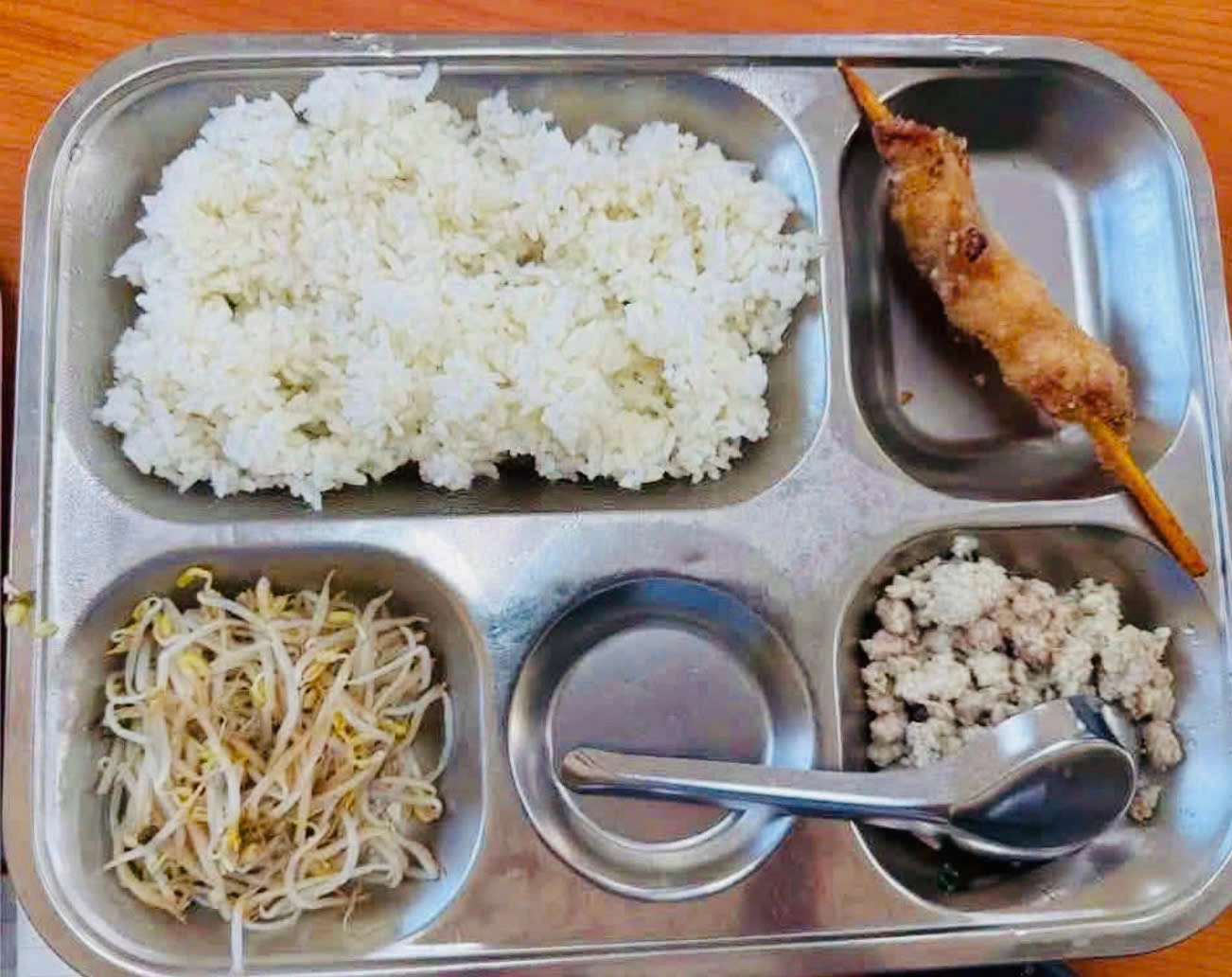 |
A half-day school meal on 7/9 for students at Trung Gia Primary School. *Photo: Provided by parents* |
Schools are required to publicize menus, suppliers, and food sources, allowing parents to monitor and supervise. However, parental involvement is intended to enhance transparency and does not diminish the management responsibilities of authorities and educational institutions.
The Ministry of Education and Training is charged with finalizing regulations for boarding and half-day school meals. It will also collaborate with the Ministry of Health to develop guidelines for creating menus that are energy-sufficient, nutritionally balanced, diverse, and appropriate for students' age and physical condition. Furthermore, the Ministry is mandated to establish a school meal database for ongoing monitoring and risk assessment.
This directive follows recent complaints from parents at several primary schools in Hanoi regarding the quality and timeliness of half-day school meals. For instance, at Trung Gia Primary School in Trung Gia commune, parents reported that a meal costing VND 40,000 per day consisted only of minced meat, bean sprouts, and a single piece of grilled skewered meat. Of this amount, the city subsidized VND 28,000, with parents covering the remainder.
Similarly, at Kim Bai Primary School in Thanh Oai commune, meals were delivered around 13h for two consecutive days, approximately two hours later than the scheduled mealtime. Some portions were even missing rice and soup. Although the school purchased cakes and milk, many parents still opted to pick up their children, allowing them to miss afternoon classes due to concerns about hunger.
On 9/9, the Hanoi City Party Committee Standing Board called for an investigation into the complaints regarding half-day meals in Bo De ward, Trung Gia commune, and Thanh Oai commune. It further mandated strict action against any groups or individuals found to be in violation.
Vu Tuan