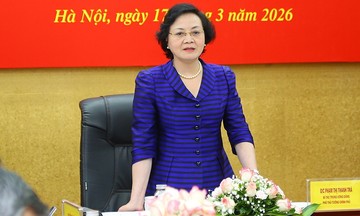
On 10/3, the Politburo issued a conclusion on perfecting the structure of Vietnam's legal system to meet the nation's development requirements in the new era. The conclusion assessed that the current legal system is cumbersome and multi-layered, with low internal consistency and an unclear hierarchical order of legal validity among documents.
According to the Politburo, perfecting the legal system's structure is an important condition to create a solid legal foundation for achieving the goal of economic growth exceeding 10% annually, making Vietnam a developed, high-income country by 2045.
The legal system's structure comprises a system of legal normative documents, including: the Constitution, documents of the National Assembly and the National Assembly Standing Committee, sub-law documents of central agencies, legal normative documents of local authorities, along with supplementary sources such as case law, custom, and equity.
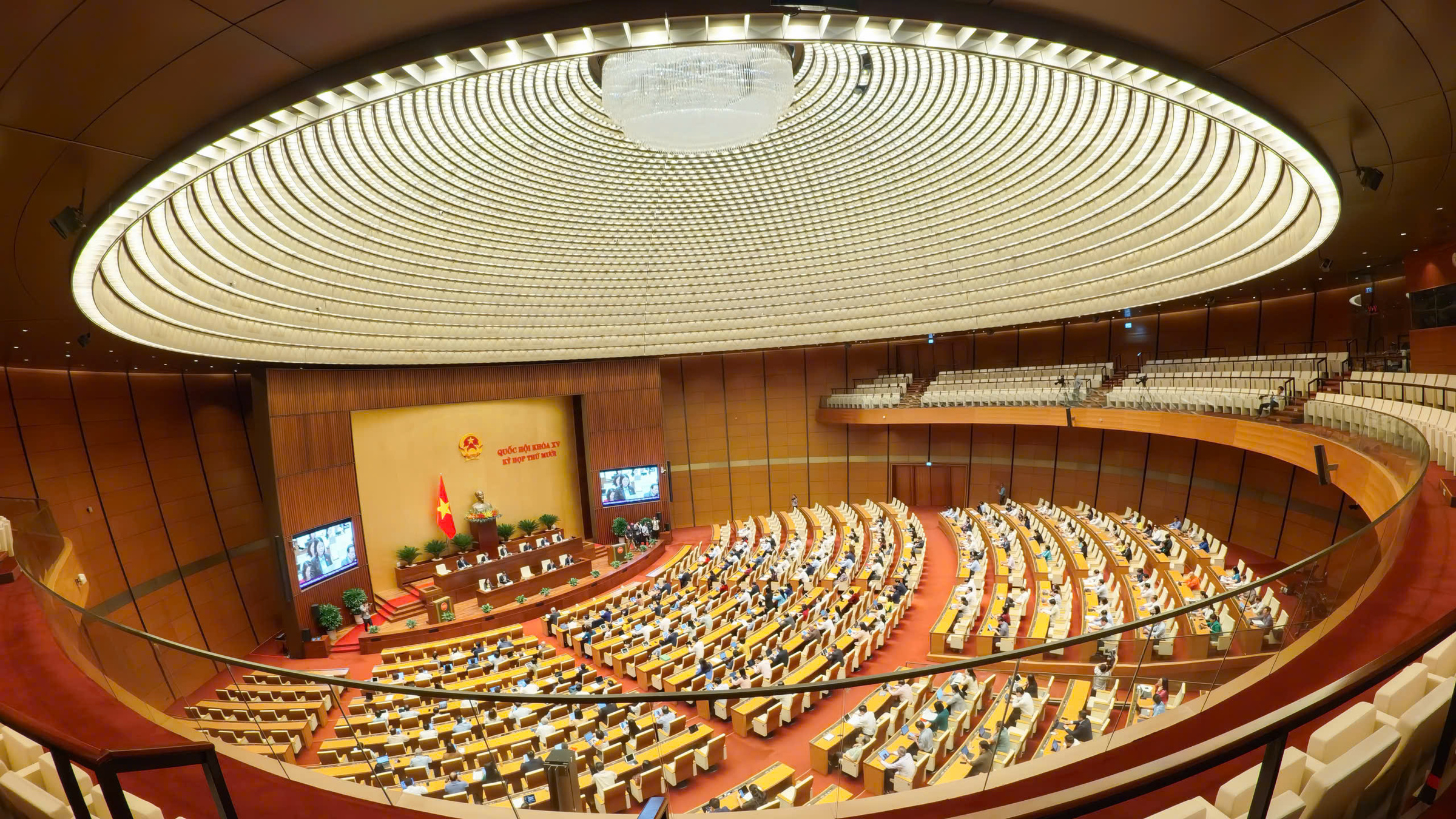 |
10th session of the 15th National Assembly, 11/2025. Photo: Giang Huy. |
The Politburo requested expanding the scope of application and clearly defining the legal value of these supplementary sources. Accordingly, case law, custom, and equity can be used to regulate social relations not yet stipulated by law or unclear in specific cases. The principle of prioritizing the application of specialized law when there are different provisions on the same issue will also be added.
The legal system will be simplified, with each authorized entity issuing only one form of legal normative document. This approach also limits the issuance of multiple documents providing detailed regulations or guiding implementation.
The conclusion also requested clearly distinguishing public and private legal norms. Public legal norms, which regulate relations between state agencies and between state agencies and individuals or organizations, need to be designed specifically, strictly, and transparently. Private legal norms primarily set out a principled legal framework for entities to self-agree.
The Constitution is defined as the basic law with the highest legal validity. Several fundamental codes play a central role: the Civil Code, Penal Code, Civil Procedure Code, Criminal Procedure Code, and Administrative Procedure Law.
The Politburo also mandated a comprehensive review of the entire system of legal normative documents, with the spirit of "absolutely not allowing vested interests to be embedded or negatively impact the legal system's structure".
In addition, the number of National Assembly sessions will be reasonably increased, including expanding online meeting formats. In urgent cases, the Government or the National Assembly Standing Committee may issue documents to adjust some legal provisions.
Vu Tuan