


Professor Le Van Trinh, Chairman of the Association of Occupational Safety and Health Sciences and Technology, presented this recommendation at a workshop on 15/1. Organized by the Vietnam General Confederation of Labor, the event reviewed five years of implementing the Labor Code. Professor Trinh emphasized the need for a gradual adjustment to normal working hours, moving from 48 to 44, and ultimately to 40 hours per week. This change, he argued, aligns with international trends and Vietnam's development.
He stressed that this phased reduction must be clearly stipulated in the law, not merely encouraged. This legal mandate is crucial for safeguarding workers' health and safety, particularly in labor-intensive sectors.
 |
Professor Le Van Trinh at the workshop organized by the Vietnam General Confederation of Labor on the afternoon of 15/1. Photo: Nguyen Hai |
Despite legal encouragement for a 40-hour work week, Professor Trinh noted that 48 hours remain common, especially in industries requiring significant manual labor. Surveys in several industrial parks reveal that workers often accept longer hours for increased income, which leads to health deterioration and less family time.
Overtime also presents a contentious issue in labor relations. Although the law states overtime is voluntary, it often becomes mandatory, as workers feel they have few alternatives to secure their jobs and boost earnings. During peak order periods, such as the last three months of the year, businesses frequently schedule continuous overtime for weeks. This practice results in prolonged worker fatigue, increasing the risk of accidents and collective labor disputes.
Previous research by the Institute of Labor Science and Social Affairs supports these concerns. Studies show that in labor-intensive sectors, workplace accidents occur more frequently at the end of shifts or during peak overtime, when workers are fatigued and less focused. Individuals consistently working 40-50 hours of overtime per month experience a higher incidence of chronic fatigue, headaches, and reduced concentration. These factors contribute to an elevated risk of occupational accidents, particularly those stemming from operational errors, negligence, and safety procedure violations.
Professor Trinh also recommended a comprehensive review of the overtime ceiling to balance production demands with worker well-being. He called for severe penalties for non-compliant businesses. Furthermore, many workers report shortened breaks or reluctance to take annual leave, fearing negative impacts on performance evaluations or income. Therefore, any amendments to the Labor Code should genuinely protect rest rights by increasing inspections of breaks and annual leave, and clearly defining post-shift recovery periods to prevent accidents and health decline.
"Working hours and rest are workers' rights, not benefits," Professor Trinh affirmed. He likened it to a field that, when adequately rested, yields abundant harvests.
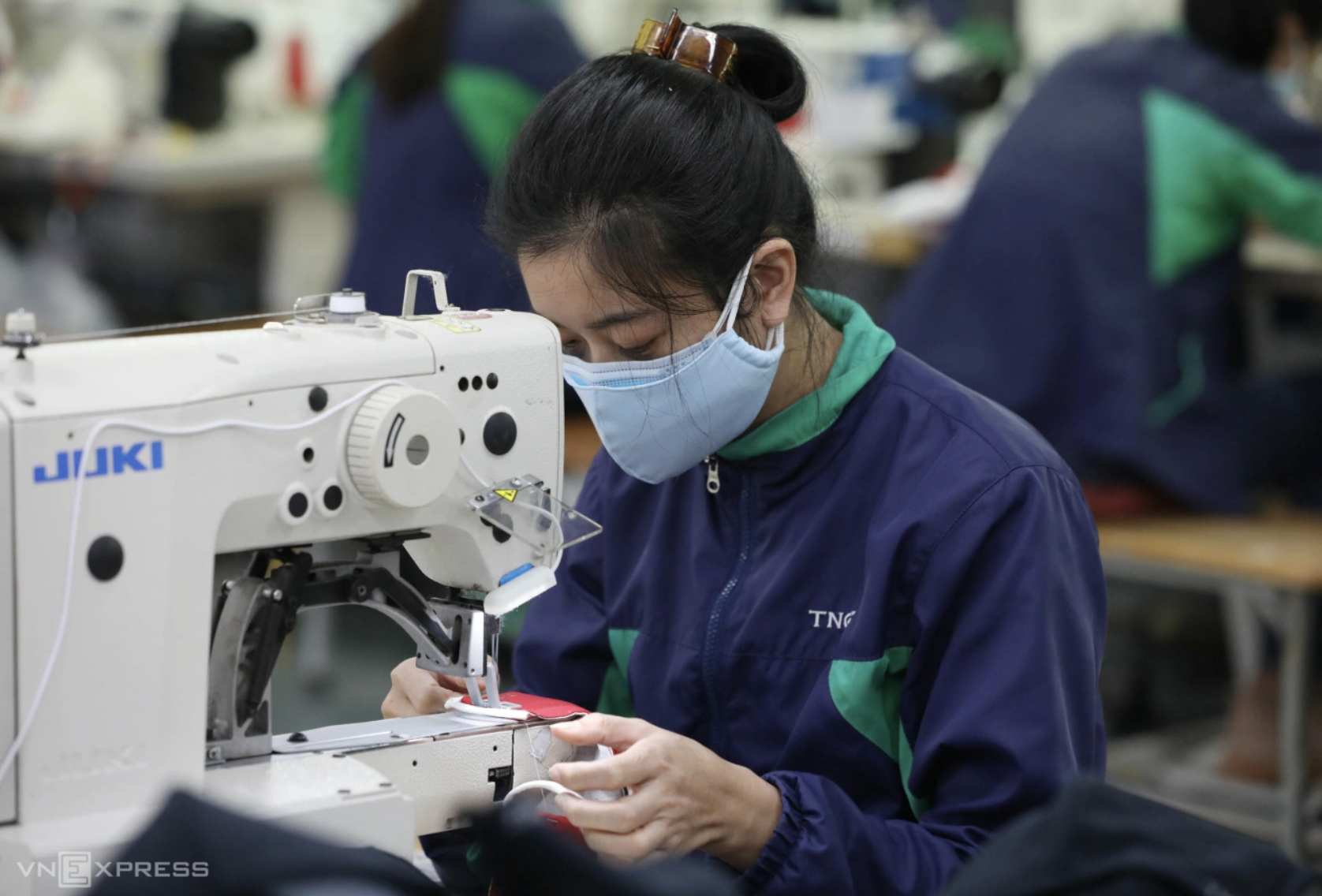 |
Textile workers at a factory in Thai Nguyen sewing masks for epidemic prevention, 2/2020. Photo: Ngoc Thanh |
The proposal for a phased reduction in working hours for the business sector has been a recurring topic for delegates in the National Assembly. In 6/2025, delegate Pham Trong Nghia proposed reducing working hours from 48 to 44 hours per week by 2026 and to 40 hours by 2030. He also urged the early implementation of a national human resource development strategy.
Mr. Nghia previously addressed this issue at the end of 2023 session, citing it as a progressive global trend. Despite Vietnam's significant achievements over eight decades, private sector working hours have not decreased, and overtime has tripled, he noted. Since 1999, state officials and public employees have worked 40 hours per week, while the business sector has maintained 48 hours through multiple Labor Code revisions.
Current law stipulates that workers under normal conditions must not exceed 8 hours per day and 48 hours per week. Businesses can set daily or weekly working hours but must inform employees. If weekly hours are stipulated, they must not exceed 10 hours per day and 48 hours per week. The state encourages businesses to implement a 40-hour work week.
The law caps overtime at 40 hours per month and 200 hours per year. However, a maximum overtime limit of 300 hours per year is extended to specific sectors, including: manufacturing and processing for export in textiles, garments, footwear, agricultural, forestry, and fishery products, electricity generation and supply, telecommunications, oil refining, water supply and drainage, match production, electrical, and electronics.
Hong Chieu


