The current environmental protection law mandates that solid household waste be divided into three categories: reusable and recyclable waste, food waste, and other household waste. However, implementation has revealed significant disparities in waste collection, transportation, treatment infrastructure, and management capacity among localities.
Speaking at the National Forum on Environment and Climate - From Policy to Action, organized by the Ministry of Agriculture and Environment on the morning of 5/6 in Nghe An, Tang The Cuong, Director of the Department of Environment, stated that the draft law amending and supplementing several articles of the environmental protection law proposes maintaining the principle of separating reusable and recyclable waste. However, it also empowers provincial People's Committees to decide on specific classification methods tailored to local realities.
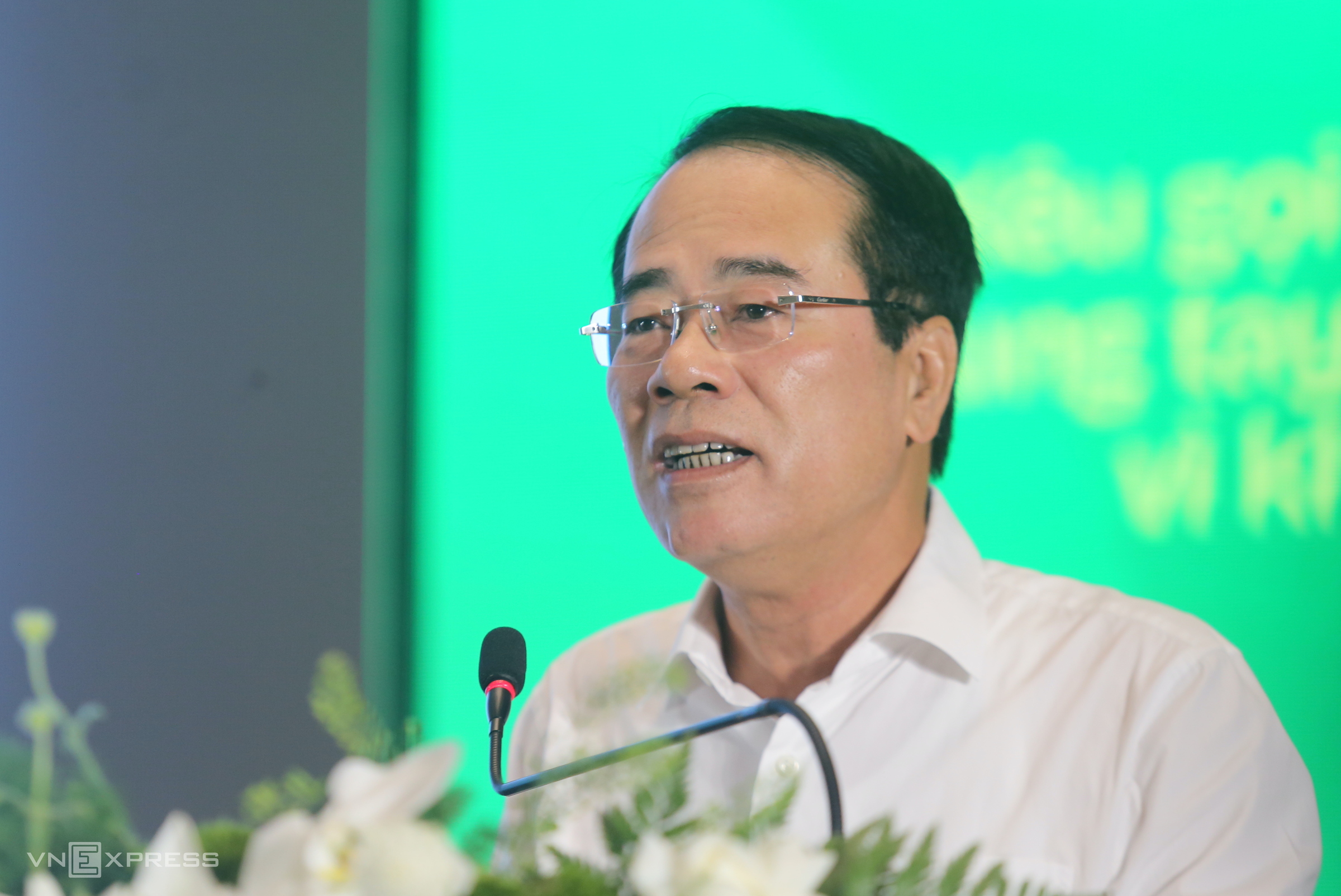 |
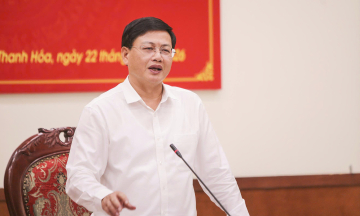
Tang The Cuong speaks about the revised draft environmental protection law on 5/6. Photo: Gia Chinh
This marks a significant adjustment compared to the draft that the Ministry of Agriculture and Environment sought feedback on in 4/2026. At that time, the Ministry presented two options: either retaining the current three-category waste classification model or simplifying it to two categories by combining food waste with other household waste. Instead of opting for a single, nationwide model, the new draft shifts towards decentralizing authority, allowing localities to decide how to organize waste classification based on their existing infrastructure and treatment technologies.
According to an assessment report on the implementation of the Environmental Protection Law 2020, after several years, waste sorting at the source remains primarily at a pilot scale and has not been uniformly implemented nationwide. A main reason for this is the lack of synchronization among legal regulations, waste collection and treatment infrastructure, and implementation mechanisms.
Data from the Department of Environment indicates that by mid-2025, only 34 out of 63 provinces (prior to mergers) had implemented waste sorting at the source, with no locality achieving province-wide implementation. Approximately 63% of solid household waste nationwide is still landfilled, with many sites failing to meet hygiene standards. Food waste accounts for more than half of the total household waste generated, yet composting capacity reaches only about 13%.
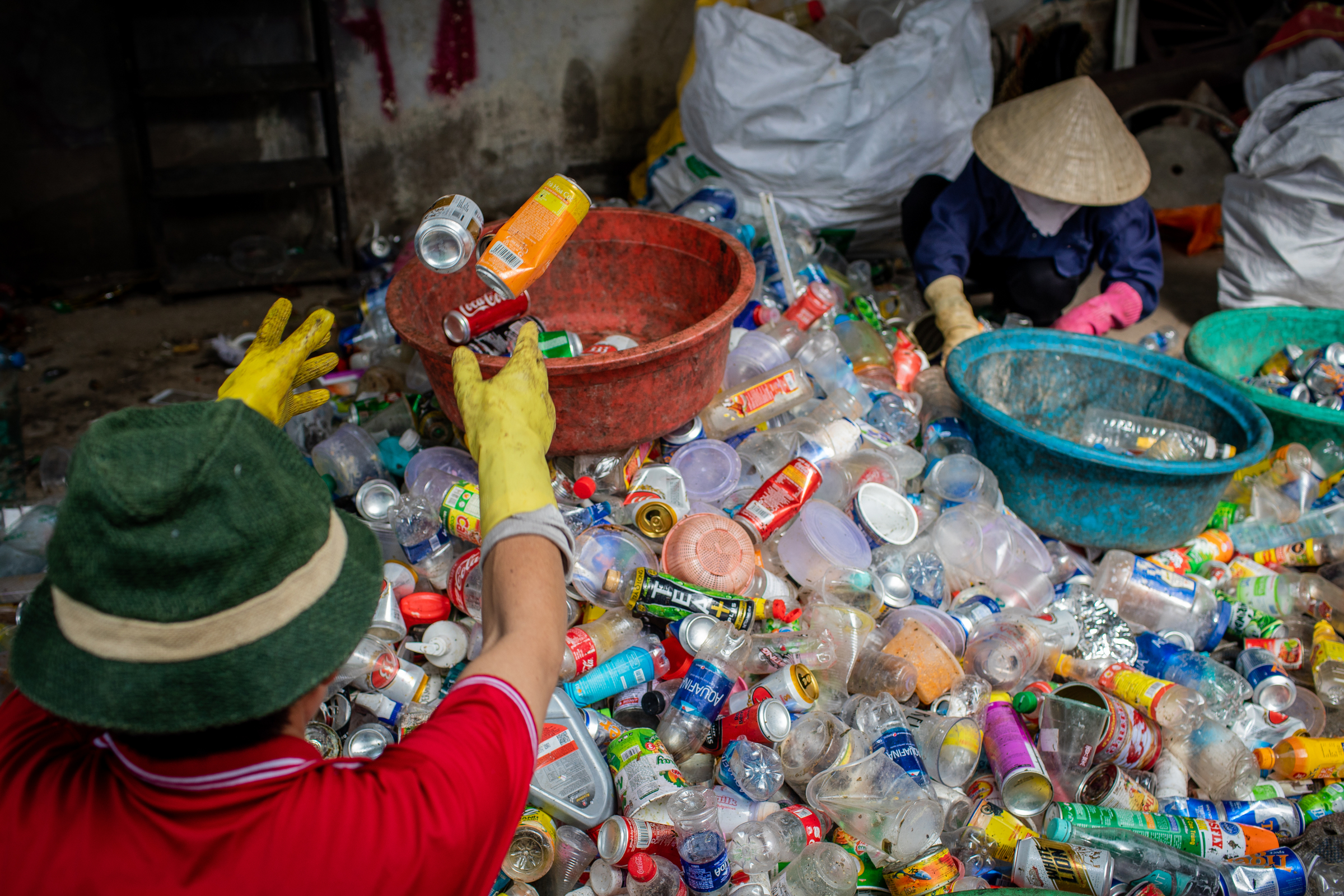 |
Recyclable waste collection point in TP HCM. Photo: Thanh Nguyen
In many localities, even when residents sort waste at the source, it is still collected together due to a lack of separate vehicles and treatment systems. Many areas also face challenges with land availability, investment capital, and remain reliant on landfill-based waste treatment projects signed years ago.
For instance, in Hai Phong, the proportion of solid household waste treated by landfilling reached approximately 85% at one point, significantly exceeding the national waste management goal of reducing landfilling to below 30%.
Tang The Cuong stated that revising regulations to increase local autonomy aims to resolve implementation difficulties, enabling localities to choose waste classification models that suit their specific conditions. This will gradually boost recycling rates, reduce the amount of waste sent to landfills, and promote a circular economy.
The revised draft of the environmental protection law is expected to be submitted to the National Assembly for consideration during its second session in 10/2026.
Gia Chinh