This proposal is part of a draft plan by the Ho Chi Minh City Department of Construction for managing traffic congestion in 2026. The plan has been circulated to relevant agencies for feedback.
Truong Sa and Hoang Sa roads, each spanning nearly 10 km, flank the Nhieu Loc – Thi Nghe canal through the city center, featuring numerous crossing bridges. While bridges such as Thi Nghe, Kieu, Dien Bien Phu, and Cong Ly already have direct ramps, many others only cross the canal without providing direct access to these key canal-side routes.
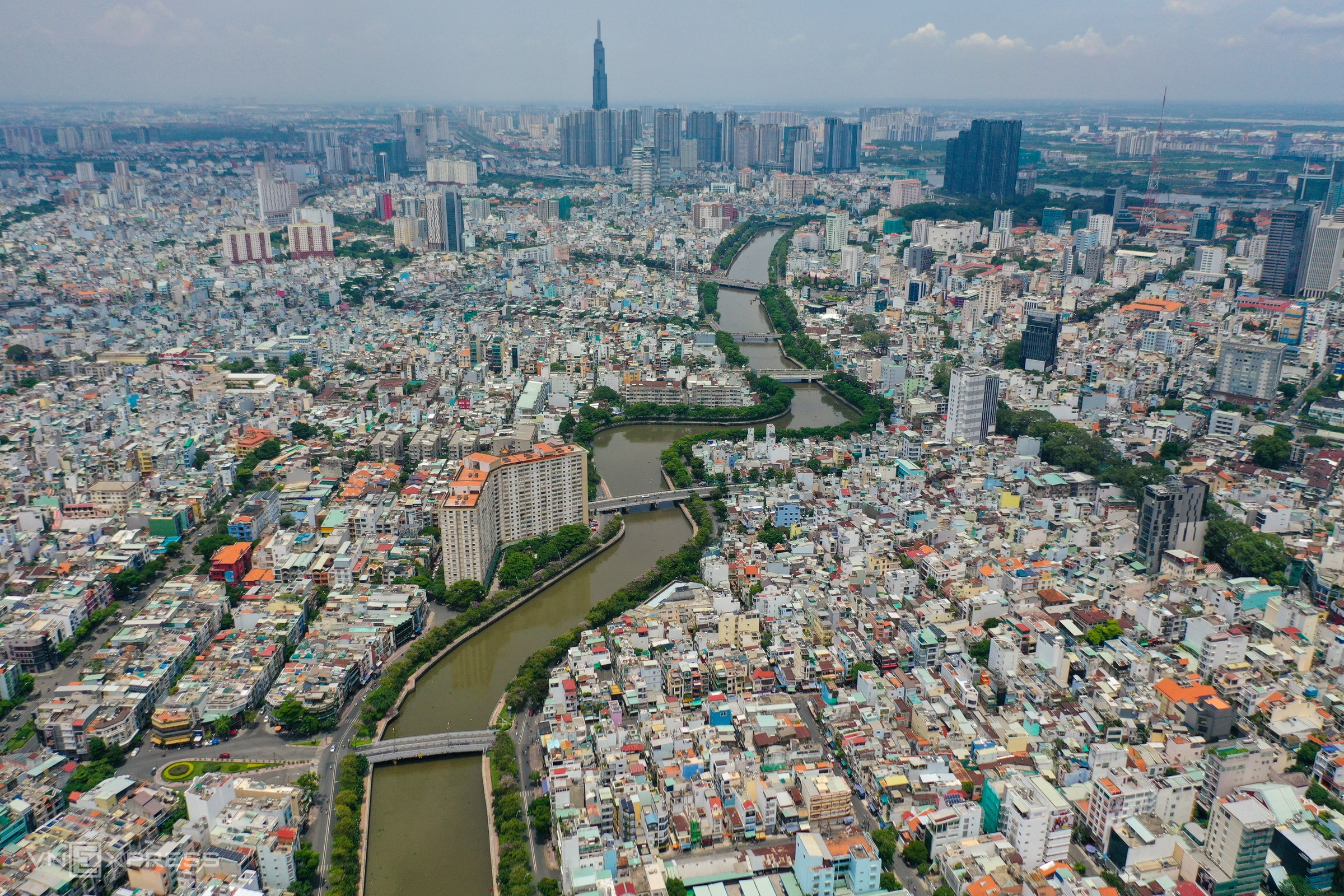 |
Truong Sa and Hoang Sa roads run along the Nhieu Loc - Thi Nghe canal. *Photo: Quynh Tran* |
The draft plan suggests adding ramps to bridges like Hoang Hoa Tham, Bong, and Bui Huu Nghia, which would lead directly to the canal-side roads. The city also intends to connect the entire Truong Sa – Hoang Sa route in its currently discontinuous segments, including the stretch from Nguyen Thi Minh Khai to Nguyen Huu Canh.
This initiative aims to improve travel convenience for residents while also supporting traffic diversion. It is expected to reduce pressure on frequently congested areas, such as the Dien Bien Phu – Nguyen Binh Khiem roundabout and Nguyen Thi Minh Khai road.
Beyond this specific area, the Department of Construction has proposed upgrading several underpass roads. These upgrades will facilitate U-turns and traffic diversion. One such location is the Khanh Hoi underpass near Bach Dang wharf, where the clearance will be raised to allow for smoother bus circulation.
The transport sector also plans to construct prefabricated overpasses for motorcycles at busy intersections with high car traffic on arteries like Do Muoi and Le Quang Dao (National Road 1, 22). These overpasses will enable safer left turns and U-turns, reducing congestion.
Beyond physical infrastructure, the city plans to deploy signaling systems at major gateways and main routes. These systems will provide early congestion warnings, allowing drivers to proactively select alternative routes. The city will also implement soft measures such as flexible traffic diversion, remote traffic control, and time-based vehicle restrictions in specific zones. Additionally, rapid response teams will be enhanced to manage incidents effectively.
Concurrently with existing infrastructure upgrades, Ho Chi Minh City in 2026 will accelerate key projects. These include the An Phu interchange, widening the Ho Chi Minh City – Long Thanh – Dau Giay expressway access road, and advancing metro projects and gateway expansions.
By the end of 2025, Ho Chi Minh City is projected to still have 22 significant congestion hotspots. Many of these locations, such as Nguyen Tat Thanh road, Bon Xa intersection, An Phu interchange, Xo Viet Nghe Tinh, and the Dinh Bo Linh – Bach Dang intersection, have experienced persistent congestion for years. The central area's Ton Duc Thang – Nguyen Huu Canh – Nguyen Binh Khiem axis frequently becomes gridlocked during peak hours.
Giang Anh