"Those were truly desperate days," said Le Thanh Tung, reflecting on the time he had to stop working after his accident. His experience highlights a critical issue: the lack of a robust social safety net for ride-hailing drivers who face occupational hazards daily.
Tung had been a GrabBike driver for 8 years. In 2018, when the footwear company he worked for faced difficulties, he switched to ride-hailing. The better income and flexible hours for picking up and dropping off his children led him to commit to the profession.
Two years later, he accepted a ride request from a newly created account with an uncontactable phone number. Following winding directions, he arrived late, leading to an argument with the passenger. The passenger threw a stone, shattering Tung's glasses and embedding a shard in his left eye. "A 17,000 dong ride cost me an eye," he stated, removing his sunglasses to reveal his left eye socket, which had lost its eyeball. The accident resulted in a permanent disability of over 50%.
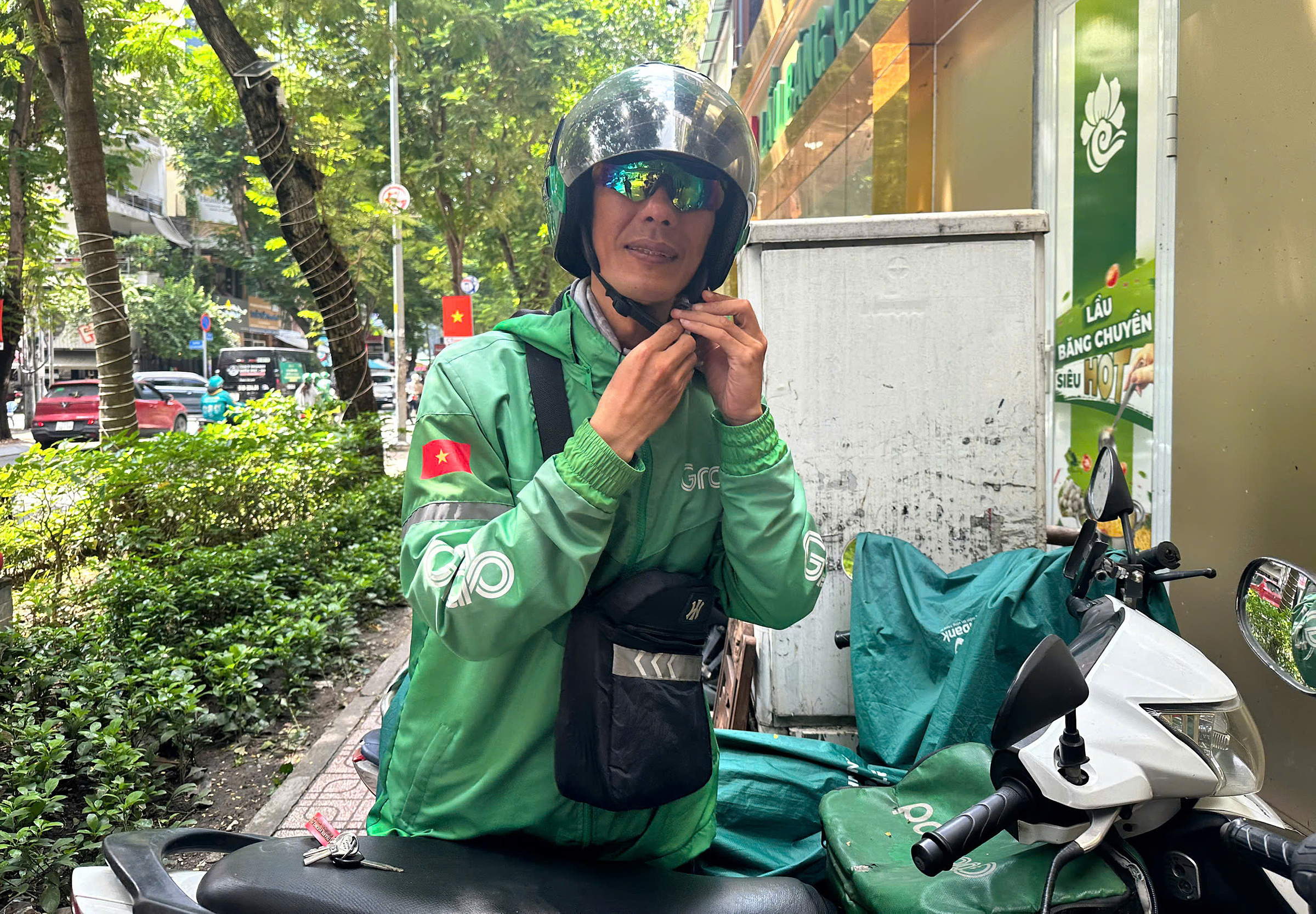 |
A GrabBike driver always wears colored glasses after losing his left eye in a driving incident. *Photo: Le Tuyet*
At the time, Grab offered an insurance program to cover medical expenses for accidents during rides. Tung expected the nearly 20 million dong hospital bill to be paid, but his claim was rejected, with Grab stating the incident arose from a conflict with the passenger. The family's savings were almost entirely spent on his treatment. He had to stop driving for seven months, while rent, food, and raising his two children depended on his wife's factory worker salary of less than 10 million dong per month.
According to Pham Mi Sen, Deputy Chairman of the Binh Tan Ride-Hailing Drivers' Union and Team Leader of the GrabBike Drivers' Solidarity Group, cases like Tung's are not uncommon. "The rescue team records ride-hailing drivers getting into accidents almost every day," he stated. Common injuries include broken legs and shoulders, with more severe cases affecting the head.
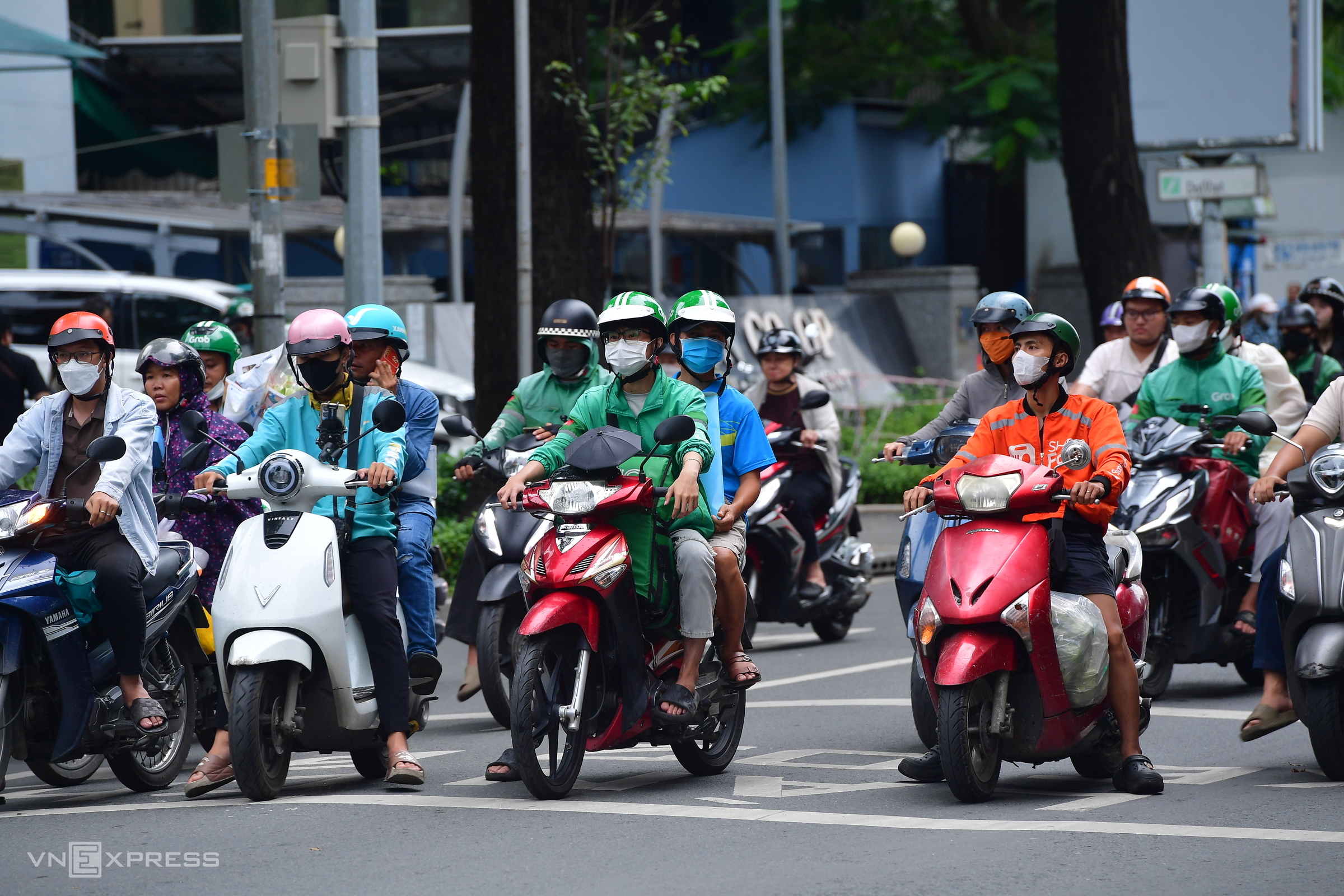 |
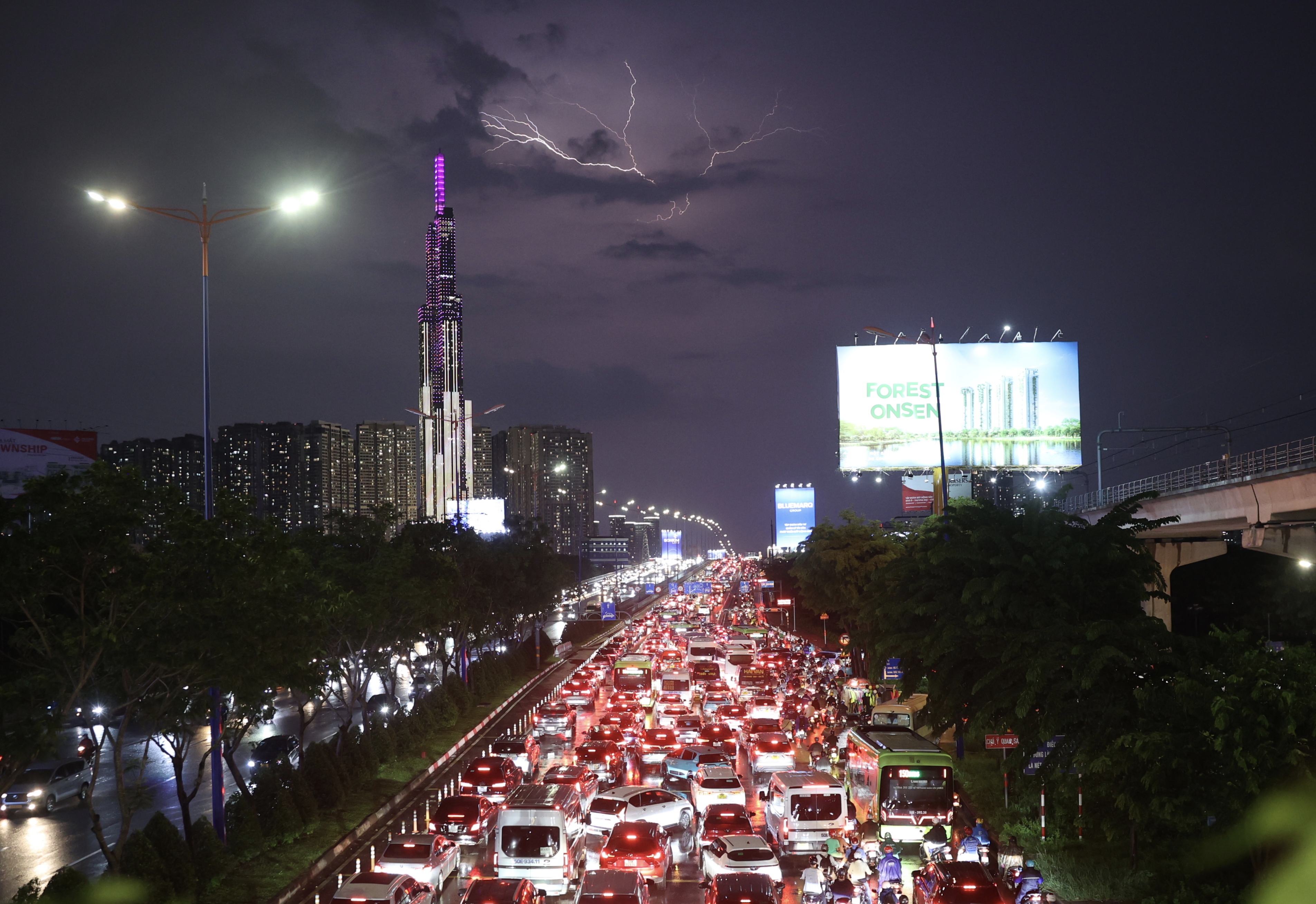
Drivers for ride-hailing companies stop at a traffic light in central Ho Chi Minh City. *Photo: Thanh Tung*
Depending on their records and insurance conditions, some drivers have their hospital fees covered by insurance companies partnered with the platforms. Those who do not meet the conditions must bear the costs themselves. After an accident, drivers may be unable to work for one to several months, losing their main source of income. When facing hardship, driver groups often organize self-funded campaigns to support one another. "Many individuals recovering at home after accidents call me asking if there's anywhere they can get a quick loan to pay rent or cover their children's school fees," Mi Sen shared. He recounted the story of a single female driver who broke her shin but, lacking other income, returned to driving before her leg had healed. She later fell again, breaking her leg a second time, and had to abandon the profession.
A survey conducted by the Ho Chi Minh City Confederation of Labor's Center for Worker Consultation and Support in August this year revealed that 73.8% of surveyed drivers had experienced collisions while driving; over 65% had encountered fraud, robbery, or harassment. These incidents cause economic damage, injuries, and impact physical and mental health.
Associate Professor Doctor Nguyen Duc Loc, Director of the SocialLife Research Institute, noted that risks for drivers increase with extended working hours. The survey indicated that nearly 94% of drivers consider ride-hailing their primary job; about 46.1% work 8-10 hours daily, and nearly 36% work over 10 hours. To earn approximately 15 million dong per month, many must drive 13-15 hours daily with almost no days off. Loc explained that with an average workday of about 8 hours, many drivers' incomes struggle to cover living expenses, forcing them to extend their driving hours. Working long hours leads to declining health and increases the risk of road incidents. A SocialLife study showed that nearly 54% of surveyed drivers reported declining health after entering the profession; over 41% experienced joint pain, nearly 16% had digestive disorders, and over 14% faced respiratory issues.
While constantly facing occupational risks, many ride-hailing drivers are currently not covered by compulsory social insurance. Consequently, they lack corresponding benefits for sickness, maternity, work accidents, or retirement pensions from this employment relationship. According to Loc, without support during periods of inability to work, drivers often must return to the road prematurely to earn income, even if their health has not fully recovered.
For example, Le Trinh, 39, returned to driving GrabBike just one month after a C-section. "If I don't drive, I don't have money to live. Even with the surgical incision still hurting, I had to turn on the app," she said. Before becoming a ride-hailing driver, Trinh worked at a wedding restaurant, receiving a monthly salary. When her family faced difficulties and accumulated regular debts, she switched to driving, working from early morning until late at night to increase her income. After more than seven years in the profession, she became pregnant with her first child. Her declining health forced her to reduce driving hours, leading to a significant drop in income. One month after her C-section, she weaned her child, entrusted care to her mother, and returned to work. In the initial days, her incision still pained her, so she took only a few rides, just enough to cover daily expenses. Debts primarily relied on her husband's income, who is also a ride-hailing driver. "Even a year later, the incision still occasionally aches, and my health has significantly declined, but I have no other choice," she stated. Having previously worked for a company with compulsory social insurance, Trinh believes that if ride-hailing drivers had similar maternity benefits, she would have had more time to recover and care for her child instead of returning to work after only one month.
Tung also returned to driving after seven months of recovery. With a disability rate of over 50%, he found it difficult to find other suitable work. Initially, he had to adapt to driving with only one eye, stopping to observe carefully every time he crossed the road. To mitigate risks, he prioritizes delivery services and only drives during the day, earning about 6 million dong per month. "During really tough times, like when my wife was seriously ill, my teammates would chip in a bit," he said. "Beyond trip-specific insurance, drivers' support often comes down to mutual assistance."
By Le Tuyet