Data from the Hydro-Meteorological Department revealed that Ho Chi Minh City recorded 2,573 lightning strikes during the heavy rainfall on 30/9. Of these, 1,457 were ground strikes, while the rest occurred within clouds. Phu Giao commune, formerly part of Binh Duong province, was the most affected area, experiencing nearly 1,200 strikes in five hours between 1h and 5h.
On 1/10, the city's skies saw an additional 1,237 lightning strikes. Nearly half of these were ground strikes during heavy downpours from 17h to 19h. Binh My commune alone registered 464 ground strikes in three hours. The thunderstorms and lightning were predominantly focused on the northwest and southeast areas of Ho Chi Minh City, encompassing Binh Duong, Cu Chi district, and former Binh Chanh.
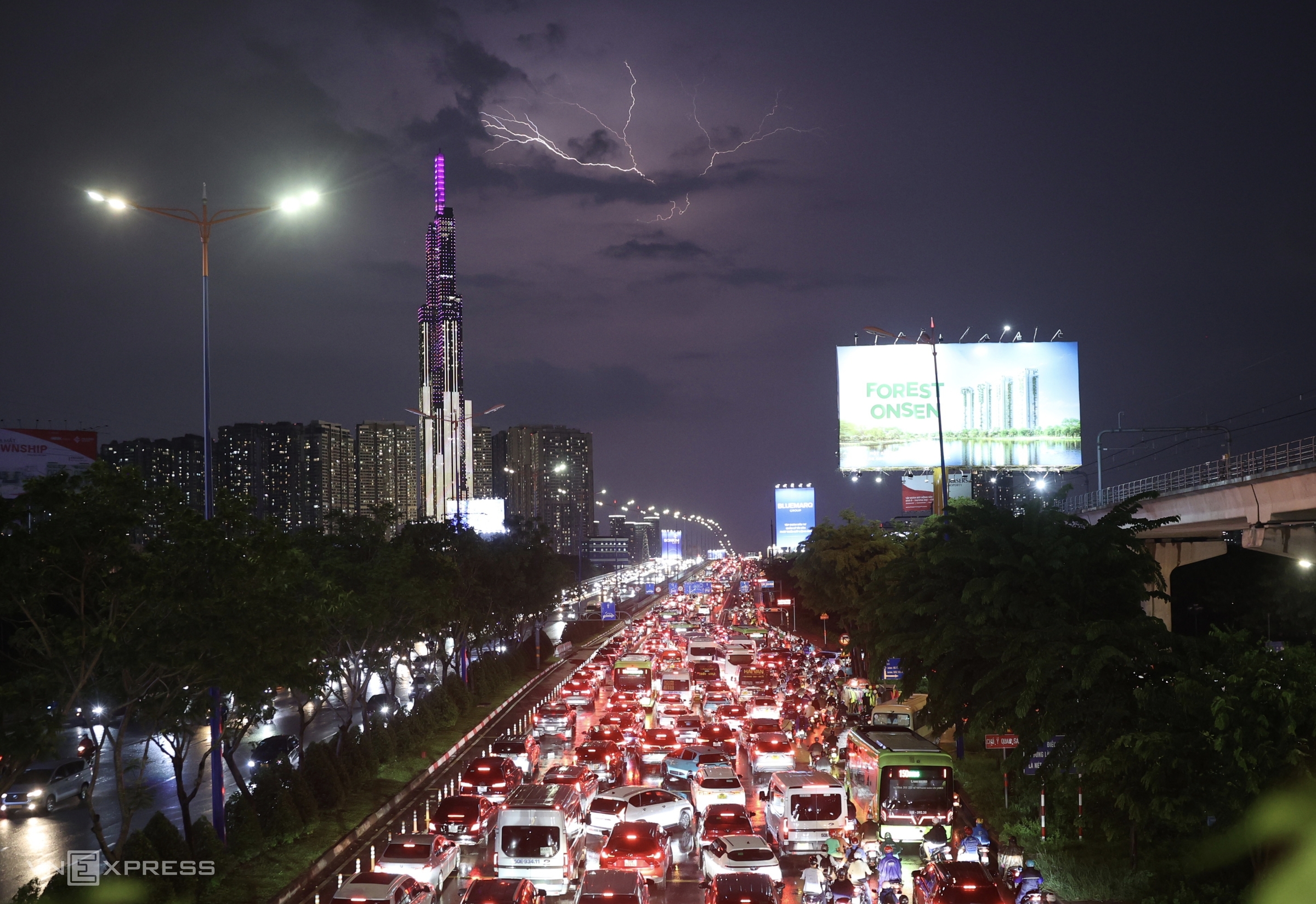 |
Thunderstorms and lightning over central Ho Chi Minh City, viewed from the pedestrian bridge at Thao Dien metro station, evening of 1/10. *Photo: Quynh Tran*. |
Since early 2025, 30/9 has recorded the second highest number of lightning strikes in Ho Chi Minh City. This figure was only surpassed by 10/5 last year, which saw approximately 5,000 strikes within 24 hours.
Ho Chi Minh City has not reported any significant impact from these lightning strikes over the past two days. However, on 30/9, residents in an urban area on Nguyen Xien street, Long Truong ward (formerly District 9), captured footage of lightning hitting a vacant lot.
The Hydro-Meteorological Department explained that the high frequency of thunderstorms and lightning over the past two days resulted from high-altitude atmospheric disturbances combined with wind convergence and a low-pressure trough. These natural factors fostered the intense development of convective clouds in humid, unstable environments, leading to the easy accumulation of electrical charges within them.
Vietnam lies within the Asian thunderstorm center, one of three global hubs for such activity. The country experiences intense lightning activity, enduring approximately 2 million strikes annually. Data from the Hydro-Meteorological Department indicates an average of 100 thunderstorm days and 250 thunderstorm hours nationwide each year. Lightning frequency is notably higher in the northern mountainous and midland regions, as well as the southern delta.
Dinh Van - Gia Chinh