 |
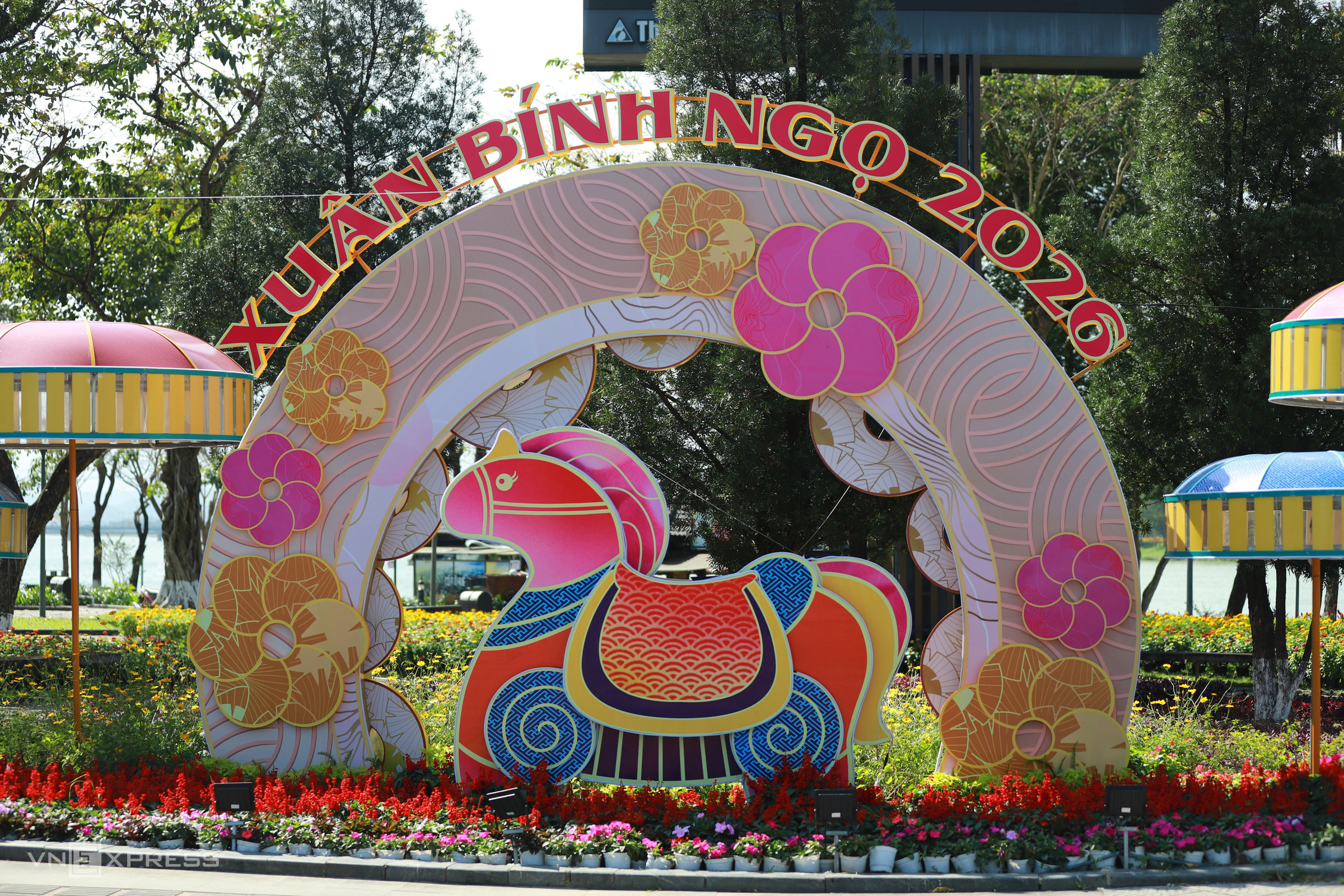
At the head of Phu Xuan bridge, where it meets Le Loi street, the Binh Ngo Lunar New Year mascot was also decorated with parasols and surrounded by many types of flowers. |
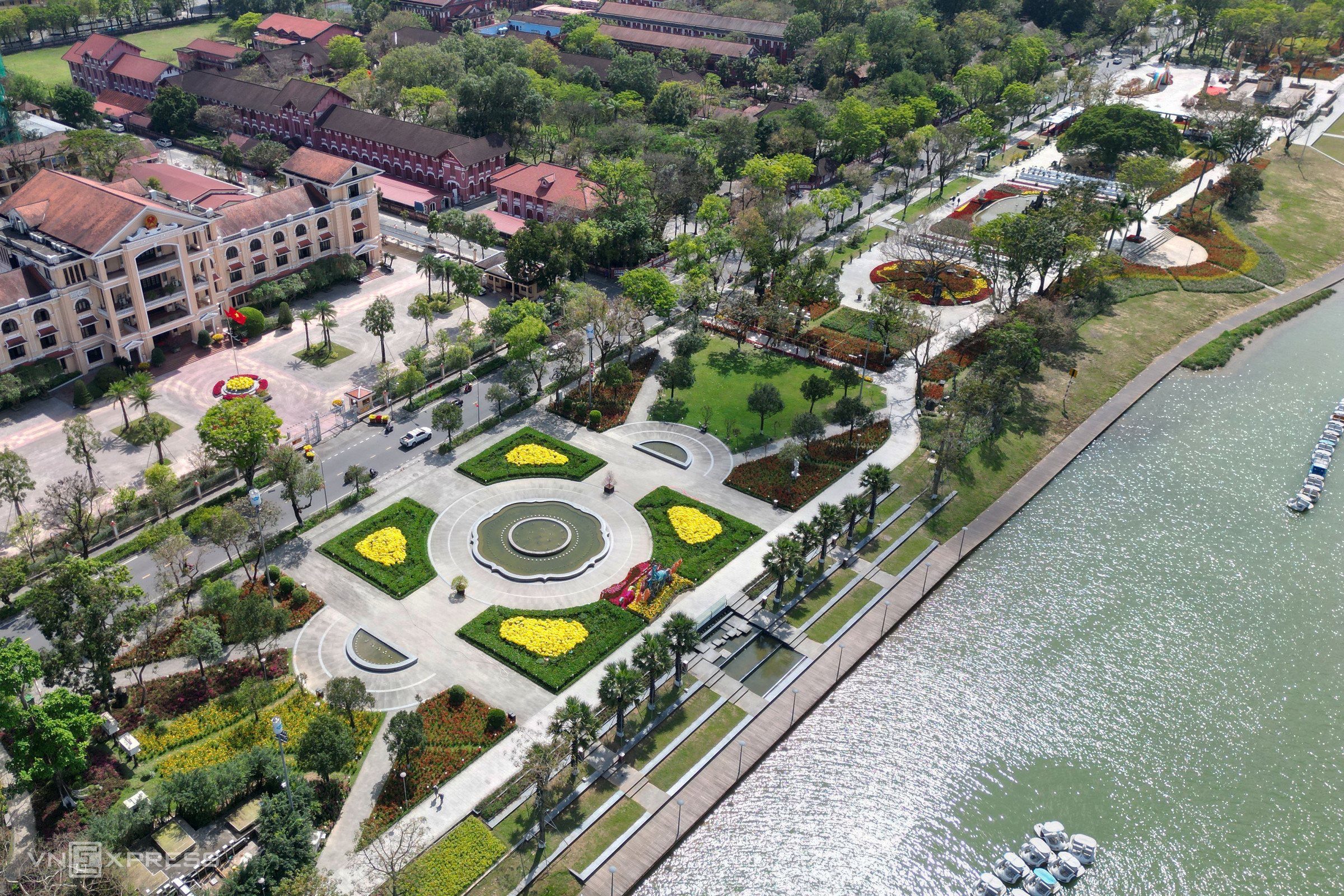
During the Lunar New Year, Thuan Hoa and Phu Xuan wards in central Hue City organized a spring flower festival on both sides of the Huong river. Ly Tu Trong Park, on the south bank of the Huong river, showcased the mascot for the Year of Binh Ngo, along with numerous miniature landscapes and various flower arrangements.
 |
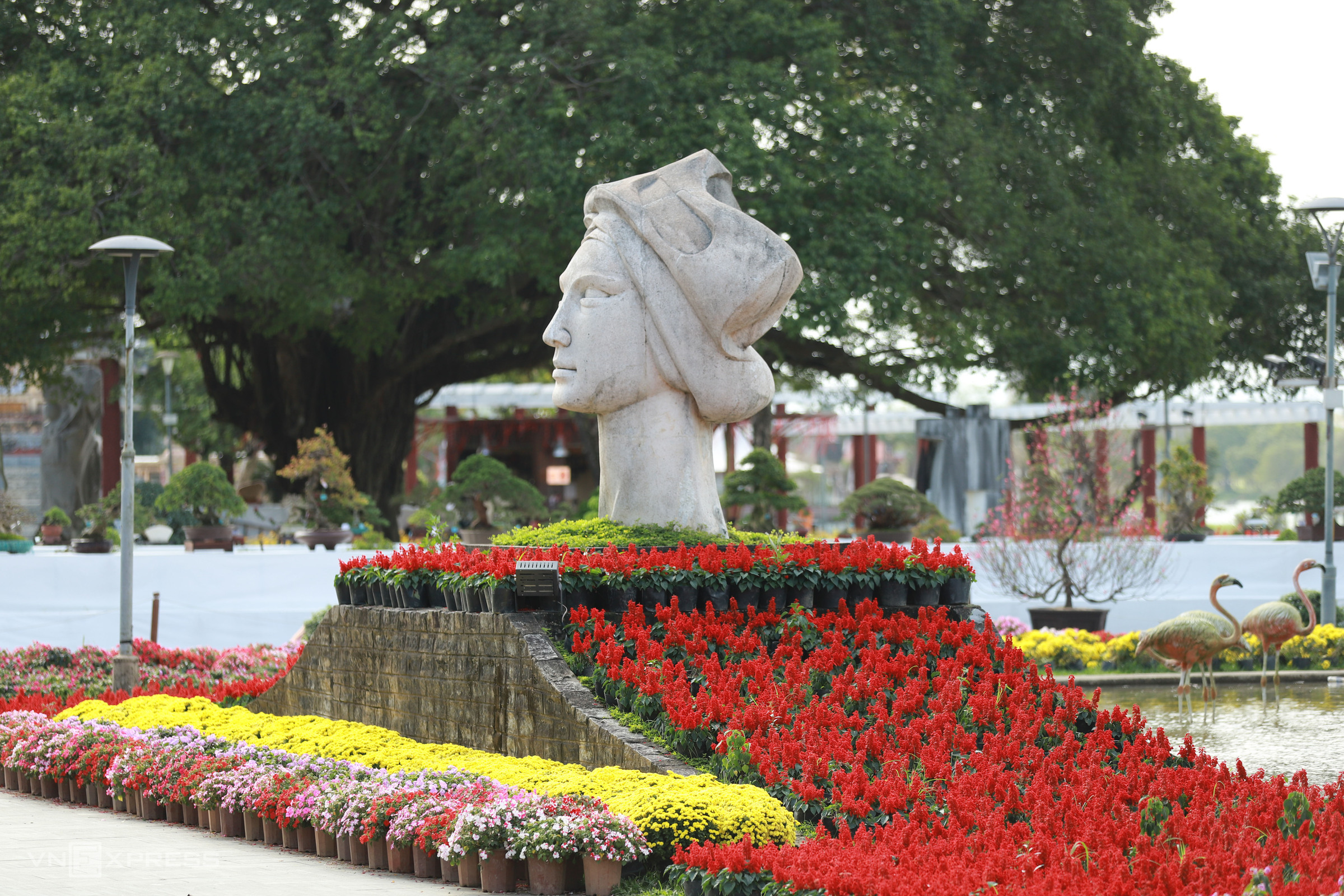
Many types of flowers adorned the area around the "Vietnamese Girl" statue in Ly Tu Trong Park, located along the Huong river in front of Hai Ba Trung High School. Artist and sculptor Le Thanh Nhon donated the statue to Hue. |
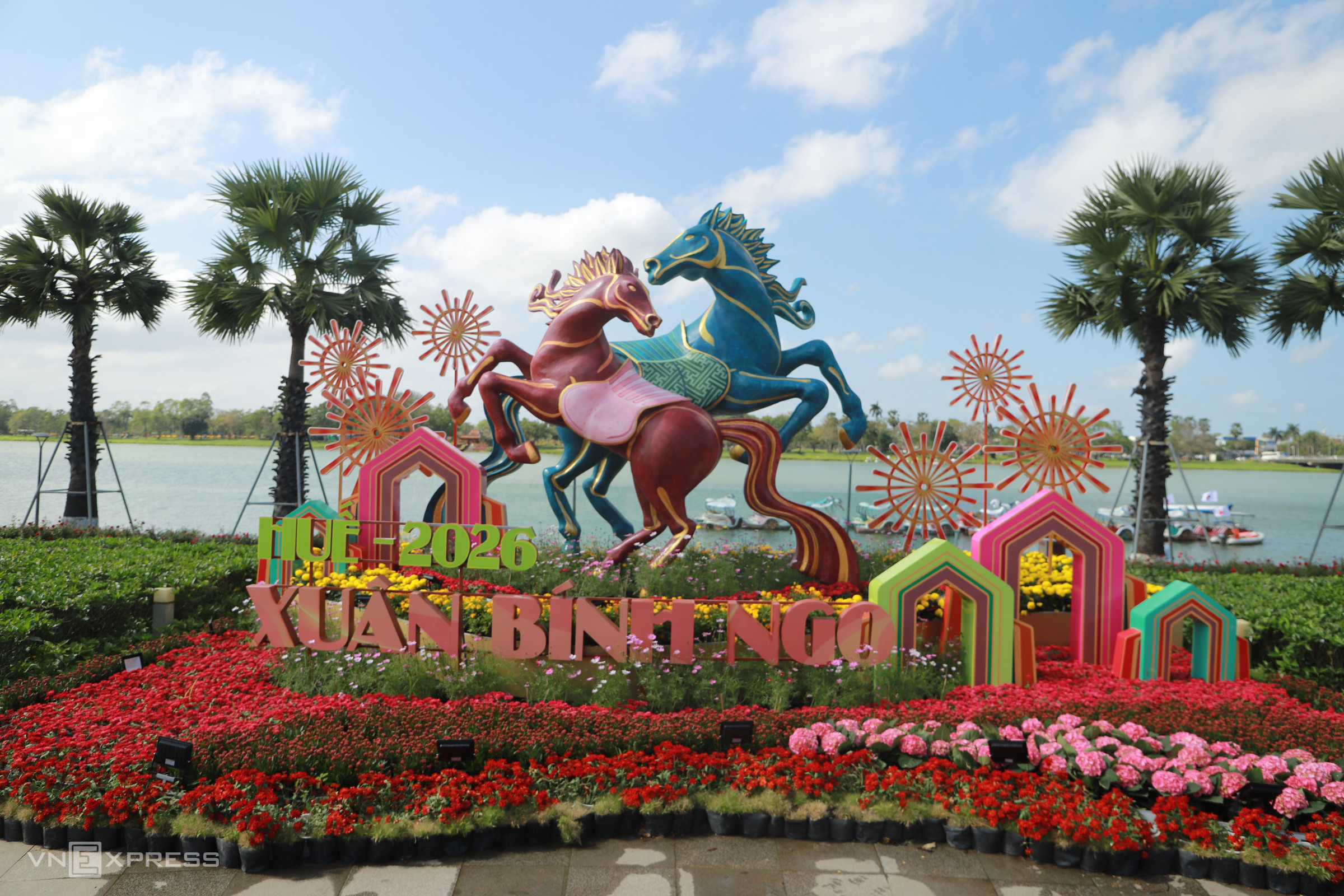
The twin horse statues were placed near the fountain in Ly Tu Trong Park, in front of the People's Committee of Hue City (UBND) headquarters. Various flowers surrounded the statues. In recent days, the twin horses became a popular spot for many residents attending the spring flower festival to take commemorative photos.
The design consultant stated that the twin horses were sculpted following the philosophy of harmonious yin and yang, with two opposing horses facing each other, symbolizing balance, prosperity, and new beginnings. The powerful, upward-leaping posture of the mascots created a towering visual axis, attracting attention from multiple directions. The mascots' colors conveyed auspicious meanings: red symbolized a spring of good fortune, wealth, and new vitality; blue represented peace, perseverance, and inner strength. The lacquer and gold leaf technique was used to honor the value of imperial craftsmanship, evoking a sense of power, sacredness, and royal dignity.
 |
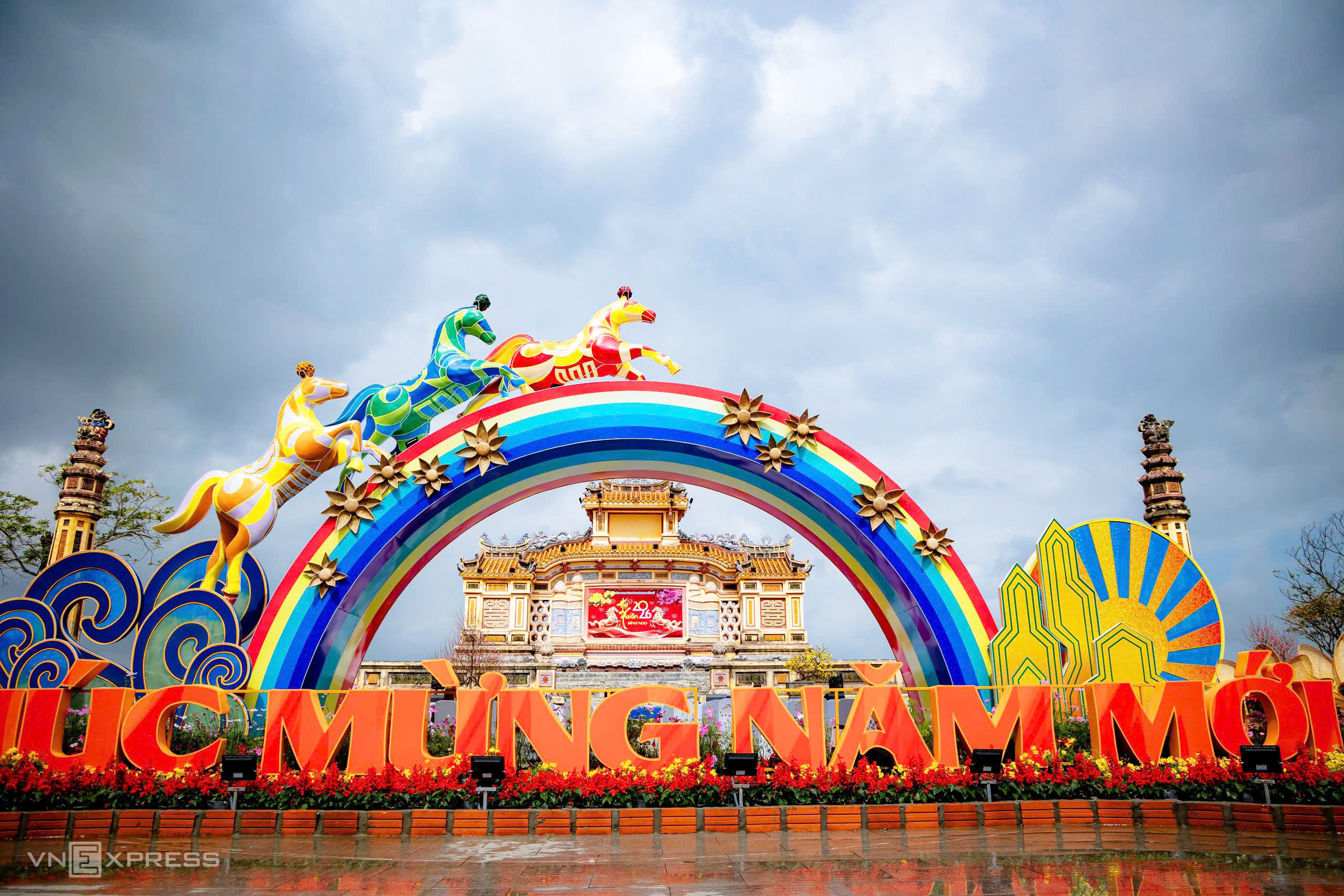
A welcome gate, featuring three horses leaping over it, was placed in front of Quoc Hoc Hue High School, conveying the message "ma dao thanh cong" (success upon arrival). The horses signal new opportunities and success. The three horses galloping on the spring gate symbolize the three blessings of happiness, prosperity, and longevity, representing aspirations for prosperity and a fresh start to the year. |
 |
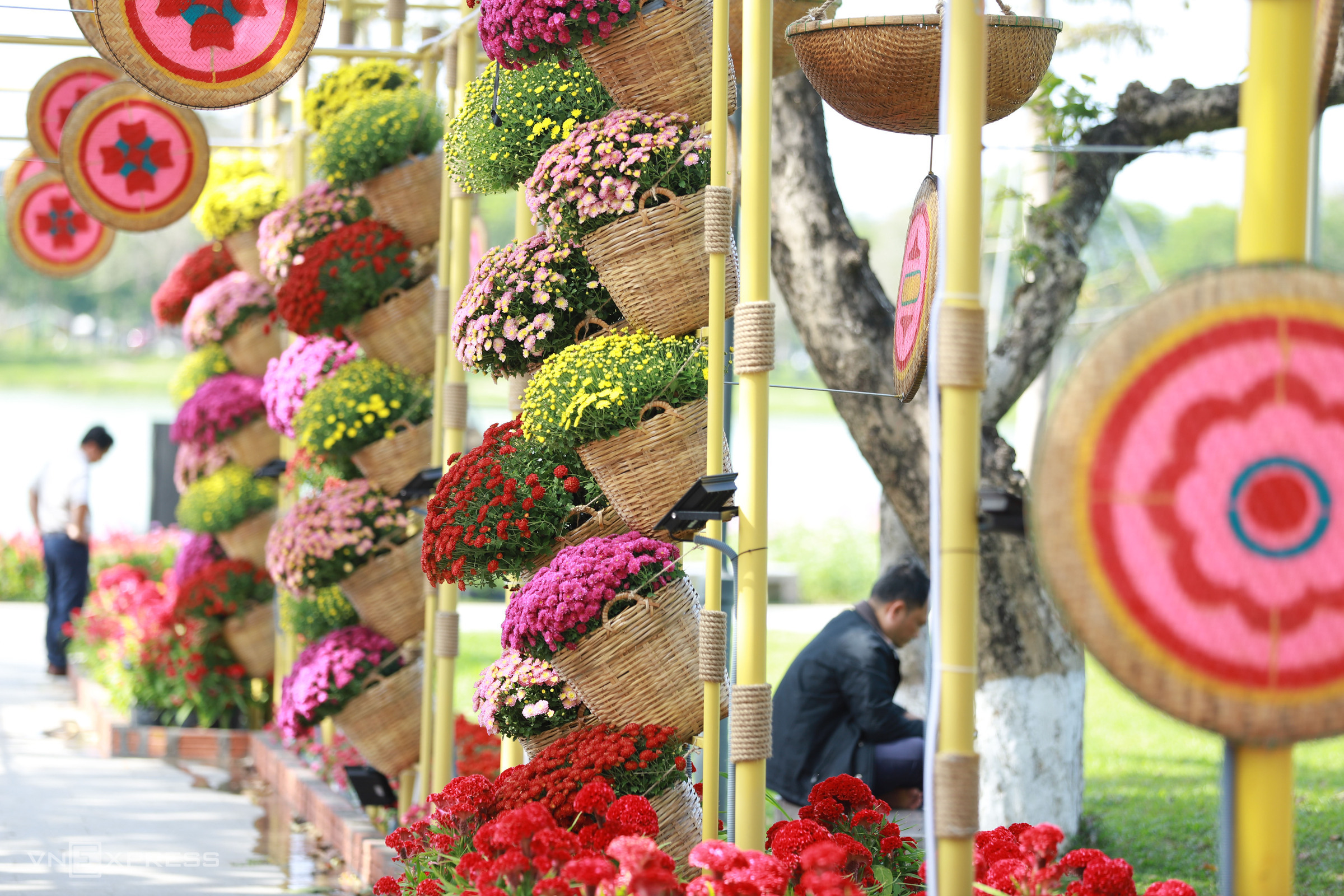
Along the walking paths in the park, the Hue Green Park Center arranged many flower baskets in bamboo containers. Many tourists and residents expressed their delight with this arrangement. |
 |
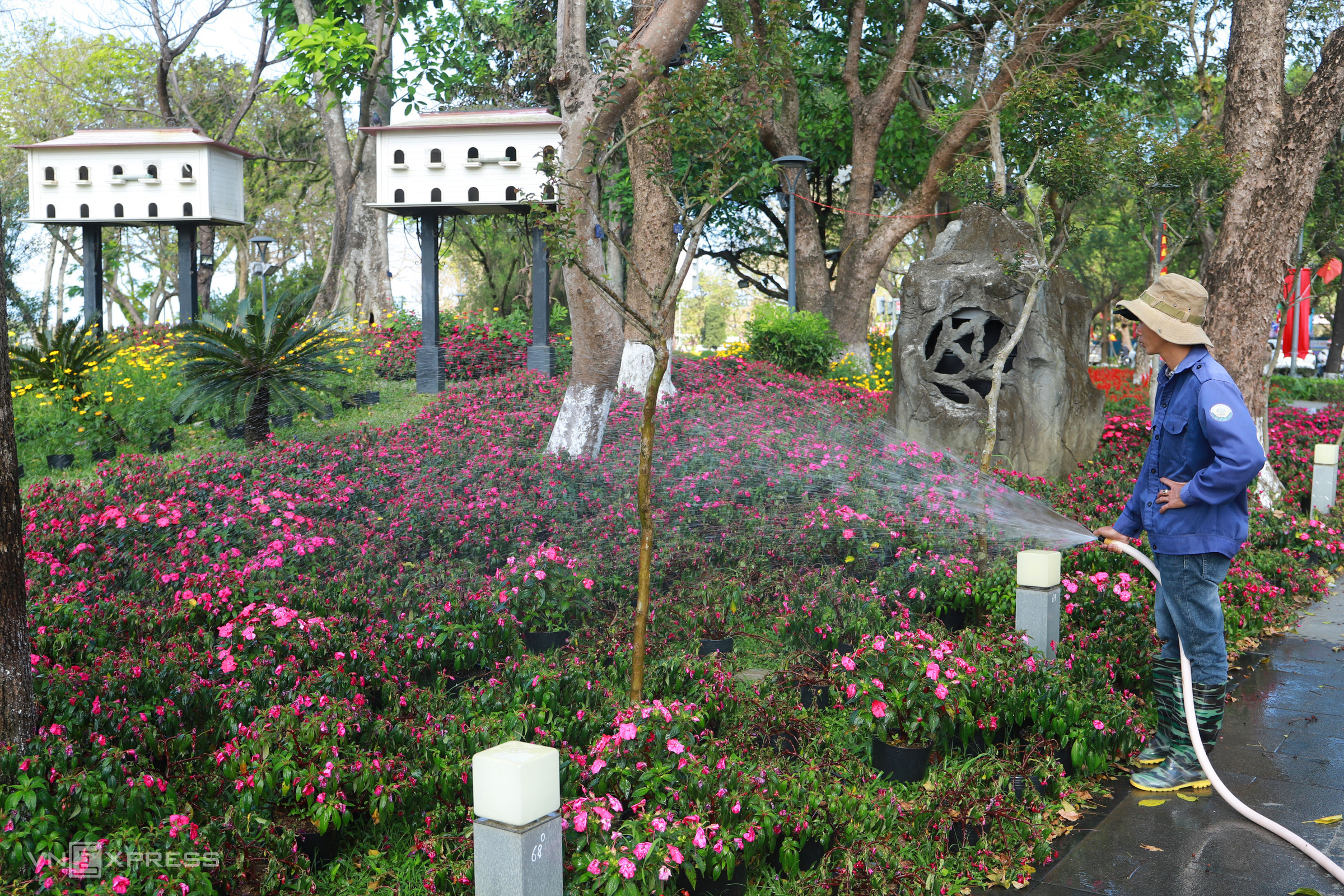
Daily, staff from the Hue Green Park Center watered the spring flower garden. Workers pumped water directly from the Huong river to irrigate the flowers. |
 |
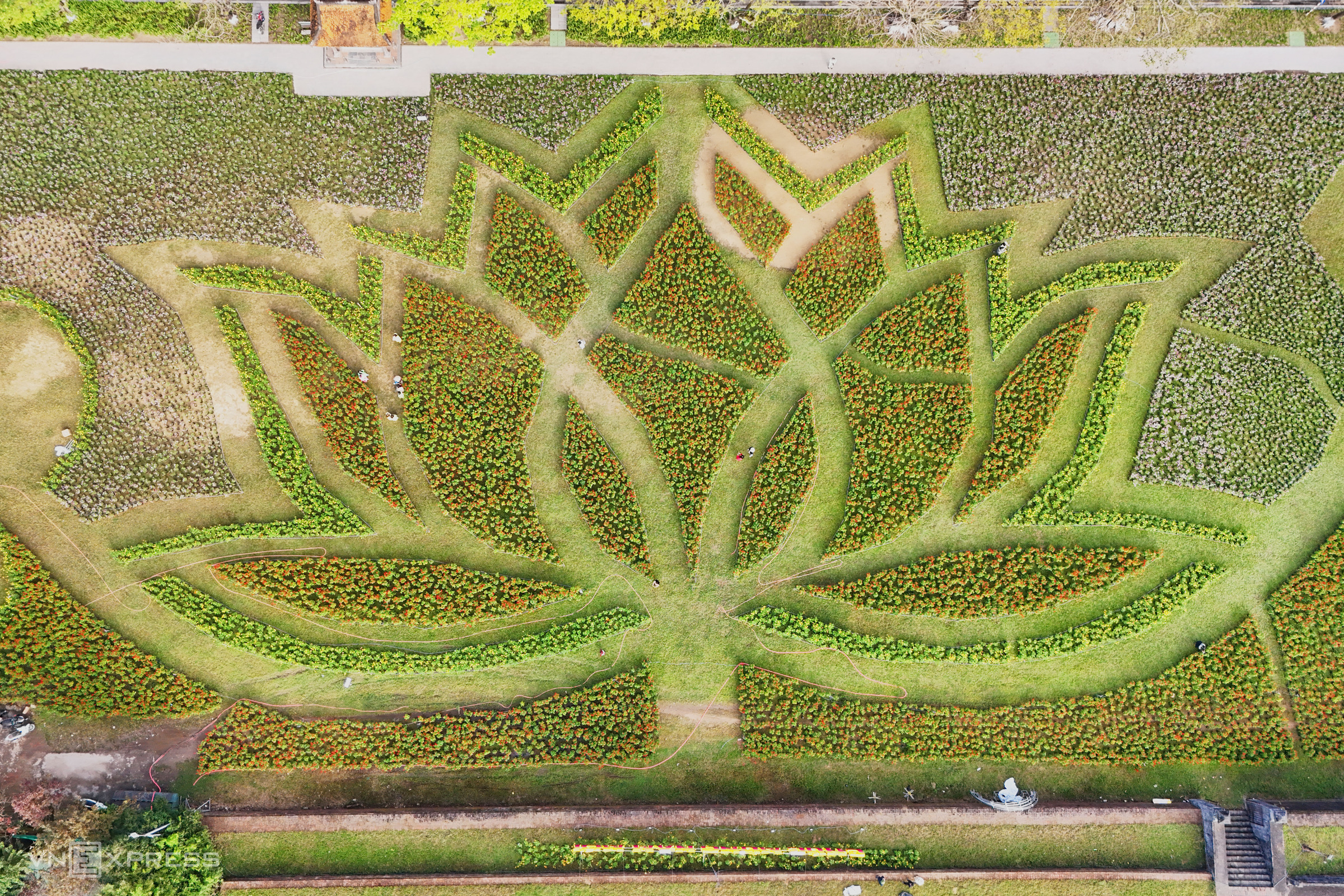
The Ham Nghi Courtyard, in front of the Quoc Tu Giam relic within the Imperial City of Hue in Phu Xuan ward, also featured over 55,000 flower pots arranged to form a giant lotus. Daily, the spring flower area became a destination for residents to visit and take photos in the days leading up to the Binh Ngo Lunar New Year. |
 |
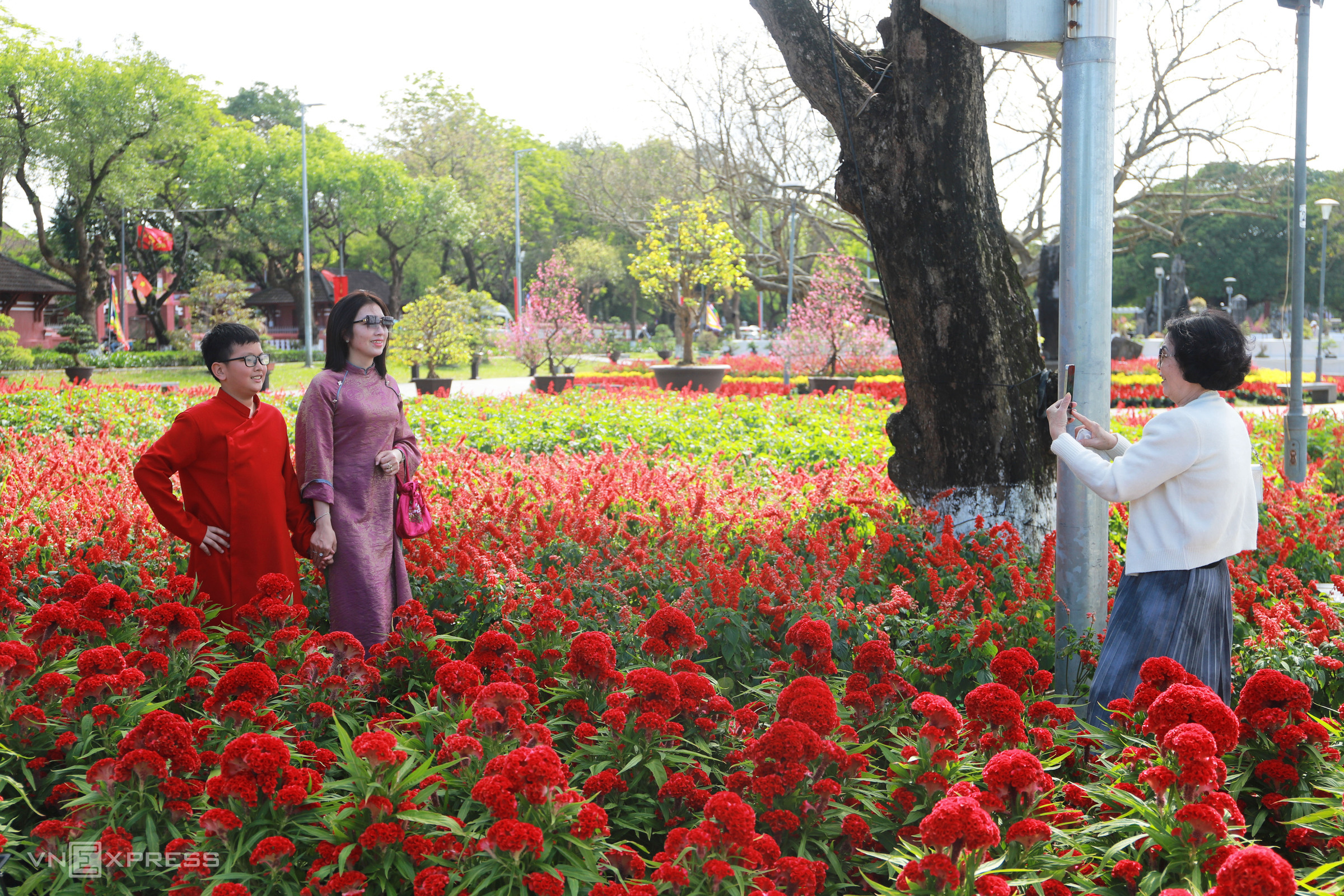
Many Hue residents wore ao dai to take photos in the spring flower garden. |
 |
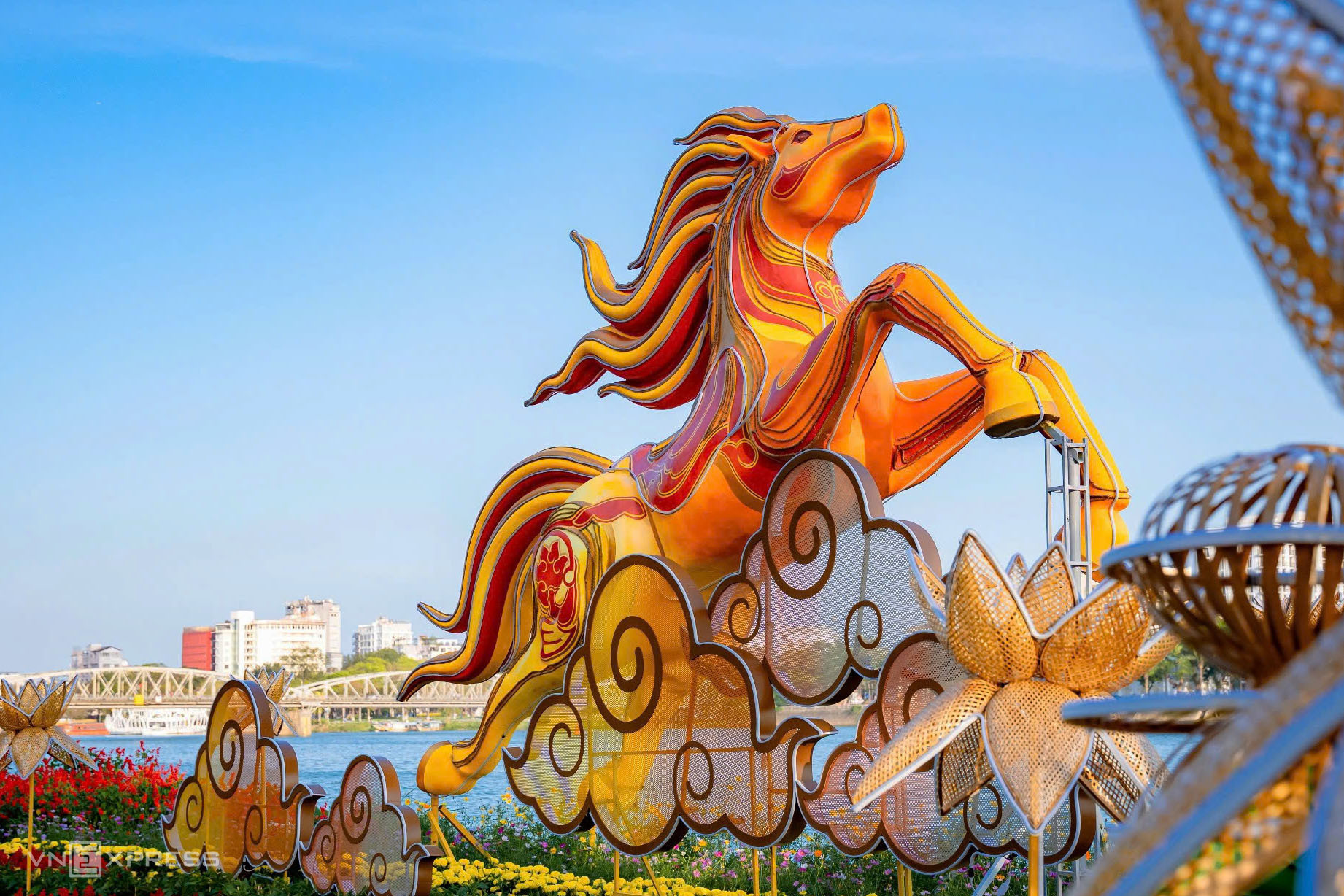 |
On the north bank of the Huong river, the People's Committee of Phu Xuan ward placed a golden horse mascot along the Huong river in front of Thuong Bac Temple.
The design team explained that the horse figure, in a "flying" posture, drew inspiration from Giong's Horse, symbolizing indomitable spirit, aspiration for advancement, and breakthrough power. The mascot evokes the Long Ma (Dragon Horse) in Hue culture, an emblem of wisdom, virtue, and transcendence, expressed through its soft, soaring mane, hair, and tail. The stylized lotus patterns on the horse's body imply that despite strong development, it retains elegance, wisdom, and cultural essence, true to the spirit of the ancient capital.
 |
 |
In the final days of the twelfth lunar month, Hue experienced sunny weather, favorable for residents enjoying the spring festivities.
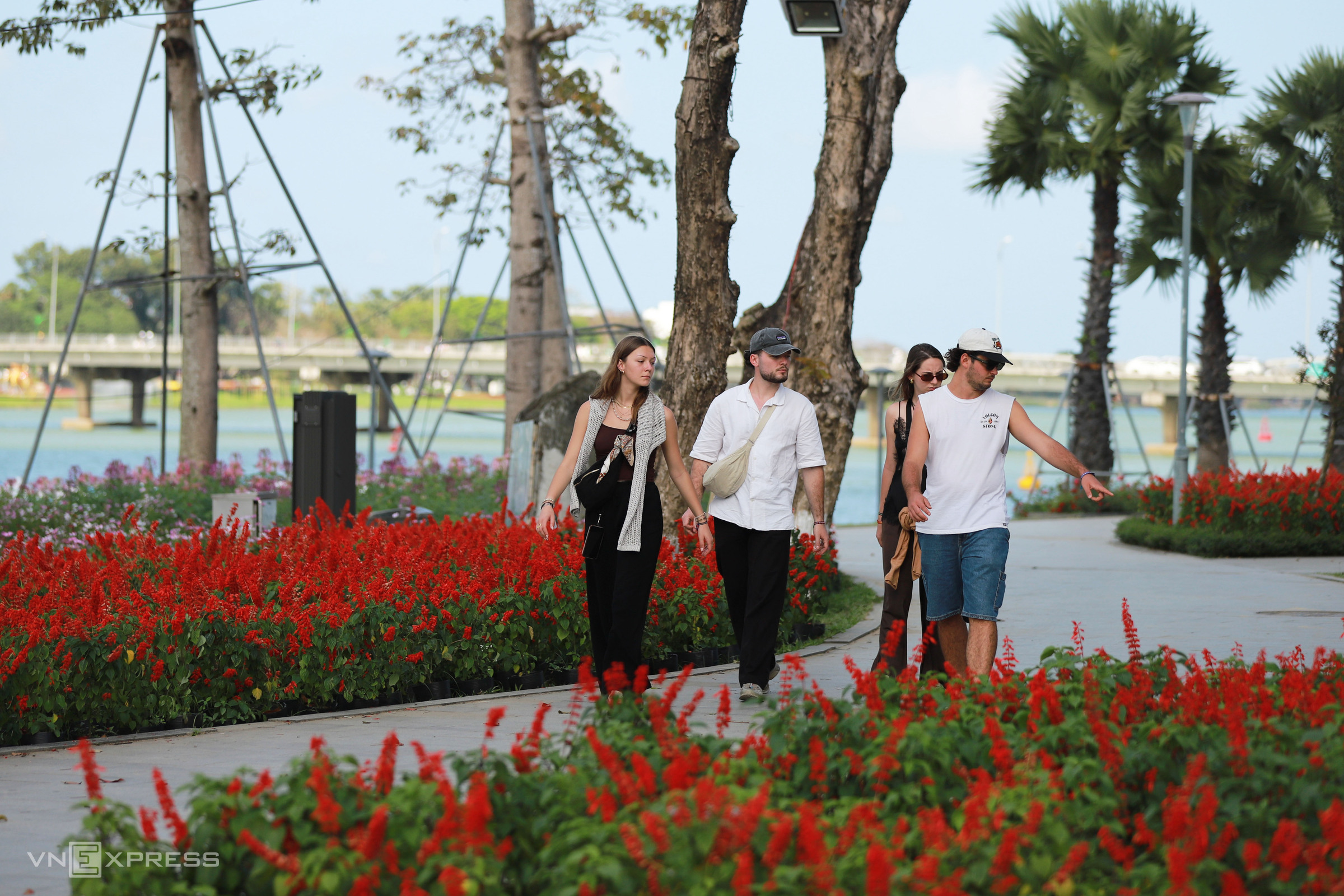
Ly Tu Trong Park along the Huong river transformed into a giant spring flower garden. Many foreign tourists walking along the Huong river expressed enjoyment as they strolled through the spring flower garden.
Vo Thanh