 |
At key locations such as Van Kiep slope, Tam Trinh road, and Ring Road 2,5, thousands of houses are being demolished to clear land for contractors. This rapid demolition pace is accompanied by the immense pressure of managing thousands of tons of construction waste each day.
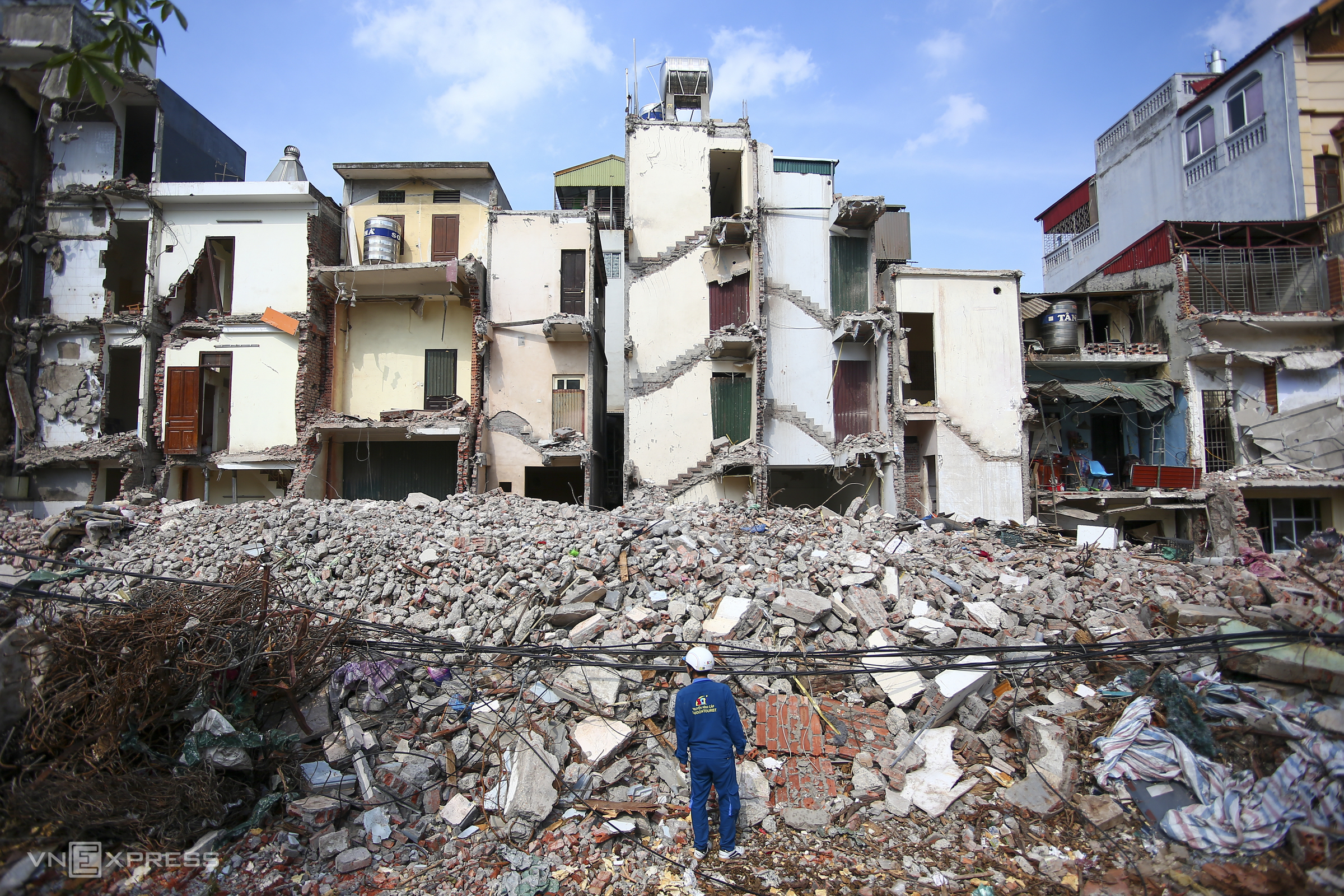
While awaiting removal, mountains of reinforced concrete, rubble, and debris are cluttering the streets. Photo: Pham Chieu
The Van Kiep street area is being demolished to clear land for the access road to Tran Hung Dao bridge, which will span the Red River. Hydraulic hammers strike concrete walls, large sections of mortar collapse, creating columns of white dust that envelop Van Kiep street. Photo: Pham Chieu
Mountains of waste, several tens of meters high, have formed after the demolition process. According to data from the Department of Construction and the solid waste management project, Hanoi generates approximately several thousand tons of construction waste daily. This volume surges during peak land clearance periods for major urban transport projects. Photo: Giang Huy
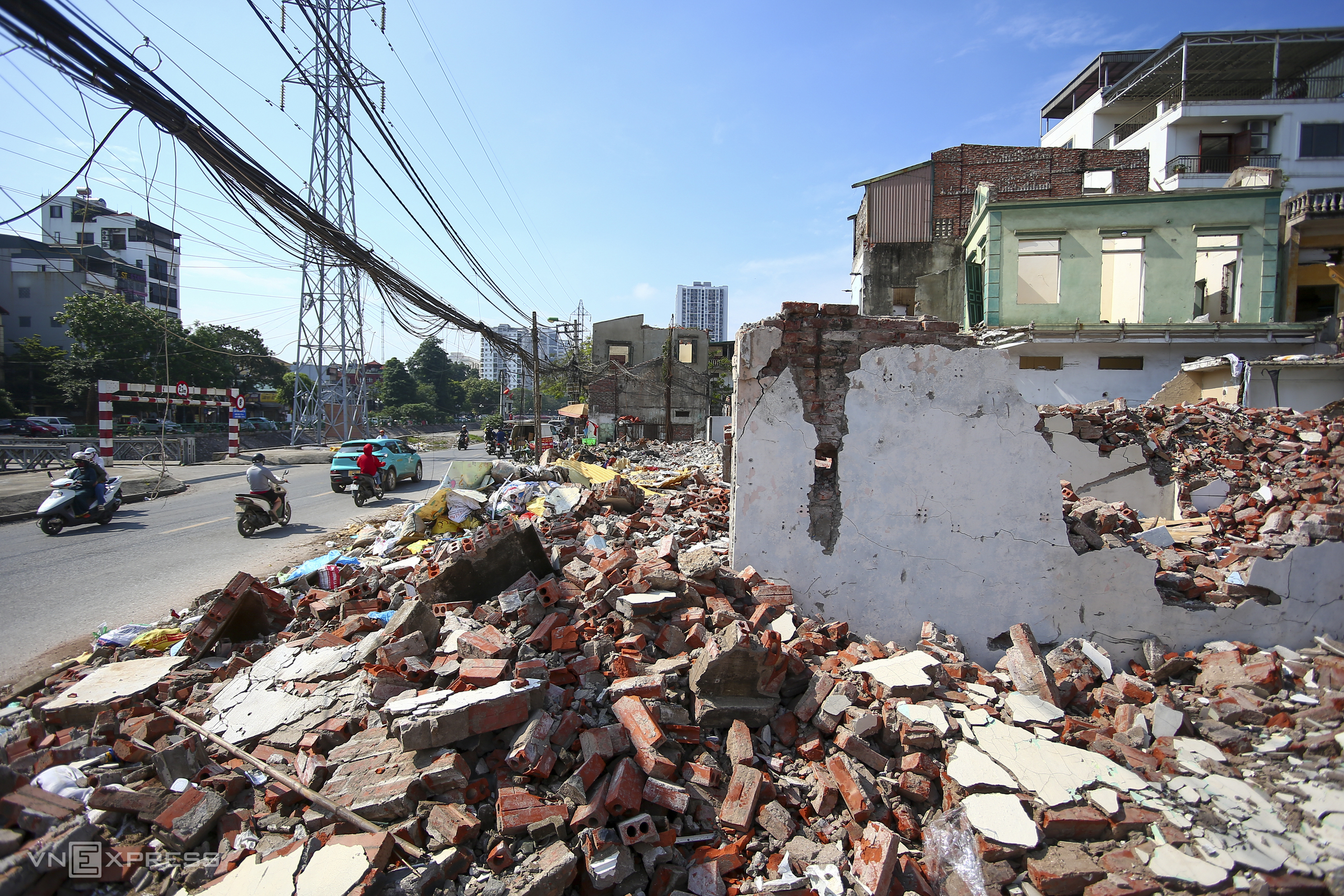 |
On Tam Trinh road, the house demolition process for road widening is nearing completion. However, a large amount of construction waste still awaits removal. The waste mainly consists of rubble, mortar, and concrete, with much of it spilling onto the road. Photo: Pham Chieu
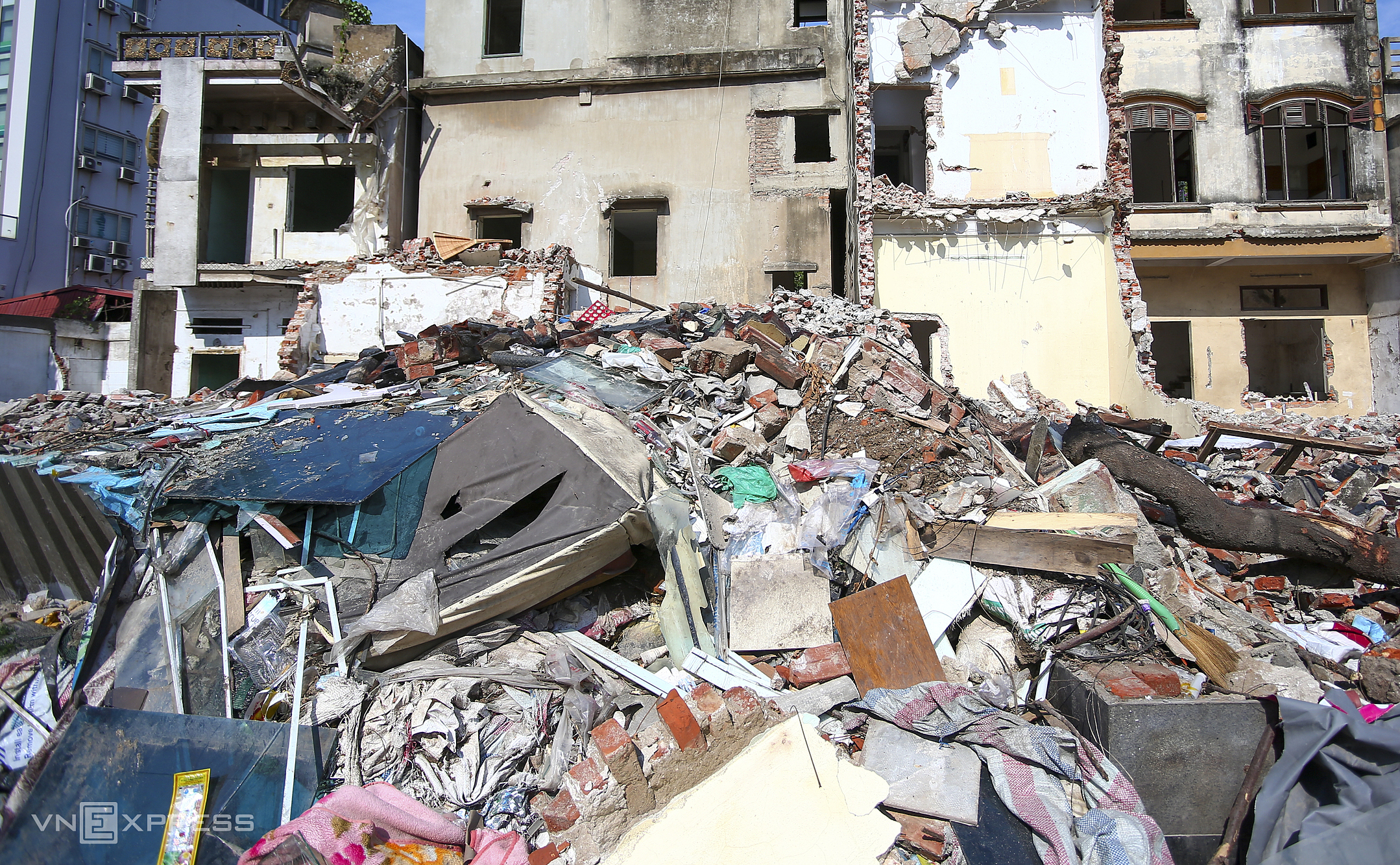 |
Besides bricks and mortar, a significant amount of waste comprises old, broken household items left behind by residents after relocation. Photo: Pham Chieu
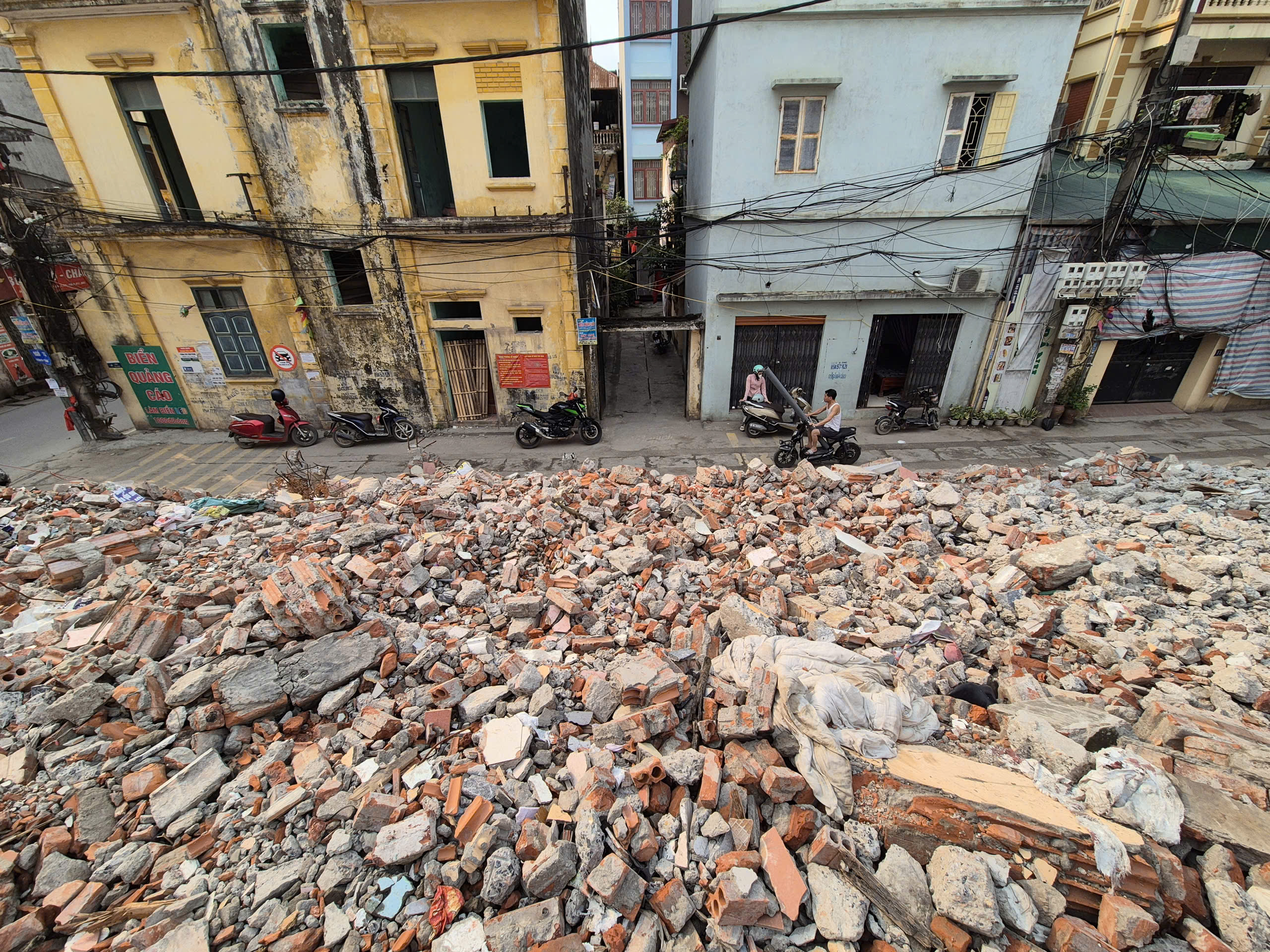 |
Numerous three- to four-story houses in Co Nhue alley 162 are being demolished for the 10-lane West Thang Long road project. This vital transport route connects West Lake to western Hanoi, contributing to urban development expansion.
The West Thang Long road project is approximately 33 km long, divided into 5 sections. Of these, the section from Vo Chi Cong to Pham Van Dong and the section from Van Tien Dung to Tay Tuu - Thuong Cat area were completed and put into use from 2019. Photo: Gia Chinh
Approximately 7 km away, house clearance for the Ring Road 2,5 project in Thanh Xuan ward also generates a large volume of construction waste awaiting removal. The waste lies scattered, revealing a dense network of phi 16 and phi 18 steel – the heaviest and most difficult material to remove during demolition. Before transport, demolition machines use powerful shears to crush concrete slabs, separating steel from bricks and mortar. Photo: Hoang Giang, Thanh Hai
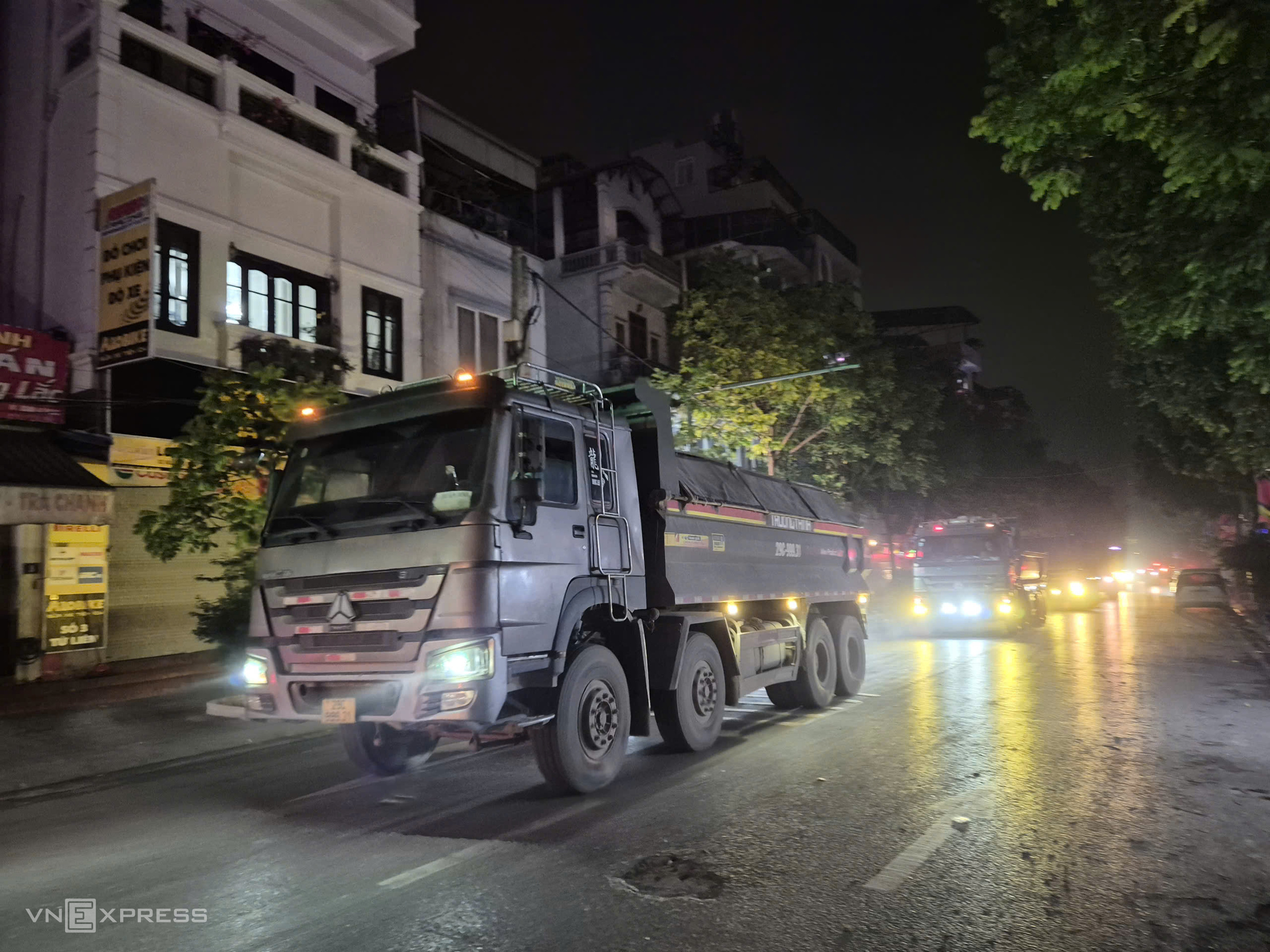 |
To ensure safety, the transport of demolition waste currently occurs mainly at night. These vehicles typically use ring roads such as Vo Chi Cong, Nguyen Hoang Ton, and Ring Road 3 to reach collection points. Photo: Pham Chieu
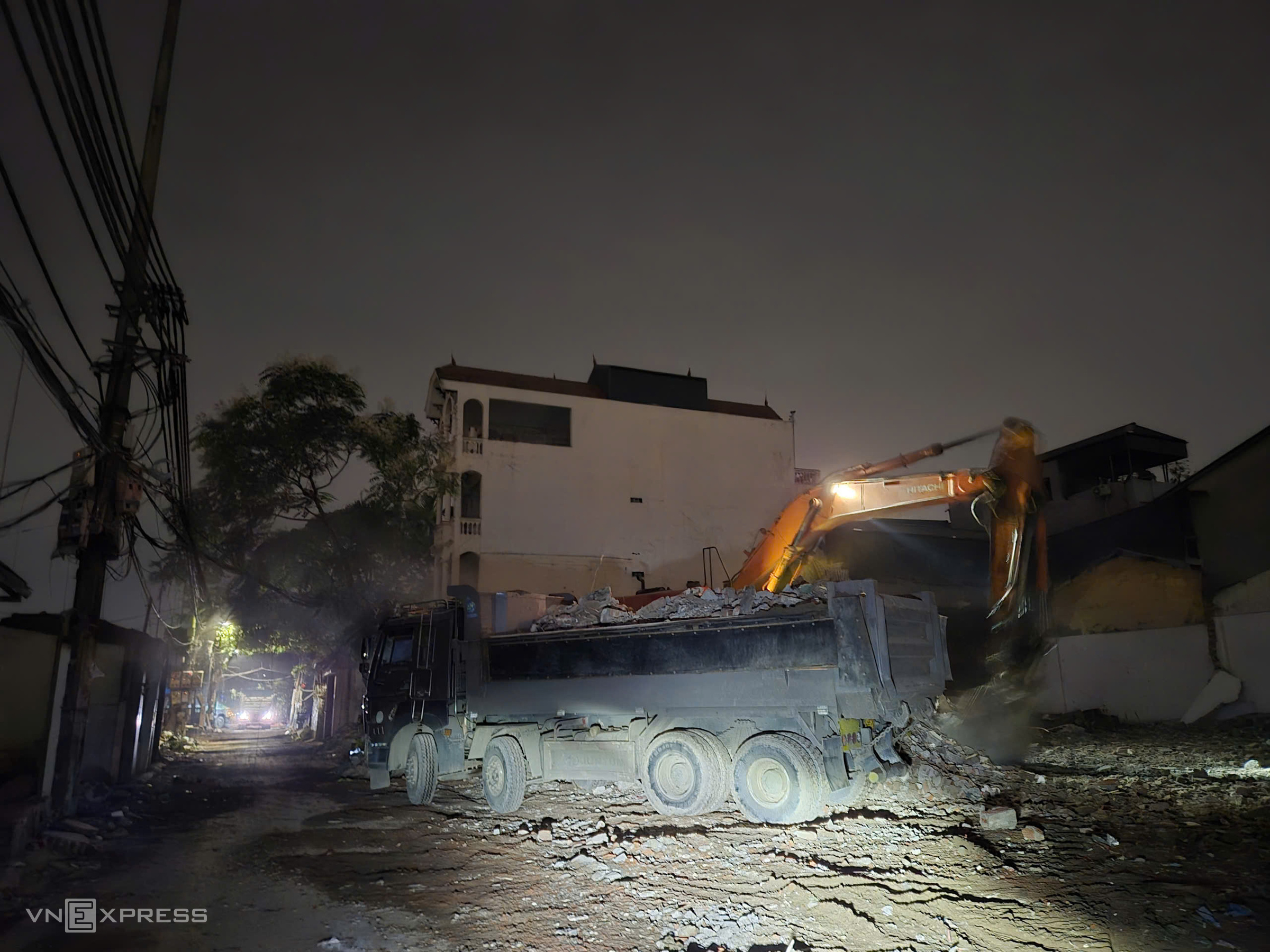 |
Tens of trucks transport construction waste from the Tu Lien bridge project at Nghi Tam alley 310. Photo: Pham Chieu
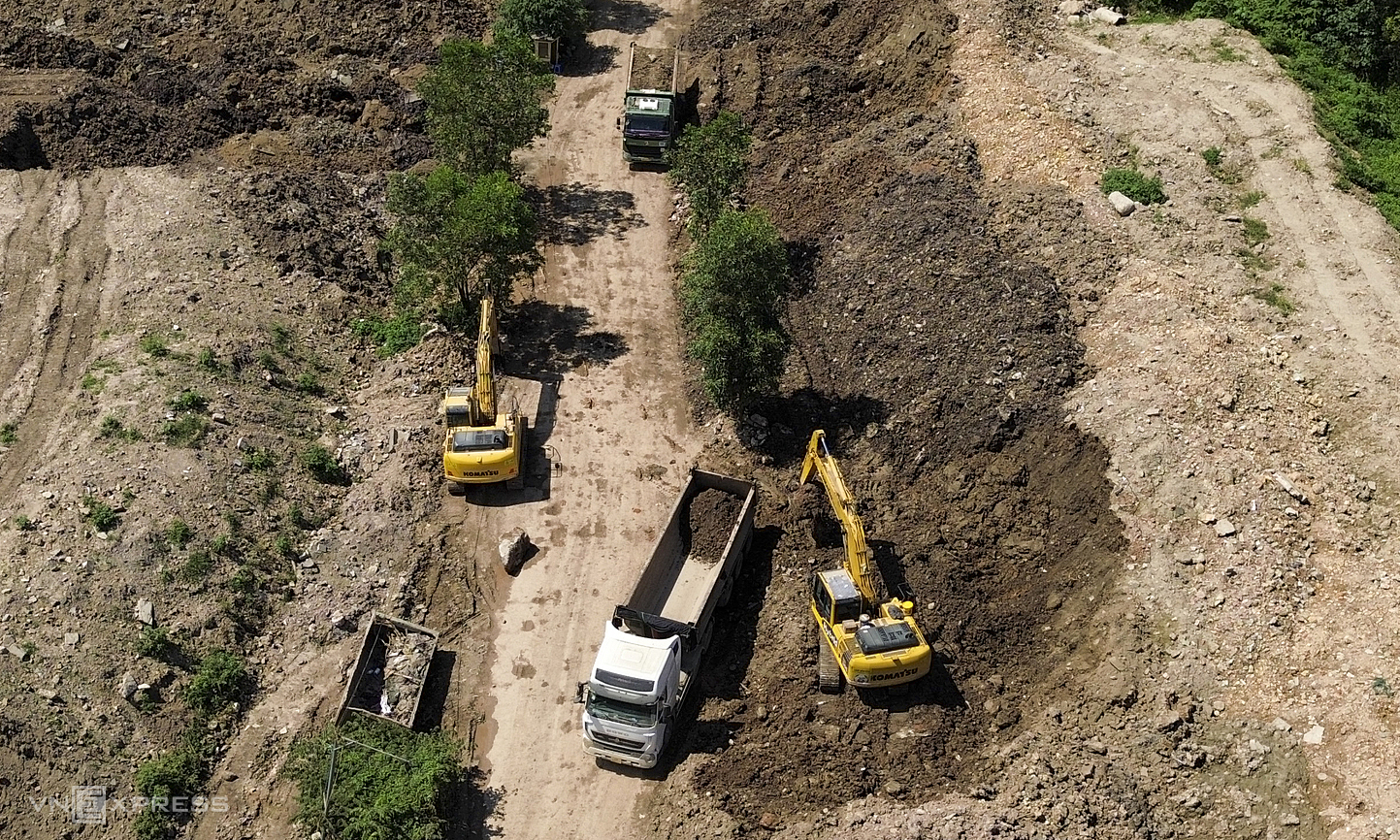 |
Currently, construction waste in Hanoi is primarily collected and processed at two main areas: near the Phap Van - Cau Gie interchange and the Nguyen Khe landfill in Dong Anh. Both sites are facing overload. Photo: Pham Chieu
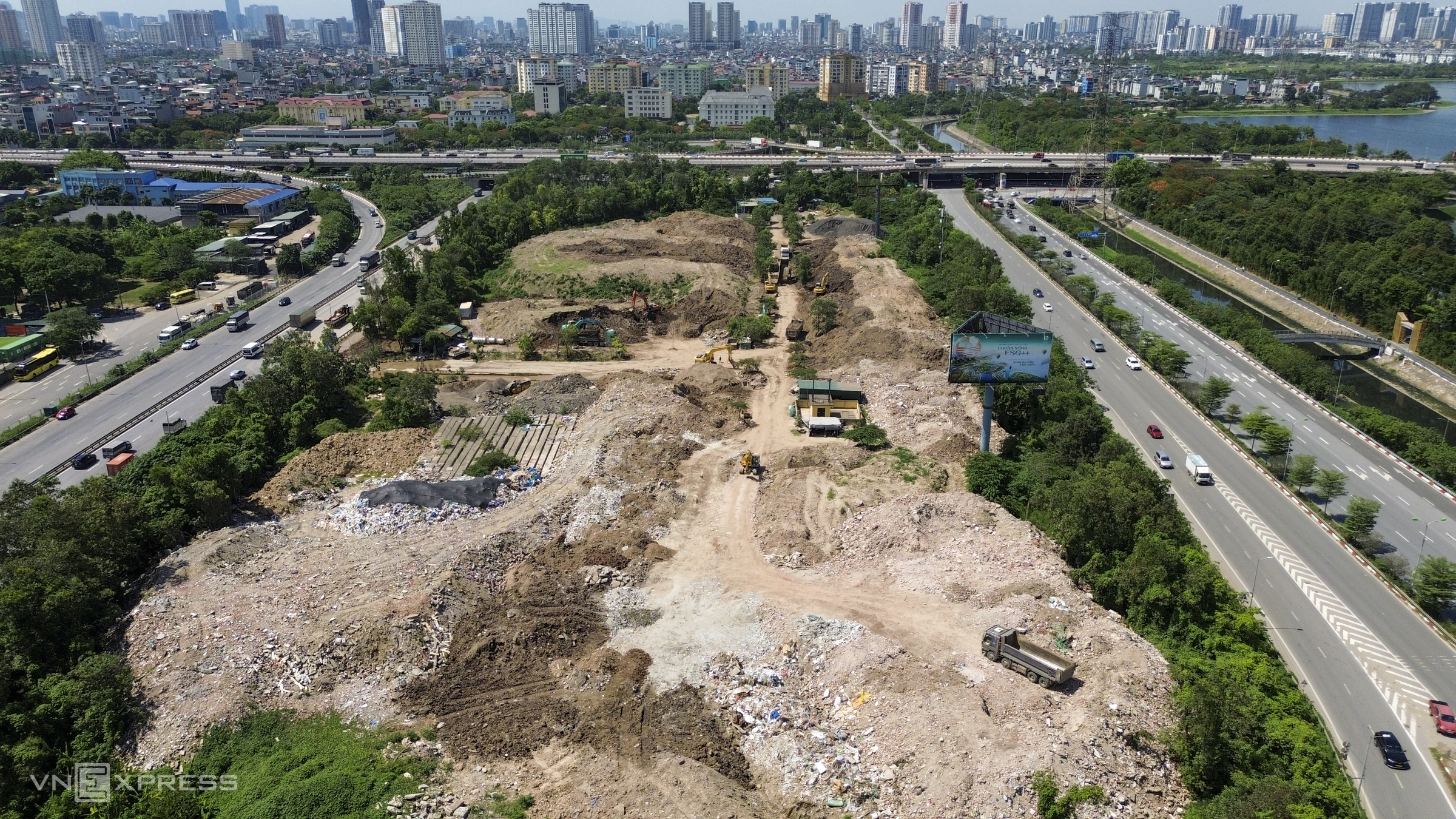 |
The construction waste processing and crushing facility at the Phap Van - Cau Gie interchange covers an area of 6,5 ha, owned and operated by a company. Here, construction waste is crushed and screened for recycling, used for various purposes such as road bases for rural and inner-city transport routes. Photo: Pham Chieu
Beyond designated disposal sites, many empty plots of land in Hanoi are becoming illegal dumping grounds for construction waste from smaller projects. Photo: Pham Chieu
Reporting team