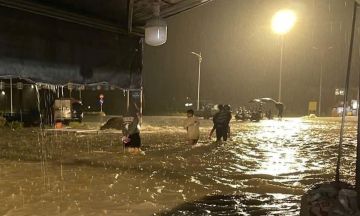
From around 4:30 PM, many areas in Hanoi experienced heavy, but intermittent, rain. In Long Bien ward, the rain coincided with rush hour, causing congestion on routes from Times City urban area to Long Bien.
At the Co Linh intersection with ring road 2, the exit from Vinh Tuy bridge, water flooded up to half a wheel. Consequently, traffic from the capital's center to Long Bien congested for kilometers. In the car lane, many people got out of their vehicles to wait.
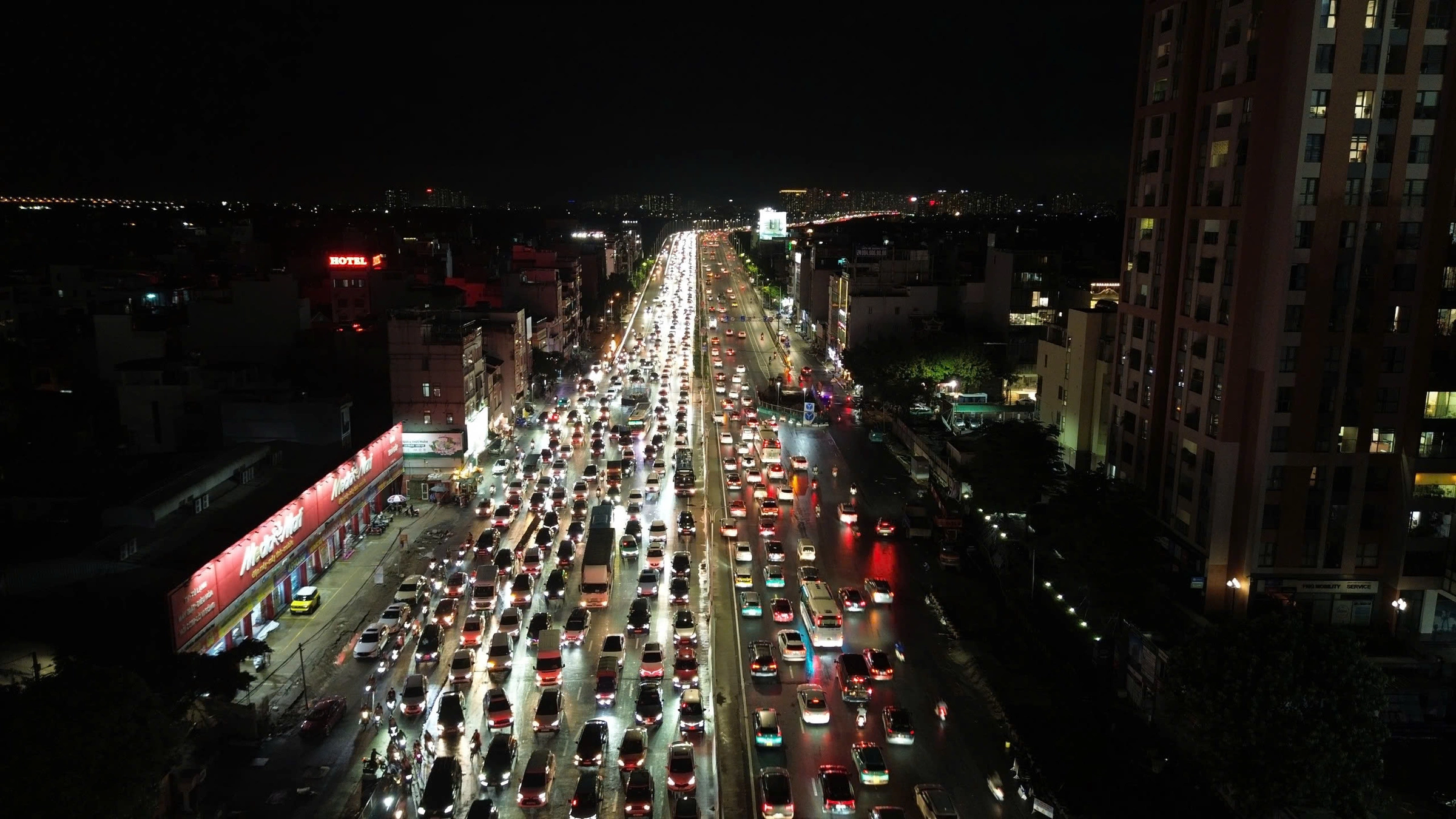 |
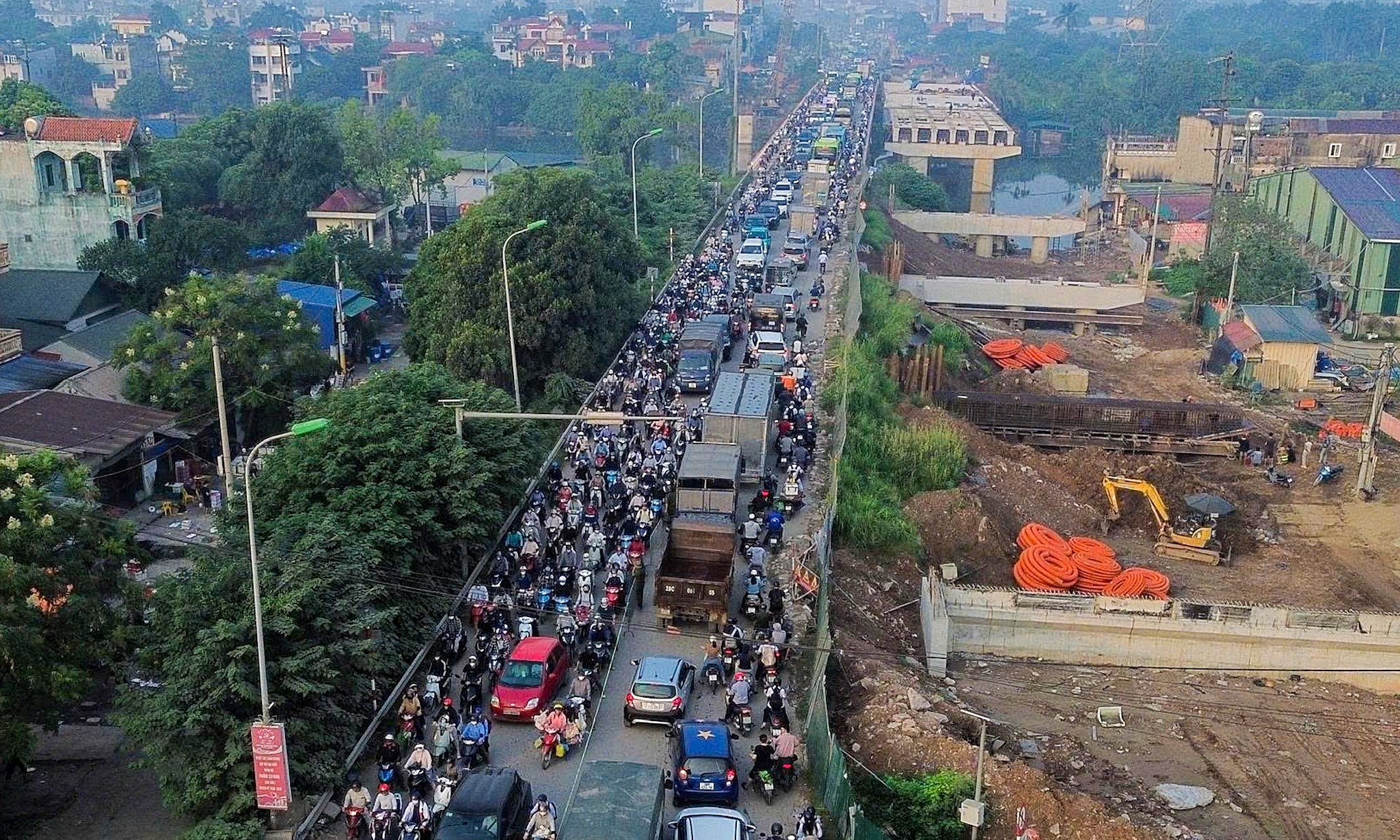
Vehicles queued bumper-to-bumper on Vinh Tuy bridge at 9:00 PM. *Photo: Viet An* |
Nguyen Tu Tai, returning home to Viet Hung ward from his workplace in Nga Tu So, stated it took him almost one hour to cross Vinh Tuy bridge.
Although floodwaters on the Co Linh side had receded by 8:00 PM, thousands of vehicles, mainly cars, still faced significant difficulty moving due to the road being narrowed for underpass construction at the Co Linh - ring road 2 intersection.
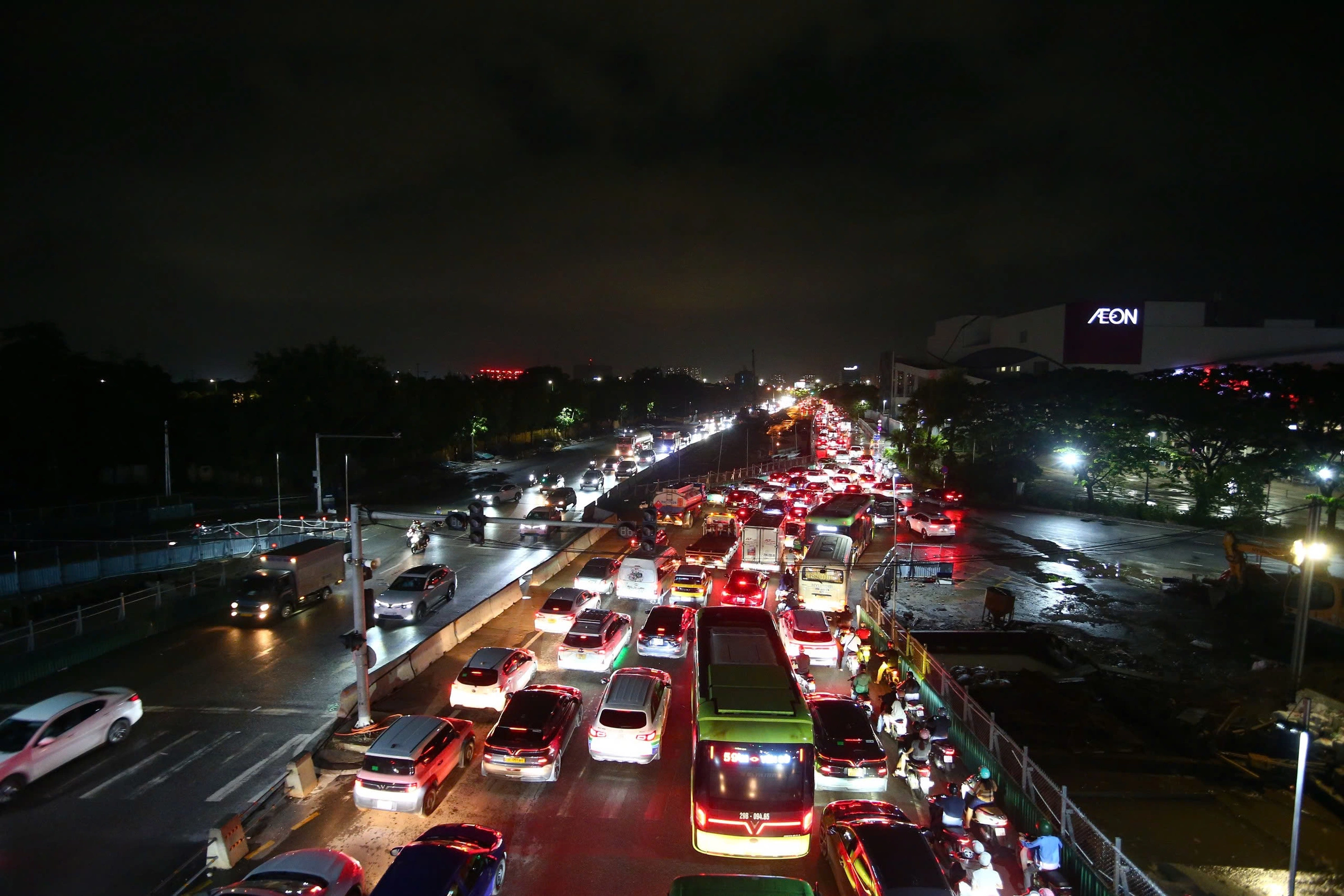 |
The road was narrowed due to ongoing underpass construction at the Co Linh intersection. *Photo: Viet An* |
Many surrounding feeder roads, particularly those leading to national highway 5, were also packed with cars and motorbikes. By 9:30 PM, vehicles were still moving bumper-to-bumper through the Co Linh intersection, the section in front of Aeon Mall Long Bien shopping center.
Hanoi, along with other Northern provinces, experienced heavy rain due to the influence of a low-pressure trough. According to data from automatic rain gauges, Long Bien received 115 mm of rain on the afternoon of 31/7. Many other areas also saw heavy rainfall, such as Gia Lam with 71 mm, Yen So with 55 mm, and Hoang Mai with 41.5 mm.
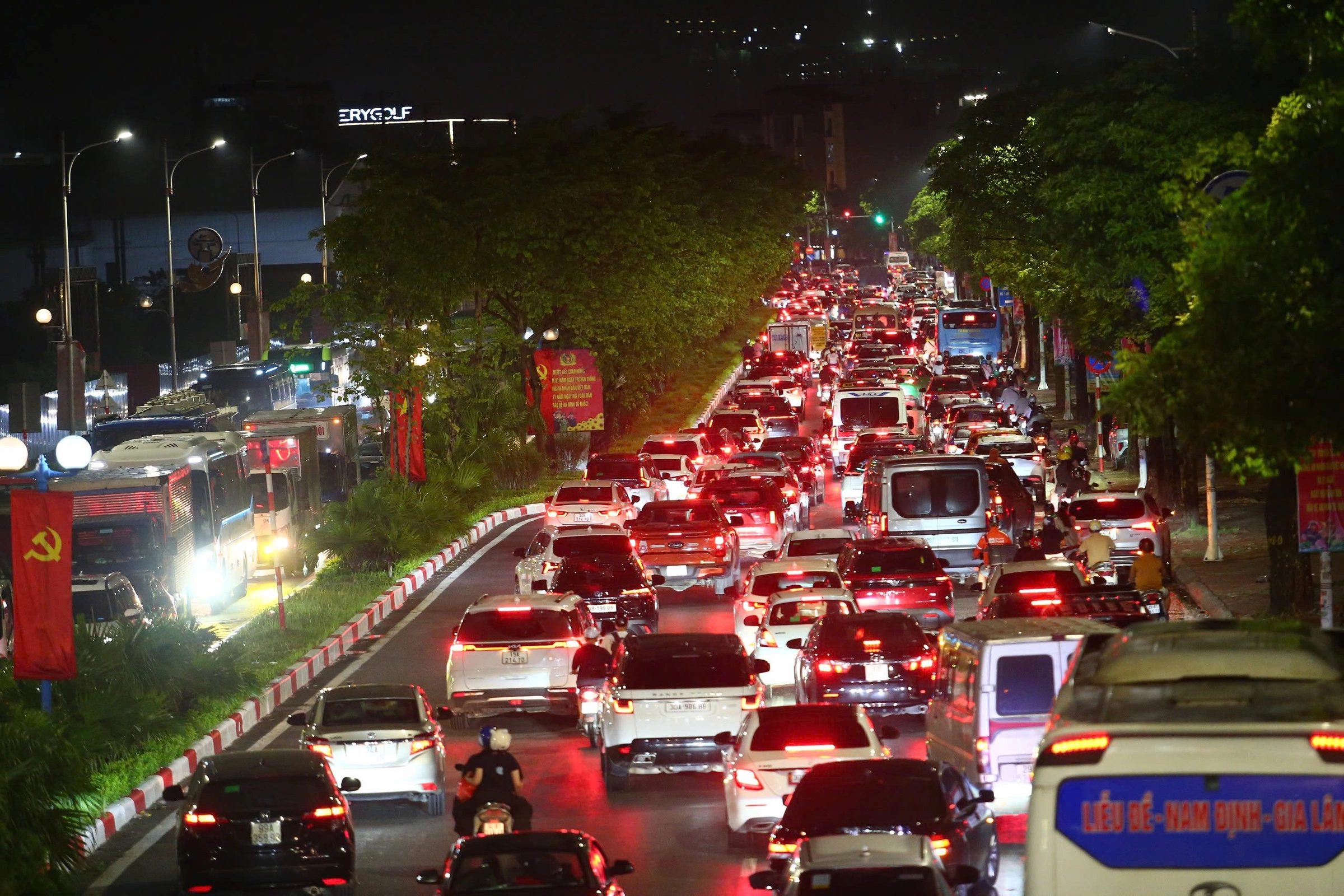 |
Vehicles moving on Co Linh road, heading towards national highway 5. *Photo: Viet An* |
Hanoi recorded several flooded spots, including Do Muoi road through the Gamuda urban area and some roads within the Vietnam National University of Agriculture area.
According to Hanoi Sewerage and Drainage One Member Limited Company, heavy rain with high intensity over a short period exceeded the immediate drainage capacity of some low-lying areas, resulting in localized flooding. However, most flooded areas receded after the rain subsided and pumping systems operated continuously.