Ho Chi Minh City People's Committee Chairman Nguyen Van Duoc announced this decision following a meeting with relevant agencies concerning the proposed battery swap cabinet model.
The city leaders have assigned the Department of Construction to review and publicly announce the criteria for selecting businesses to invest in, install, manage, and operate the cabinets, along with a list of eligible sidewalk routes. Implementation must be transparent, non-discriminatory, avoid monopolies, and create conditions for all capable businesses to participate.
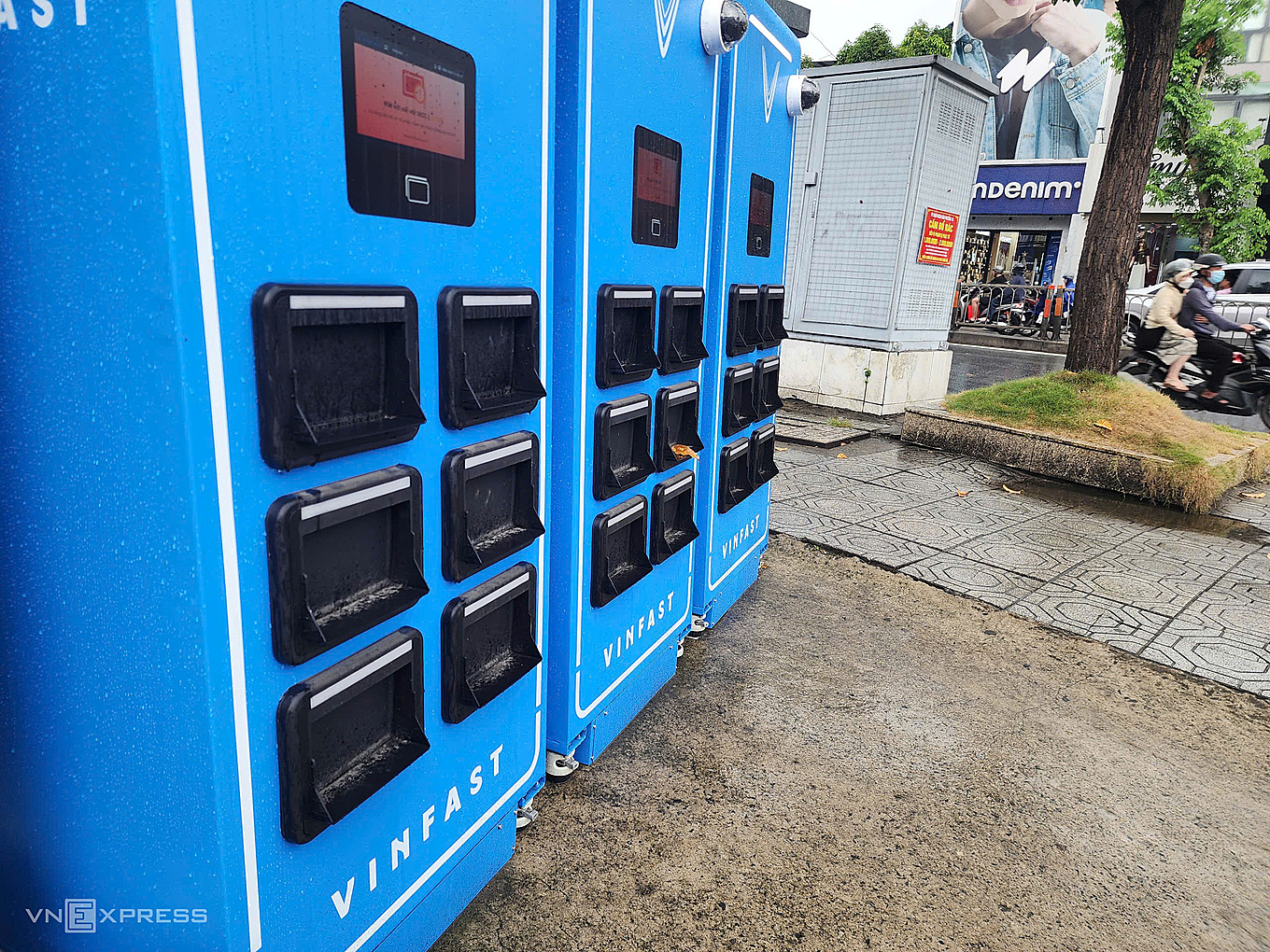 |
A battery swap cabinet undergoing trial installation on Quang Trung street, Go Vap ward, on 25/12/2025. *Dinh Van* |
The Department of Construction is also tasked with clarifying the post-investment management mechanism, defining business responsibilities during operation, and meticulously considering electrical safety, fire prevention and fighting, public order, environmental factors, and incident response plans.
To facilitate smooth implementation, city leaders have assigned the Public Security of TP HCM, the Department of Industry and Trade, the Electricity of Vietnam, and local authorities to coordinate with the Department of Construction in supporting businesses with the installation and operation of the battery swap cabinet system.
Previously, the Department of Construction reported that two companies, Great Wealth and V-Green, proposed investing in approximately 20,000 electric motorcycle battery swap cabinets. These would be located at public lighting poles or on eligible sidewalks. Each cabinet would contain 6-12 battery trays, with a capacity of 6-12 kW, serving popular electric motorcycle brands such as Honda, Yadea, Yamaha, and VinFast.
These businesses committed to self-funding the investment, operation, and maintenance of the system. Upon approval, they expect to complete the full installation in Quarter I/2026 and will relocate or dismantle units if required by competent authorities.
Currently, TP HCM has over 100,000 electric motorcycles but only about 300 fast-charging stations, which is insufficient to meet demand. Residents primarily charge at home or in apartment buildings, posing potential risks of electrical hazards and fires. Consequently, many riders and experts support the battery swap cabinet model, as it helps reduce waiting times, enhances safety, and minimizes conflicts in apartment complexes lacking dedicated charging points.
Giang Anh