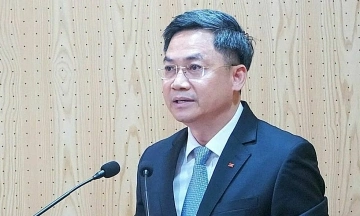
Speaking at a voter meeting on 11/5, following the first session of the 16th National Assembly, Ho Chi Minh City Party Secretary Tran Luu Quang addressed inner-city traffic congestion and central infrastructure overload. He stated that the city is studying urban structure adjustments to encourage population decentralization to suburban areas.
According to Quang, new housing projects will prioritize development in suburban areas, coupled with synchronous transport infrastructure investment for convenient connection to the city center.
"High-rise apartments will no longer appear in the city center. Large land plots will be prioritized for parks and public spaces to serve the community", Quang said.
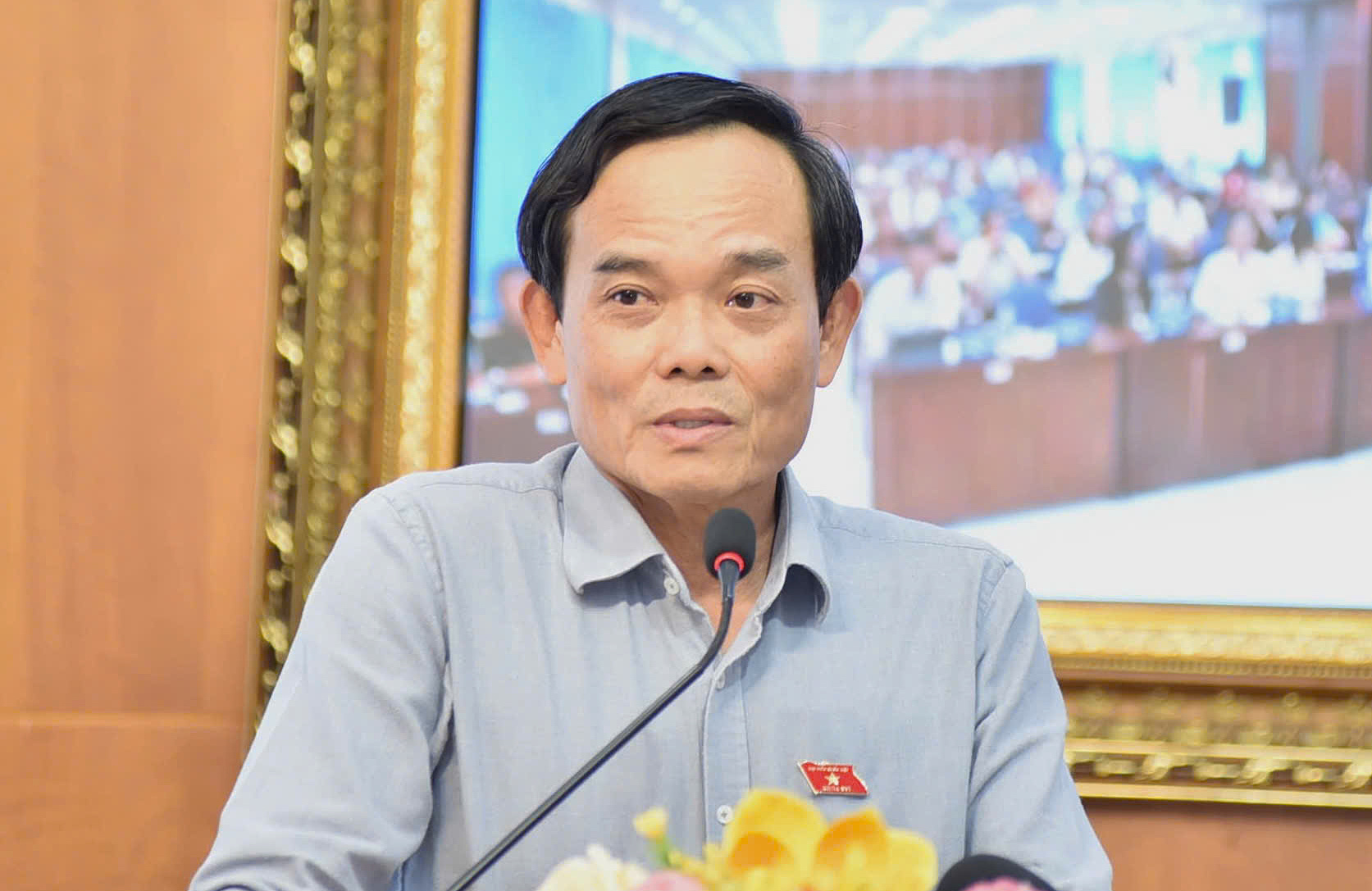 |
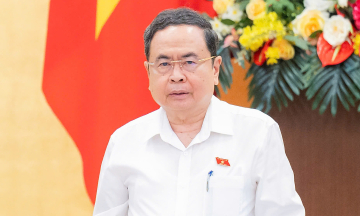
Ho Chi Minh City Party Secretary Tran Luu Quang addressing voters on the afternoon of 11/5. *Photo: An Phuong*
Beyond restricting high-rise buildings in the urban core, Ho Chi Minh City is also exploring models for reasonably priced commercial housing in areas further from the center. These are distinct from social housing or rent-to-own schemes, offering prices suitable for a segment of the population.
To encourage residents to relocate outside the city center, city leaders stated that Ho Chi Minh City will also heavily invest in connecting transportation systems to reduce travel times. Numerous major infrastructure projects are planned, including urban railway lines and a route connecting Thu Thiem with Long Thanh airport.
The policy to limit high-rise development in the city center has been a long-standing initiative for Ho Chi Minh City. Under the Housing Development Program for the 2021-2030 period, the city restricts new high-rise projects in seven old inner-city districts if technical and social infrastructure remains inadequate.
Since early this year, Ho Chi Minh City has also inventoried vacant or underutilized public land for conversion into parks, temporary flower gardens, and public spaces, particularly in many central land plots.
Le Tuyet