This was the reward after over two months of persistent camera trapping by a team of young officers, marking a milestone in wildlife conservation at Vietnam's first elephant sanctuary.
Trapping cameras in the forest
Before the Lunar New Year 2026, from 8/2 to 15/2, a task force from the Nature Conservation Department received deployment orders. The team included Nguyen Long Ban (28, team leader), Phan Thanh Vinh (32), Luong Thanh Nhuan (29), and six forest rangers from Que Lam Forest Protection Management Station. Their mission was to penetrate the core area of the sanctuary in Que Phuoc commune to establish an automated monitoring system. This system aimed to decipher the survival patterns of the elephant herd nine years after the establishment of the Elephant Species and Habitat Conservation Area.
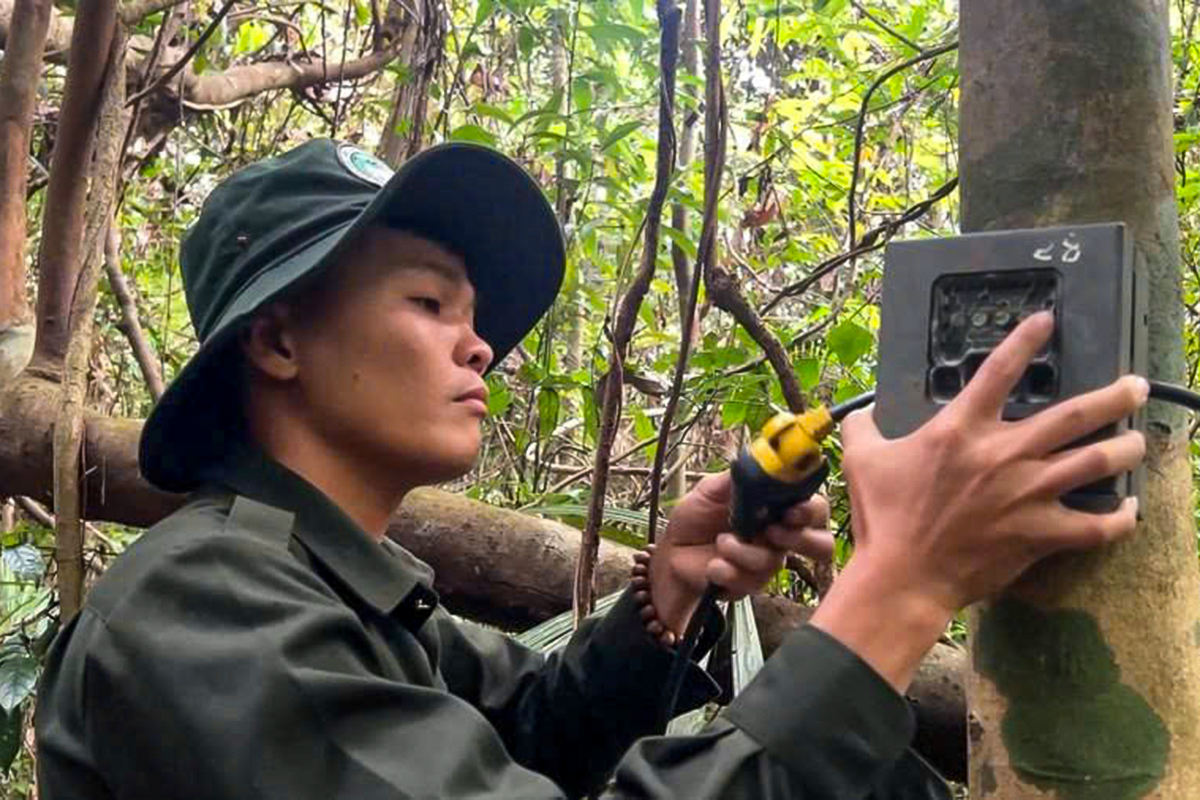 |
Long Ban sets up a camera trap that recorded the elephant herd in the sanctuary. Photo: NVCC |
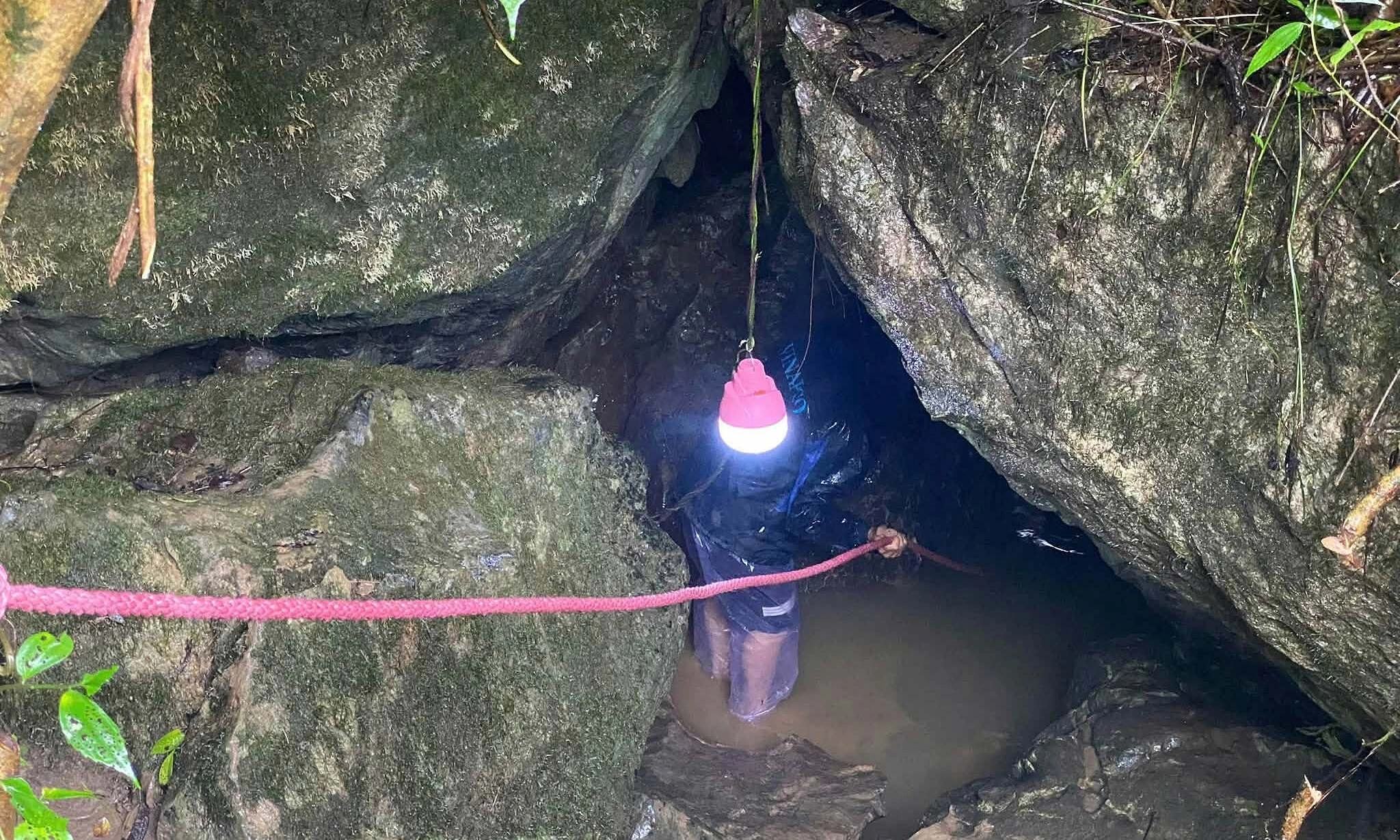
The expedition, lasting nearly ten days during the humid rainy season, required canvas hammocks, dried rations, satellite navigation devices, and 45 specialized automated camera traps, each valued at about 20 million VND. The rainy season in central Vietnam caused streams to swell, and dense leeches thrived beneath the lush vegetation. On some days, the team spent an entire day climbing hills and wading through streams just to reach a viable camera installation site.
To ensure safety from large, potentially dangerous animals, the team used their field skills: following deep footprints in the mud, broken branches, fresh droppings, or trails leading to water sources. The strict rule was to avoid direct confrontation; upon smelling the distinct strong odor or determining that elephants had recently passed, the team immediately retreated.
After more than one week in the forest, 45 camera traps were successfully positioned at 15 key locations, spread across three sub-zones. At each point, the team arranged a cluster of three devices at a height of 1,5-2 m: one camera dedicated to video recording and two cameras for multi-angle still photography to fully capture the movement corridor of wild animals.
Overwhelmed by the "eye of god"
After two months enduring harsh weather, the devices' batteries gradually depleted. In 4/2026, Long Ban's team spent another week traversing the forest to retrieve data. Thousands of gigabytes of raw images and videos were brought back to the station for decoding, creating an atmosphere of anticipation.
The footage captured by Long Ban's team proved to be the most valuable data. Under the early morning sun piercing through the primary forest canopy, nine elephants—the largest number ever recorded in the history of conservation here—appeared vividly in every detail.
Leading the group was a robust female elephant, her ears flapping rhythmically, her agile trunk deftly plucking young branches. Following closely was a calf, about 4-5 years old (with developed tear glands), diligently trailing its mother in search of food.
At the center of the herd, a calf just over one year old toddled along, wagging its tail, and curiously curling its trunk skyward directly in front of a camera trap. Bringing up the rear was a massive male elephant, with a broad chest and majestic white tusks.
"When we opened the file and saw the complete herd of elephants walking peacefully through the old forest, we hugged each other and cheered loudly with joy. All the fatigue from two months of wading through streams, climbing hills, and battling mosquitoes vanished," Long Ban recalled with emotion.
According to him, the complete herd structure, including a male, a female, and successive generations of calves, is the most vivid proof that the population is adapting and reproducing very well naturally.
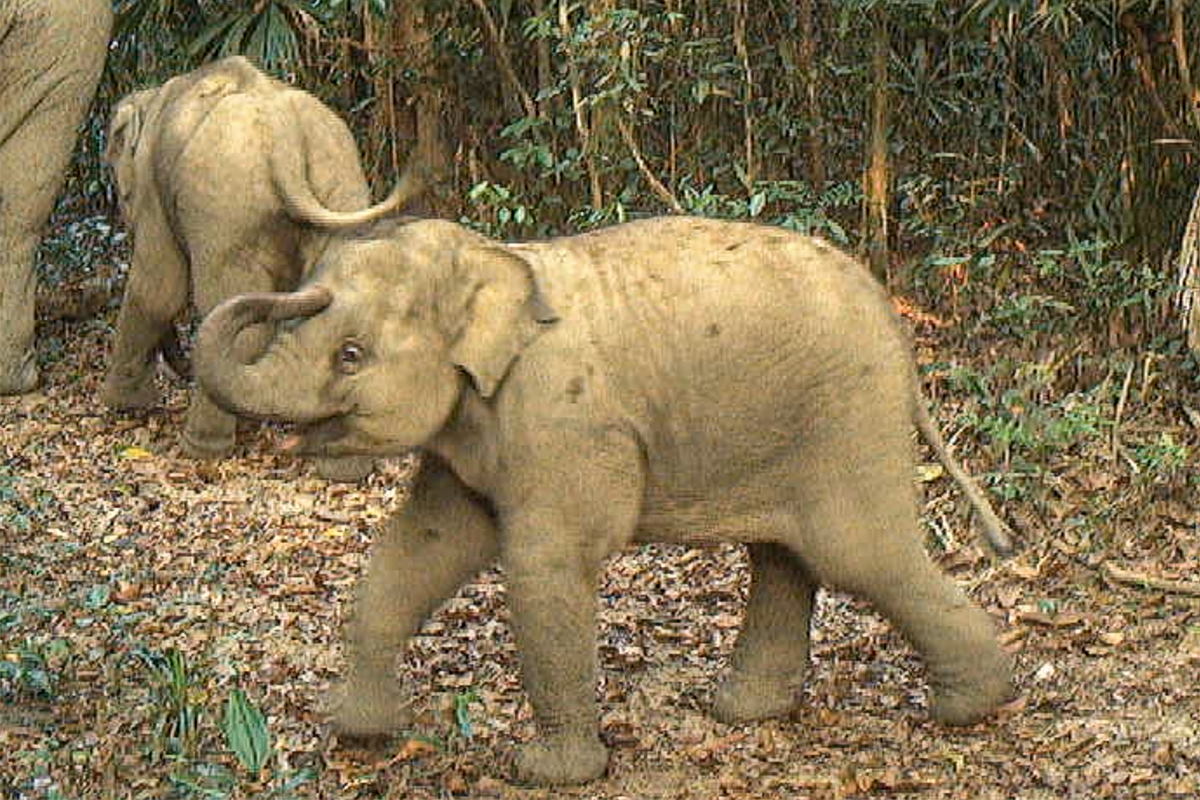 |
Image of a playful elephant calf in front of a camera trap. |
In addition to the rare Asian elephant herd, this round of camera traps also recorded the presence of numerous valuable species listed in the Red Book, such as the large-antlered muntjac, Truong Son muntjac, sambar deer, serow, white-eared pheasant, and peacock pheasant.
Resolving conflict, preserving the wild's footsteps
The Elephant Species and Habitat Conservation Area was established in 2017, covering nearly 19.000 ha (within the former Que Son district, specifically Phuoc Ninh and Que Lam communes). During 2017–2020, the elephant herd repeatedly encroached on Cam La village, Que Lam commune, seeking food, destroying crops, breaking domestic water pipes, and approaching homes, igniting conflicts with residents.
To maintain peace for both people and elephants, a fundamental solution was implemented: along the 13,5 km boundary between the elephant habitat and agricultural land, authorities collaborated with the US Forest Service to plant a 7 km green fence using thorny honey locust trees (covering 30 ha), while the remaining 6,5 km maintained its natural forest state. The thorny fence prevents elephants from crossing the boundary. This, combined with public awareness campaigns, helps residents understand elephant behavior, abandon violent deterrents, and participate in forest protection.
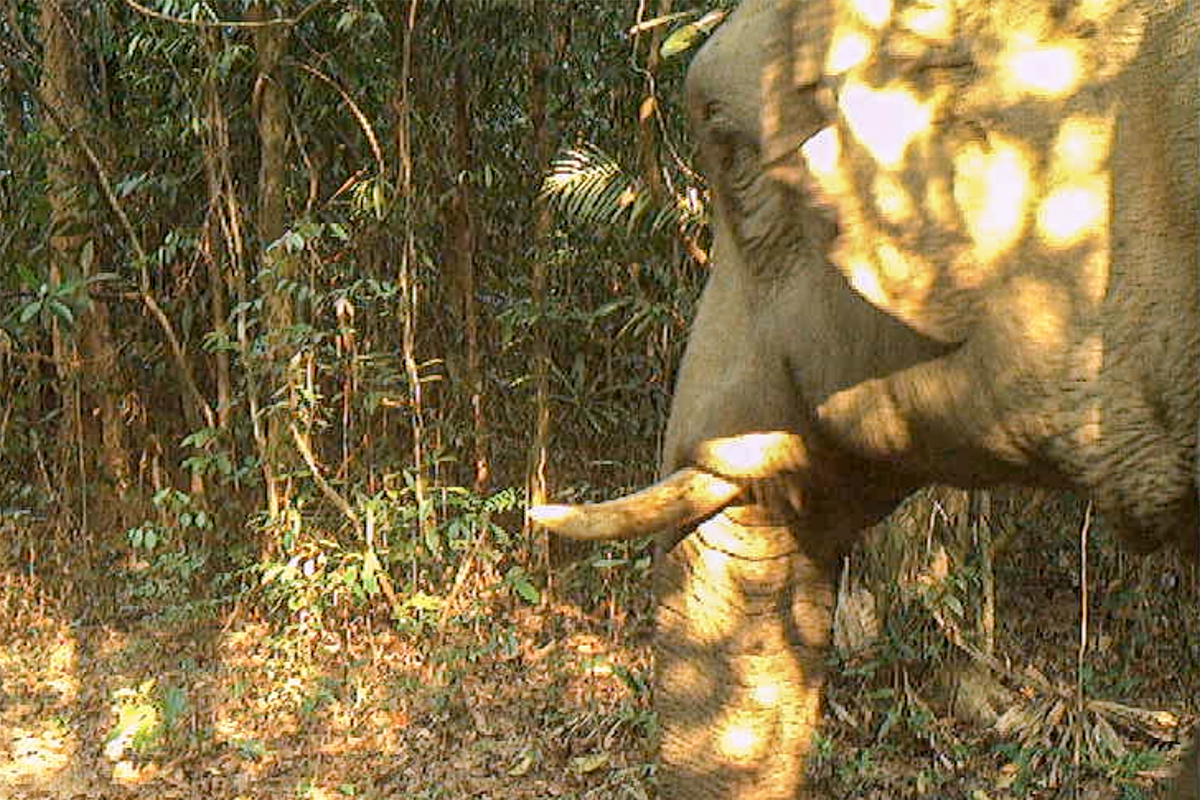 |
The elephant herd includes a male with white tusks, showing a complete herd structure. Photo: Screenshot from video |
Le Hoang Son, Director of the Da Nang Special-Use Forest Management Board, affirmed that the appearance of a nine-elephant herd with all generations is clear evidence of a strong recovery in the herd's structure. "The elephants' successful natural reproduction confirms the effectiveness of habitat management and the persistent human-elephant conflict mitigation measures over the past years," he stated.
After the merger of Quang Nam and Da Nang City, the total natural forest area of the entire city reached about 5.000 km2 (accounting for nearly 43% of the area). Along with Son Tra Peninsula, Ba Na - Nui Chua, and Cu Lao Cham, the Elephant Species and Habitat Conservation Area serves as a crucial ecological link, home to over 215 species of terrestrial vertebrates.
According to the Da Nang Special-Use Forest Management Board, the simultaneous application of grid-based camera trapping, unmanned aerial vehicles, and SMART software is enhancing the effectiveness of biodiversity monitoring and forest patrols. Data from these silent "eyes of god" not only helps accurately identify the distribution and behavior of rare animal species to adjust patrol routes but also provides a scientific basis for authorities to promptly detect and dismantle illegal camps and wild animal traps, thereby protecting natural habitats.
Nguyen Dong