 |
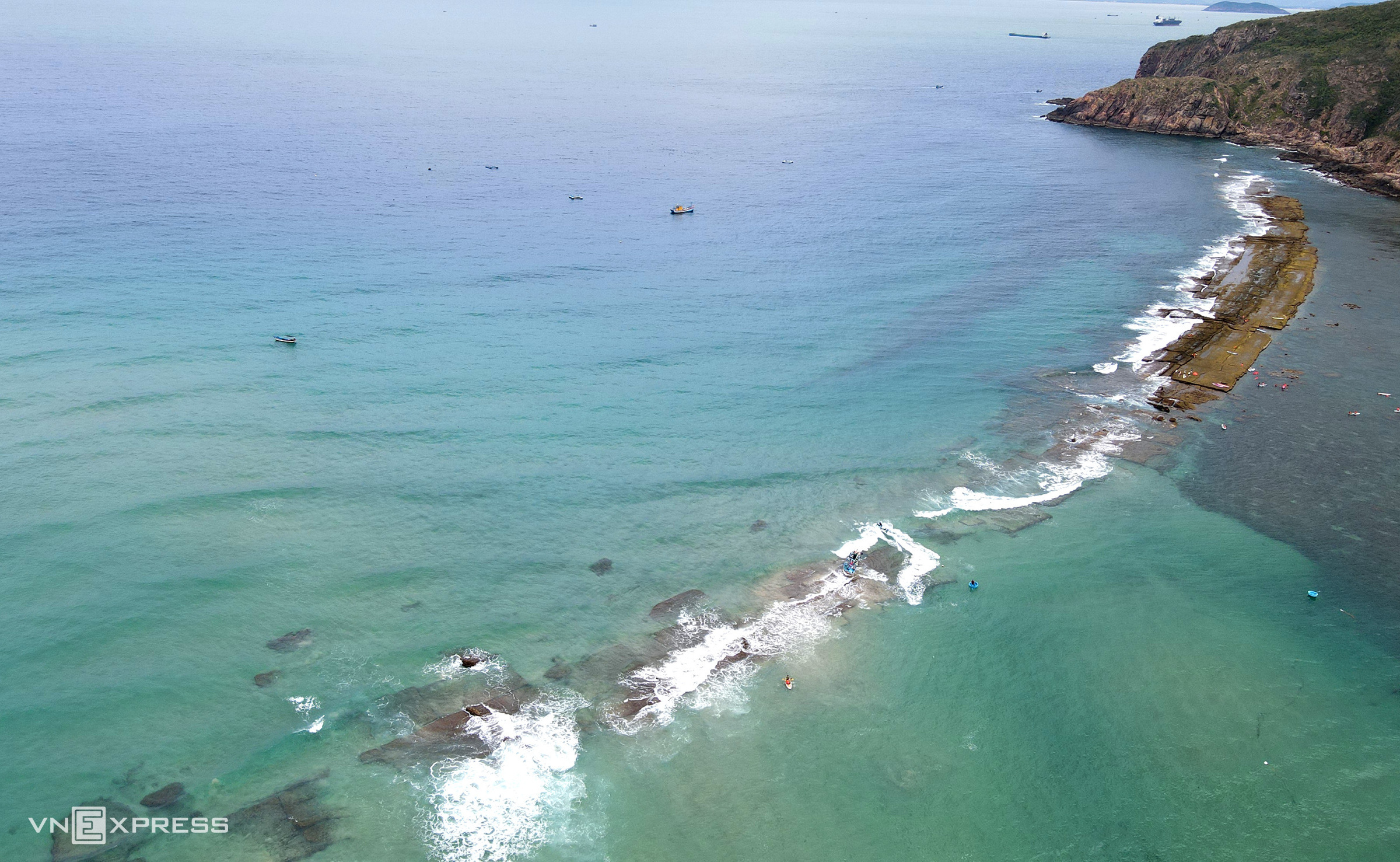
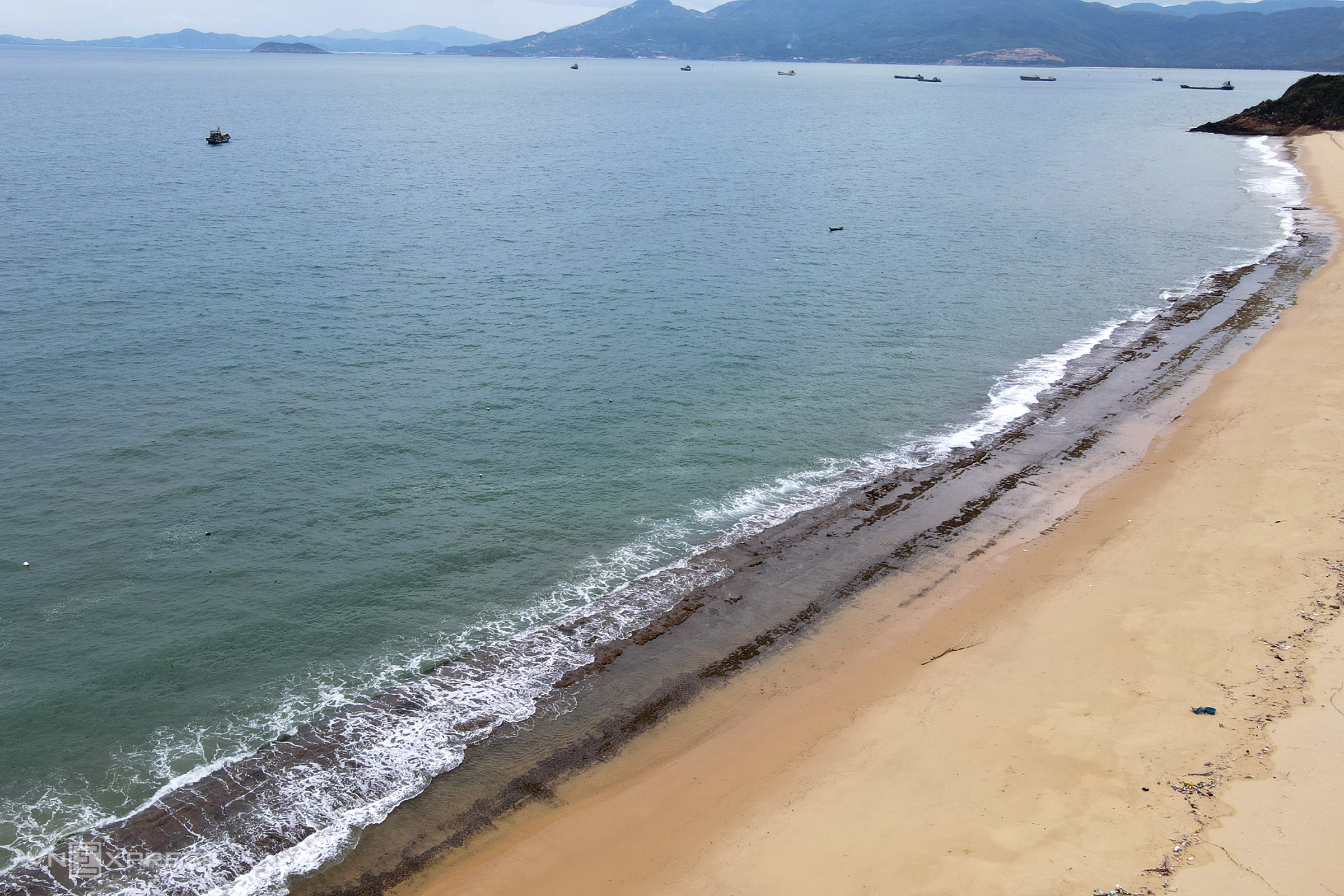
The rock formation beneath Nhon Hai sea, in Nam Hai village (Quy Nhon Dong ward), extends for approximately 1,5 km from Ganh Duoi to Hon Kho island. It appears above the surface when the tide recedes in the afternoon, typically between the 15th and 18th of the lunar month.
Local residents refer to this formation as Bo Dap. When the tide is lowest, the top of the rock formation emerges, measuring about 40 m to 60 m wide, with its highest point nearly 10 m above the seabed.
The Bo Dap formation features numerous natural transverse fissures. At both ends, the rock formation opens into gaps about 50 m wide, which local fishermen currently use as passages for boats entering and exiting the harbor.
Analysis of mollusk samples from the surface sediment layer indicates that this area was accreted between approximately 1,000 BCE and 700 CE. Based on this data, the research team hypothesizes that residents of the Sa Huynh - Champa culture may have utilized these natural rock formations as anchorages and storm shelters for their boats.
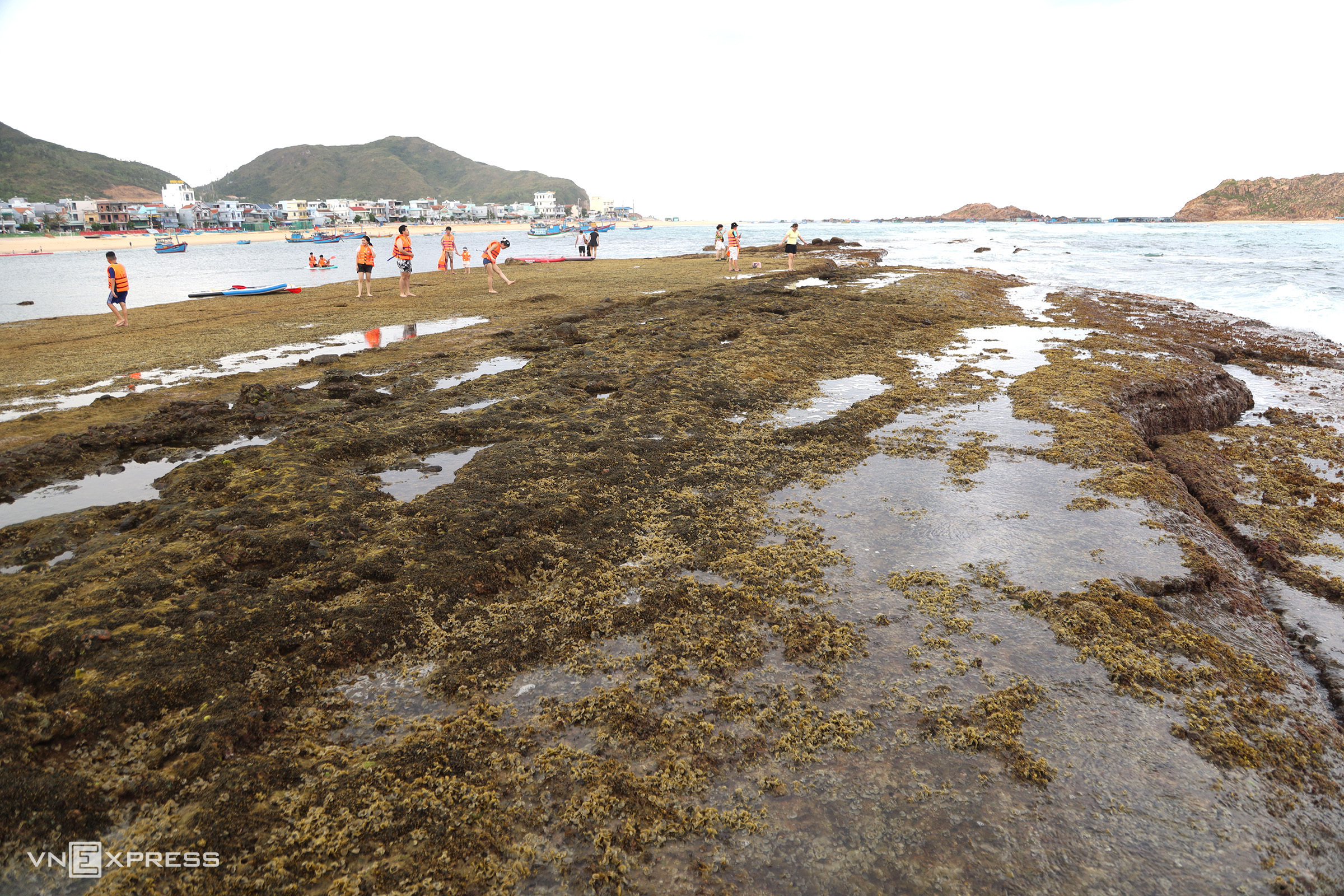 |
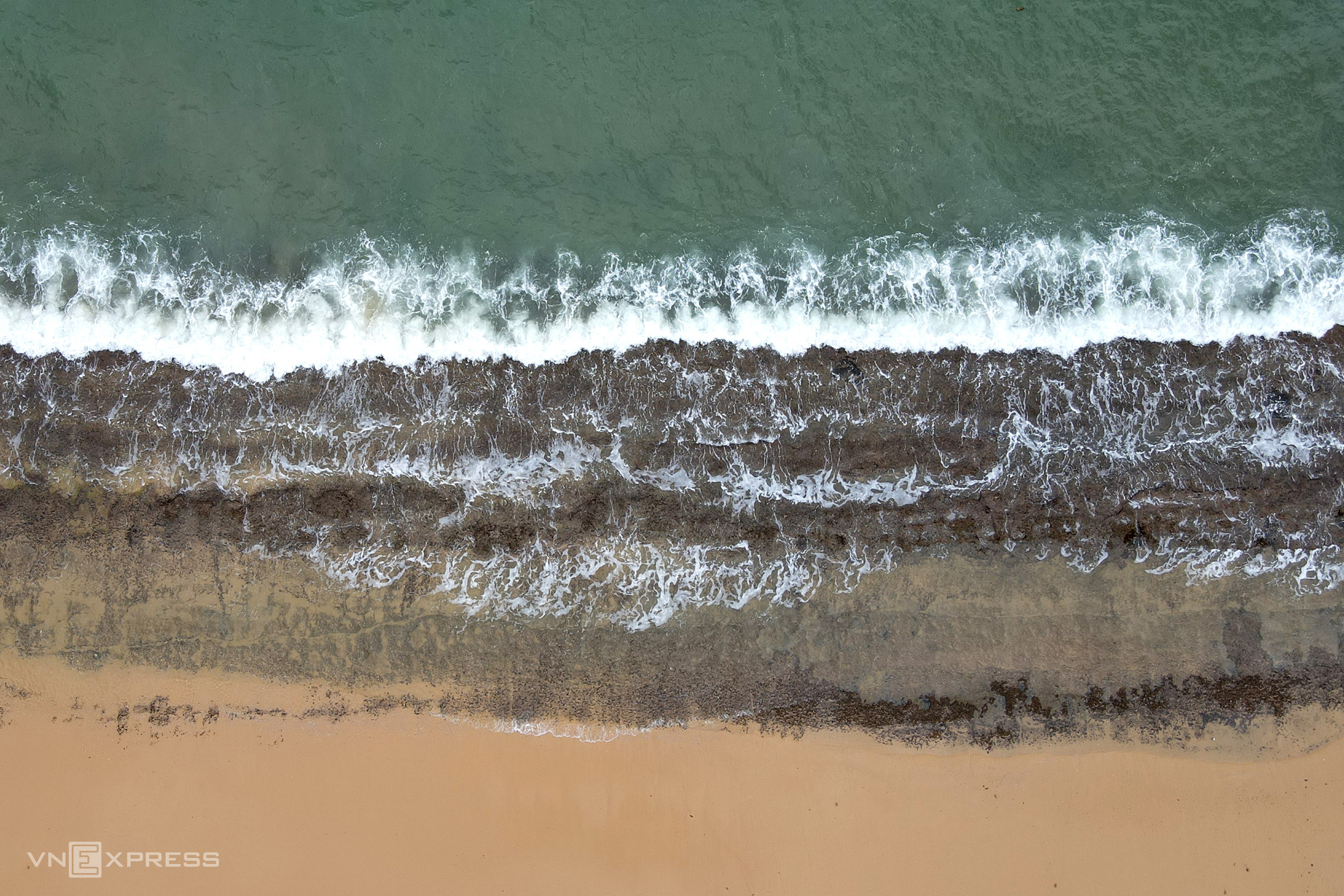
Rocks of various sizes are arranged in a long formation, with a relatively flat upper surface covered in algae, oysters, mussels, and other mollusks.
Tourists take advantage of the low tide to paddle SUPs and basket boats to the rock formation for photos and coral viewing.
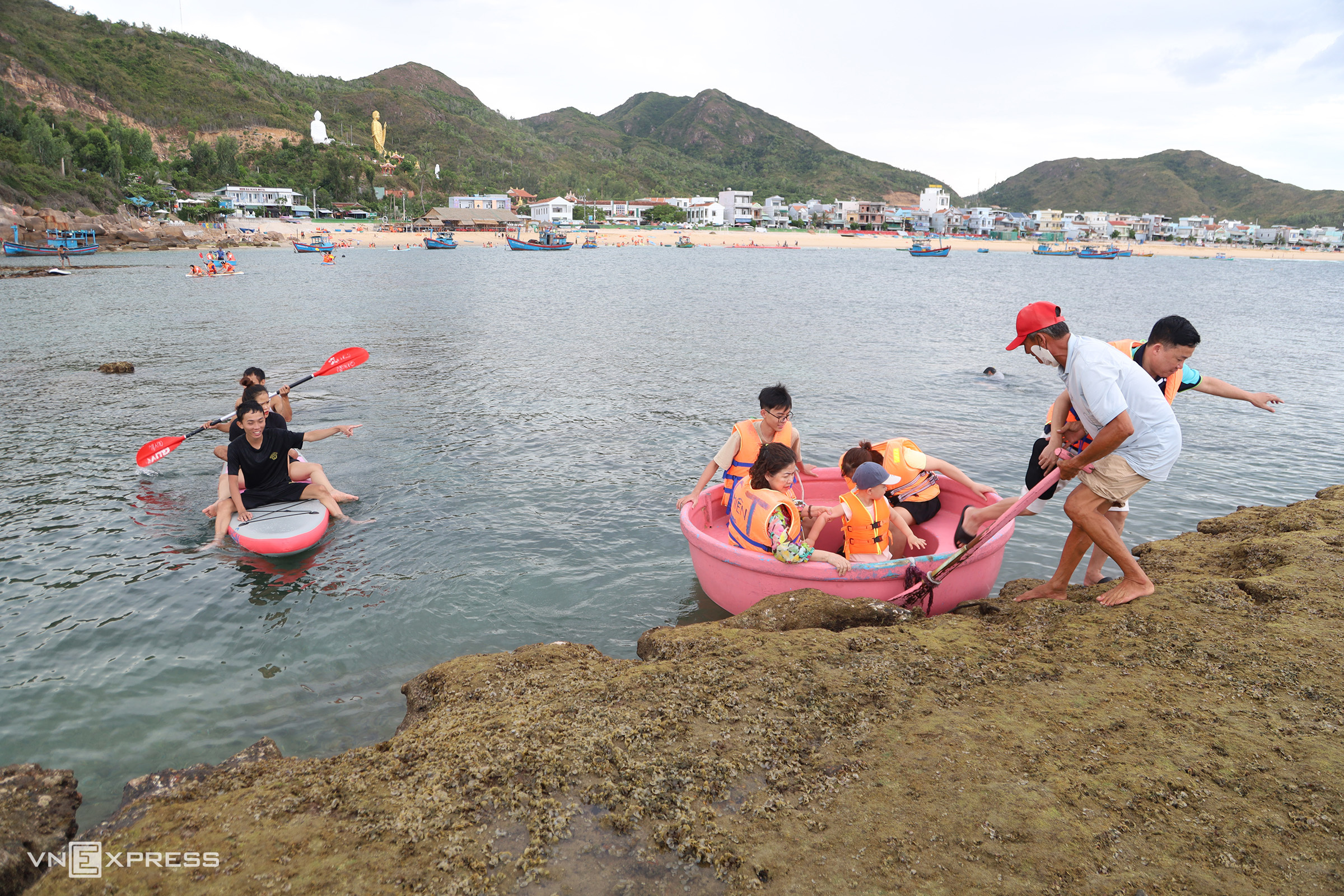 |
Many tourists take photos and stroll on the 'wall' when the tide recedes.
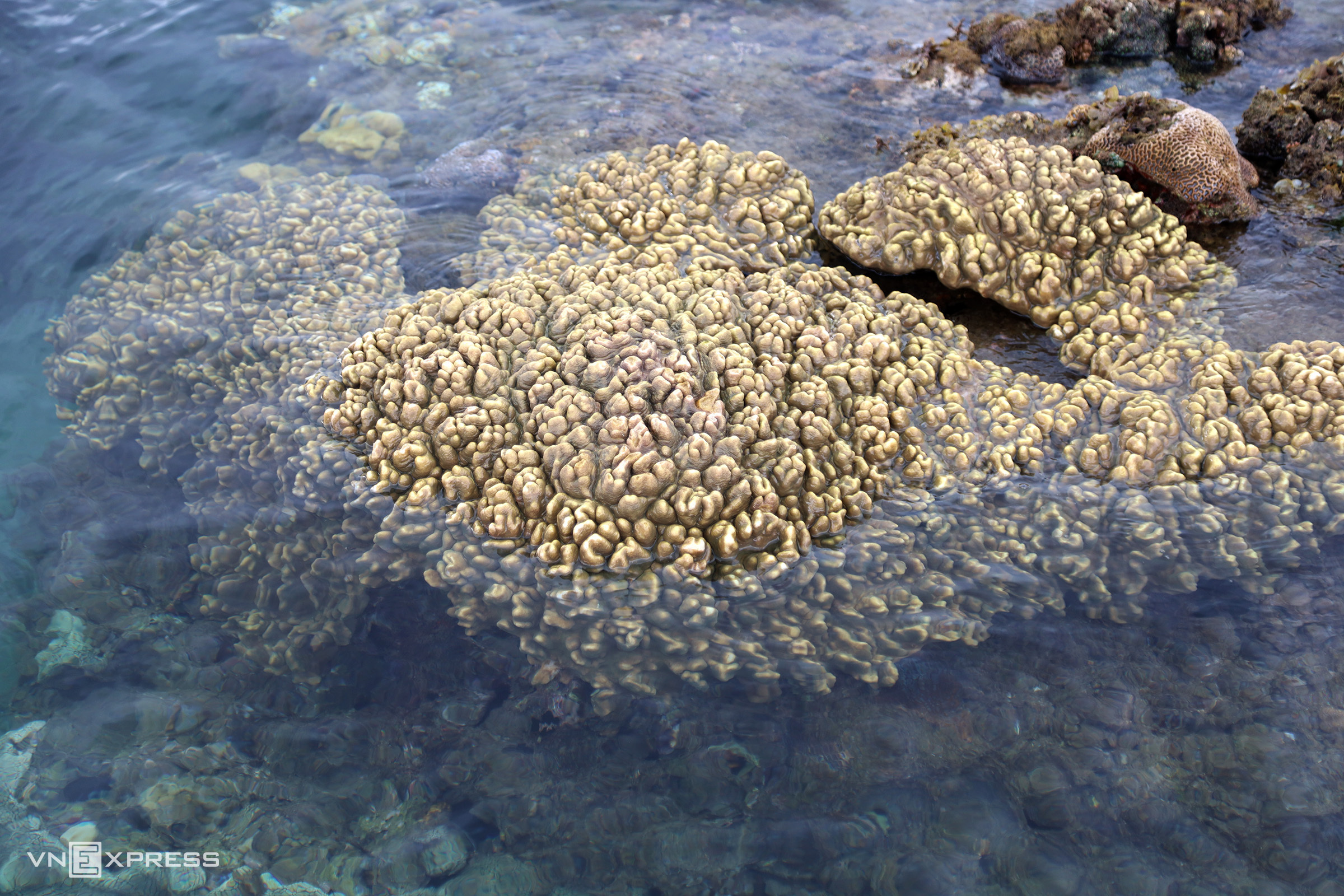
Coral next to the rock formation. Nguyen Duy Phuong from Pleiku ward stated that this was his first time visiting Nhon Hai beach with relatives to see the unique 'sea wall' and impressive coral reef.
 |
 |
About one km from Bo Dap is the Ran Cau rock formation, located in the Hai Giang area. This formation is approximately 3 km long and 3-4 m wide, extending from Mui Thap to the Ngoi area.
 |
Bui Tinh, director of the Gia Lai Provincial Museum, stated that Bo Dap and Ran Cau have been included in the provincial People's Committee's inventory of relics. According to Tinh, to determine if these two rock formations are artificial structures, further archaeological excavations, geological and material studies, dating, and assessments of their function and purpose are necessary. Without sufficient scientific evidence, it cannot be confirmed whether they are archaeological relics or merely natural geological phenomena.
In 2024, the Gia Lai Provincial Museum, in collaboration with the Vietnam Institute of Archaeology and local authorities, conducted initial field surveys at Bo Dap and Ran Cau. Initial results suggest that the two rock formations were primarily formed by the sedimentation process in the marine environment over various periods. Layers of sand, marine organisms, and sediment gradually accumulated to create their current structure.
The Gia Lai Provincial Museum will continue to collaborate with the Vietnam Institute of Archaeology and the Center for Imperial Citadel Studies for more in-depth surveys in the future.
Tran Hoa