Thuong Phuc is one of 11 communes within the Hanoi International Sports City project's scope. Tran Ngoc Tuan, Vice Chairman of the commune's People's Committee, identified the primary challenge: assisting residents in transitioning to sustainable livelihoods following changes in their traditional production methods.
Local leaders view Vingroup's extensive local recruitment program as highly practical for the area. Tuan noted that this initiative not only creates immediate employment opportunities for residents but also significantly eases the burden on the local administration regarding vocational training, connecting businesses, and job placement after land reclamation.
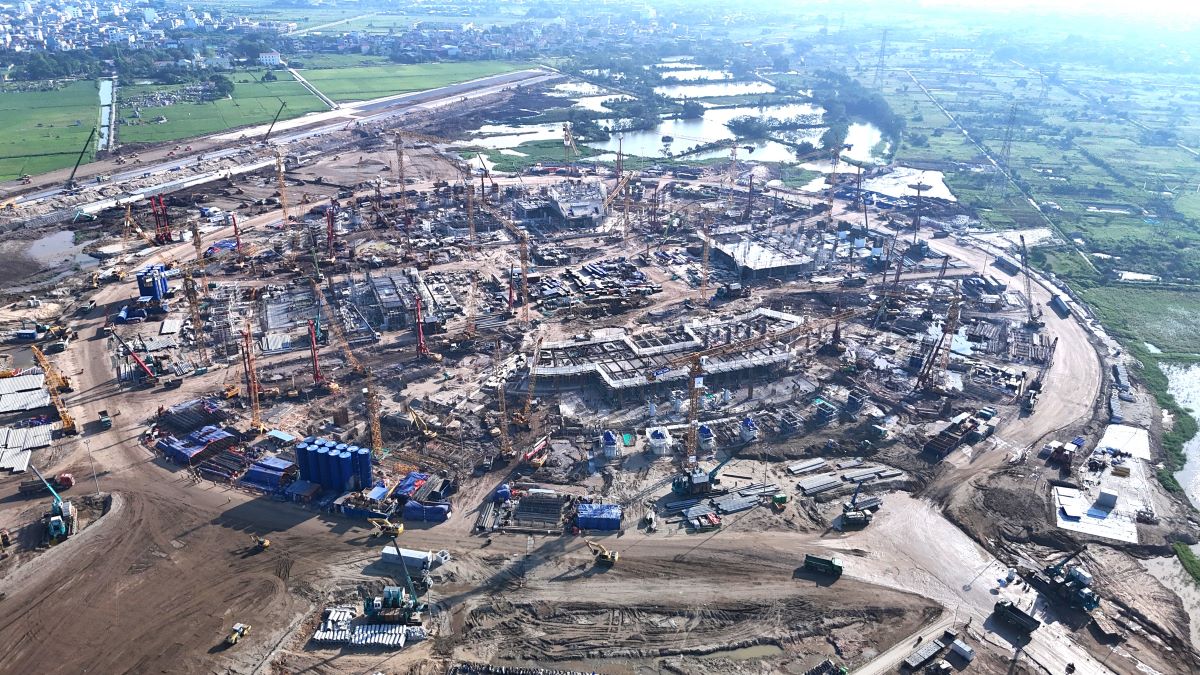 |
The Hung Vuong Stadium construction site mobilizes over 6,000 workers, over 500 engineers and staff, and nearly 1,000 pieces of machinery. Photo: Vingroup |
The Hung Vuong Stadium construction site mobilizes over 6,000 workers, over 500 engineers and staff, and nearly 1,000 pieces of machinery. Photo: Vingroup
Residents can now access employment in new sectors such as services, trade, and urban operations. This facilitates their adaptation to new development conditions, especially as traditional land use and livelihoods evolve. This shift is vital for development, serving as a foundation for improving residents' income and quality of life in the future.
Consequently, residents no longer need to seek employment far from home, allowing them to remain connected with their families and communities, embodying the spirit of "leaving the farm but not the homeland". This policy gradually enhances the quality of life for residents, fosters more stable communities, and strengthens social consensus.
"This policy builds trust, increases public consensus, and aims for sustainable development, harmonizing the interests of businesses, the State, and residents", Tuan stated.
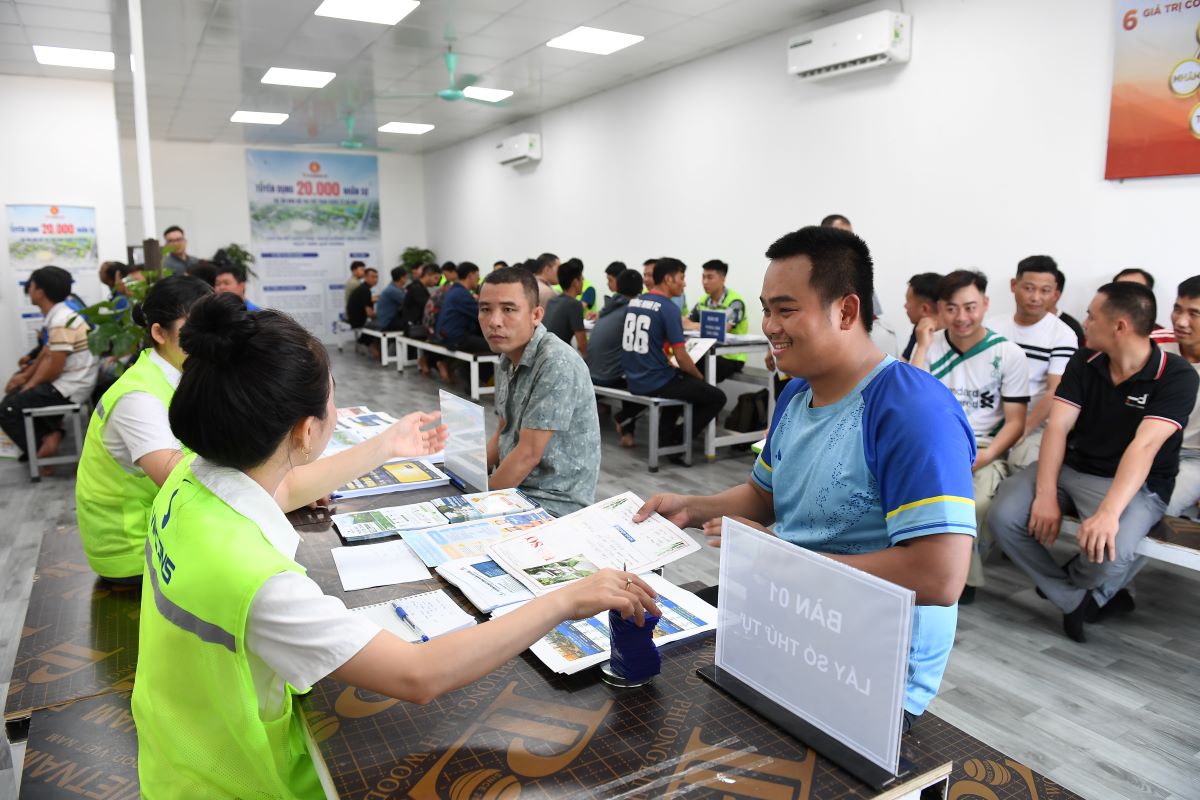 |
Workers register for recruitment. Photo: Vingroup |
Workers register for recruitment. Photo: Vingroup
Khuc Thanh Dat, a resident of Thuong Phuc commune, previously worked as a tailor and seller of ao dai in the local craft village. His income, however, was seasonal and inconsistent. Three months ago, he secured a position as a traffic coordinator at the construction site, which provides a higher, more stable income while allowing him to work in his hometown.
"With my current salary, I hope to save some capital for the future, for getting married and renovating my house", said the young man, born in 2003.
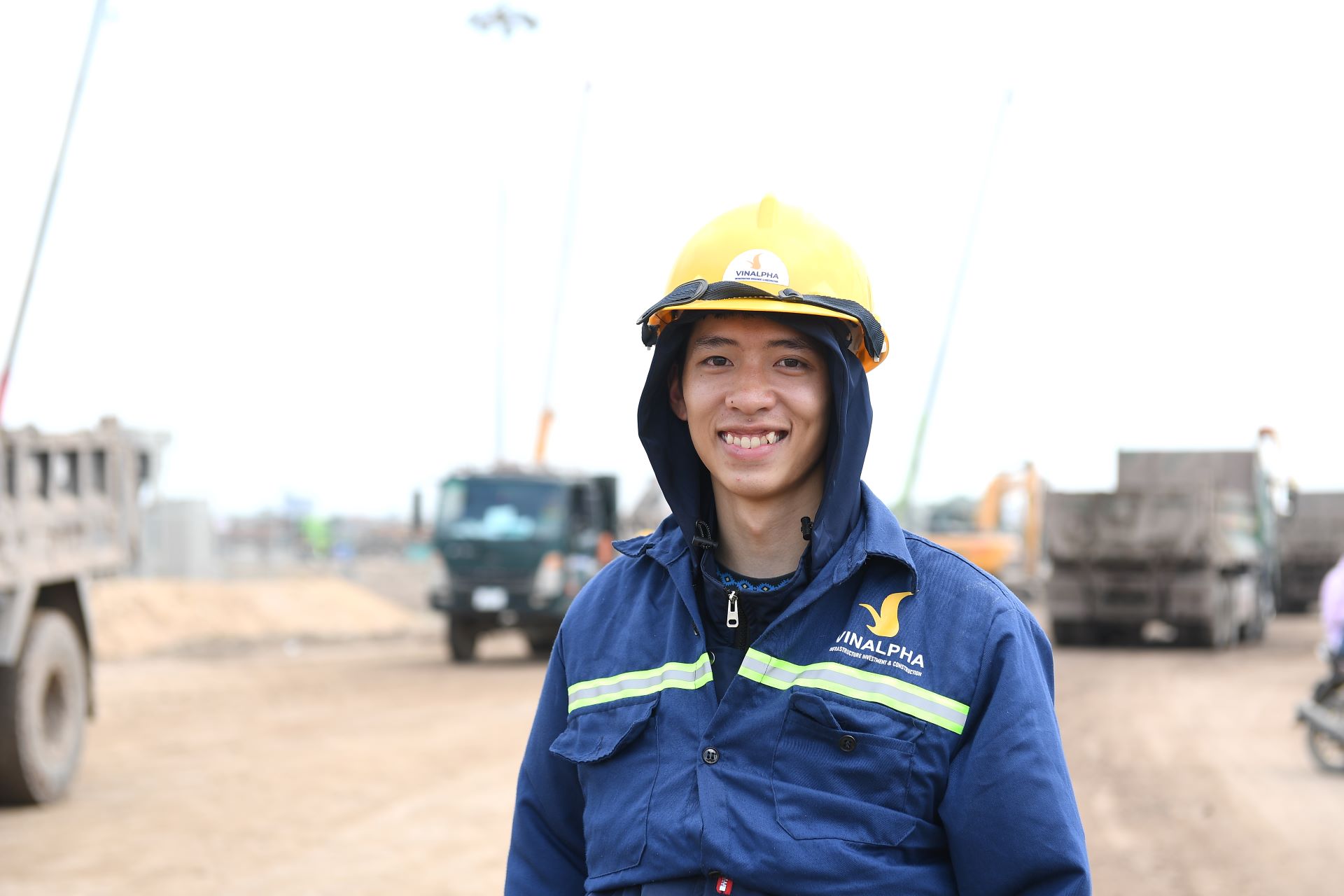 |
Khuc Thanh Dat works at the project. Photo: Vingroup |
Khuc Thanh Dat works at the project. Photo: Vingroup
Nguyen Van Khien, Head of Phuc Trai village in Thuong Phuc commune, also noted that local residents previously engaged only in seasonal occupations such as agriculture, auxiliary construction work, selling vegetables in the city, and informal trading.
"Now, the community has employment directly generated by the Hanoi International Sports City project. Residents have stable incomes, ensuring long-term financial security, which in turn guarantees social welfare and order in the locality", Khien said.
After 5 months of construction, the Hung Vuong Stadium project has completed all site leveling, 100% of the main structural piling, and approximately 80% of its internal and connecting roads.
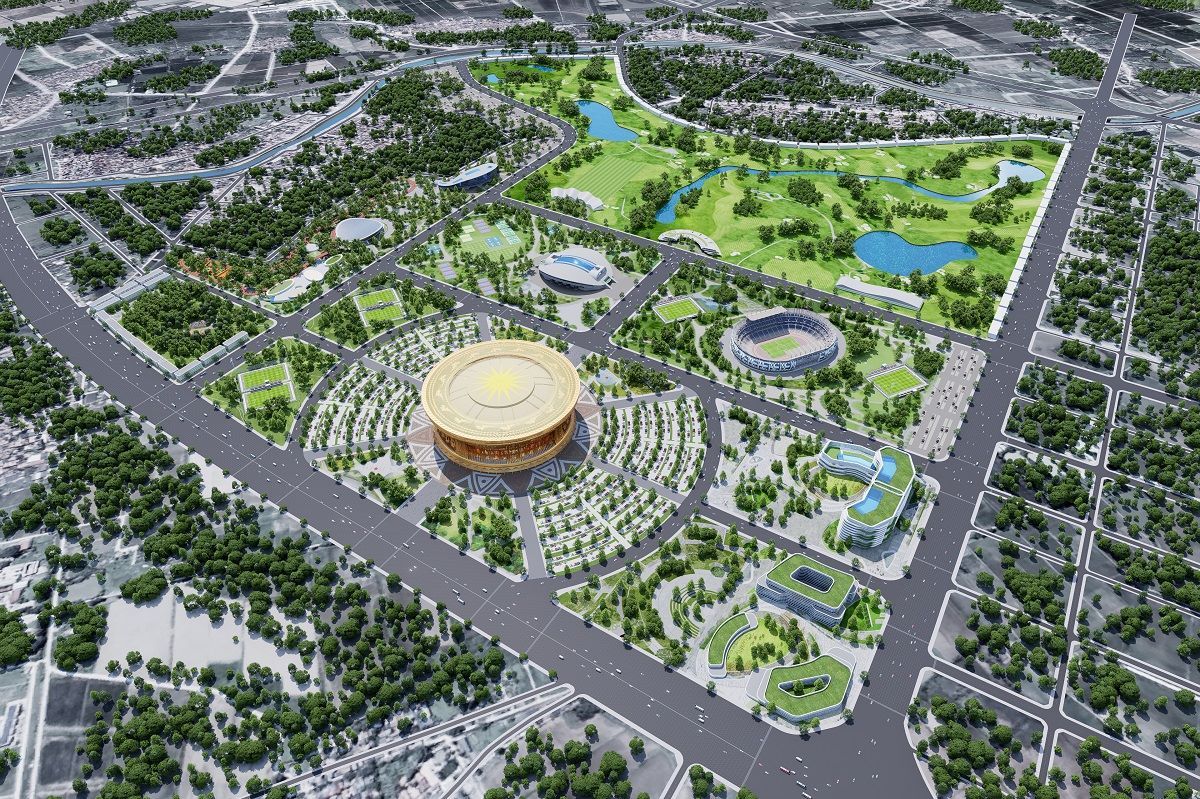 |
Perspective of the Hung Vuong Stadium project. Photo: Vingroup |
Perspective of the Hung Vuong Stadium project. Photo: Vingroup
The 135,000-seat stadium is expected to be completed by 7/2027. Vingroup's project also aims to set a world record for the fastest construction time, at 20 months. This timeline is significantly shorter than the nearly 5 years it took to build India's Narendra Modi Stadium, the world's largest with a capacity of 132,000 people.
Nhat Le