On 16/7, the Ninh Binh Provincial People's Committee organized an international workshop to assess the outstanding universal values and guide the development of a World Heritage nomination dossier for the Van Long - Kim Bang - Tam Chuc white-rumped langur ecological and cultural landscape. The workshop brought together numerous domestic and international experts and scientists to establish a scientific basis, roadmap, and direction for the dossier, aiming for long-term conservation of this unique ecological and cultural space in Vietnam.
According to experts, the Van Long - Kim Bang - Tam Chuc area boasts many outstanding values related to tropical karst geomorphology, biodiversity, archaeology, history, and culture. Critically, it is home to the white-rumped langur population—a critically endangered endemic primate species vital for global biodiversity conservation.
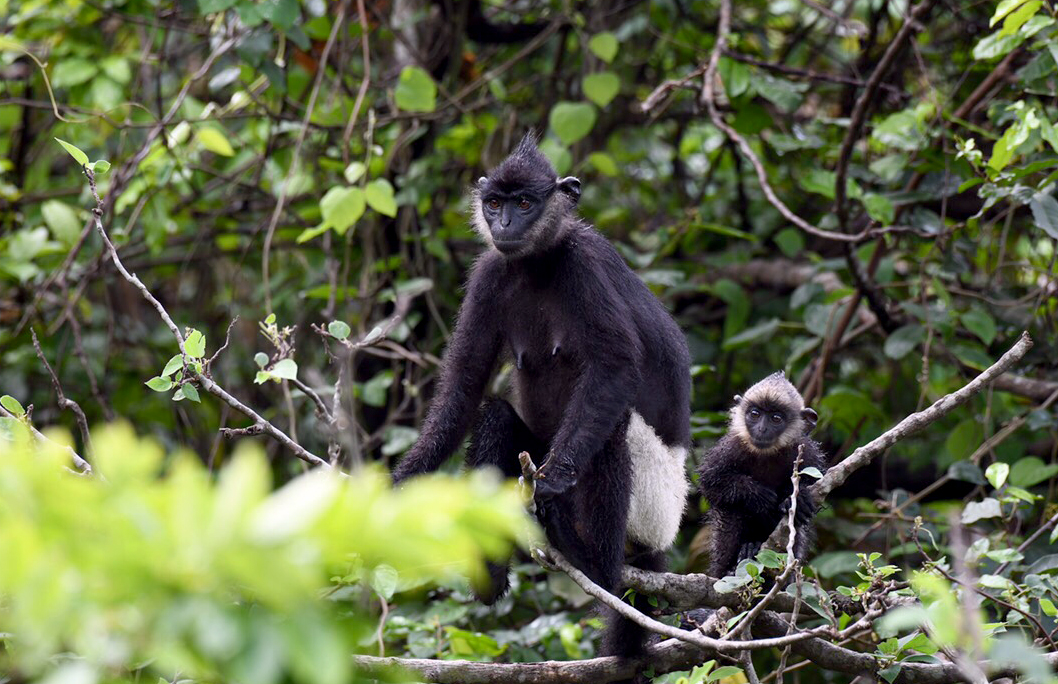 |
A pair of white-rumped langurs at Van Long wetland. Photo: Lam Son
Associate Professor Dr. Tran Tan Van, former Director of the Institute of Geological Sciences and Mineral Resources, stated that the dossier preparation process has achieved significant initial results. Experts completed a summary report to include the area in UNESCO's Tentative List on schedule, establishing a legal premise for subsequent steps.
The domestic expert team conducted studies to build scientific arguments for UNESCO's criteria, completing the initial content of the nomination dossier and a heritage management plan. Concurrently, international experts participated in identifying the nature, boundaries, and integrity of the heritage site, and supported drafting the preliminary assessment requirements in accordance with UNESCO regulations.
According to Associate Professor Dr. Tran Tan Van, the dossier development process still requires further agreement on several aspects: the nature of the heritage, the scope of protection boundaries, the nomination roadmap, and legal and technical requirements.
At the workshop, scientists also announced additional results from pre-protohistoric archaeological surveys and research on documentary heritage systems in communal houses, temples, and pagodas within the region. These findings further strengthen the scientific basis for the nomination dossier.
Tran Song Tung, Standing Vice Chairman of the Ninh Binh Provincial People's Committee, noted that after the area was included in UNESCO's Tentative List for nomination, numerous in-depth surveys, investigations, and research programs were implemented with the participation of leading scientists from Vietnam and abroad.
"Initial results continue to affirm this space's special value in geology, geomorphology, biodiversity, archaeology, history, and culture. Furthermore, it is home to a white-rumped langur population of particular importance for global biodiversity conservation," Tung said.
Ninh Binh's goal is not only to complete the World Heritage nomination dossier but also to establish an effective heritage management model. This model will ensure harmony between nature conservation, biodiversity preservation, cultural value promotion, and sustainable development.
Ninh Binh province commits to continuing collaboration with relevant ministries, sectors, international organizations, and experts to finalize the dossier according to UNESCO standards. Concurrently, the province will increase investment in biodiversity conservation, karst landscape protection, and heritage management capacity building.
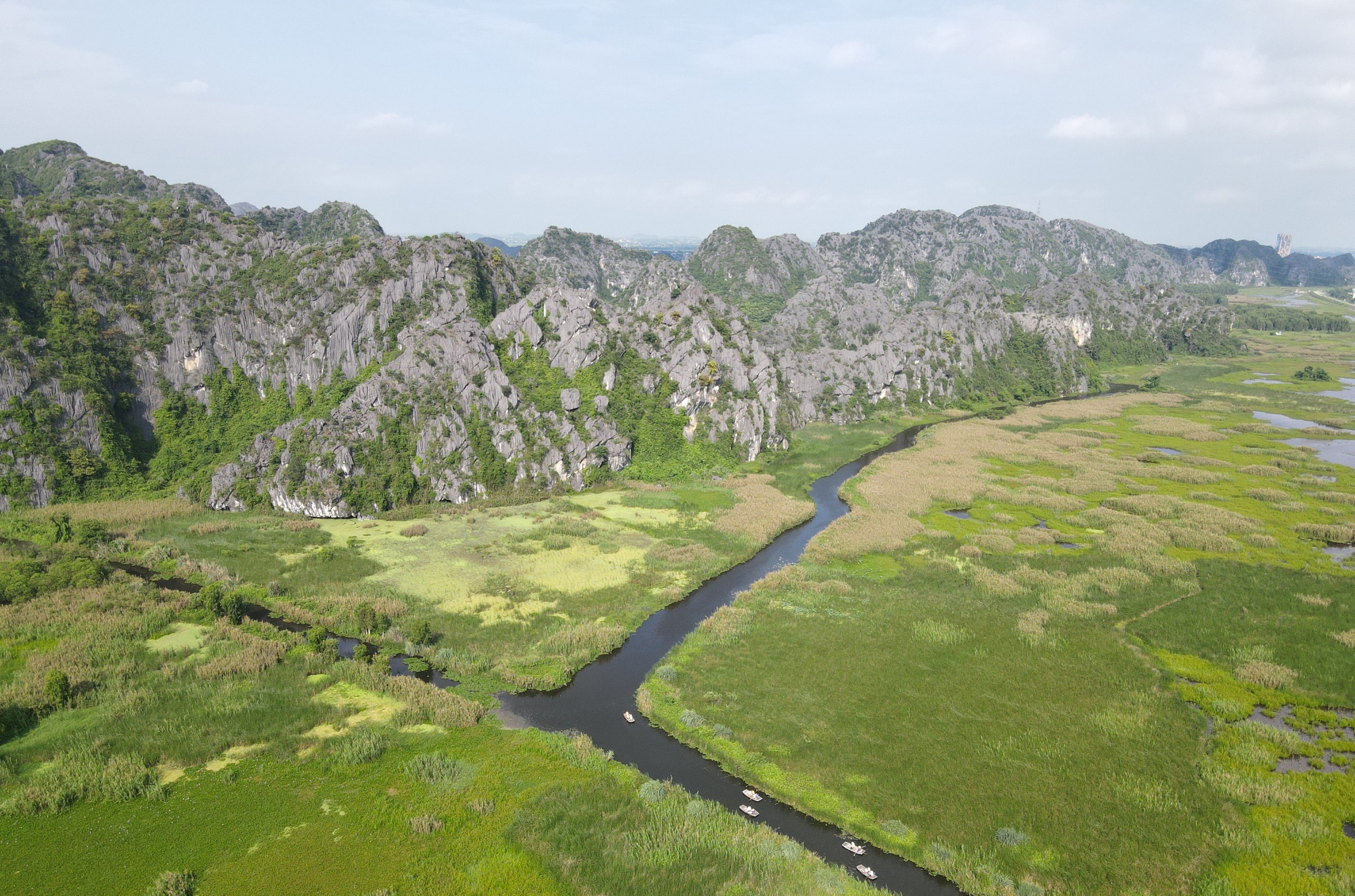 |
Van Long wetland, habitat of the white-rumped langur population. Photo: Le Hoang
The Van Long - Kim Bang - Tam Chuc complex is home to approximately 370-400 white-rumped langurs, accounting for more than 90% of the wild population. Of these, the Van Long Wetland Nature Reserve has about 250-300 individuals, while the Kim Bang limestone mountain area (formerly Ha Nam), adjacent to Tam Chuc, hosts about 120-150 individuals.
Studies indicate that white-rumped langurs were once widely distributed in the Northern and North Central regions but declined severely due to hunting and stone quarrying. In the early 2000s, Van Long had only about 40 individuals.
After two decades of strict conservation with the participation of domestic agencies and international organizations, the species' population has recovered robustly. This is considered one of the most successful primate conservation models globally, serving as a critical basis for Ninh Binh to develop its UNESCO nomination dossier for the Van Long - Kim Bang - Tam Chuc heritage space.
Le Hoang