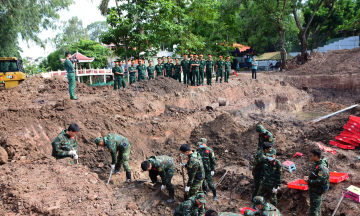
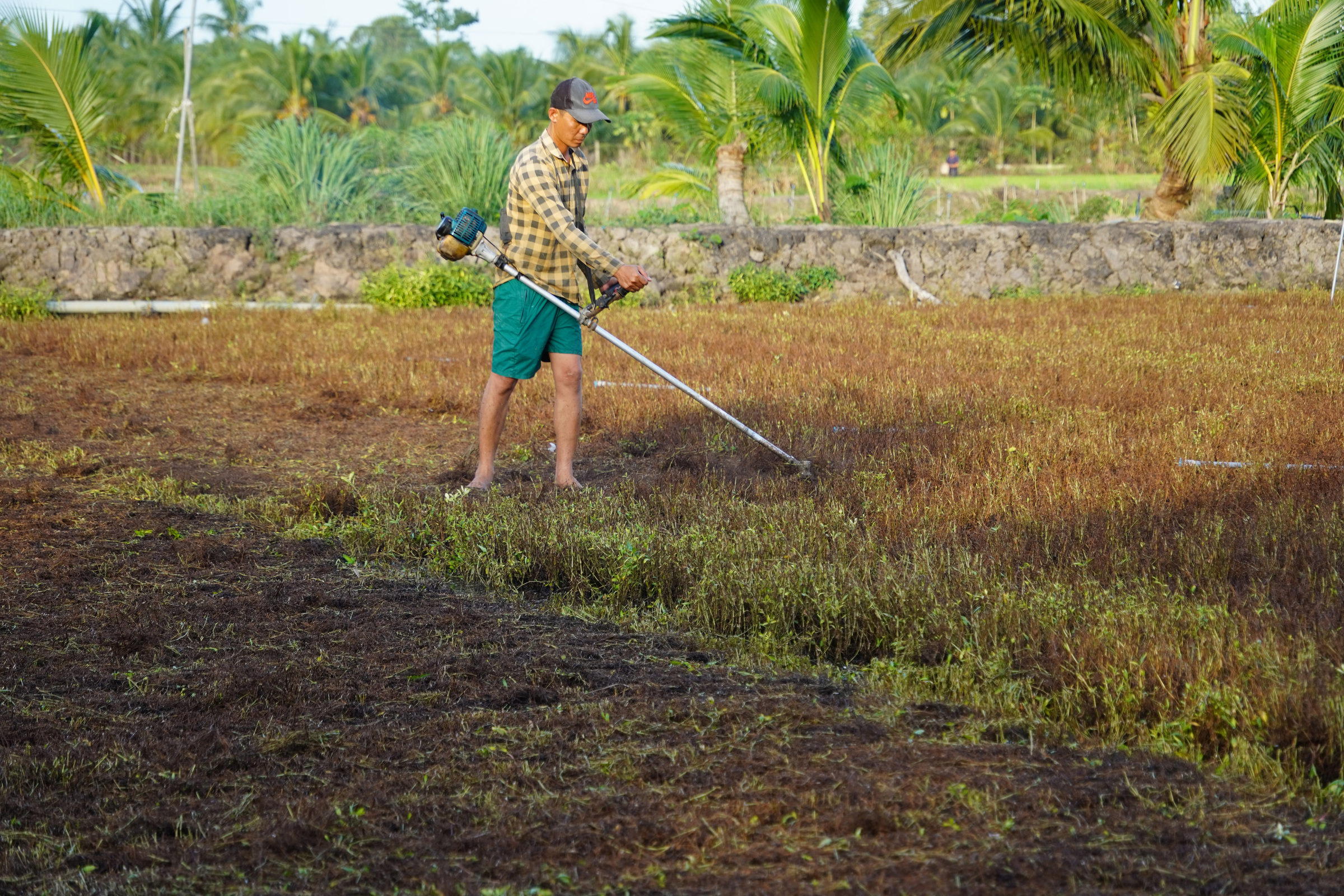
On the afternoon of 16/7, Dang Hoang Quan, 49 years old, residing in Trung hamlet, Long Dinh commune, hired workers to clear 9,000 m2 of withered perilla and rice paddy herb that had been dying for a week. This was in preparation for planting a new crop.
 |
Workers using machines to clear withered rice paddy herb. Photo: Hoang Nam |
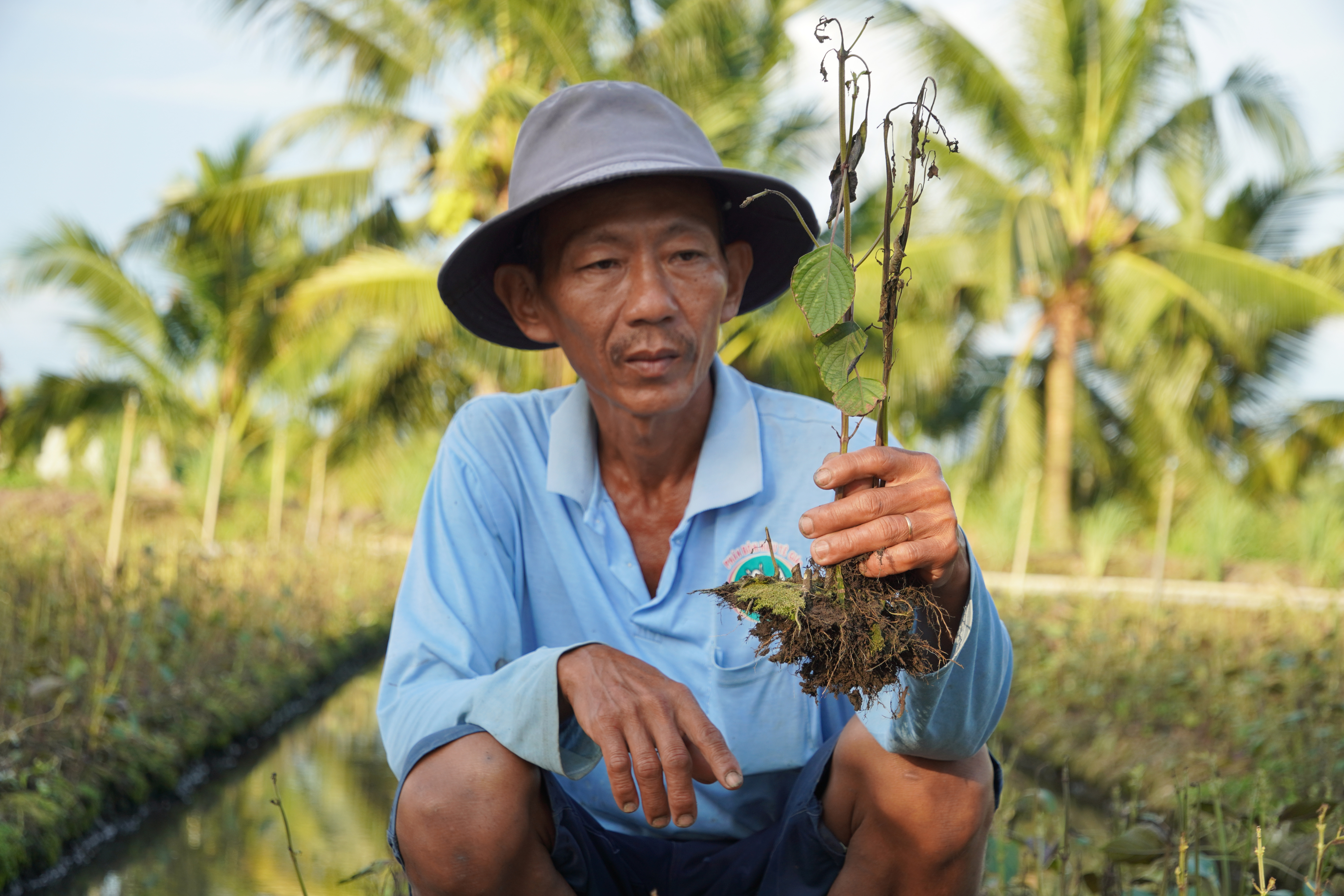
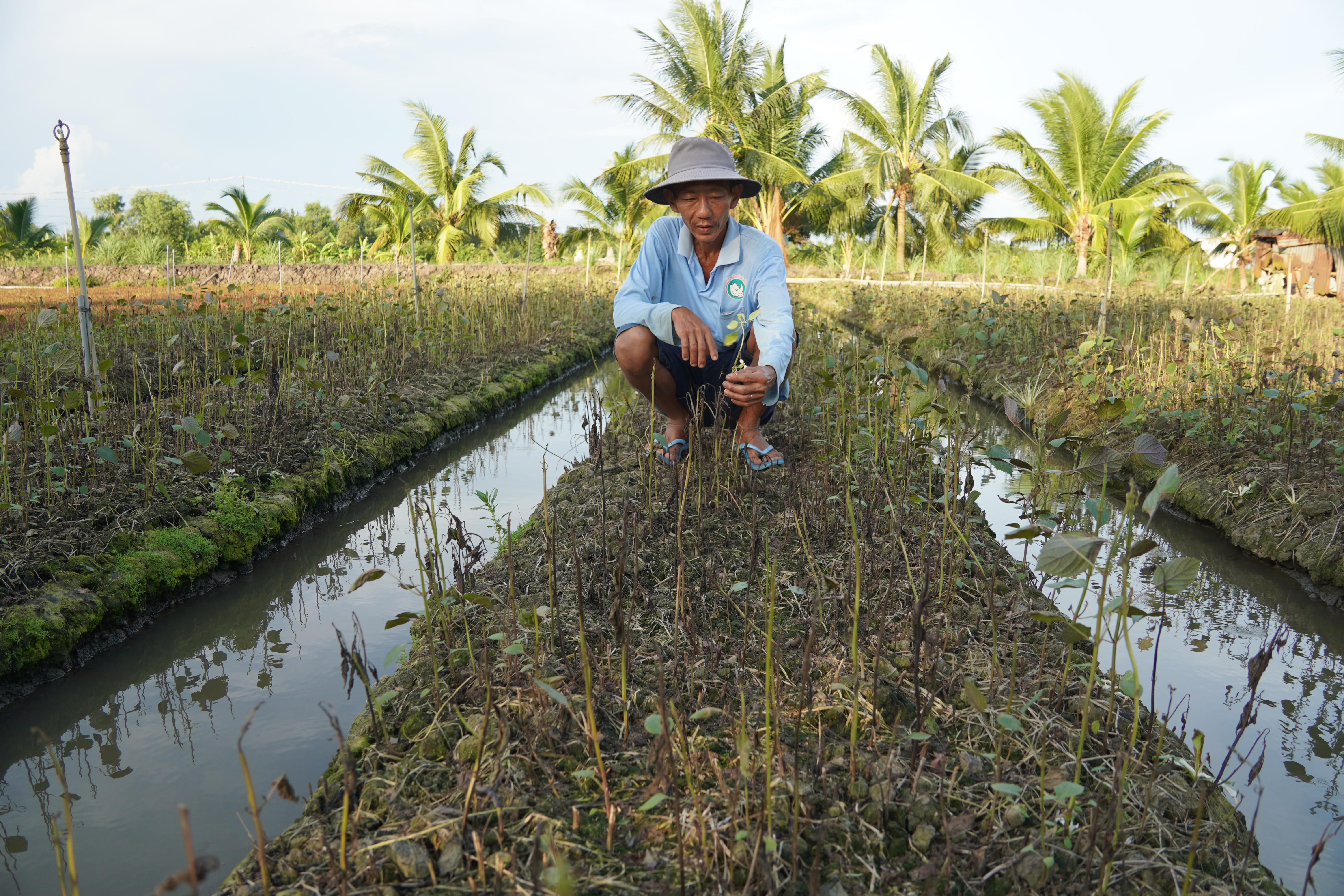
The field owner by withered perilla plants.
 |
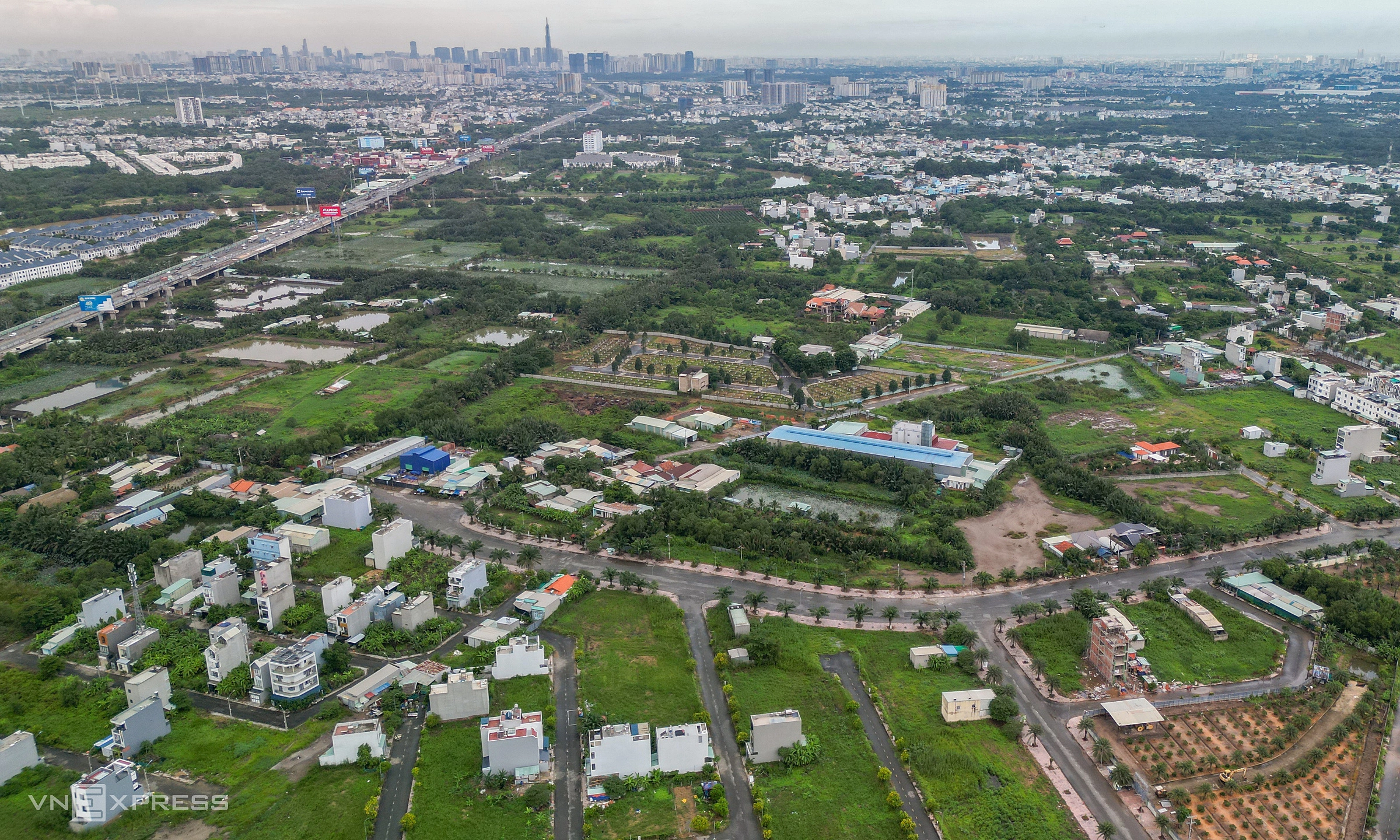
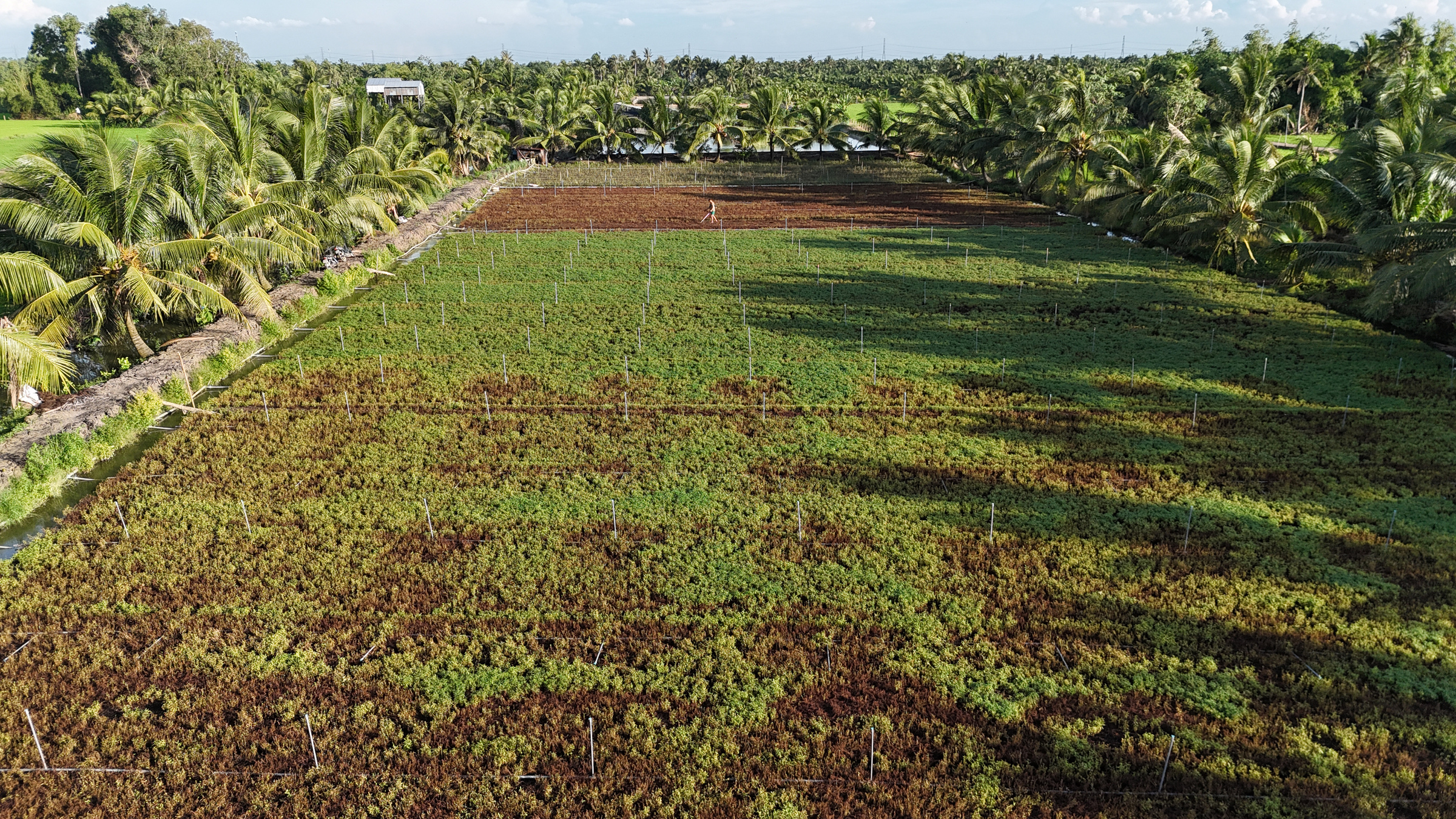
A field of rice paddy herb and perilla viewed from above. Photo: Hoang Nam |
4,000 m2 of perilla withered after more than a week, awaiting removal.
Quan's family has cultivated 1,5 hectares of perilla, basil, and rice paddy herb for over 10 years. More than a week ago, 4,000 m2 of perilla were thriving and nearing harvest. This year, perilla prices were approximately 20,000 dong per kg, with a yield of about 2 tonnes per 1,000 m2, leading him to expect a profit of around 40 million dong.
However, the perilla field unexpectedly experienced scorched shoots and yellowing leaves. Believing the plants were diseased, Quan spent over 4 million dong on pesticides, but they proved ineffective. In just about three days, the entire area withered and died, making harvesting impossible.
"I plant four crops annually, with an investment cost of about 8 million dong per 1,000 m2 for seeds, fertilizer, pesticides, and labor," Quan stated.
Adjacent to his land, 5,000 m2 of rice paddy herb, which he co-invested in with a friend, suffered the same fate. Most of the area now consists only of bare stems, with his family's current losses estimated at 45 million dong.
Ngo Van Tho, head of Trung hamlet, reported that over 15 hectares of rice and other crops in the area were affected, all utilizing a shared water source from the internal canal system.
 |
According to the Dong Thap Department of Agriculture and Environment, nearly 320 hectares of crops, rice, and fruit trees belonging to over 600 households have suffered damages ranging from 20% to 100%.
Affected localities include Long Hung, Long Dinh, Tan Phuoc 3, Tan Huong, Chau Thanh, and Trung An ward. The three communes of Long Hung, Long Dinh, and Tan Phuoc 3 alone account for approximately 290 hectares of the total damage.
Damaged crop types include basil, perilla, rice paddy herb, cinnamon, and sweet cabbage. A common symptom observed was that older leaves at the bottom remained green, while young shoots lost chlorophyll, turning white or yellow before wilting and dying.
Most of the affected areas drew water from the Nang, Ben Chua - Cho Bung, Sau Au - Xoai Hot, and Nguyen Tan Thanh canals, which are part of the Bao Dinh project area.
 |
The Department of Agriculture and Environment collected water samples for analysis. Initial results indicate signs of surface water pollution in the area, with low dissolved oxygen levels and ammonia, nitrite, and COD concentrations exceeding standards at multiple locations.
According to experts, these indicators reflect organic pollution, which could impact crop growth if farmers use this water source for irrigation over an extended period.
Hoang Nam