Viet Nature announced on 14/5 that the repatriation marks the start of a program to restore the central region's endemic bird. Following their arrival, the 20 edwards's pheasants will undergo legal procedures, including CITES permits for wildlife import and animal quarantine, before moving to suitable conservation breeding facilities.
Initially, the program focuses on helping the flock adapt to tropical climate conditions, after several generations lived in captive environments in Europe.
Experts, both local and international, will monitor each individual's health and adaptability in preparation for the breeding phase. The plan is for the generation born in Vietnam to undergo training in a semi-wild environment. This aims to restore natural behaviors such as foraging, recognizing natural predators, and avoiding hunters before reintroduction.
The project's final phase involves reintroducing the edwards's pheasants into the wild and attaching tracking chips to monitor population development. This process is expected to take place in the next two to three years.
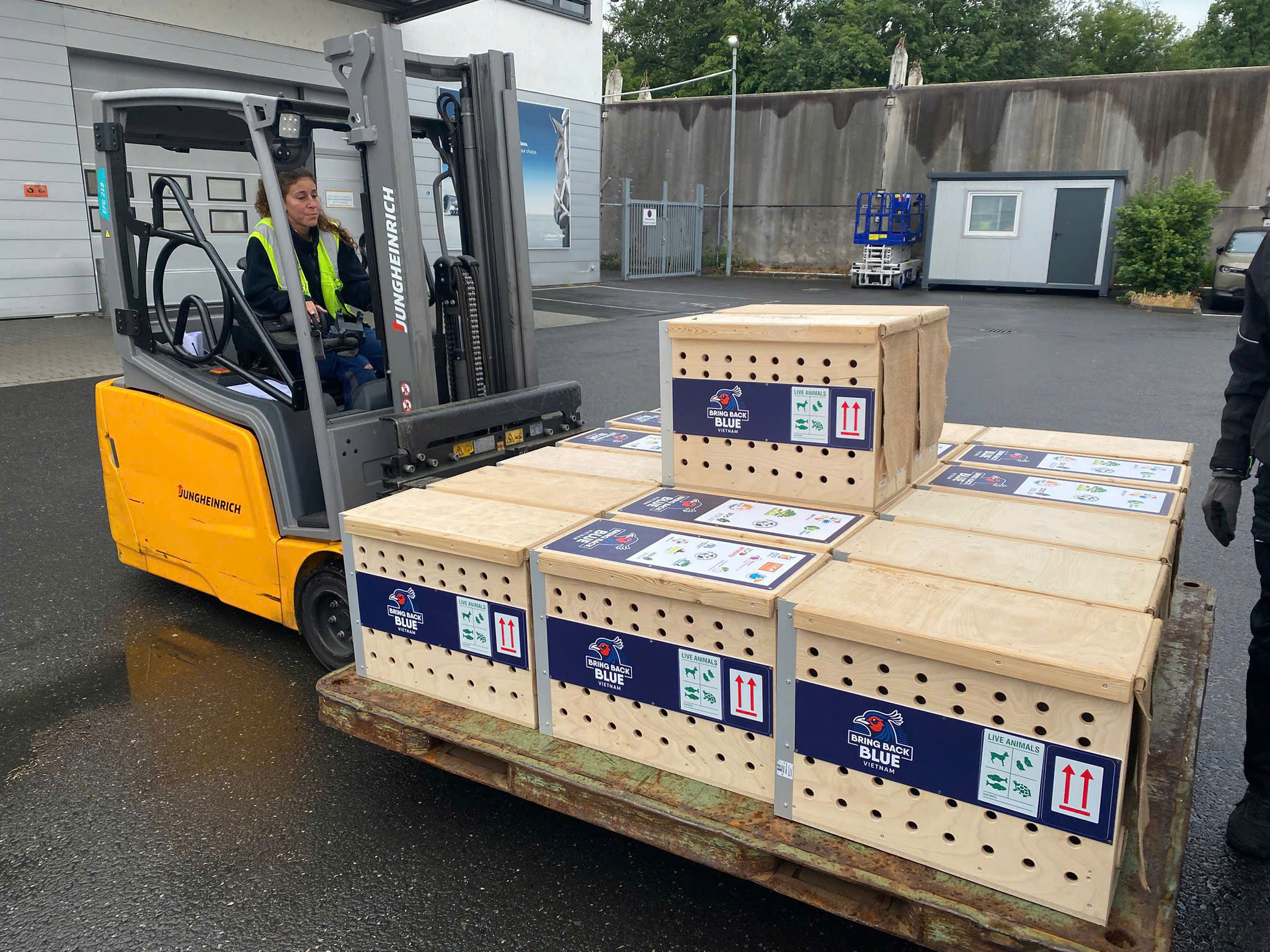 |
Edwards's pheasants arrive in Vietnam. Photo: Viet Nature |
At Phong Dien Nature Reserve in Hue City, habitat preparation for reintroduction has been underway for two years, in coordination with Viet Nature. Activities include habitat surveys, establishing forest patrol teams, and regularly removing animal traps to reduce hunting pressure in the planned reintroduction area.
Conservation teams also deploy camera traps to record the presence of other galliform birds and monitor predators that could impact the edwards's pheasants upon their return to the wild.
According to Viet Nature, semi-wild enclosures simulating natural environments are also under construction for the pre-reintroduction training phase. This is a crucial step to help the endemic bird gradually regain survival skills after generations in captivity.
The edwards's pheasant (Lophura edwardsi) is an endemic bird species of central Vietnam, historically found in lowland forests from Ha Tinh to Hue. First scientifically described in the late 19th century, it is considered one of the world's rarest birds.
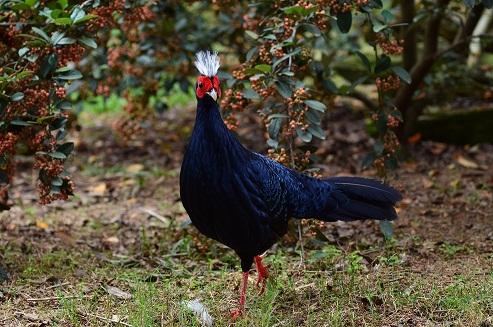 |
Edwards's pheasant. Photo: Don Butler |
In the 1920s, French ornithologist Jean Delacour collected several individuals in central Vietnam, taking some to France for conservation breeding. This is considered the origin of the current global captive population.
After decades of war, deforestation, and hunting, the edwards's pheasant almost disappeared from the wild. The last confirmed sighting of the species in its natural habitat was in 2000 in Quang Tri. Since then, despite numerous surveys in central Vietnam's forests, no conclusive evidence has emerged to suggest the species still exists in the wild.
Currently, the global captive population numbers over 1,000 individuals across conservation facilities in Europe, Japan, and the United States. The repatriation of these 20 edwards's pheasants is hoped to provide an opportunity for Vietnam's endemic bird to gradually return to the wild after more than two decades of absence.
Gia Chinh