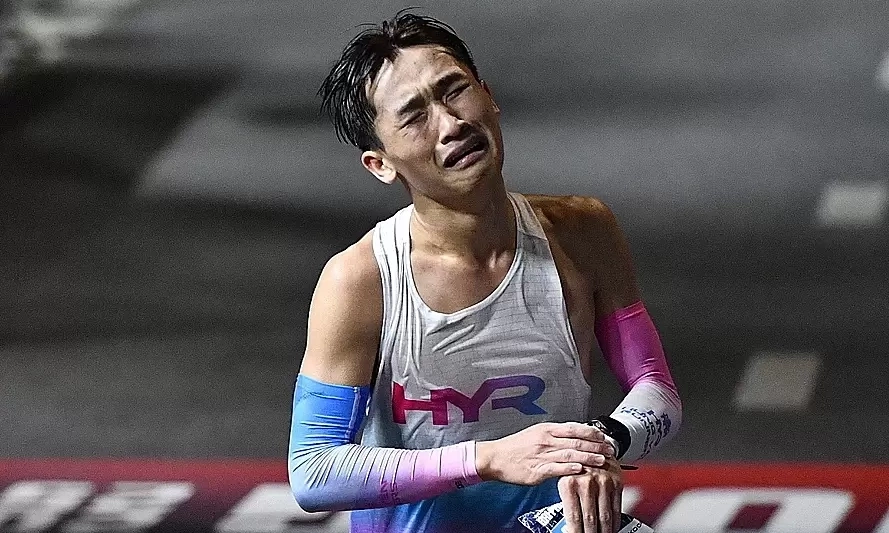
1. Find training motivation
Jo Wilkinson, a former British track and field athlete with 10 years of coaching experience, notes that everyone's training motivation fluctuates. To maintain discipline, Wilkinson suggests runners schedule runs with friends or join a running club. This can boost motivation for new runners.
Thomas Craggs, World-Class Endurance Program Director at UK Athletics, points out that even professional athletes have days they don't want to train. However, they still follow their training plans to maintain performance.
2. Start slow, combine running and walking
Allie Bailey, a coach and author of "31 Days to Master the Modern Runner's Mindset," advises new runners to begin with supportive apps like Couch to 5K. This app uses a training method that combines walking with light running. The initial pace should be just slightly faster than walking, ensuring the runner can still converse normally while moving.
Wilkinson affirms that combining running and walking does not reduce training effectiveness. Spending ample time building up exercise volume allows the musculoskeletal system to adapt, minimizing injury risk.
 |
New runners should combine running and walking to allow their bodies to adapt. Photo: VnExpress Marathon
3. Choose appropriate running shoes
Emma Kirk-Odunubi, a running coach in England and author of a running book, advises new runners to prioritize comfortable shoes over those optimized for performance.
Wilkinson states, "It's undeniable that professional carbon-plated shoes for elite athletes can make a significant difference. However, these shoes lack high stability, so don't use them for every run; otherwise, it could lead to long-term injury issues."
4. Prioritize comfortable attire
According to Kirk-Odunubi, when selecting training attire, new runners should prioritize comfortable clothing for ease of movement. "This factor must be the number one priority, as it's also a way to maintain training motivation," she emphasizes.
Allie Bailey agrees that new runners don't need to spend excessive amounts on training attire. Runners can purchase inexpensive used sports clothes. "However, the best attire is what you already own," she says.
 |
Choosing comfortable attire makes training easier. Photo: VnExpress Marathon
5. Register for races
Setting specific running goals serves as important motivation for runners to maintain training discipline. Wilkinson suggests that runners can challenge themselves by registering for community running events (parkrun) or professional races.
"You might feel hesitant about your skill level, but in reality, these races always include runners of all levels, ages, and fitness capacities. Walking is encouraged just as much as running," Wilkinson adds.
6. Build a consistent training schedule
According to Craggs, new runners need to focus on maintaining regular training frequency. Running three sessions per week is a suitable starting point for the body to get accustomed to the running intensity. Running volume also needs to increase gradually to avoid injuries caused by increasing volume too quickly.
Additionally, Emma Kirk-Odunubi advises runners to always listen to their bodies. If the body is tired but still attempts endurance or speed workouts, the runner is prone to injury. Therefore, gradually increase training volume and intensity only when the body is ready.
7. Avoid over-reliance on performance monitors
Allie Bailey notes that performance monitoring devices are merely supportive tools. They are only truly useful when the runner is not dependent on the metrics displayed on the device screen.
Jo Wilkinson agrees with this view, stating that constantly looking at a watch while running does not improve fitness; rather, the training process itself yields results. She believes one of the most important skills for a runner is the ability to self-perceive and control their body's pace.
8. Supplement carbohydrates properly
Wilkinson explains that carbohydrates are an effective energy source for the body and should be consumed regularly every day. Before starting a run, runners should consume a light energy snack such as bread, oats, or a banana.
After completing a workout, runners should combine protein and carbohydrates—essential nutrients for replenishing energy and muscle recovery. She suggests that drinking a glass of fresh milk is a simple, economical, and highly effective option.
 |
A runner performs a single-leg lunge to increase lower body endurance. Photo: Magnific
9. Focus on stretching and resistance training
Many runners have a habit of quick stretches lasting about 10 seconds, which offers minimal effectiveness. Wilkinson suggests runners dedicate time to yoga, pilates, or hold stretches long enough (approximately one minute) for maximum benefit.
Allie Bailey also advises runners to perform weekly lower body accessory exercises. Strengthening these muscle groups will help runners sustain activity longer.
Emma Kirk-Odunubi recommends unilateral exercises for runners, such as lunges, split squats, single-leg calf raises, or light plyometrics.
10. Handle injuries correctly
"If running causes injury, it's best to stop training," Wilkinson asserts. She advises that when pain appears, runners should stop immediately, even if they are far from the finish line.
Kirk-Odunubi concurs with this view. If the pain affects daily activities, it signals that the runner must temporarily cease training and seek support from medical or physical therapy professionals for an accurate diagnosis.
11. Prepare thoroughly for the 42-kilometer distance
For those planning to participate in a 42-kilometer race, Craggs advises runners to prepare a training plan early. During the planning process, runners should continue consistent runs with moderate volume to optimize effectiveness.
Additionally, ensuring proper nutrition, training intensity, and sleep is crucial. If the body is fatigued, runners should take one to two days to rest, rather than trying to complete the training plan.
 |
A female runner smiles brightly upon completing the race. Photo: VnExpress Marathon
12. Maintain a relaxed attitude towards results
After a race, runners should review their training plan, nutrition strategy, and actual physical condition instead of overly worrying about their finish time. Factors like weather, health, and mental state directly influence performance.
Craggs emphasizes that not achieving a target time is not a bad outcome. Instead, be happy to have completed the race. "If sports were predictable, we wouldn't participate," he states.
Duc Anh (via Guardian)
About VnExpress Marathon Hanoi Midnight
 |