 |
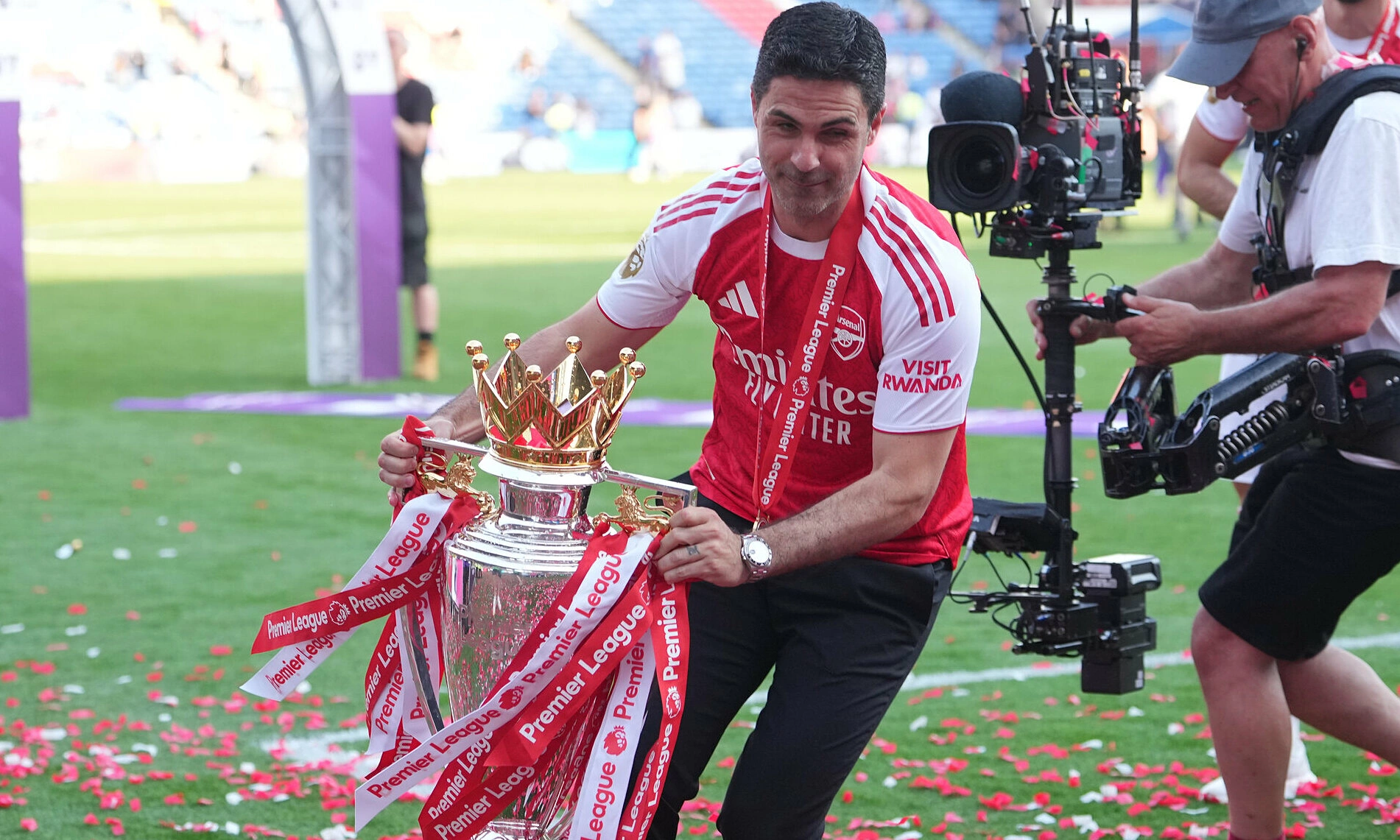
Coach Mikel Arteta celebrates the Premier League championship after the Crystal Palace - Arsenal match on 24/5. Photo: AP |
At the national team level, Spain, the European and world champion, is led by a Basque, Luis de la Fuente. Meanwhile, the current Europa League champion and Premier League champion both owe their success to Unai Emery and Mikel Arteta, two individuals who grew up just a few kilometers apart in San Sebastian, Gipuzkoa province, in the Basque Country.
This is truly a phenomenon, as a small community is creating a rare significant influence in football coaching.
Even more remarkably, in the 2026-2027 season, four major English football clubs will compete for titles and status in the Premier League and European competitions, all under the guidance of coaches trained at the same amateur football club on the coast of the Bay of Biscay.
Mikel Arteta (Arsenal's head coach), Unai Emery (Aston Villa), Andoni Iraola (Liverpool), and Xabi Alonso (Chelsea) have achieved remarkable success, creating historic accomplishments at Arsenal, Bournemouth, Leverkusen, Sevilla, and Aston Villa. Now, they will directly compete for England's most prestigious titles.
Another commonality, particularly among Arteta, Iraola, and Alonso, is their nearly identical development paths. They frequently intersected during their formative years in San Sebastian, trained under the same philosophy, and even received guidance from the same coaches.
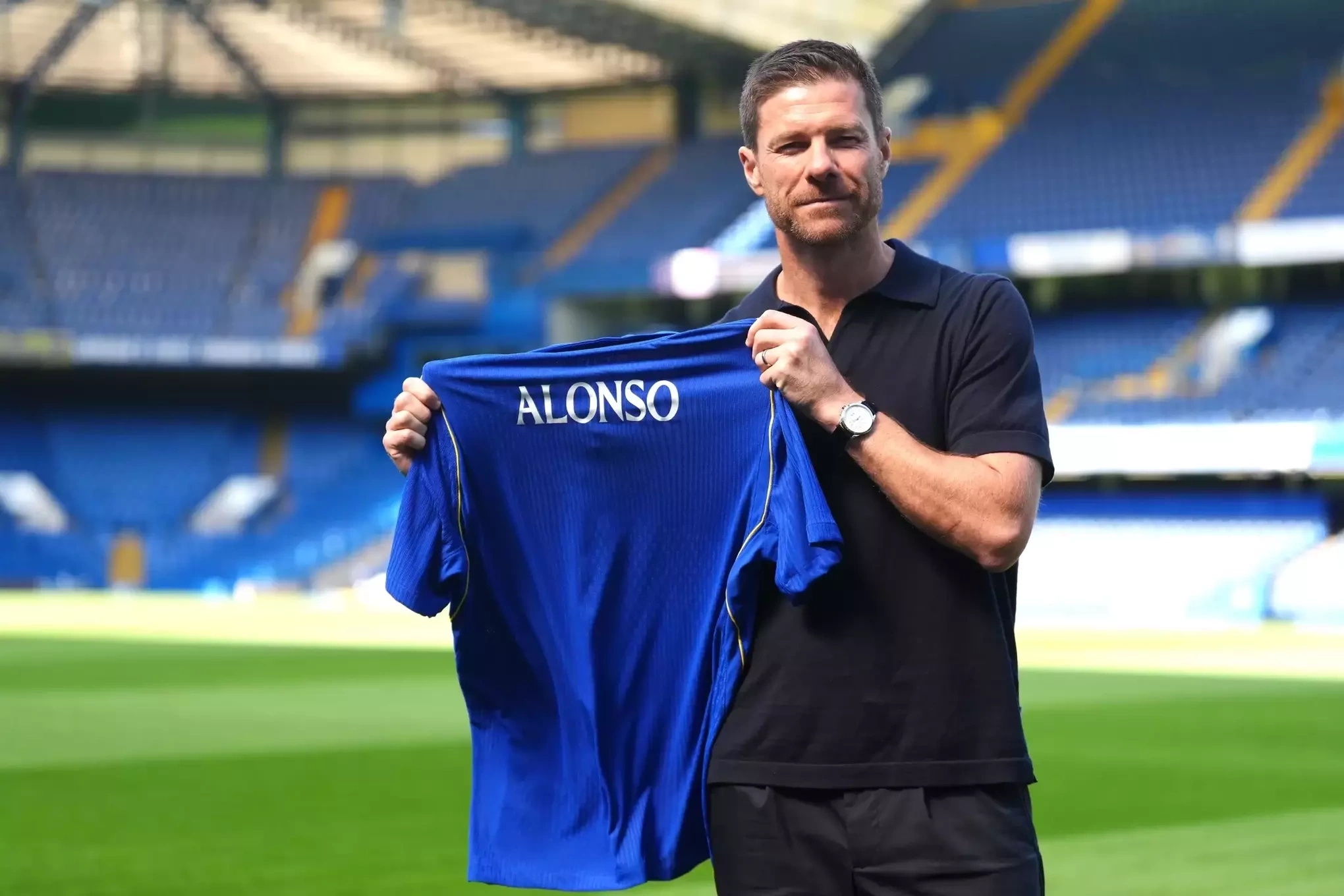 |
Coach Alonso poses with a Chelsea jersey after his introductory press conference at Stamford Bridge, London, England, on 13/7. Photo: AP |
That amateur club is Antiguoko. This team can claim some credit for Bournemouth's first qualification for UEFA, as Iraola played for Antiguoko as a child and later began his coaching career there. Antiguoko also developed Alonso, who then led Leverkusen to the club's sole Bundesliga title, and Arteta, who guided Arsenal to their first premier league title in 22 years.
Football administrators at Antiguoko and throughout Gipuzkoa are now accustomed to European media seeking them out, asking about the "magic formula" that produces such outstanding former students, along with numerous other important figures in coaching or football management across Europe.
But there is no magic. There is only philosophy, hard work, decades of training, and attention to detail.
Iraola said: "The number of successful coaches trained in the Basque Country receives much attention because although this is a small region, we have a very strong football culture".
When asked what makes Basque coaches successful, Arteta once replied simply: "It is the passion and the education we all received".
That education includes a notable principle: children following the path that led Arteta, Alonso, and Iraola to the top in Gipuzkoa are not allowed to exclusively commit to one club or play only one sport before the age of 10.
Instead, they must continue learning and developing through other sports like basketball, handball, or volleyball before specializing. The goal is to expose them to other gifted young people, develop various spatial and physical skills, and learn and combine diverse ideas.
Another highly valued factor is the quality of youth coaches. They must hold good professional certifications, share a common philosophy, and earn the community's respect.
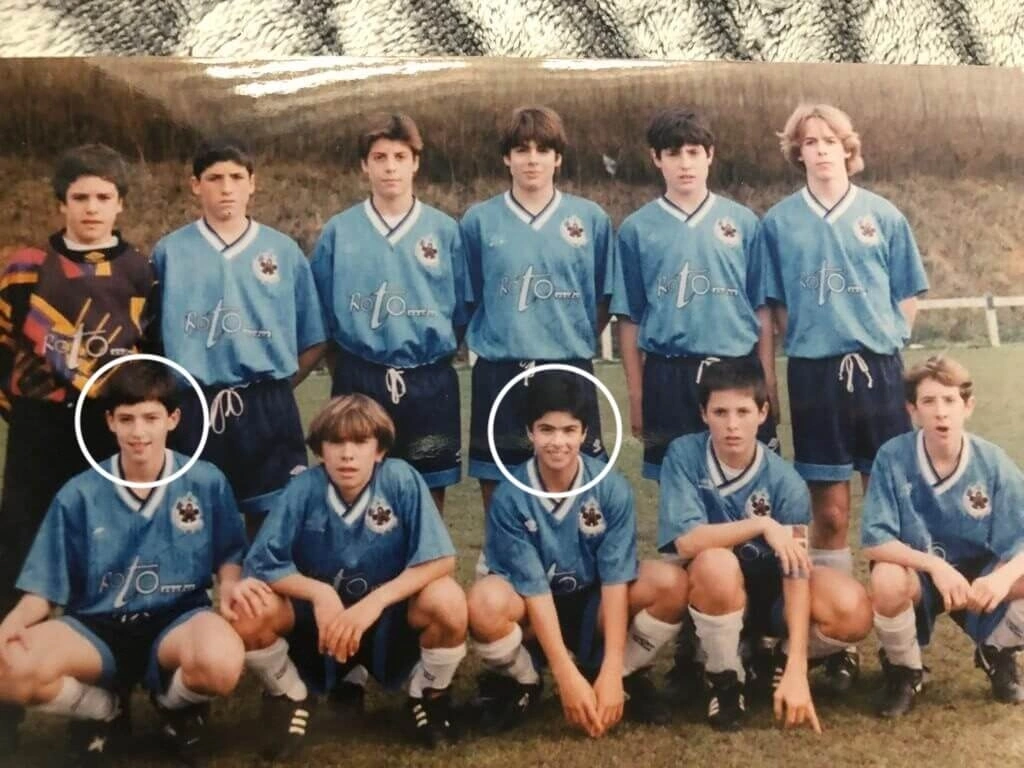 |
Iraola (far left) and Arteta (center) sit in the front row of a team photo of Antiguoko. |
Manu Diaz, President of the Gipuzkoa Football Federation, explained: "Our area has a disproportionately large number of coaches due to our community spirit. People want to contribute back to society. Children want to become coaches. They wait until their 16th birthday to start studying and getting certified, just like waiting to learn to drive. From a young age, they also learn to be part of a larger team, which helps them become good leaders later. Coaches are respected by the community".
"People can create a story that a common football school exists here, but in reality, more than a way of seeing the game, it is a way of seeing life. There is a Basque word that sums it up: 'Auzolan', referring to the spirit of working together with cooperation among neighbors", Diaz added.
This spirit is evident in how Arteta, Alonso, Iraola, and others learned their first football skills. They also experienced "cooperation among neighbors" through a distinctive phenomenon in San Sebastian: numerous youth football matches held on the city's two main beaches.
When the tide recedes, parents, children, and coaches use their hands to mark many fields on the flat, hard sand of La Concha and Ondarreta, pull out pre-stored goalposts, and organize dozens of matches until the sea water rises again.
The field boundaries must be drawn by hand in the sand. Speed and team spirit are decisive factors, not only when the match begins but also in collaboratively creating a giant mosaic of 10, 12, or 15 fields in the shortest possible time, allowing many matches for boys and girls of various ages to take place.
Alonso, who won his first career title with Arteta in an Antiguoko tournament when both were teenagers, recounted: "I was lucky to have Mikel, who was as passionate about football as I am, living in the same neighborhood. Every day, we skateboarded down to the beach to play tennis, surf, and of course, play football".
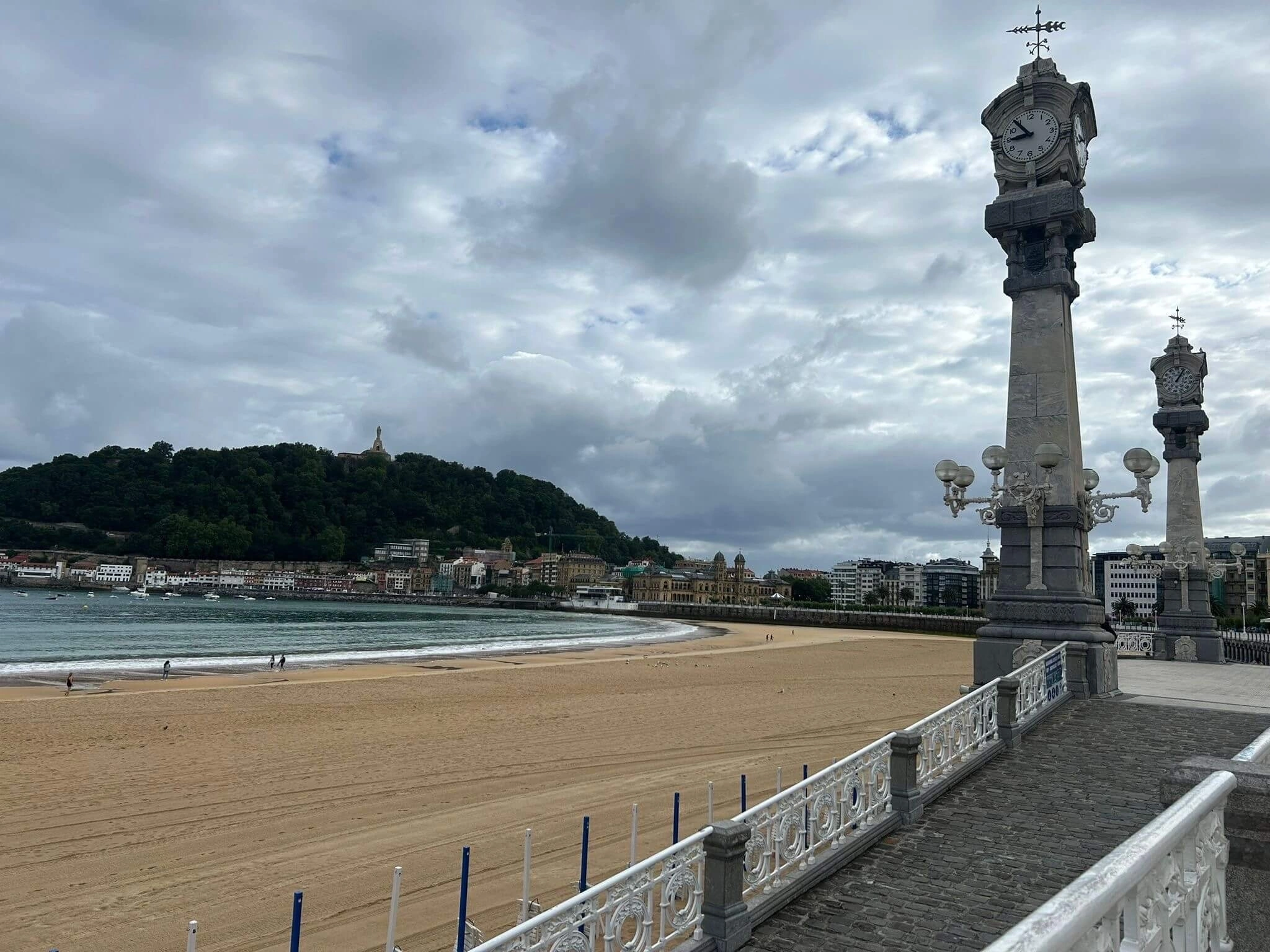 |
San Sebastian beach, where Iraola, Arteta, and Alonso learned their first football skills. Photo: The Athletic |
Undeniably, the Basque football training philosophy uses phrases and principles that the modern football world, obsessed with money, speed, and harshness, might consider outdated or cliche.
But perhaps that is the key. All the things that traditional football fans find unsettling, making them feel distant from a modern football controlled by foreign owners, expensive, and run like a corporation or investment fund, are completely opposite to the approach of Antiguoko, Gipuzkoa, and the Basque Country, which produced Alonso, Arteta, Iraola, and Emery.
An Antiguoko representative told ESPN: "This highlights one of Europe's leading youth academies. We are a community organization, with modest resources but significant influence. For decades, we have truly been a school for both football and people".
"These individuals currently working in the Premier League have openly acknowledged the profound influence of Antiguoko K.E. on their athletic and personal development. We nurture players by developing raw talent, but also build a culture of hard work, tactical thinking, game reading ability, and team spirit", the representative added.
That football culture, according to him, is a philosophy based on competitiveness and holistic development. Antiguoko truly embodies the essence of local grassroots football, where football is present in players' lives from a very young age, instilling discipline, cohesion, and a sense of community.
five years ago, Alonso co-authored Real Sociedad's training manual titled "Made In Gipuzkoa". This document was published to help anyone in the football world globally who is interested to read, learn, and apply those principles.
One of the book's core statements, again echoing another era, is: "The core of this model is the person, not just the player".
The manual continues: "The boy or girl whose future we do not yet know, whether they become a footballer, engineer, doctor, mechanic, or lawyer, is the center of everything. In this model, each individual is a unique project, and everything else revolves around them. Coaches at Real Sociedad accompany, nurture, and train them throughout their journey, taking stability as the foundation for a model based on trust and patience. In short, it is nurturing, training, guiding, and educating. That is the mission we receive from the community we want to represent, from the Gipuzkoa families and all of Gipuzkoa society".
From this human-centric, community-based, and somewhat "outdated" football philosophy to the fierce, high-tech, winner-takes-all competition at the top of the Premier League is a vast distance.
But no matter how different Alonso, Emery, Arteta, and Iraola may be this season, they remain connected by their origins, beliefs, and shared values, things that European football in particular and global football in general can learn from.
Hong Duy (via ESPN)