Tra Que vegetable village (Da Nang)
International tourists visit Tra Que vegetable village. Photo: Dac Thanh |
Located about 3 km from Hoi An ancient town, Tra Que vegetable village is a lush, peaceful oasis with a nearly 300-year history of organic vegetable farming. This village is known for more than 20 types of leafy greens and herbs with distinct flavors, cultivated using traditional methods, utilizing seaweed from the Co Co river as fertilizer.
Visitors to Tra Que can stroll through vibrant green vegetable beds and experience being a true farmer. The "one day as a farmer" experience begins with tilling soil, sowing seeds, watering, and harvesting vegetables alongside local residents. After working, visitors can relax with herbal foot baths and participate in cooking classes, preparing specialties like Tam Huu and banh xeo using freshly harvested ingredients.
In 4/2022, vegetable farming in Tra Que was recognized as a National Intangible Cultural Heritage. This recognition affirms the cultural value and sustainable tourism potential of this unique craft village.
Me Tri green rice flake village (Hanoi)
The process of sifting green rice flakes for sorting. Photo: Ngoc Thanh |
With a history spanning over one century, the craft of making green rice flakes (com) in Me Tri has become a cultural heritage and a symbol of Hanoi cuisine.
Visiting the village during green rice flake season, typically from the 7th to the 10th lunar month, visitors will witness a bustling work atmosphere. From early morning, residents are busy with the elaborate steps of making green rice flakes: selecting glutinous rice (nep cai hoa vang) that is still "milky", roasting it in cast-iron pans over wood fires, and pounding it with large pestles. The rhythmic sounds of pounding and the fragrant aroma of roasted young rice blend to create a lively experience.
Visitors can talk with artisans, learn the secrets to creating fragrant, thin, and green green rice flakes, and enjoy many dishes such as fried green rice flake patties (cha com), sticky rice with green rice flakes (xoi com), and green rice flake cakes (banh com).
Sa Dec flower village (Dong Thap)
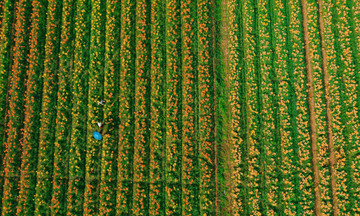
Approaching Lunar New Year, Sa Dec flower village attracts thousands of visitors daily. Photo: Ngoc Tai |
Known as the "flower capital" of the Mekong Delta, Sa Dec flower village is a vibrant destination, especially near Lunar New Year. With a history spanning over 100 years, it is one of the largest ornamental flower hubs in the Mekong Delta, supplying flowers to provinces nationwide.
The most unique feature of Sa Dec flower village is its cultivation method: "flowers on trellises, people in water". Flower beds are not planted directly in the soil but placed on high bamboo trellises, with water-filled canals beneath. Farmers wear boots or use small boats to navigate and care for the flowers, creating a characteristic image of labor in the riverine region.
Visitors can walk on elevated bridges to admire the sea of colorful flowers, rent bicycles to ride along village roads, or experience paddling a small boat through flower gardens. This place is suitable for flower lovers and photography enthusiasts.
Ban soy sauce village (Hung Yen)
Ban soy sauce drying in the sun. Photo: Thanh Nga |
Ban soy sauce is a famous specialty of Ban Yen Nhan village. The craft of making soy sauce has existed for over 700 years, once offered to kings, and now an indispensable part of Vietnamese cuisine.
The process of making Ban soy sauce is an art requiring meticulousness and ancestral experience. Key ingredients include glutinous rice (nep cai hoa vang), soybeans, and pure sea salt. Through many complex stages, from fermenting sticky rice, soaking soybeans, and sun-drying in large ceramic jars, a batch of delicious soy sauce takes one to two months to "mature" and achieve its characteristic golden-brown color and rich, sweet flavor.
Upon visiting the village, tourists will be impressed by hundreds of soy sauce jars neatly lined up in the courtyard. They can also hear locals recount the craft village's history, learn about the soy sauce making process, and taste this flavorful dipping sauce, rich in the cultural identity of the Northern Delta.
Thanh Thu