Known as one of China's prime examples of 'dark cuisine,' a term for unusual food combinations that defy conventional cooking norms, 'cow dung hotpot' holds a unique place in the country's culinary landscape.
Originating in the mountainous Guizhou region of southwest China, this hotpot is prepared using partially digested grass fluid from a cow's stomach and small intestine, along with cow bile and local herbs. The preparation starts by sauteing garlic, ginger, spring onions, and Guizhou chili. Beef and offal are lightly stir-fried before the grass fluid and bile mixture is added and brought to a boil. The resulting broth is a deep olive-green, emitting an aroma more akin to herbal soups than any foul odor. It offers a savory umami flavor from the beef, complemented by a bitter aftertaste from the bile and herbs. Diners typically enjoy it with a dipping sauce of dry chili powder, spring onions, and minced garlic.
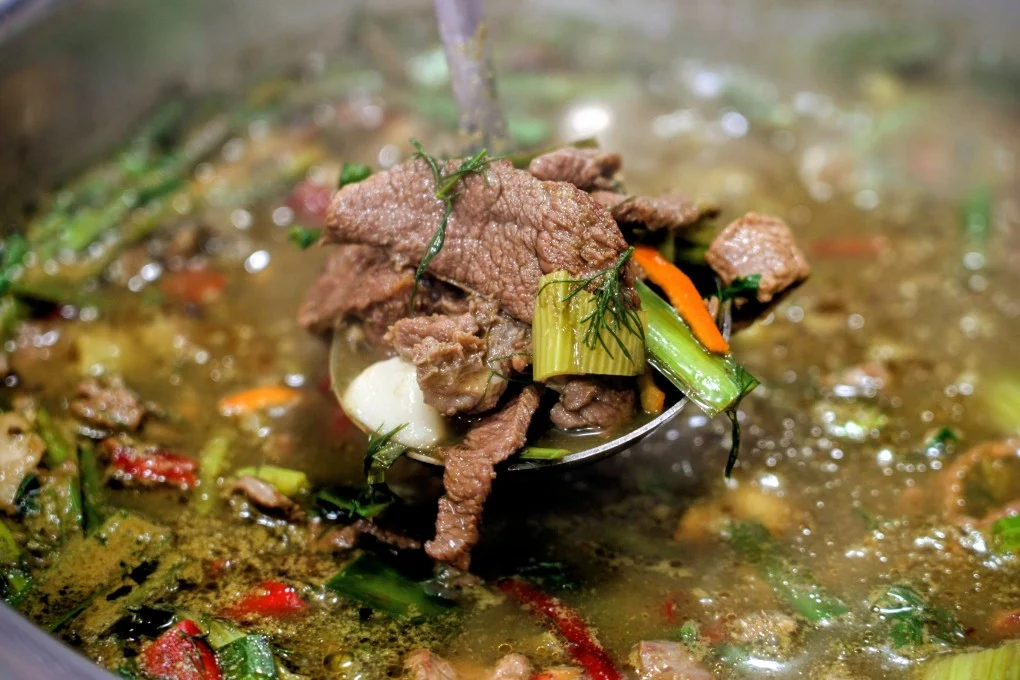 |
The cow dung hotpot, a specialty of Guizhou. *Photo: SCMP*
Crucially, the liquid in the dish is not waste but rather primary digestive fluid extracted from the rumen, the first chamber of a cow's stomach. Before slaughter, the cattle are fed quality grasses and herbs. The resulting fluid, rich in chlorophyll and digestive enzymes, is akin to an herbal tea formed naturally within the animal. This culinary practice is deeply ingrained in ethnic minority communities such as the Miao and Dong, who have long inhabited Guizhou's distinctive limestone mountains. For these groups, the cow represents a natural vessel of nutrition, and consuming rumen fluid is a way to absorb environmental nutrients.
Rooted in traditional medicine principles, bovine extracts are believed to possess medicinal qualities. In Guizhou's humid valleys, residents consume this hotpot broth as a digestive aid, facilitating the absorption of nutrients from natural herbs pre-processed within the cow's stomach. This perspective aligns with various traditional medical systems that value bovine products for their nourishing properties.
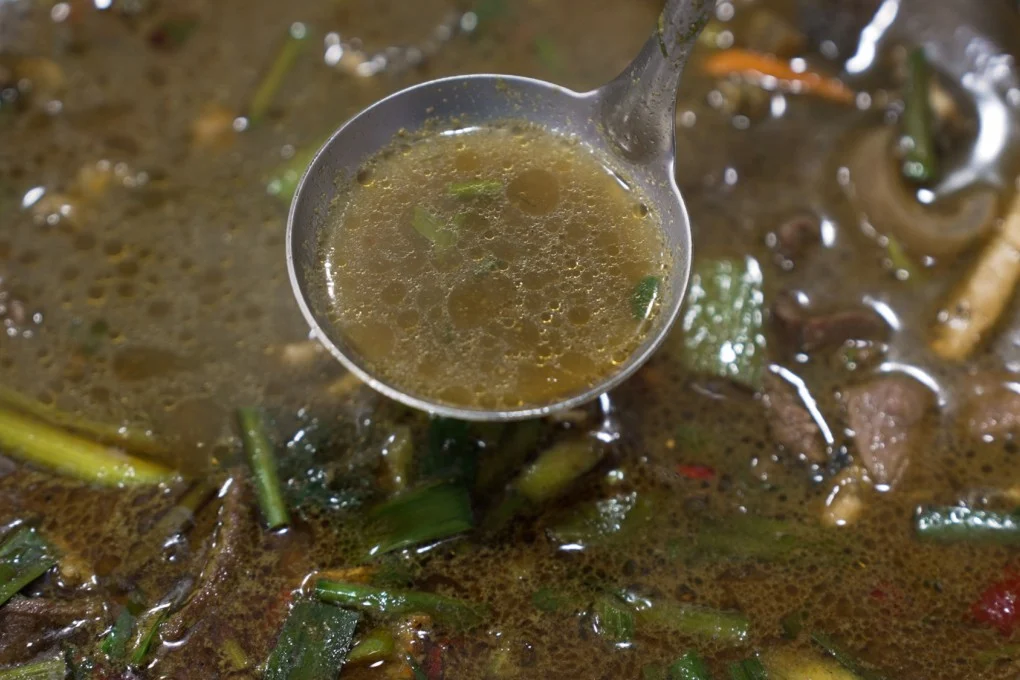 |
The dish's broth is olive-green. *Photo: SCMP*
This dish exemplifies how local populations adapted to their environment and limited food resources. By utilizing the digestive system of livestock to harness nutrients from natural grasses and herbs, they ensured nearly every part of the animal was used. Despite its cultural significance, the dish garners mixed reactions. Alex He, executive chef at Anantara Guiyang Resort and a Guizhou native, admits he has never tasted the hotpot, finding its ingredients "unacceptable." For him, the true essence of Guizhou cuisine lies in its sour and spicy notes, reminiscent of the chili-salted fried rice his parents prepared for his childhood breakfasts.
He explains that Guizhou's mountainous terrain once isolated the region, leading to limited ingredient availability. Locals consequently relied on chili, often fermented, to impart flavor. This explains why signature dishes, such as sour fish soup or spicy stir-fried chicken, feature a combination of mild sourness and heat. Distinct from the famed numbing spice (mala) of Sichuan or Chongqing cuisine, Guizhou cooking uses less Sichuan peppercorn, opting instead for moderately spicy fermented chilies that deliver an aromatic, non-lingering warmth.
While 'cow dung hotpot' remains a polarizing dish, it undeniably reflects the survival history of Guizhou's mountainous communities, where every part of an animal was traditionally utilized. These challenging conditions fostered unique tastes and a distinct culinary identity for the region.
By Mai Phuong (Source: SCMP)