Many passengers immediately turn off the overhead air vent upon settling into their seats, a common habit to avoid feeling cold.
Despite the often-low cabin temperatures, experts advise against completely turning off this small overhead airflow, especially for health and comfort. Passengers should keep the vent open, adjusting it so the air is not directed straight at their face, rather than closing it entirely.
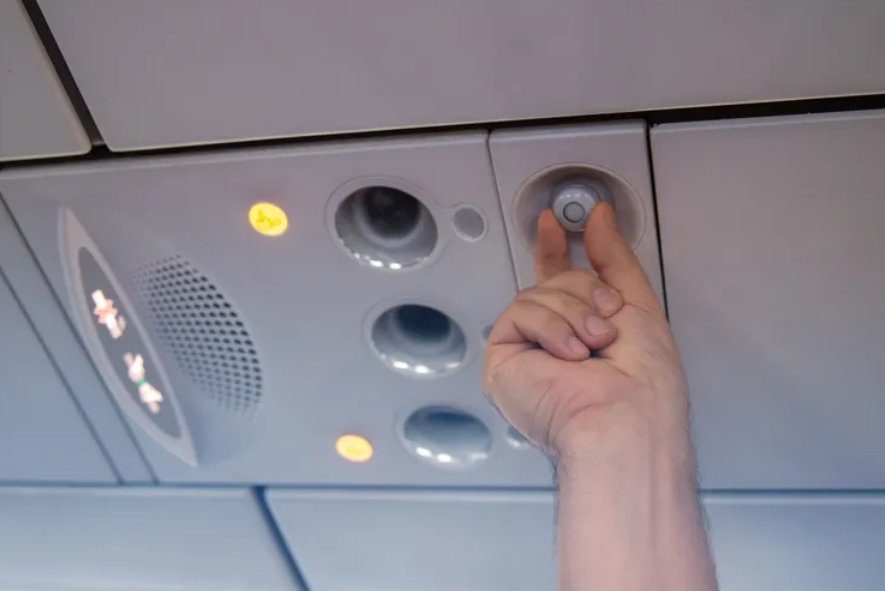 |
Many passengers habitually turn off the overhead air vent as soon as they settle into their seats on a plane. *Photo: Adobe stock*
Keeping the vent open does not mean directing air straight at your face. According to pediatrician and allergy specialist Amiirah Aujnarain from the University of Ottawa, Canada, passengers should adjust the airflow slightly upwards or to the side. This creates gentle air circulation without causing a chilling sensation.
This is especially important on long or crowded flights, where limited personal space makes air circulation crucial.
What happens when you turn off the air vent?
"Turning off the air vent does not change the overall cabin air quality, but it does affect the airflow around you", explained Dr. Aujnarain. The air around passengers becomes more stagnant, slightly increasing exposure to dust, pollen, or droplets from nearby passengers. For those with allergies, asthma, or sensitive respiratory systems, this change can noticeably impact their flight experience.
"Gentle airflow helps dilute allergens and pathogens in the surrounding area, preventing stagnant air and limiting asthma or allergy flare-ups", the doctor stated.
Cabin air is not as stagnant as many travelers believe; it is cleaner. Modern aircraft use ventilation systems that continuously circulate and filter air.
According to the International Air Transport Association (IATA), cabin air is refreshed 20-30 times per hour, equivalent to every two to three minutes. This is about 10 times faster than most office buildings.
About half of this air is fresh from outside; the remainder recirculates through HEPA filters. These filters remove over 99% of airborne particles, including pollen, bacteria, and viruses.
The airflow design also helps limit the spread of particles. Cabin air circulates vertically from the ceiling to the floor, exiting near the seats, rather than moving horizontally from front to back. This vertical flow reduces how far airborne particles can travel.
The overhead air vent works with the aircraft's air filtration system. While HEPA filters clean recirculated air, the passenger's vent creates localized airflow, reducing exposure to particles around the seat.
Most passengers turn off the air vent to avoid feeling cold or dry, especially on long flights. However, completely shutting off this airflow can create new problems.
According to Dr. Aujnarain, while you might feel warmer or less dry, stagnant air allows allergens and pathogens to linger around your face, potentially causing sneezing, nasal congestion, or coughing.
If you are concerned about being cold, adjust the airflow and wear a light jacket or shawl. If dryness is the issue, she recommends addressing it directly with moisturizing products such as: lip balm, hand cream, face mist, or saline nasal spray.
Anh Minh (According to Cn Traveller)