 |
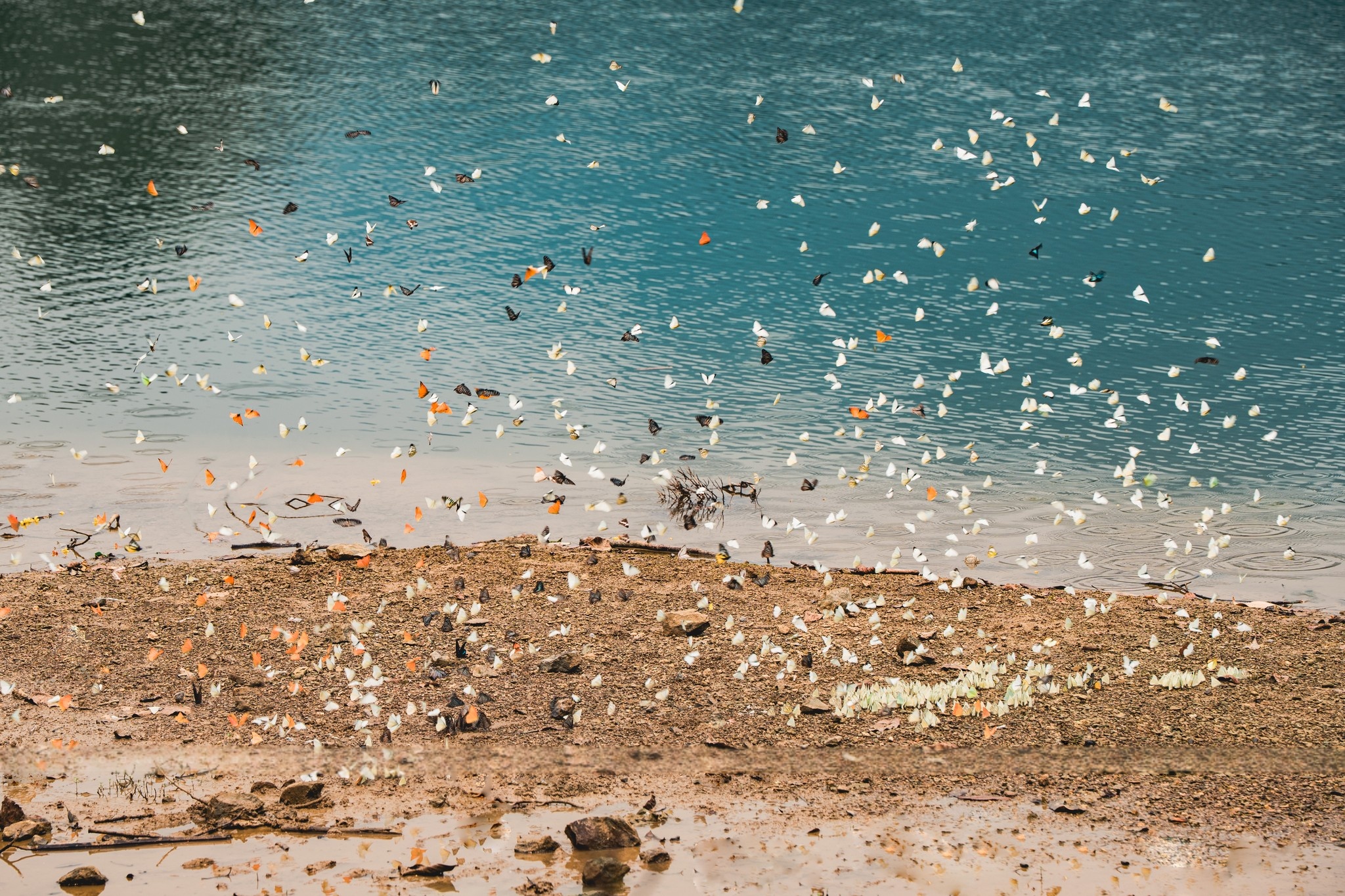
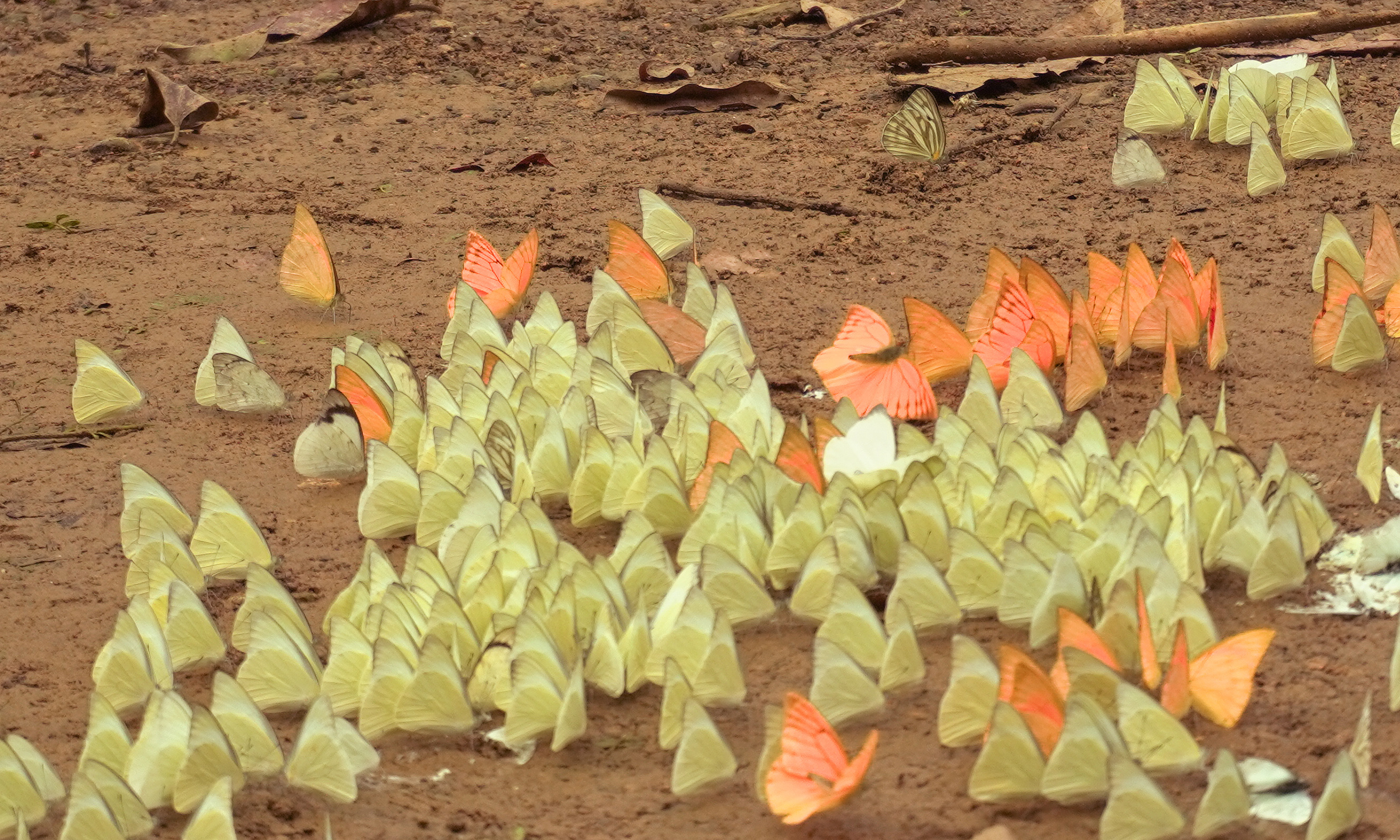
Cuc Phuong National Park is home to over 400 butterfly species, including swallowtails, moon moths, morphos, and whites (pictured), in various colors and sizes. White and yellow butterflies are the most common. The butterfly season in Cuc Phuong lasts until late May. *Photo: whereizhanhan* |
In early April, Cuc Phuong National Park in Ninh Binh entered the breeding season for hundreds of butterfly and firefly species.
This year, the butterfly season began about two to three weeks earlier than usual. A park representative stated that the early appearance of butterflies and fireflies is due to weather fluctuations. The northern region experienced an early warm-up and high humidity from late spring, creating favorable conditions for larvae to develop quickly and transform into butterflies sooner. *Photo: Dang Foto*
 |
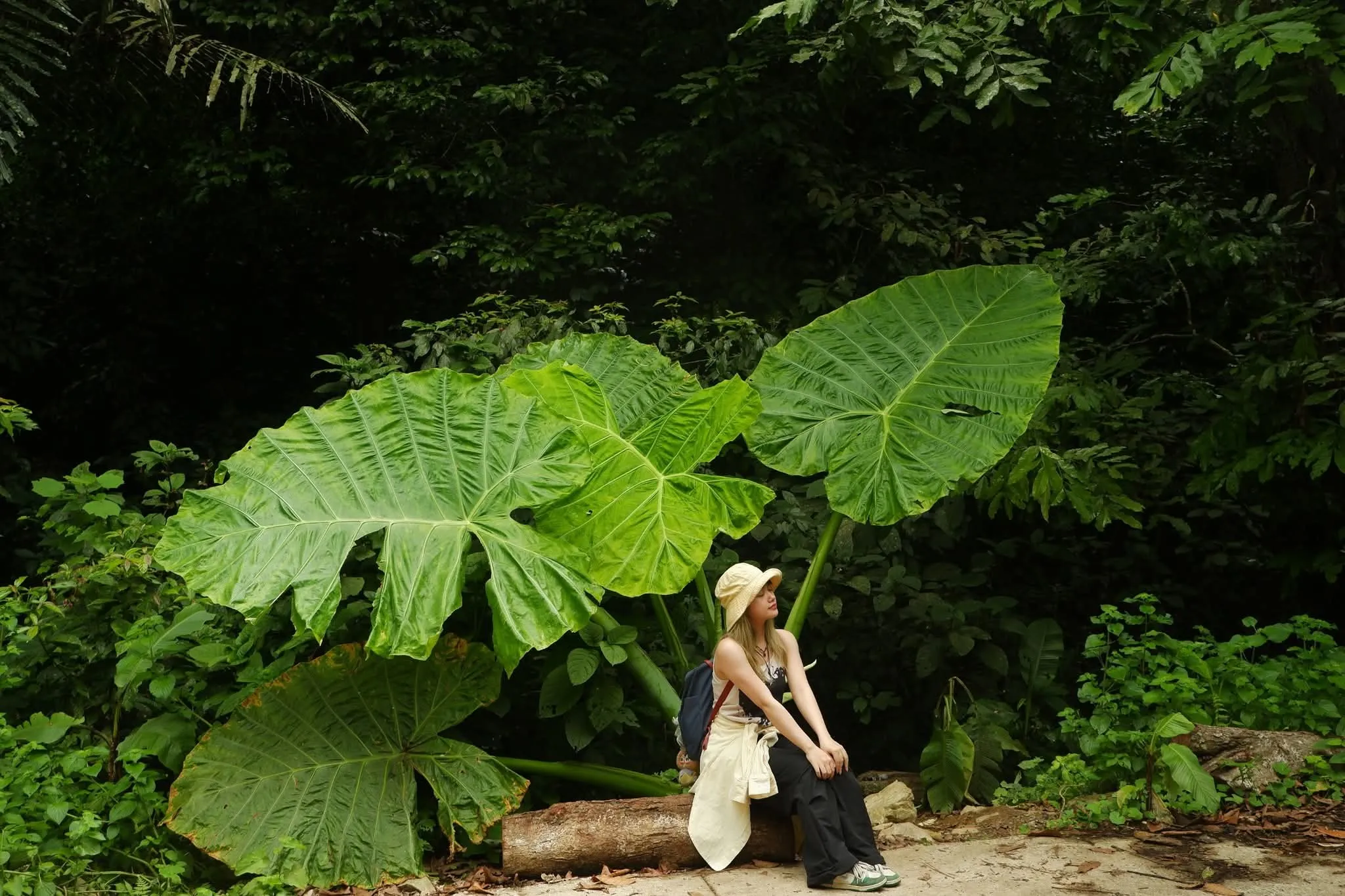
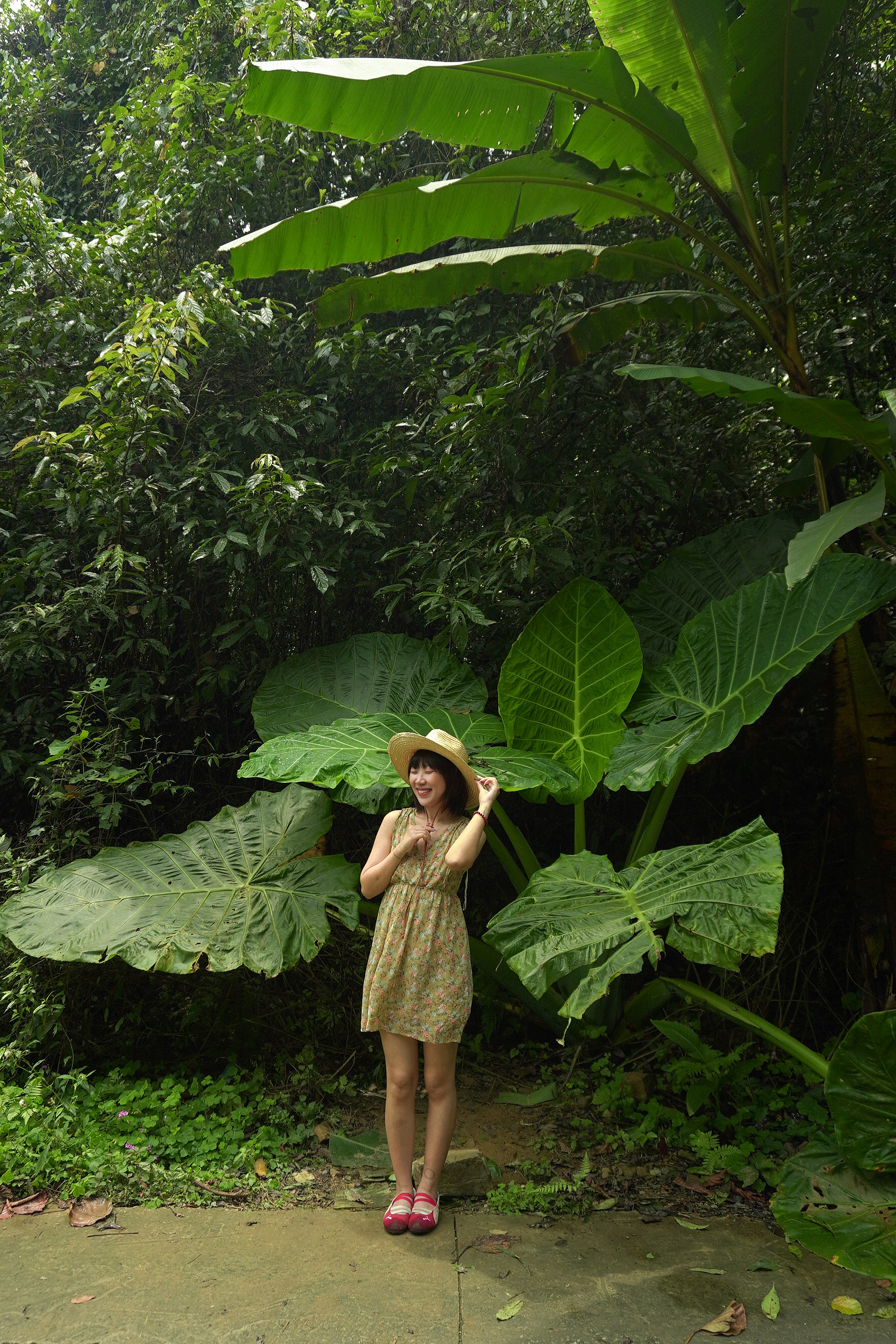
Beyond the "specialty" of butterfly wings, a representative from the National Park Management Board stated that the giant arum plants have also become a highlight. In Cuc Phuong's natural conditions, the elephant foot yam species develops thick, clustered stems, growing 3-4 meters tall with leaves up to 1,5 meters long. The management unit also warned that this plant contains calcium oxalate crystals in its sap, which can cause skin irritation upon direct contact. *Photo: Linh Vu* |
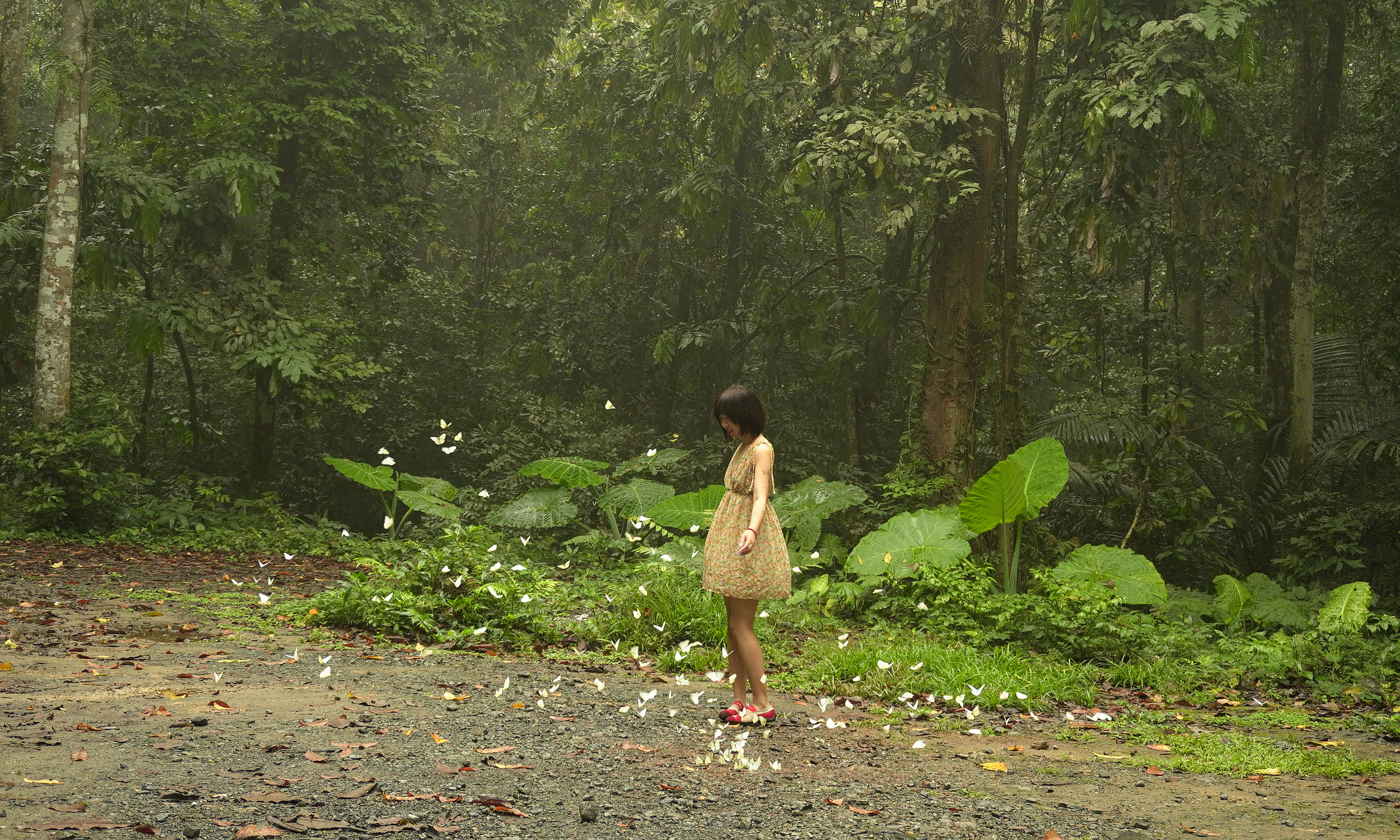
Hanh Hanh, a tourist from Hanoi who visited the national park in late March, noted that butterflies were abundant, even though it was not yet the peak season. According to her experience, butterflies are most concentrated at the parking lot leading to the Cave of Early Man and around the lake near the park gate.
Given the park's straight road through the forest, visitors can stop at any point along the journey to capture desired photos. *Photo: whereizhanhan*
 |
Elephant foot yam is quite common in Cuc Phuong. Areas along the main road from the park gate to the Bong center frequently attract visitors who stop to take photos, sometimes causing local traffic jams. According to a representative from the Park Management Board, visitors venturing deeper or following trekking routes may encounter larger and more impressive arum plant communities. *Photo: whereizhanhan* |
 |
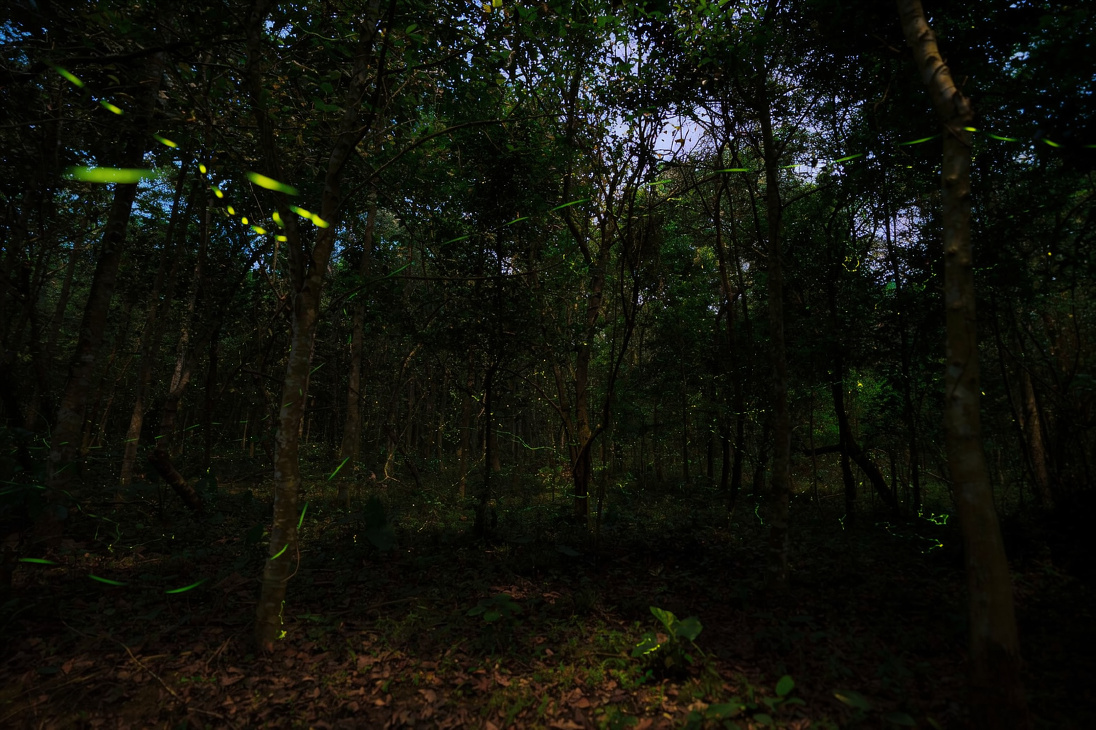
In April, Cuc Phuong also attracts visitors with its night firefly season. Firefly "hunting" tours take place from 7 p.m. to 8 p.m. Visitors can choose to stay at the Forest Gate Hotel right at the national park entrance. Room prices here range from 500,000-800,000 VND. Visitors can contact the national park's reception directly to book an overnight stay. *Photo: Dang Foto* |
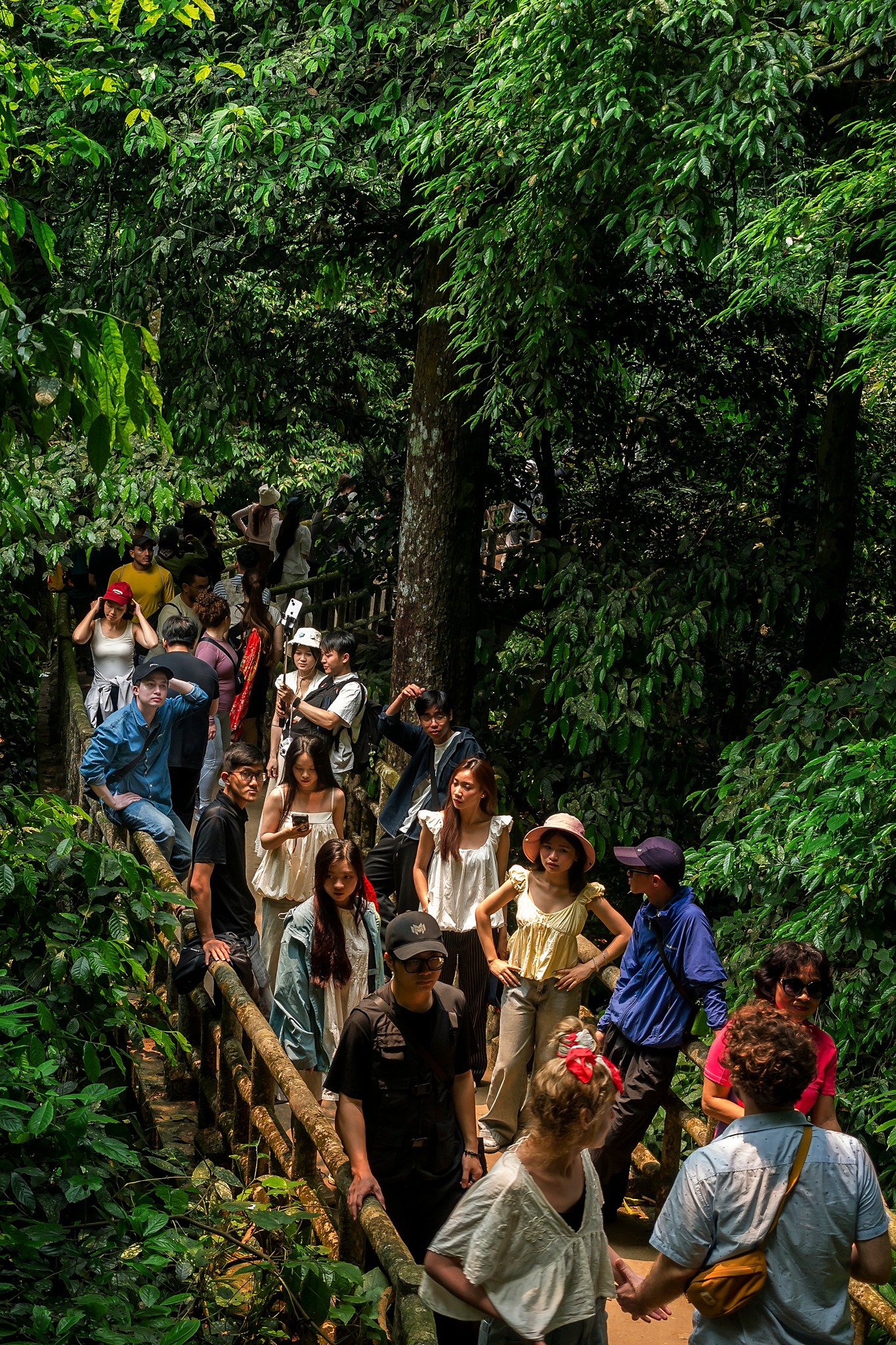
On 7/4, visitors lined up at the entrance of the Cave of Early Man, waiting to take photos with the butterfly swarms.
Park representatives reported that visitor numbers have been high even on weekdays. Many tourists who "hunted" for butterfly photos during the first week of April said that from about 10 a.m. on weekdays, crowds caused congestion.
For the best experience, tourists from Hanoi should depart at 5 a.m. to arrive at the park by 7:30 a.m. Going early helps avoid congestion and capture the best butterfly photos, as butterflies often retreat into the shade to escape the heat when the sun is intense. *Photo: Nhan Hung*
 |
 |
 |
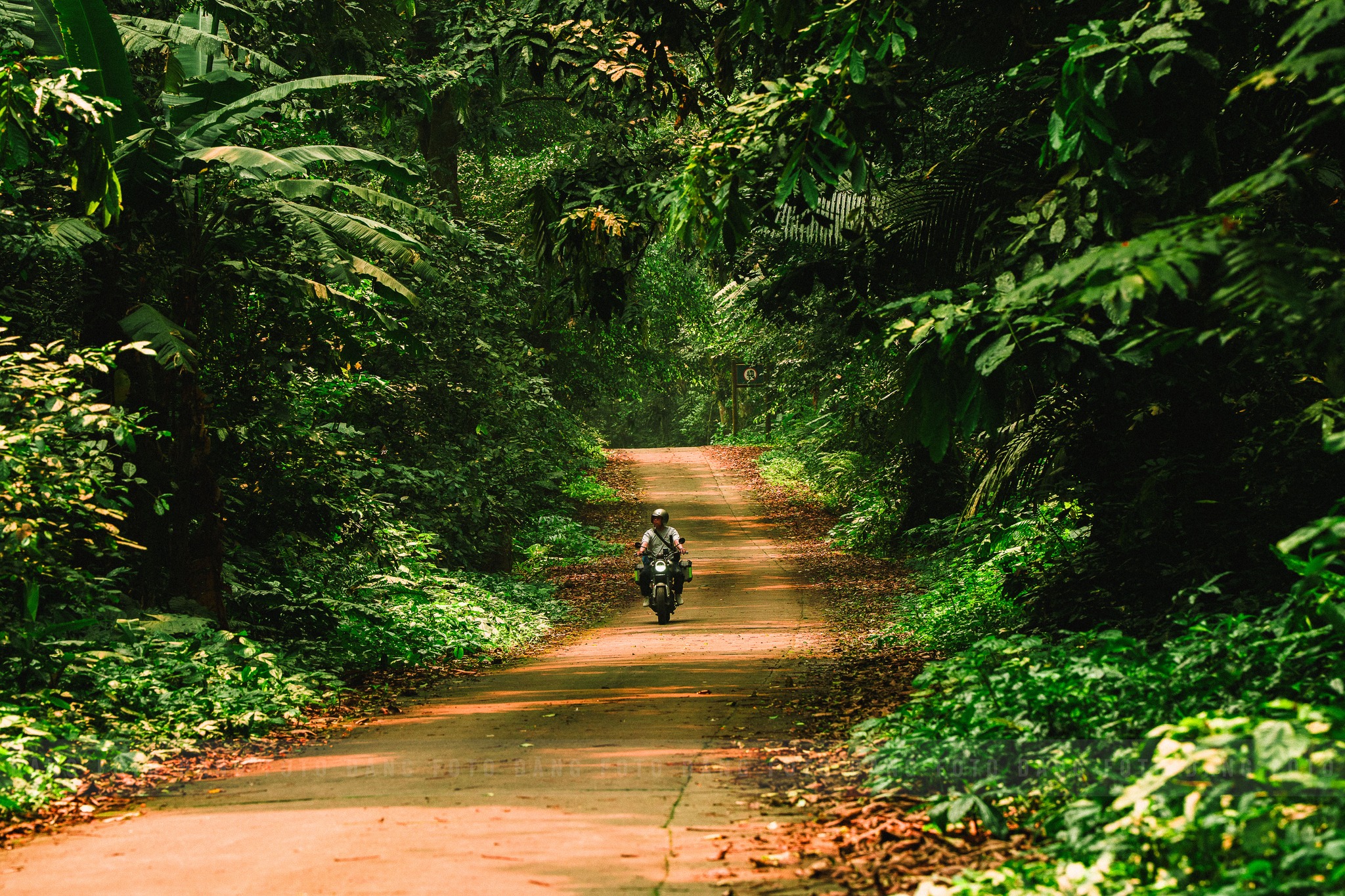 |
The tree-lined road shaded by ancient trees in the heart of Cuc Phuong's primeval forest. To move around the forest independently, visitors can rent motorbikes for 250,000 VND per vehicle.
For day-trippers to the national park, an ideal itinerary starts early morning and concludes visits around 2 p.m. to 3 p.m. Currently, entrance tickets cost 60,000 VND per person, with self-paid parking fees ranging from 20,000-30,000 VND. *Photo: Dang Foto*
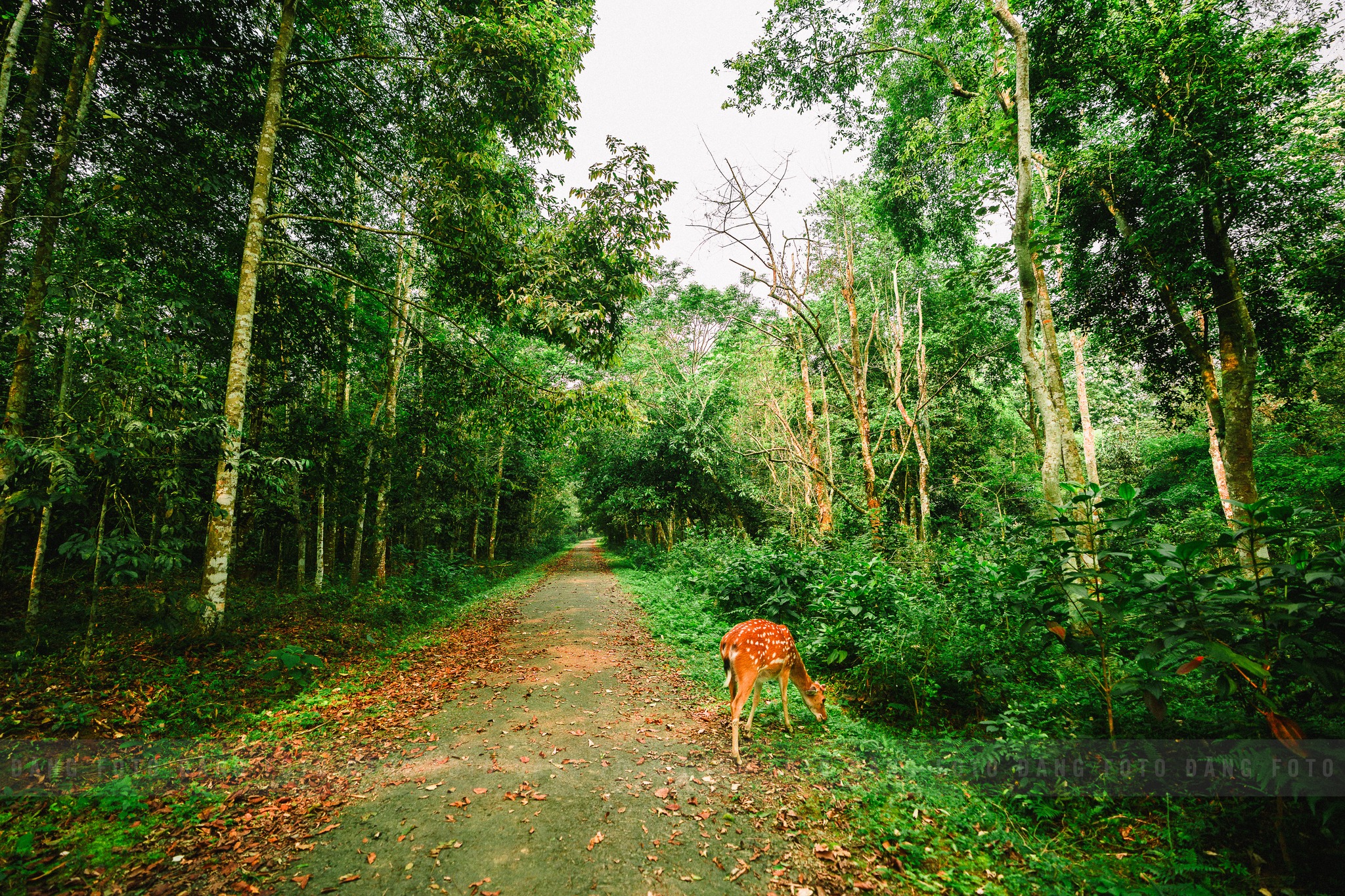 |
A sika deer in Cuc Phuong National Park.
In addition to capturing the beauty of the butterfly breeding season, visitors may encounter various wild animals in the forest.
Cuc Phuong National Park is advancing its "re-wilding" strategy, aiming to actively restore animal populations and ecosystems. By 2050, the park aims to establish a complete special-use forest ecosystem where food chains and biological interactions operate naturally. *Photo: Dang Foto*
Mai Phuong