Eng English
China 中国人

Eng English
China 中国人
  • News
  • World
  • Business
  • Entertainment
  • Sports
  • Law
  • Education
  • Health
  • Lifestyle
  • Travel
  • Science
  • Digital
  • Automobiles
  • Trở lại Thể thao
  • Travel
Tuesday, 26/5/2026 | 19:02 GMT+7

Unraveling the 'ice cellars' that cooled the Forbidden City

Beneath the Forbidden City lies a system of ice cellars that once helped the imperial family store ice and cool the palace for centuries.

The Forbidden City in central Beijing was constructed between 1406 and 1420 during the reign of Emperor Yongle. Spanning approximately 720,000 square meters and comprising nearly 1,000 buildings, it served as the residence and administrative center for Chinese emperors for over 500 years.

Given Beijing's continental climate, characterized by hot, humid summers and deep, cold winters, preserving food, medicinal herbs, and maintaining a stable environment for the large-scale wooden structures posed a challenge for the imperial court. To address this, the imperial family constructed a system of ice cellars, known as "bing jiao", located beneath the palace grounds.
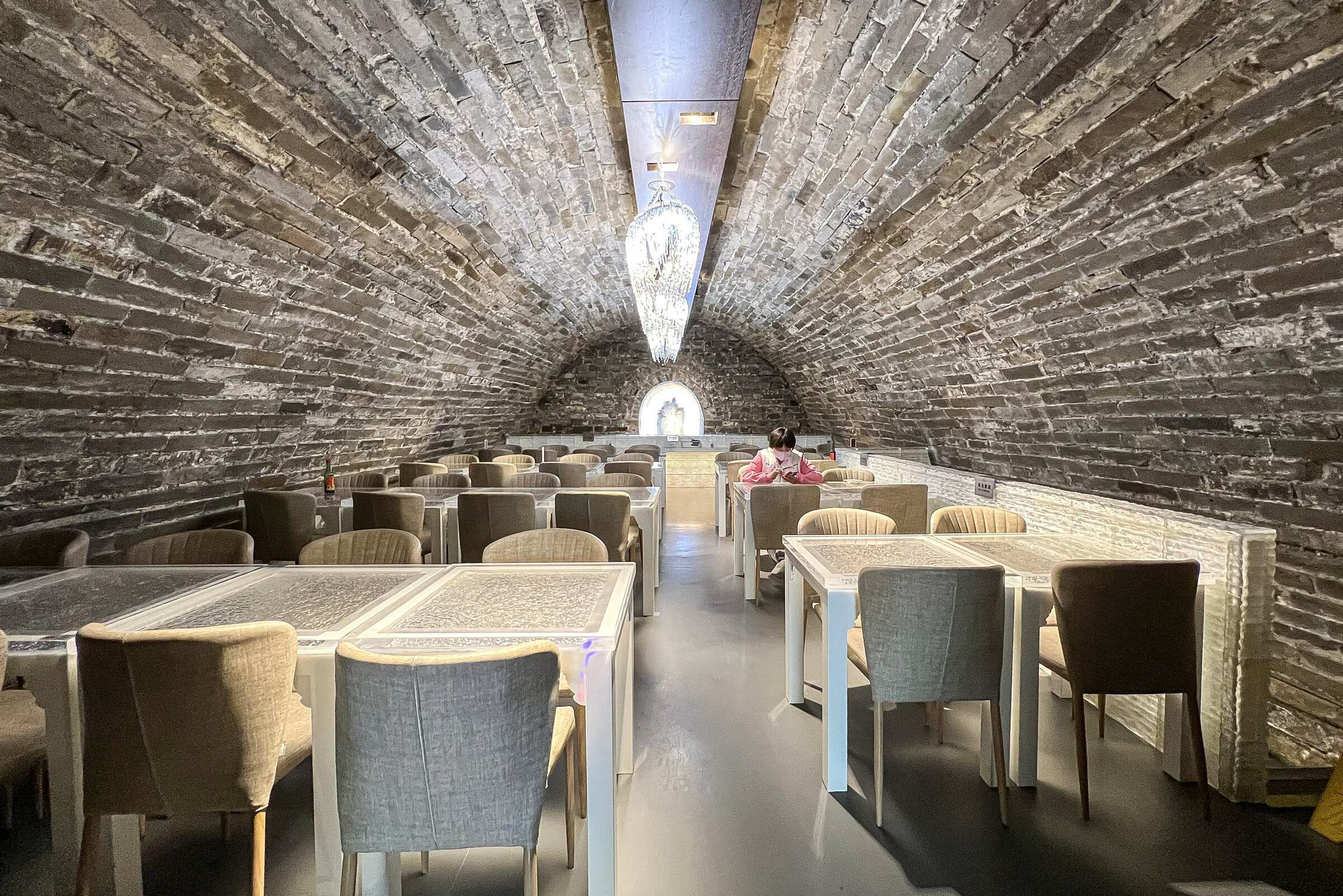
An ice cellar repurposed as a cafe. Photo: N509FZ

According to documents from The Palace Museum, the ice cellar system was widely used during the Qing dynasty and underwent several renovations during the Qianlong era.

The cellars were semi-subterranean to leverage the stable underground temperatures and minimize ice melt. Their thick walls, constructed from multiple layers of fired bricks, combined with vaulted roofs, supported the earth covering above. Inside, a drainage system channeled melted ice water out, reducing humidity and maintaining low temperatures within the storage space.

Each winter, when Beijing's lakes and moats froze, the imperial court organized ice harvesting for storage until the following summer. Large blocks of ice were cut, stacked in the cellars, and separated by straw or sawdust to reduce heat exchange.
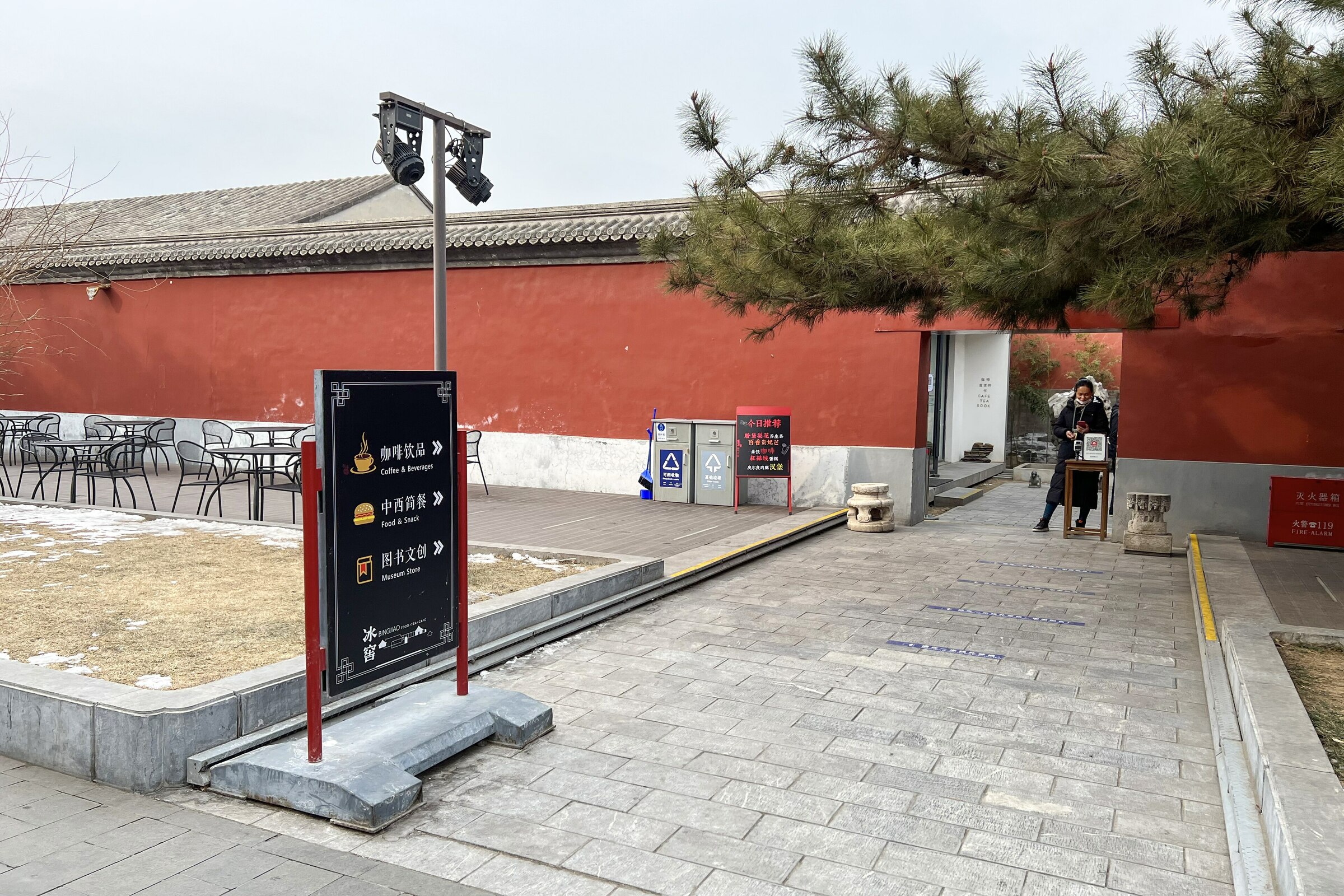
Entrance to the ice cellar area at the Forbidden City. Photo: N509FZ

According to some historical records from the Qing dynasty, the imperial family stored tens of thousands of ice blocks annually for daily use within the palace. In addition to the ice cellars, the court also utilized "bing jian", containers made of precious wood or metal, which held ice to cool indoor spaces. Cold air diffused through openings on the lid and sides of the boxes, lowering room temperatures. Bing jian were also used to preserve fruits, food, and medicinal herbs during summer.

Today, the ice cellars in the Forbidden City are no longer used for ice storage. The ice cellar area is located on the west side of the Forbidden City, near Cining Palace. Following renovation and preservation efforts, many areas have been opened to visitors, while some have been converted into restaurants and cafes for visitors to relax within the Forbidden City grounds.

Visitors can now observe the thick brick wall structure, vaulted roofs, and characteristic semi-subterranean design of the complex. This space offers a glimpse into how ancient people adapted to climate conditions before the advent of modern refrigeration technologies.

Mai Phuong (According to Sohu, Visit Beijing)
By VnExpress: https://vnexpress.net/giai-ma-ham-bang-lam-mat-tu-cam-thanh-5078419.html
Tags: Forbidden City China cooling summer imperial palace

News in the same category

Nearly 30% discount on Da Nang fireworks tickets when purchased with Visa

Nearly 30% discount on Da Nang fireworks tickets when purchased with Visa

Tourists booking tickets for the Da Nang International Fireworks Festival (DIFF) 2026 and Sun World online will receive cumulative discounts of up to nearly 30% when paying with a Visa card.

Maldives tragedy exposes deadly risks of cave diving

Maldives tragedy exposes deadly risks of cave diving

A tragedy in the Maldives, which claimed the lives of five Italian tourists, has highlighted the deadly pitfalls of cave diving, including a lack of specialized skills and inadequate contingency plans.

A series of nature experiences at TTC World - Valley of Love

A series of nature experiences at TTC World - Valley of Love

TTC World - Valley of Love, Da Lat, introduces a range of new experiences, including a nature vegetable buffet, a colorful slide, pedalo boats, zipline, and the "Summer in Love" activity series.

Ban Gioc waterfall 30 years ago through the lens of a German visitor

Ban Gioc waterfall 30 years ago through the lens of a German visitor

A trip to Ban Gioc waterfall in the summer of 1993 was part of German tourist Hans-Peter Grumpe's 83-day cross-Vietnam journey over three years.

Vietnamese travelers to Egypt no longer require pre-arranged visas

Vietnamese travelers to Egypt no longer require pre-arranged visas

Vietnamese tourists can now obtain a visa on arrival at Egypt's international airports by presenting their passport, a shift from the previous requirement of submitting applications one month in advance to the embassy.

Two tourists murdered in South Africa's largest national park

Two tourists murdered in South Africa's largest national park

South African police suspect two elderly tourists were murdered by a wildlife poaching gang in Kruger National Park after inadvertently discovering their activities.

10 most attractive destinations in Southeast Asia

10 most attractive destinations in Southeast Asia

Hoi An ancient town and the war remnants museum are two Vietnamese landmarks among the most attractive destinations in Southeast Asia, according to Tripadvisor.

Ascott Vietnam suggests summer vacation destinations for families

Ascott Vietnam suggests summer vacation destinations for families

Ascott Vietnam recommends Ha Long, Sam Son, and Nha Trang as family getaways, offering a blend of fun, relaxation, and local cultural exploration.

Avoid keeping passports in carry-on luggage

Avoid keeping passports in carry-on luggage

Many travel experts advise passengers to always keep passports in a personal bag worn on their person instead of in carry-on luggage.

Tourists flock to Moc Chau to pick ripe plums

Tourists flock to Moc Chau to pick ripe plums

Visitors converge on Na Ka valley, Moc Chau to experience the plum picking festival as orchards enter their peak harvest season.

Eng English
China 中国人
  • News
  • World
  • Business
  • Entertainment
  • Sports
  • Law
  • Education
  • Health
  • Lifestyle
  • Travel
  • Science
  • Digital
  • Automobiles
FPT Tower, 10 Pham Van Bach Street, Dich Vong Ward,
Cau Giay District, Hanoi, Vietnam
Email: contacts@vnportal.net
Tel: 028 7300 9999 - Ext 8556
Advertise with us: 090 293 9644
Register
© Copyright 2026 vnnow.net. All rights reserved.
Terms of use Privacy policy Cookies