The Abu Dhabi Department of Culture and Tourism (DCT) announced in mid-May a plan to invest USD 1.7 billion in building Sphere, a multi-sensory entertainment venue. Operated by US-based Sphere Entertainment, the project is expected to be completed in 2029. This will be the second Sphere complex globally, following the first one which opened in Las Vegas in 2023.
"We are increasing our investment across the entire tourism ecosystem," stated Mohamed Khalifa Al Mubarak, Chairman of DCT, reaffirming Abu Dhabi's commitment to revitalizing its destination image.
This move comes as the UAE's tourism sector faces significant pressure from military conflicts in the region. Earlier this month, drone attacks targeted several domestic infrastructure facilities, including airports.
The International Atomic Energy Agency (IAEA) reported that a drone attack caused a fire outside a UAE nuclear facility. However, Abu Dhabi officials confirmed there was no radiation leak, ensuring the safety of residents and the environment.
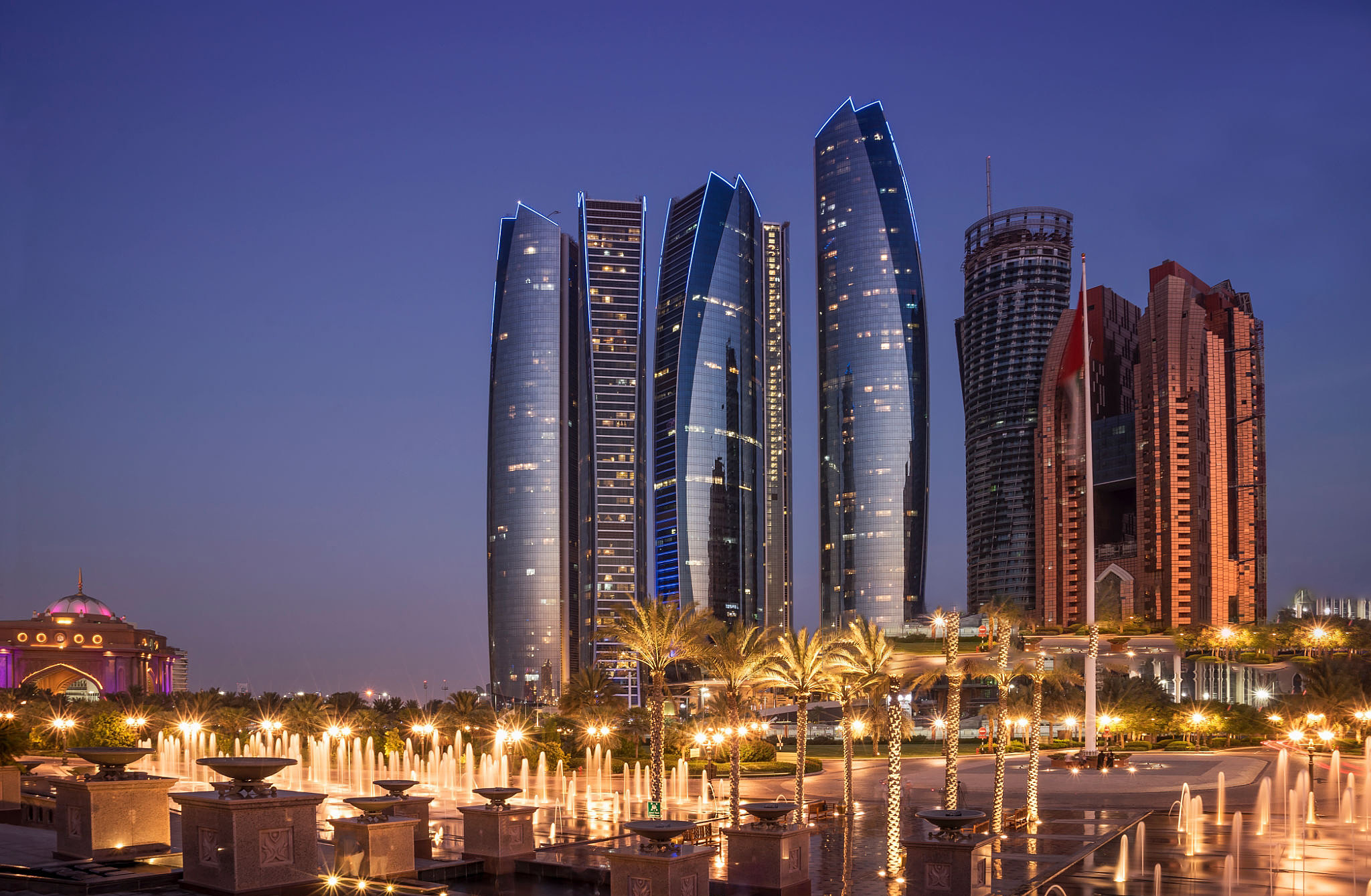 |
Abu Dhabi, UAE, illuminated at night. Photo: Suvarna arora. |
The conflict also triggered widespread flight cancellations across the Middle East. Although the UAE fully lifted airspace restrictions in early May, many international airlines have not yet resumed routes. German national airline Lufthansa announced a suspension of flights to Abu Dhabi until the end of October. Previously, major US and European airlines frequently altered their routes to avoid conflict zones.
According to data from real estate analytics firm CoStar, hotel occupancy in Abu Dhabi during the Eid al-Fitr holiday in mid-March decreased by 45% compared to the same period last year.
However, local tourism authorities report signs of market recovery. National airline Etihad is currently operating at 80% capacity.
Data from flight tracking website Flightradar24 indicates that during the third weekend of May, an average of 200 flights landed daily at Zayed International Airport. This figure is lower than the 250 flights recorded the day before the conflict erupted but shows significant improvement compared to the peak period of tension.
Alongside the Sphere project, Abu Dhabi's long-term tourism infrastructure plans remain unchanged.
In 2024, the Abu Dhabi Tourism Strategy 2030 launched, outlining a plan to spend billions of USD on infrastructure and other initiatives, including marketing.
Construction of other major attractions continues. The Guggenheim Museum in Saadiyat Island Cultural District "is still under completion and is expected to open by the end of 2026," Al Mubarak said.
In May 2025, Disney announced a new theme park in Abu Dhabi. "Our Abu Dhabi strategy remains unchanged," Disney stated in an earnings report earlier this month.
In 2025, Abu Dhabi welcomed 26.6 million visitors, including 5.9 million hotel stays. The city aims to attract 39.3 million visitors annually by 2030, increasing tourism's contribution to GDP to USD 24.5 billion.
Several experts agree that the conflict is unlikely to have a lasting impact on Abu Dhabi's efforts to attract tourists.
Aaron Goldring, a senior economist specializing in tourism at Oxford Economics consulting firm, noted that safety is a core factor for tourists. The UAE plans to launch more major marketing campaigns to reposition its image.
"Tourism is a particularly important and long-term strategic sector for Gulf nations," Goldring said.
Concurring, Professor Nancy Gard McGehee, a professor of hospitality and tourism management at Virginia Tech (US), believes the UAE benefits from financial resources and well-structured planning strategies, which help mitigate short-term damages caused by geopolitical factors.
"This is a long-term game for the UAE and other destinations in the Middle East. They are a wealthy nation with sophisticated tourism planning strategies," she said.
By Anh Minh (Source: CNN)