The Royal Society for the Protection of Birds (RSPB) announced on 18/6 that Major Oak had not sprouted leaves this spring, marking the end of a historic life. Experts stated that the tree's death was not a sudden shock but the cumulative result of various elements, notably the impact of millions of tourists, climate change, and natural senescence.
For over two centuries, Major Oak has been one of England's most popular attractions. The constant stream of visitors to Sherwood Forest compacted the soil around its base, hindering rainwater penetration. Recent surveys revealed that Major Oak's root system had been "suffocated" and severely lacked nutrients for an extended period.
"The tree not producing leaves this year is heartbreaking for everyone", said Hollie Drake, an RSPB representative.
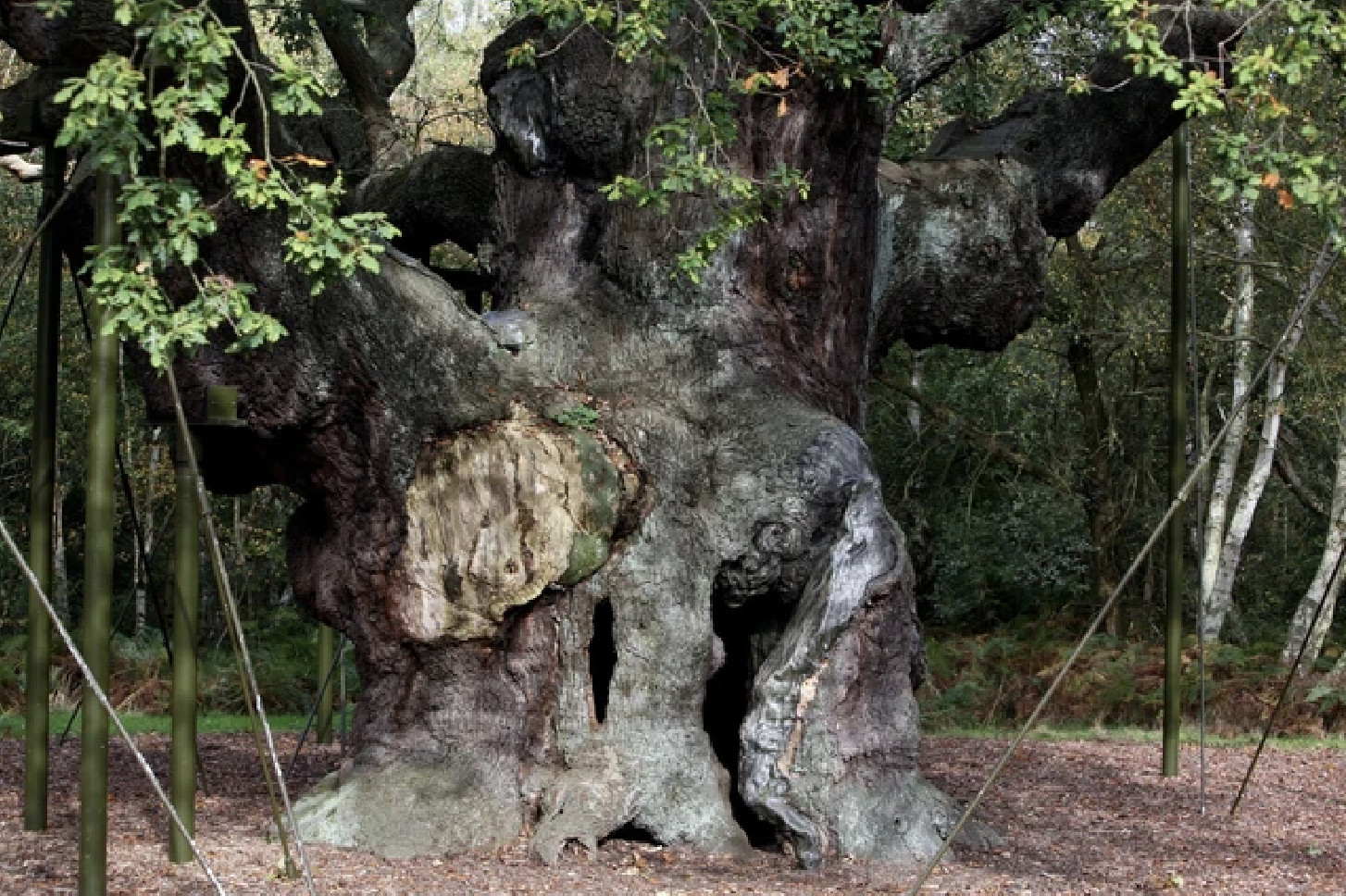 |
The thousand-year-old oak tree in Sherwood Forest, England. *Photo: AP*
According to English folklore, Robin Hood was an outlaw archer in the 13th century, renowned for robbing the rich to give to the poor. His image is inextricably linked with Sherwood Forest, which is believed to have been his hiding place while pursued by the Sheriff of Nottingham.
The name Major Oak emerged in 1790 after the tree was featured in one book on ancient oaks by Major Hayman Rooke. From then on, it became a celebrated destination, drawing visitors from across the globe.
The oak tree was confirmed dead on 18/6. *Video: Marissa Duhaney*
Researchers noted that in addition to tourism, prolonged heatwaves and droughts caused by climate change accelerated the tree's decline. For many years, Major Oak's large branches had required support from a system of cables and metal poles to prevent them from breaking.
Ed Pyne from the Woodland Trust likened ancient trees like Major Oak to "the white rhinos of UK conservation", as they are silently disappearing despite possessing priceless ecological and historical value.
Despite its death, Major Oak's trunk will remain in Sherwood Forest. According to the RSPB, the trunk will continue to play a vital role in the local ecosystem, becoming a habitat for many insects, fungi, and wildlife, while preserving an enduring symbol of the Robin Hood legend.
Tuan Anh (According to AP, People)