 |
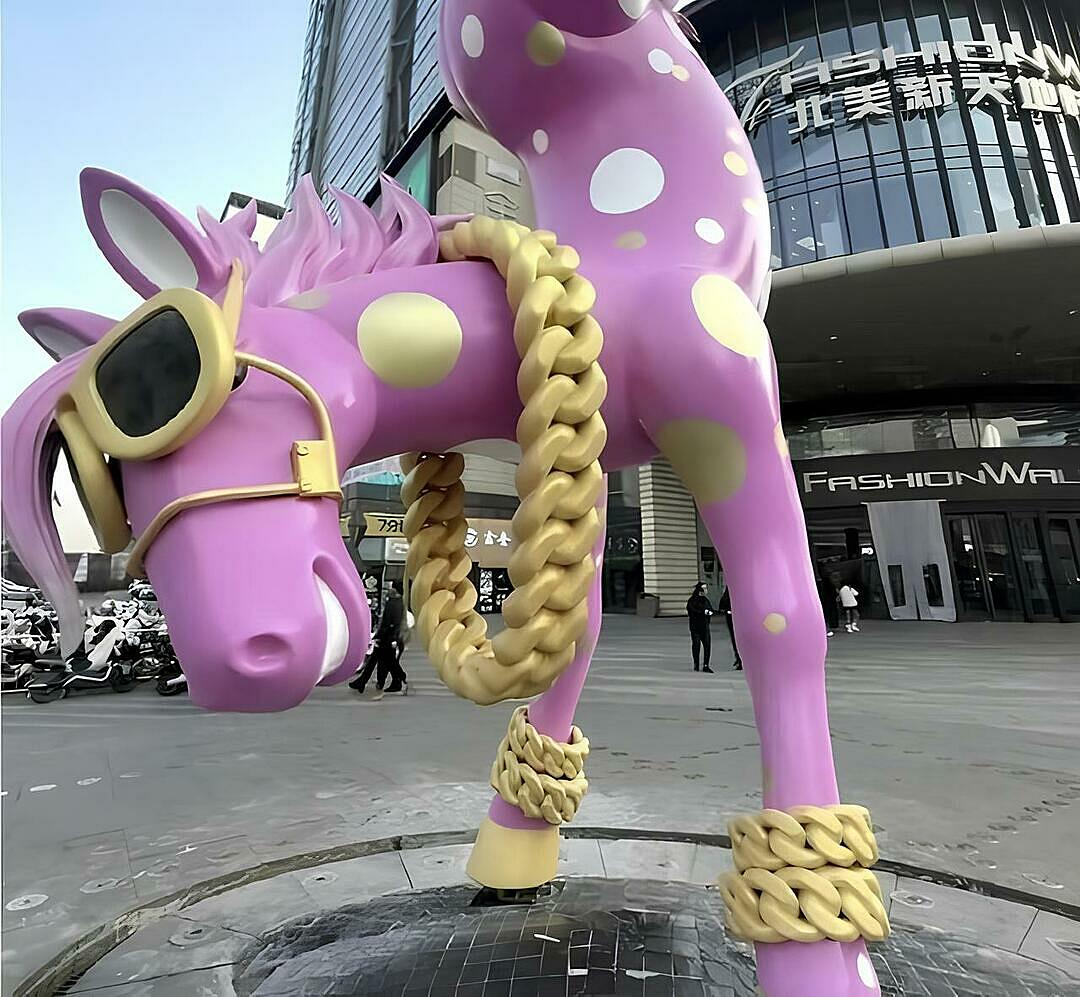
At a shopping mall in Taiyuan, Shanxi province, a horse statue depicting an inverted head and wearing accessories was criticized and dismantled on January 5, three days after its display. Some admirers of the statue contacted the mall's customer service and were told the reason was "force majeure." *Photo: Sina* |
Across China, various horse mascots have been erected to celebrate the Year of the Horse, showcasing a range of artistic interpretations from traditional to whimsical. These displays reflect both cultural reverence and modern creative expression, though not all have been met with universal acclaim.
One prominent example of public feedback occurred in Taiyuan, Shanxi province. A horse statue, featuring an inverted head and adorned with accessories, was displayed at a local shopping mall. However, it quickly drew criticism for its unusual design and was dismantled on January 5, just three days after its unveiling. Admirers who contacted the mall's customer service were informed the removal was due to "force majeure."
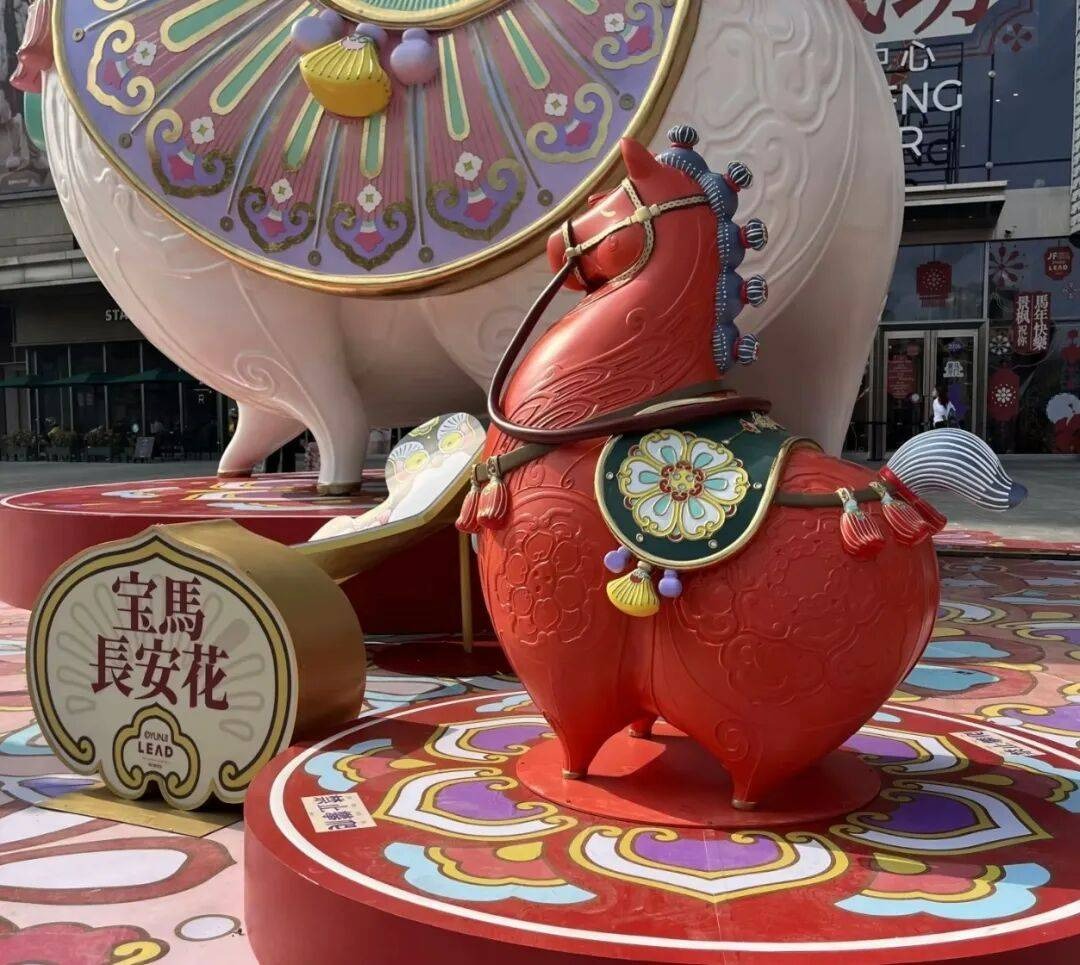 |
Alongside the "fat horse" is a smaller, differently colored statue with a similar meaning. Both statues are on free display for visitors until March 3. *Photo: Sohu* |
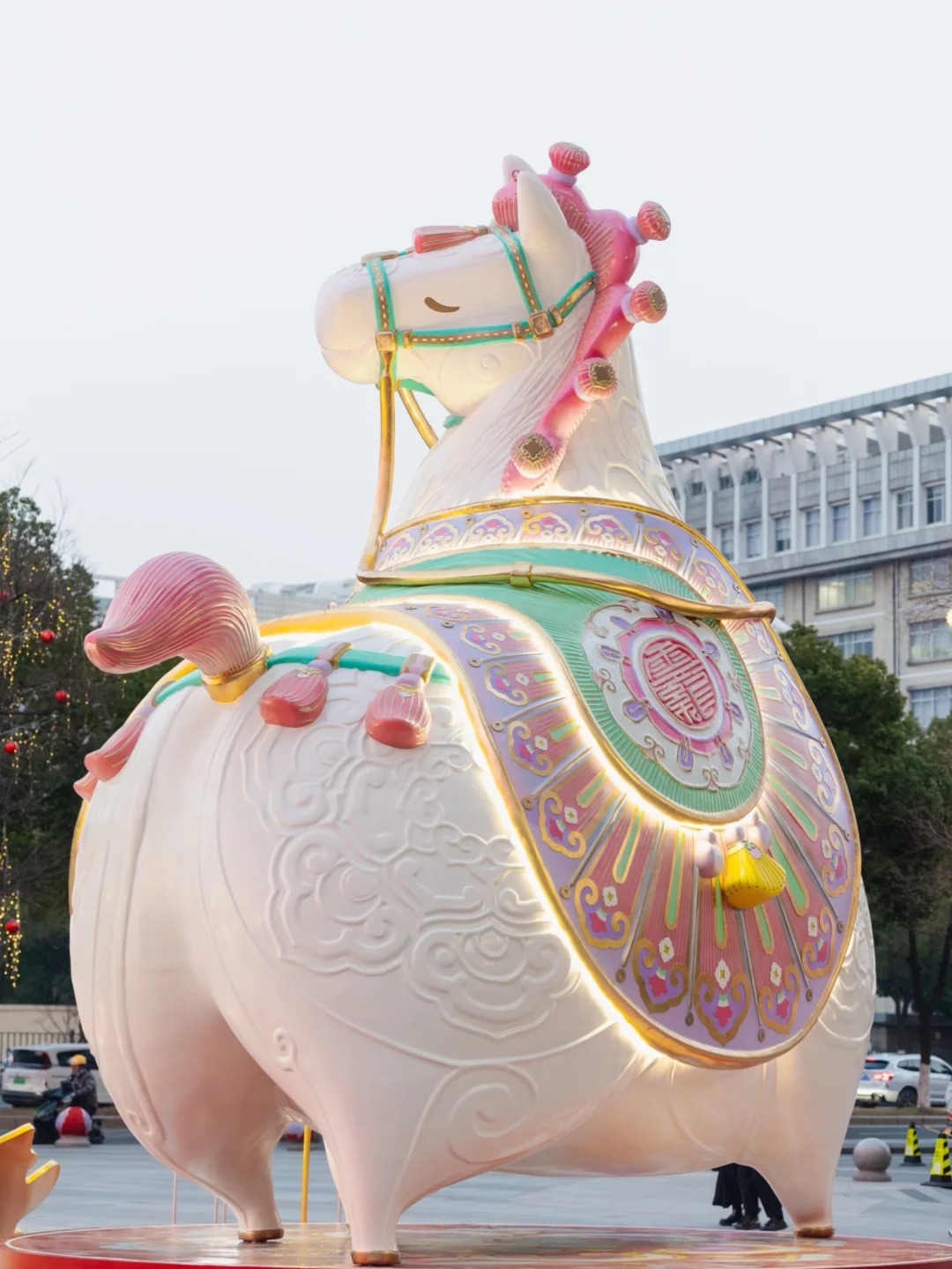
In contrast, the Jingfeng Commercial Center in Nanjing gained popularity for a giant horse statue, approximately 7.6 meters tall, distinguished by its rounded shape. This artwork is part of the "Bao Ma Truong An Hoa" art exhibition, organized to welcome the Year of the Horse. Its design draws inspiration from Tang dynasty horses, a historical period known for the aesthetic concept that 'fat is beautiful,' symbolizing prosperity, wealth, and power. The features are exaggerated with rounded forms, harmoniously blending classical tradition with modern cartoon style.
 |
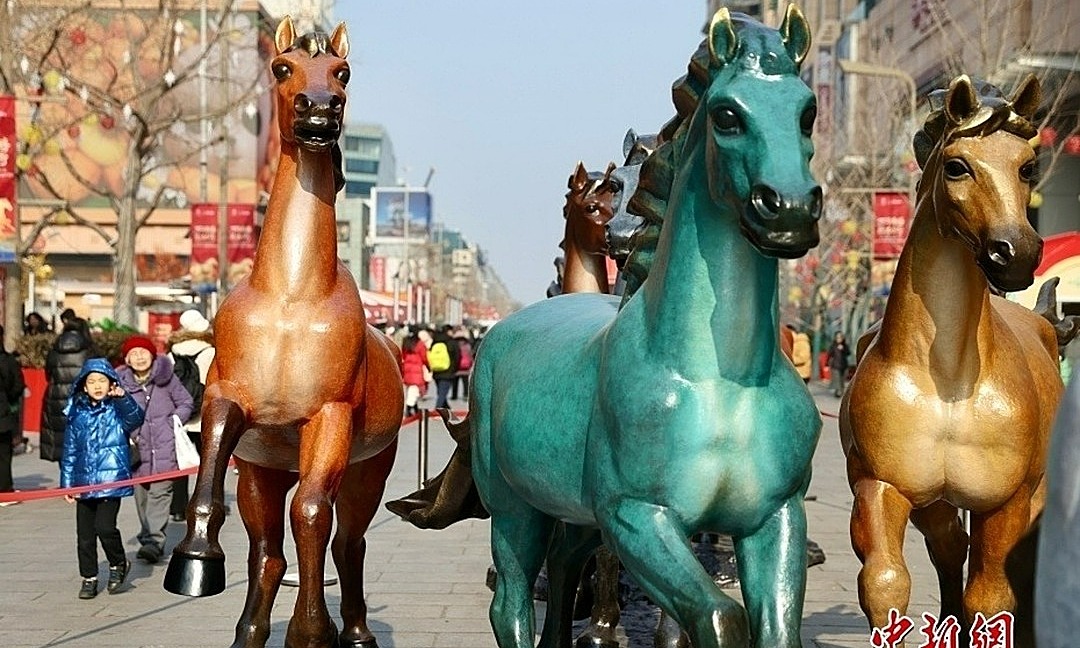
In Beijing, eight horses in various poses, such as neighing and galloping, are displayed on Wangfujing pedestrian street. The collection of statues draws inspiration from the legend of King Mu of Zhou's "eight steeds," symbolizing prosperity and national spirit. *Photo: Chinanews* |
Beijing also hosted several notable horse displays. On Wangfujing pedestrian street, eight horses in various poses, such as neighing and galloping, were showcased. This collection of statues draws inspiration from the legend of King Mu of Zhou's "eight steeds," symbolizing prosperity and national spirit. Furthermore, the 700-year-old Hong En Temple in Dongcheng district hosted the "Galloping Ahead!" wood sculpture exhibition. A 2.83-meter-tall dragon horse (long ma) artwork stood at its center. Visitors to the temple could also admire other works inspired by Chinese culture, including Sun Wukong, Yang Jian, and Nezha.
 |
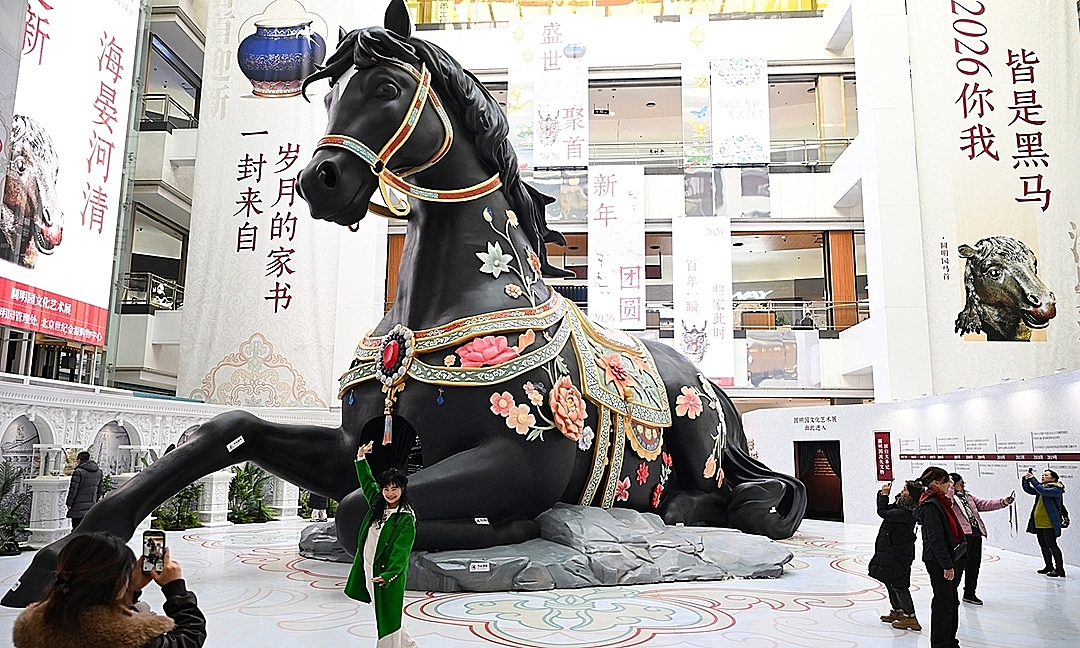
A giant black horse artwork at Beijing Century Golden Resources shopping mall. *Photo: CNS* |
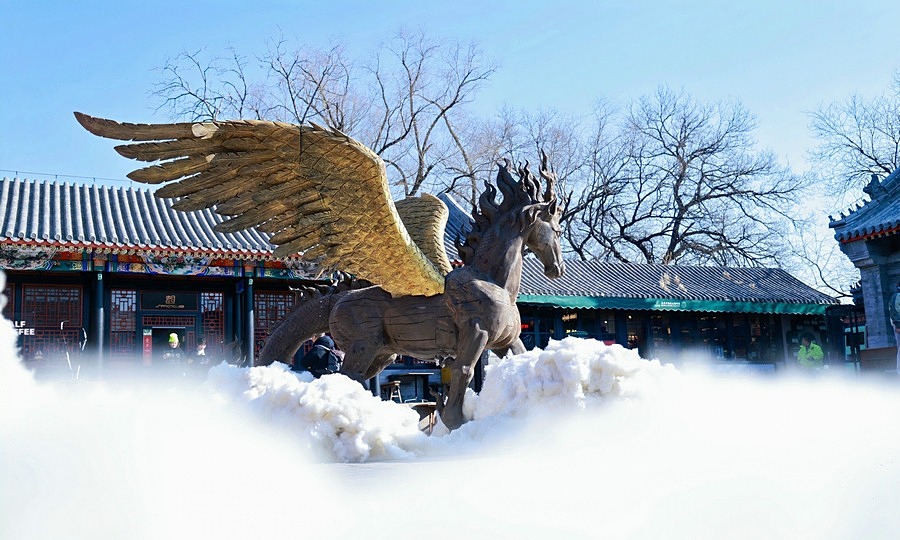 |
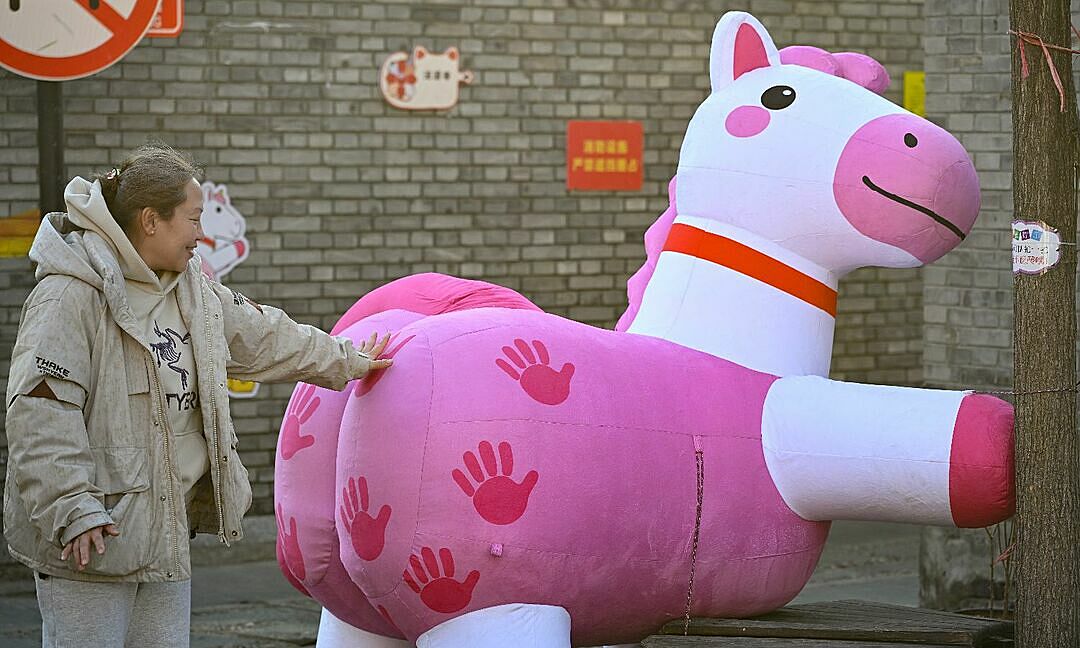
In Lan Mian Hu Tong alley, part of Xicheng district and known for its creative shops, horse artworks welcoming the New Year have been on display since early January. *Photo: JPChina* |
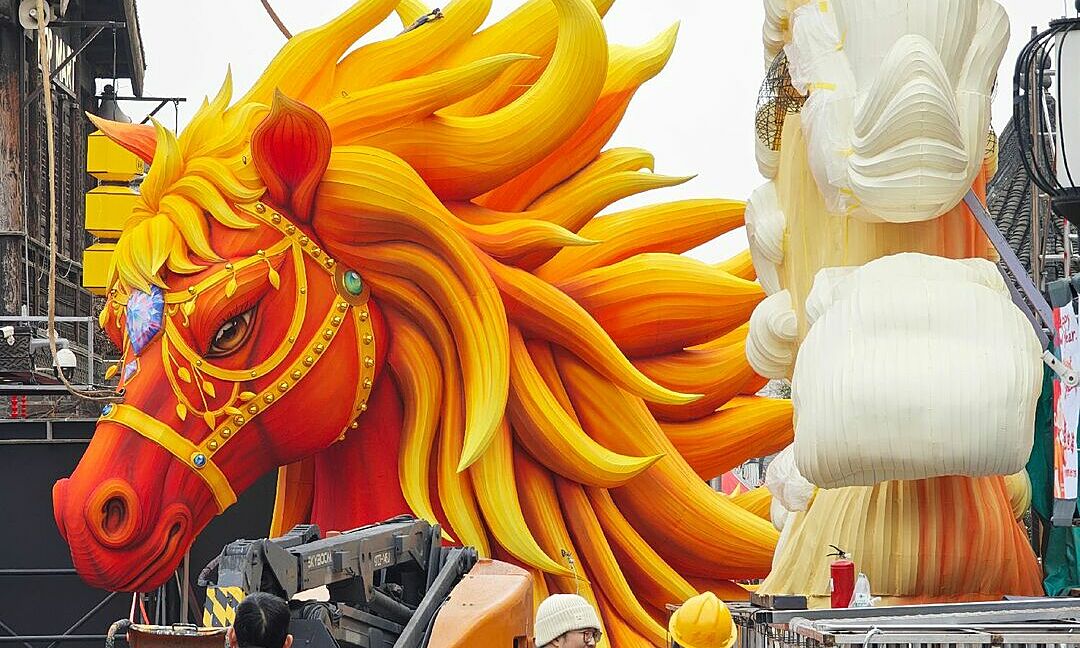
Other displays in Beijing included a giant black horse artwork at Beijing Century Golden Resources shopping mall. In Lan Mian Hu Tong alley, part of Xicheng district and known for its creative shops, horse artworks welcoming the New Year have been on display since early January. Meanwhile, back in Nanjing, a giant horse-shaped lantern artwork was a highlight of the 40th Qinhuai Lantern Festival.
 |
A giant horse-shaped lantern artwork at the 40th Qinhuai Lantern Festival in Nanjing. *Photo: JPChina* |
 |
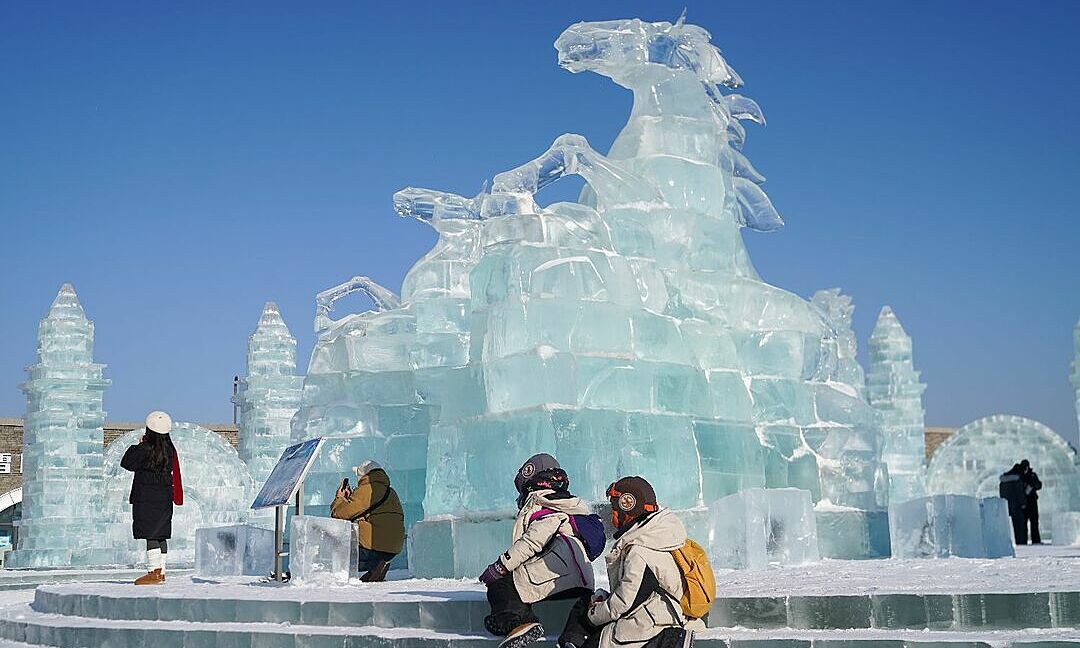
In Harbin, Heilongjiang province, several horse-shaped ice sculptures have been erected in the Ice and Snow World area. Additionally, some horse artworks made from snow also attract attention at this recreational park. *Photo: JPChina* |
 |
Further north, in Harbin, Heilongjiang province, several horse-shaped ice sculptures were erected in the Ice and Snow World area, adding a unique frosty dimension to the celebrations. Additionally, some horse artworks made from snow also attracted attention at this recreational park.
 |
Hoai Anh (According to Sina, Sohu, JPChina)