Globally, many diners may be familiar with spicy Sichuan and Chongqing hotpots, the rich Japanese shabu-shabu and sukiyaki, or the diverse Korean jeongol. However, upon its introduction to Vietnam, this dish was fully localized, becoming a mirror reflecting the Vietnamese culinary mindset: a respect for harmony, a preference for light and refined flavors, and a culture that values togetherness, writes the Michelin Guide.
Michelin Guide experts explored what makes Vietnamese hotpot special through a conversation with a chef from a Bib Gourmand-awarded restaurant (signifying good quality, good value restaurants) in TP HCM.
"Rich, delicate, and natural," the chef replied when asked about hotpot, one of Vietnam's popular dishes. The richness comes from the ingredients, the delicacy from the spices, and the naturalness from the way the broth is prepared.
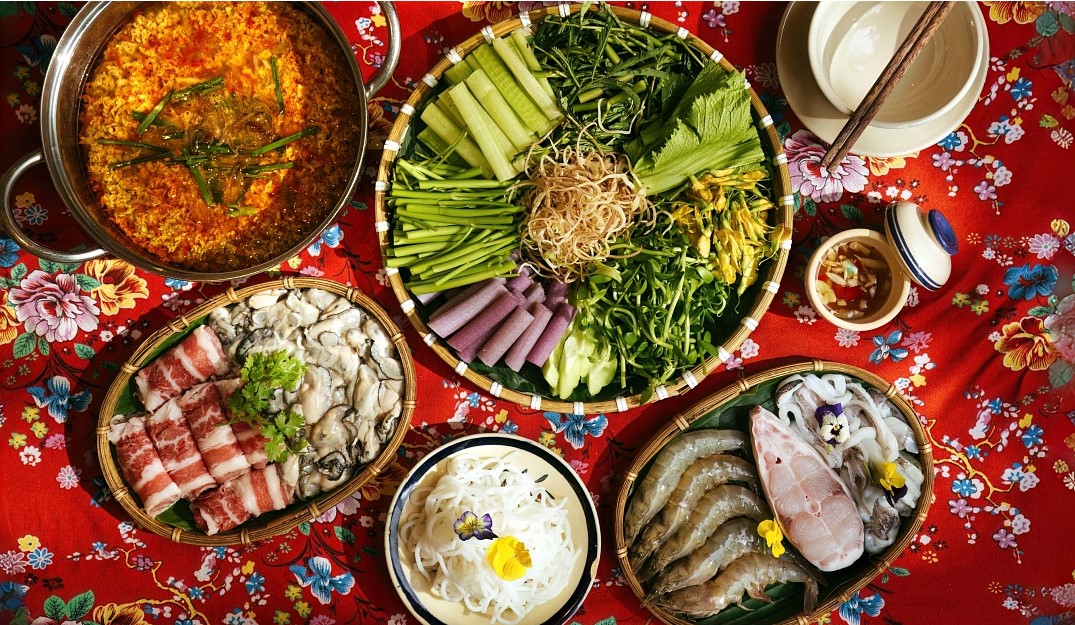 |
Hotpot at a Bib Gourmand restaurant in TP HCM. *Photo: Michelin Guide*
There are no precise records of when hotpot first appeared in Vietnam. However, around the mid-1960s, steaming hotpots began to appear on the tables of many reputable restaurants in TP HCM. Diners in the southern region quickly embraced this dish, making it their own and leading to many variations such as fermented fish hotpot, assorted hotpot, oxtail hotpot, and even snake hotpot.
Vietnamese hotpot celebrates the natural purity of each ingredient. Therefore, the broth is often cooked light and clear to allow the original flavors to shine, then refined to achieve balance and elegance.
By the early 2000s, hotpot continued its journey, spreading to the northern region, becoming a part of daily culinary life in Ha Noi, many neighboring provinces, and the central region. Beyond its taste, hotpot also connects with a deep human instinct: the joy of reunion and sharing.
More than just a dish, hotpot creates a shared rhythm at the dining table. Conversations linger, laughter softens, and time seems to slow as the hotpot simmers.
Hotpot also respects individual preferences. From the same pot of broth, everyone can choose according to their liking. Some prefer light flavors, others rich; some prioritize vegetables, others seafood. There is no rush, no imposition, only a sense of harmony that is distinctly Vietnamese, where each individual finds their place in a shared meal.
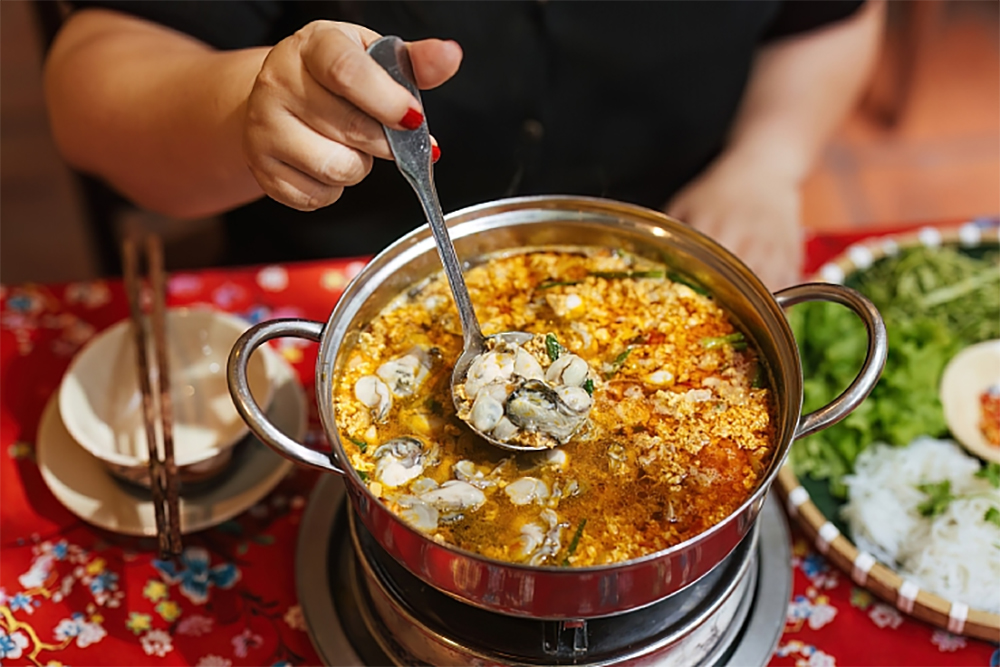 |
Oyster and pork belly hotpot. *Photo: Michelin Guide*
"Hotpot varies by region, just like our climate and accents," the Michelin chef added. Where there is sea, there is seafood hotpot. Where there are forests, there will be mushroom hotpot or chicken cooked with forest leaves. Where there are rivers, there will be fish hotpot served with dien dien flowers, aquatic vegetables, or fermented fish hotpot. Each region has its own hotpot versions, fully reflecting the "soul" of that land.
In the northern region, hotpot often features a clear, light-flavored broth. The delicate sweetness comes from bones and a slow, patient simmering process, rather than relying on strong spices. With four distinct seasons, the colder months naturally become an ideal time for hotpot dishes such as sour chicken leaf hotpot (with a sour taste) or crab noodle hotpot served with beef shank.
Additionally, Michelin suggests several hotpot types and recommended establishments: milk oyster and pork belly hotpot at Nha Tu (TP HCM), seafood hotpot at My Hanh (Da Nang), and eel hotpot at Ha Noi Garden.
Tam Anh (according to Michelin Guide)