Agoda's 2026 travel outlook report, released on November 25, offers insights into how Vietnamese travelers are changing their behavior and mindset. The report is based on a survey of over 3,000 travelers across 9 key markets: India, Indonesia, Japan, Malaysia, the Philippines, South Korea, Taiwan, Thailand, and Vietnam.
The data reveals a clear shift in traveler sentiment, with 50% of Vietnamese respondents prioritizing domestic travel plans for 2026 over international trips. This figure has nearly doubled from 26% last year, reflecting a significant change driven by economic uncertainties and rising international airfares.
This trend is part of a broader wave across Asia, where 35% of respondents indicated they would travel domestically more than internationally – a sharp increase from 15% last year. This trend coincides with the strong emergence of "secondary destinations," which are lesser-known cities or localities outside traditional tourism hubs.
Beyond geographical scope, most Vietnamese travelers are carefully considering their budgets. Over 90% stated they are willing to spend a maximum of approximately 2,6 million VND for a single night's stay. Notably, 56% of travelers plan to tighten their belts, aiming to spend under 1,3 million VND per night. This places Vietnam among the top three markets in the region, alongside Malaysia and Indonesia, for price-conscious accommodation choices.
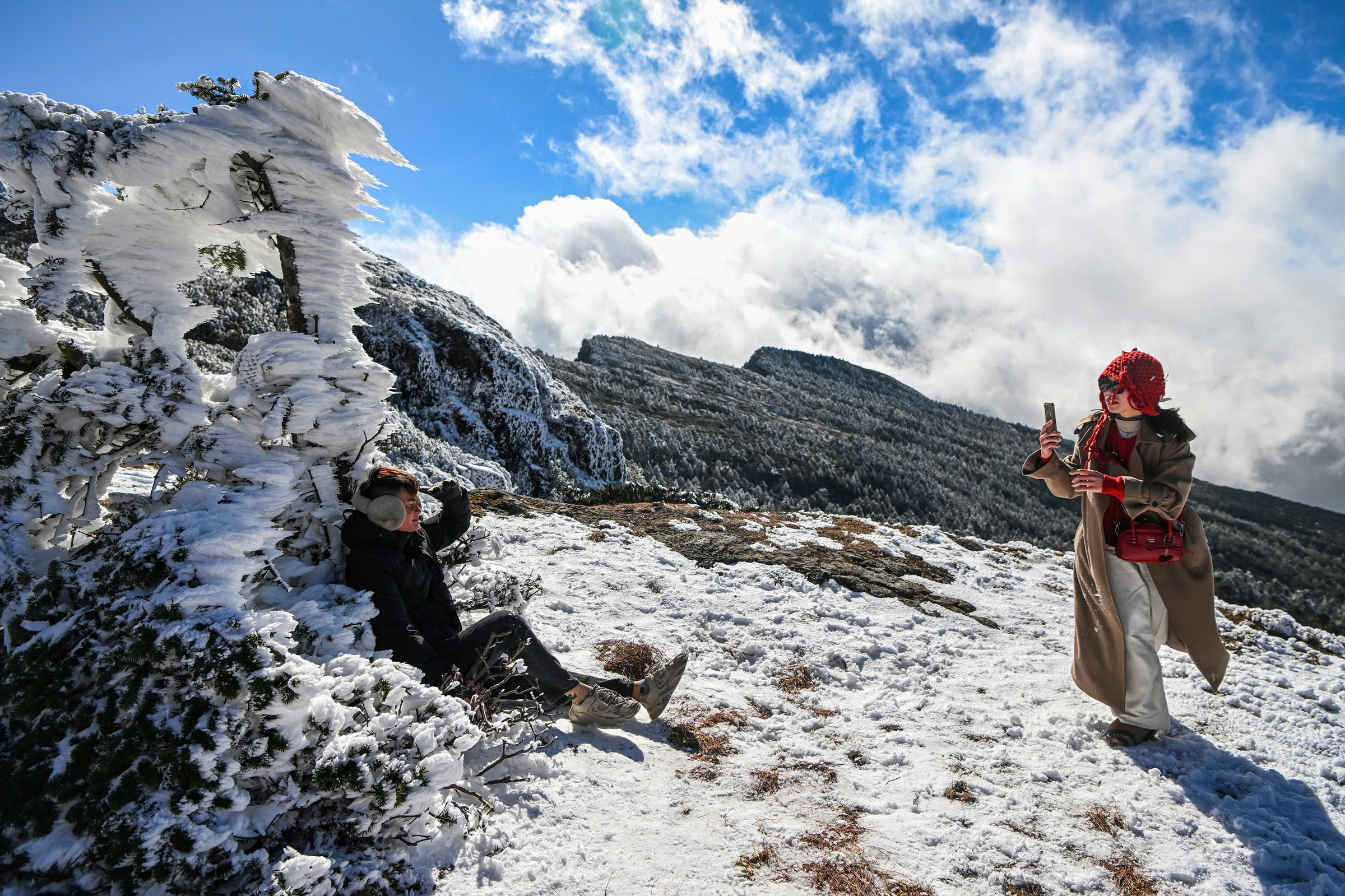 |
Khach Viet chup hinh o nui tuyet Kieu Tu, Van Nam, Trung Quoc Anh: Giang Huy
Another factor encouraging travelers to choose domestic destinations is passport power. According to the Henley Passport Index 2025, the Vietnamese passport currently ranks 89th, offering visa-free access to 50 countries.
The complex and costly visa application process for developed markets remains a significant hurdle. The report indicates that 58% of travelers acknowledge these administrative barriers directly influence their choice of destination, and 91% confirm they would travel abroad more if visa policies were relaxed.
The primary motivation for Vietnamese trips remains the need for relaxation and rejuvenation, accounting for 45% of journeys. However, a unique characteristic of Vietnamese travelers compared to the rest of the region is their passion for food. A significant 35% consider culinary experiences as their reason to travel, making it the second-highest rate in Asia, trailing only Taiwan (47%) and surpassing South Korea (42%).
A bright spot in the 2026 travel landscape is the high level of technology adoption among Vietnamese travelers. While many countries remain hesitant, Vietnam leads in the intention to use artificial intelligence (AI) for travel planning. Over 50% of Vietnamese travelers state they are "very likely" to use AI for planning, which is higher than the average of 63% for the entire Asian region.
Beyond simple information retrieval, users expect "agentic AI" – technology that acts as an all-powerful virtual travel agent. This system could automatically find cheap flights, suggest personalized itineraries based on a tight budget, and even automatically rebook transfers if a flight is delayed or change destinations based on real-time weather forecasts.
In addition to technology, major cultural and entertainment events (music tourism) are becoming a strong lever for the tourism industry. A prime example is the frenzy for concert tickets of K-pop groups or European-American artists in Singapore and Thailand, which previously led to a surge in accommodation searches from Vietnamese travelers.
During the Blackpink concert in Bangkok in October, accommodation searches in the city increased by 18% compared to the previous month. According to Agoda, accommodation searches in Bangkok from Vietnamese travelers surged by 266% during this period, significantly higher than Malaysia, which ranked second with 107%.
The "set-jetting" trend, where travelers visit famous film locations, is also noteworthy, with 13% of Vietnamese travelers hoping to visit settings from films such as "The White Lotus" or "Jurassic World."
The 2026 travel outlook for Vietnamese shows that despite tightening budgets, Vietnamese travelers remain open-minded, leading in technology trends, and willing to pay for high-quality emotional experiences.
Hoai Anh