Chinese airlines face potential losses of billions of yuan as passengers are massively cancelling flights to Japan amid diplomatic tensions.
According to Li Hanming, an independent aviation analyst, Chinese airlines have recorded nearly 491,000 cancellations for flights to Japan since 16/11, representing 32% of total bookings. The percentage of affected flights reached 82% on 16/11 and 75,6% the following day.
Cancellations on Sunday were 27 times higher than new bookings. Li suggested that safety concerns are influencing passenger decisions. The magnitude of these cancellations is comparable to the initial Covid-19 outbreak in early 2020.
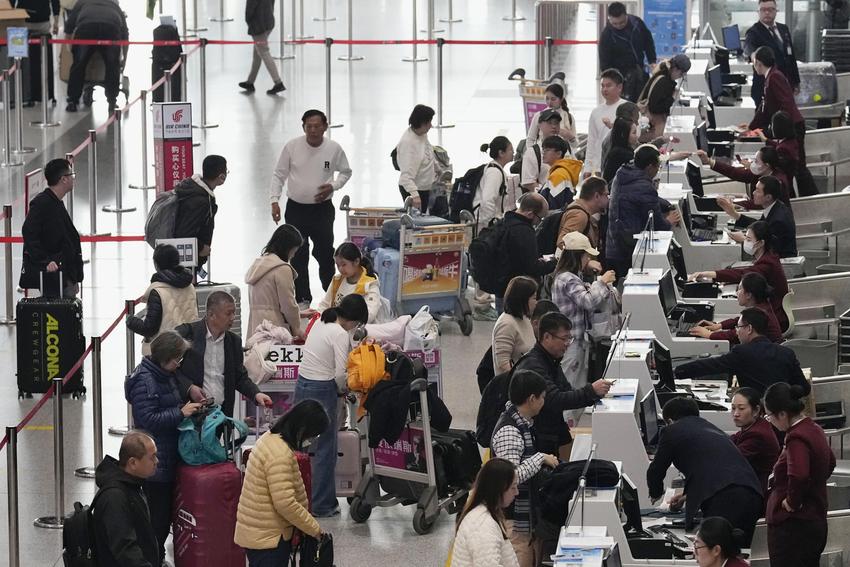 |
Chinese passengers queue for check-in at Beijing Capital International Airport, China on 17/11. *Kyodo* |
Chinese airlines currently hold the top 5 positions in market share for routes to Japan. Experts anticipate these carriers will incur heavier losses than their Japanese competitors.
Despite signs of diplomatic de-escalation, airlines still expect to significantly adjust capacity in the coming weeks. On 15/11, the three largest state-owned carriers—Air China, China Southern, and China Eastern—along with 4 other airlines, announced free refunds or exchanges for travel booked until 31/12.
China Trading Desk, based in Singapore, reports that bookings for flights to Japan in the coming weeks have decreased by more than 30% compared to last week. Most cancellations involve flights scheduled to depart before January.
China was Japan's largest international tourist market during the first 9 months of the year, accounting for approximately 7,49 million visitors, according to Kyodo News, citing Japanese government data.
Over 6,7 million Chinese tourists visited Japan in the first 8 months of 2025, a significant increase from 4,6 million during the same period last year, according to the Japan National Tourism Organization (JNTO). Analysts attribute this trend to short flight times, cultural attractions, and favorable costs due to the weakened yen.
Many major Chinese travel agencies have ceased selling tours to Japan, Japan Today reported on 17/11. A large state-owned travel agency in Beijing confirmed it stopped organizing individual and group tours to Japan from 16/11, citing "the current situation between the two countries".
The agency also stated it has halted visa application support services and will provide full refunds for customers who purchased Japan tours. Searches for keywords like "Japan" or "Tokyo" on its website no longer yield any related products. A private travel company in the capital likewise confirmed it stopped accepting new tour registrations for Japan.
Some businesses within Japan's tourism industry are concerned this development could lead to a decline in profits. Several hotels have already reported room cancellations from Chinese guests. The Imperial Hotel Group confirmed receiving cancellation and postponement requests from some Chinese companies that booked rooms and banquets, but noted no impact yet from individual travelers. The Colowide Group, which operates a chain of Japanese restaurants, also expressed concern about the latest developments between the two nations.
For Chinese tourists, Japan remains one of the most popular international destinations, alongside South Korea, Thailand, and Malaysia.
During the July-September period, Chinese tourist spending in Japan reached approximately 590 billion yen (3,8 billion USD), marking the highest expenditure among all markets, according to JNTO data.
By Anh Minh (Sources: SCMP, Japan Today)