Over the past month, the monstera fruit has unexpectedly become a social media sensation. Numerous mukbang videos showcasing the peeling of its scaly layers to reveal the white flesh inside have garnered millions of views. This surge in user curiosity quickly led to the once-obscure fruit selling out at many imported fruit stores and nurseries in Ho Chi Minh City.
Nguyen Thi Be Ba, Deputy Director of the Saigon Botanical Garden's Plant Enterprise, identified the currently popular fruit as being harvested from the Monstera Deliciosa plant, also known as the South American split-leaf philodendron, belonging to the Araceae family. This plant, native to the tropical forests of southern Mexico and Central America, is now widely cultivated globally as an ornamental due to its large, deeply lobed leaves.
The monstera fruit is cylindrical, measuring approximately 15-30 cm in length, with a surface covered in green, scale-like hexagonal segments. After fruiting, the plant requires about one year for the fruit to fully ripen.
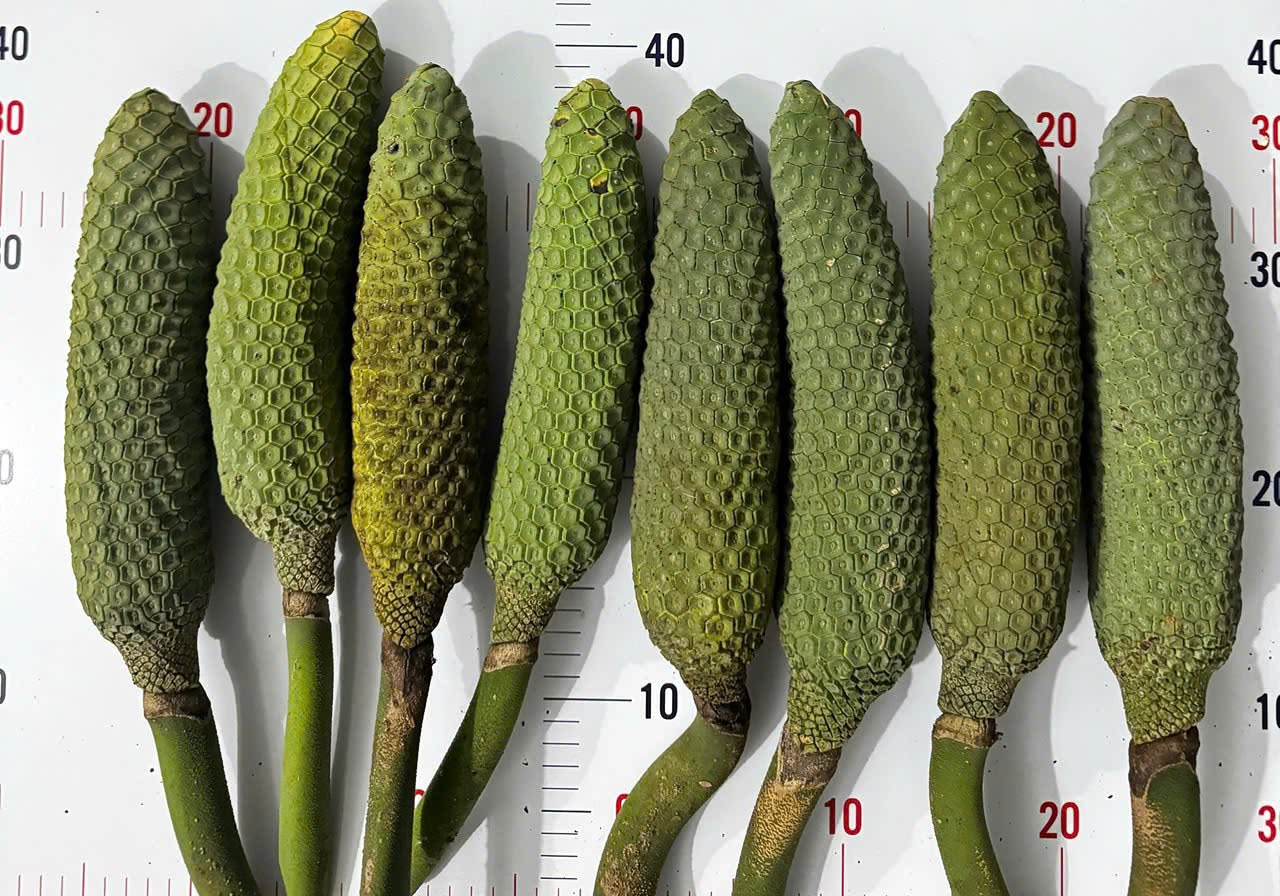 |
Monstera fruit at Bao Chi's store, displayed for customers at prices ranging from 300,000 to 400,000 dong. *Photo: CC Finefoods*
Pham Dang Son, owner of a nursery specializing in supplying monstera plants to the southern market, explained that most growers cultivate this plant for ornamental purposes. To ensure the plant focuses its energy on leaf growth, many nurseries typically remove the fruit while it is still young.
"Many who have cultivated monstera for years are unaware that this species can produce fruit," he stated.
According to the Singapore National Parks Board (NParks), Monstera Deliciosa is also known as the "fruit salad plant" because its flavor evokes various tropical fruits, including pineapple, banana, and jackfruit. This distinct taste has made the fruit a popular subject for content creators worldwide to feature in mukbang videos.
Botanical experts, however, caution that this fruit is not edible immediately after being picked. A unique characteristic is that the fruit does not ripen all at once; instead, it ripens progressively from the base to the tip. When a section reaches maturity, its scaly segments will naturally detach, exposing the creamy white flesh underneath.
Consumers should only eat the flesh found beneath segments that have naturally separated. Unripe portions must be allowed to continue ripening naturally over the next few days. Unripe fruit contains numerous needle-shaped calcium oxalate crystals, which can irritate the mucous membranes of the mouth and throat, causing a burning, itching, or swelling sensation when chewed.
Food safety studies also advise against peeling the scaly layer to hasten ripening. The most reliable indicator of ripeness is when the segments naturally detach from the fruit's surface. Eating unripe portions can result in prolonged mouth irritation for several hours.
Nguyen Ngoc Quy, who runs a large ornamental plant community in Vietnam, shared his experience of eating the fruit, confirming that he experienced mouth itchiness despite its unique flavor, which he likened to custard apple with hints of banana.
According to Quy's research, the monstera plant was introduced to Vietnam by the French in the early 20th century, alongside various ornamental aroids and colorful foliage plants. These were primarily cultivated in French villas within the Central Highlands region. Many monstera plants nearly 100 years old still exist in this area today.
In 2017, monstera plants created a "fever" within Vietnam's ornamental plant community, with a small plant costing around 700,000 dong. Today, the price has decreased to 400,000 dong for a medium-sized plant, which is equivalent to the current market price of a single monstera fruit. It takes approximately three years for a plant to reach maturity and bear fruit, and then about one year for the fruit to ripen.
"The extended cultivation period and extremely limited supply make this fruit rare in the market," he explained.
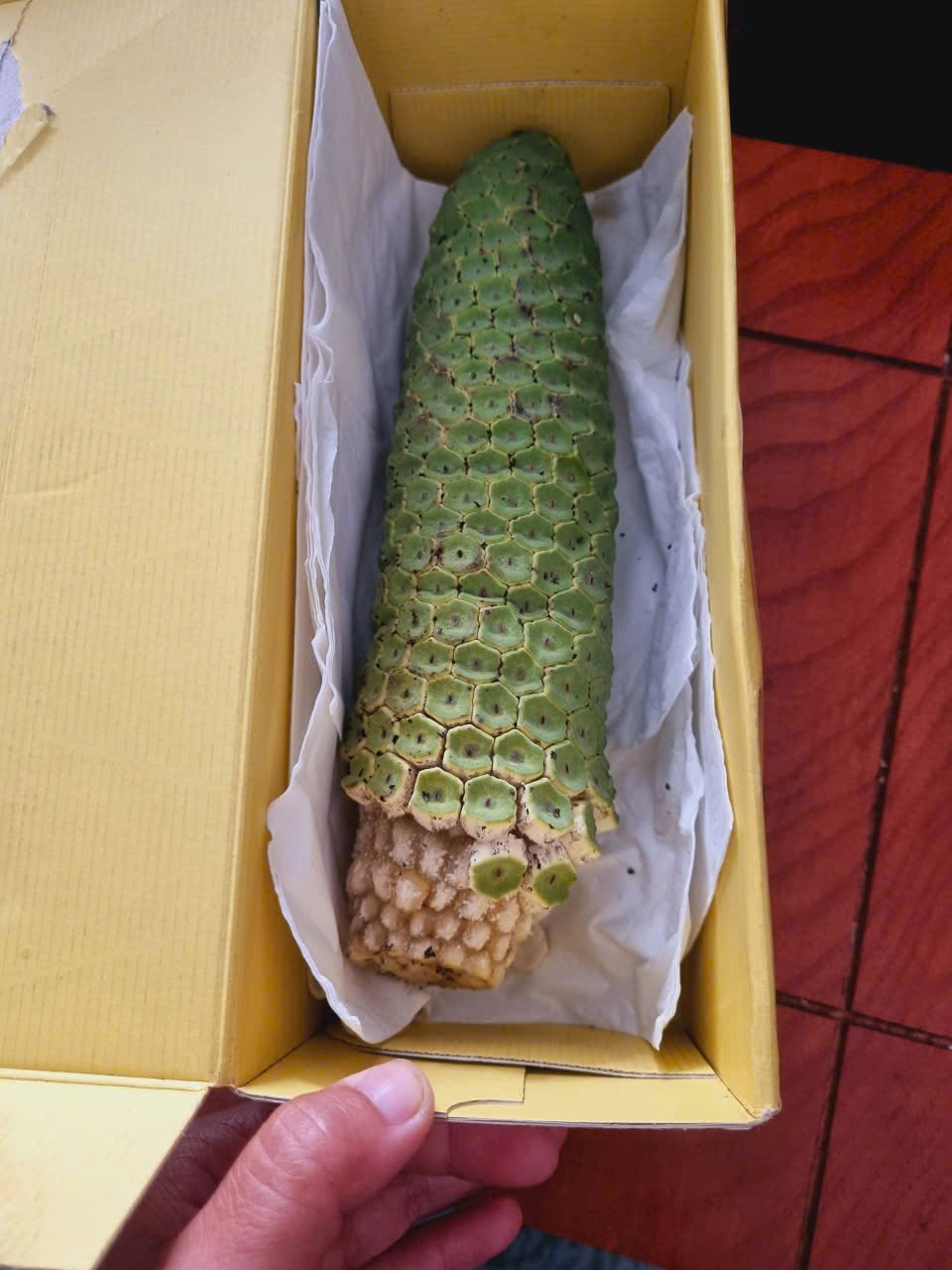 |
A ripe monstera fruit. *Photo: Vinh Hien*
Currently, the monstera fruit craze shows no signs of cooling down in Ho Chi Minh City. Bao Chi, owner of a fruit business with branches in Ho Chi Minh City and Dong Nai, has been selling monstera fruit for approximately two years. However, in the past two months, customer demand has increased by over 30%. Each fruit is priced between 300,000 and 400,000 dong, with supplies primarily sourced from nurseries in Da Lat.
"Due to the very limited supply, customers must place advance orders. Some individuals have to wait an entire week to receive their fruit," Chi stated.
Given the restricted supply, coupled with a selling price of several hundred thousand dong per fruit and uncertainty regarding consumer demand once the trend subsides, many businesses are importing only small quantities or operating on a pre-order basis.
Tuan Anh