Nördlingen, a small town in Bavaria, southern Germany, attracts tourists with its "diamond town" moniker. Scientists estimate the diamond quantity here to be approximately 72,000 tons.
The diamonds originated from a meteorite impact approximately 15 million years ago, forming the Nördlingen Ries crater, which measures over 14 km in diameter. This crater is the site of modern-day Nördlingen.
The town's residents were unaware of the vast diamond presence until the 1960s, when American geologists Eugene Shoemaker and Edward Chao arrived to conduct a survey.
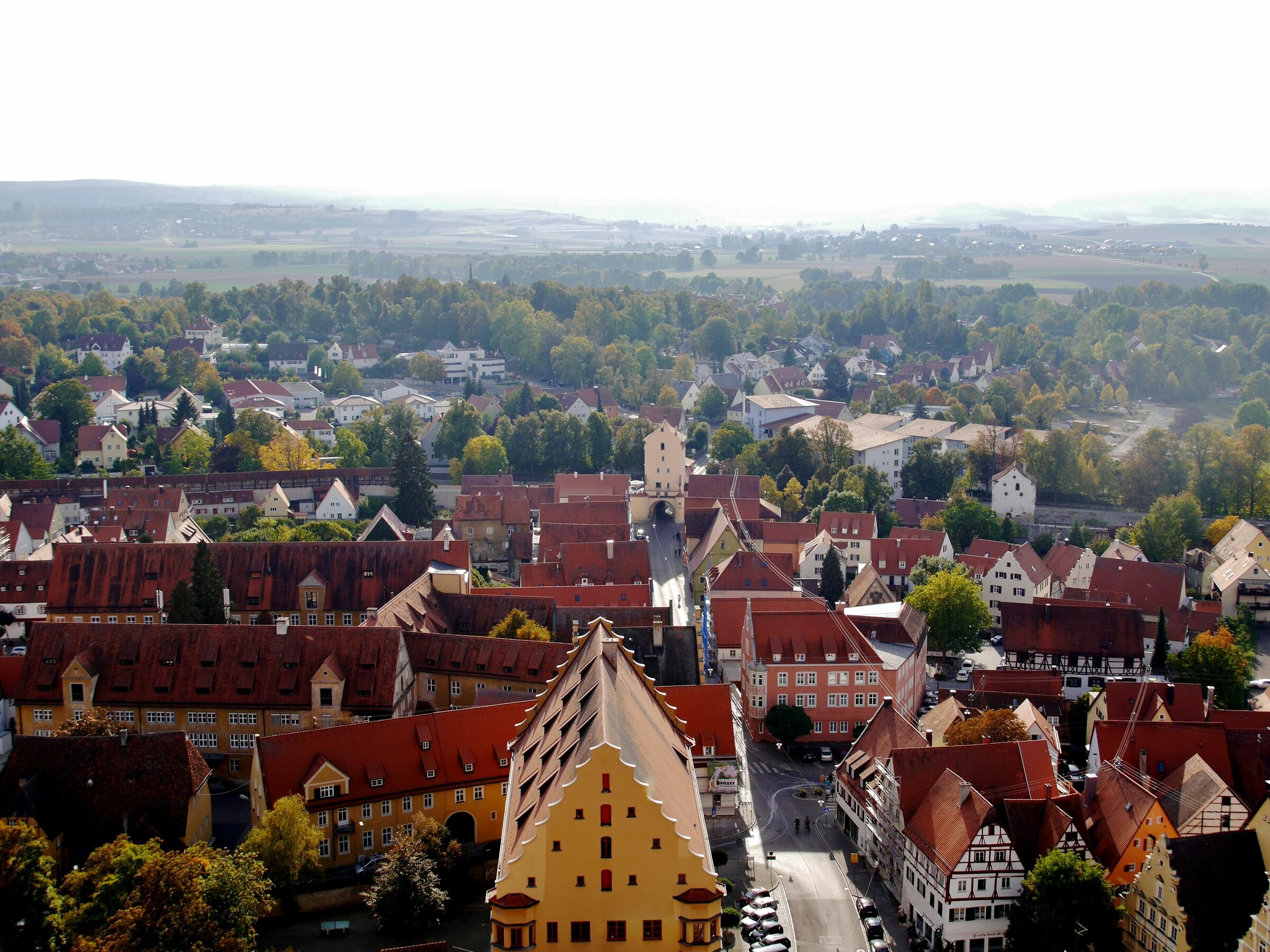 |
Nördlingen from above. *Photo: Expedia*
Initially, local residents believed the Nördlinger Ries crater resulted from a volcanic eruption. However, Shoemaker and Chao suspected it was formed by an asteroid impact with Earth.
Upon their visit, observing the church walls scattered with tiny diamond clusters, they confirmed their hypothesis.
The powerful cosmic impact generated suevite, a rock type containing angular fragments of glass, crystals, and diamonds. Under an estimated pressure of up to 60 GPa from the explosion, the local graphite-containing gneiss rock transformed into diamonds.
In 898, the first residents began settling, establishing Nördlingen. By the Middle Ages, they constructed a protective town wall, which remains intact today despite numerous conflicts. For houses and public buildings, builders utilized the most readily available local material: suevite rock.
For centuries, local residents remained unaware that their building stones contained diamonds.
The diamond town in Germany. *Video: Youtube/Philip Dukakis*
St. Georgs Church, a famous town landmark, was constructed entirely from suevite rock and contains approximately 5,000 carats of diamonds. However, their microscopic size – the largest measuring only 0,3 mm – renders them without economic value.
"You can only observe them under a microscope", said Gisela Pösges, a geologist and Deputy Director of the Ries Crater Museum in Nördlingen.
By Anh Minh (According to Amusing Planet, Travelbook Magazine, Smithsonian)