According to data from the US magazine Real Simple, up to 38% of travelers open and arrange their luggage directly on the bed. US travel and health experts state that this is one of the quickest ways to turn a bed into a breeding ground for bacteria and pollutants.
According to the US travel magazine Travel & Leisure, suitcases have traveled through many places and accumulated dirt before reaching a hotel room. Therefore, the first place travelers should not put their luggage is the bed in the room.
Timothy Southern, director of the Nevada State Public Health Laboratory and associate professor of microbiology-immunology at the University of Nevada, Reno School of Medicine, stated that dirt and pathogens are not only found on the surface of suitcases.
Suitcases can act as fomites – objects that carry and transmit contaminants from one surface to another. He said that some bacteria and viruses can survive on suitcase surfaces, then transfer to bedding.
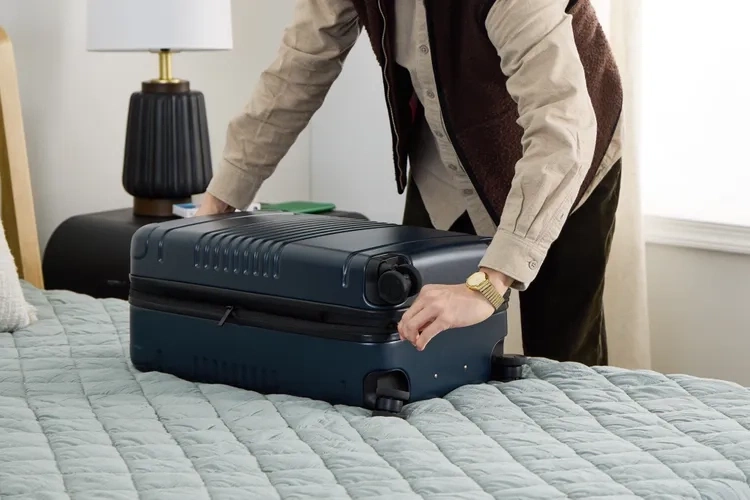 |
Many travelers habitually place suitcases on beds. Photo: T&L |
Many travelers habitually place suitcases on beds. Photo: T&L
Beyond bacteria and viruses, suitcases present another notable concern: bed bugs.
These small insects can hide in suitcases, clothes, bedding, and furniture crevices. Suitcases are one of the easiest means for them to travel from one location to another. Bed bugs can also crawl into suitcases and return home with travelers.
"Bed bugs reproduce and spread rapidly; they do not differentiate whether you are staying in a 5-star hotel or a budget guesthouse," Southern said.
So, where should suitcases be placed? According to experts, most hotels provide luggage racks for travelers.
Southern recommends placing suitcases on these racks. This keeps luggage at a convenient height for access and reduces the risk of carrying dirt or bed bugs.
Julie Durso, a US travel consultant, agrees with this advice. If a hotel room lacks a luggage rack, she recommends placing suitcases on sturdy furniture like a desk, dresser, or a bench at the foot of the bed.
If the room lacks any of the above options, the bathroom floor is the best alternative. Hard, non-porous tile surfaces are less conducive for bed bugs to reside in compared to carpets or upholstered furniture.
Anh Minh (According to Travel & Leisure)