Shinsegae Centum City, located in the Haeundae district of Busan, South Korea, is a large shopping, entertainment, and relaxation complex spanning approximately 294,000 square meters. The facility opened in March 2009 and was recognized by Guinness World Records as the world's largest department store in June of the same year. Behind its luxury brand counters lies Spa Land, an area divided into separate male and female sections for bathing, soaking in hot pools, and enjoying saunas. This experience is deeply rooted in Busan, the city where Korea's first jjimjilbang was established.
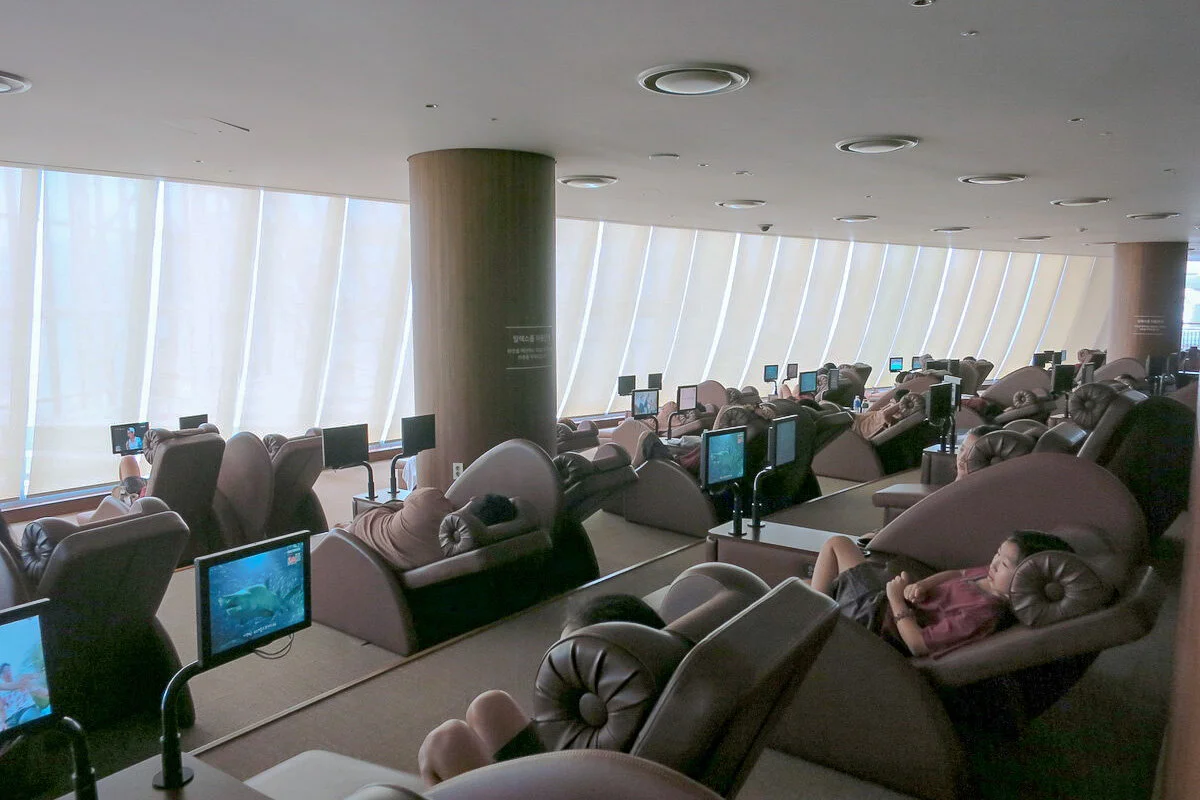 |
Visitors relax, nap, and watch TV at Spa Land. Photo: Melody |
A unique aspect of the experience is the full-body exfoliation service, known as ttaemiri. After a hot soak, guests lie on a table while staff use specialized gloves to scrub away dead skin cells from their entire body. For many international visitors, being nude in front of strangers might initially cause embarrassment, but it is considered a natural part of Korean bathing culture.
According to Lee In-hye, author of "History of Bathing", the custom of relaxing on floors warmed by the ondol system emerged during the Joseon era. As Korea urbanized, people transitioned from traditional homes to apartment complexes with central heating, leading to a gradual loss of the familiar ondol experience.
A group of women in Busan revived this practice by gathering on heated floors in a communal building, thereby creating a new type of bathhouse—the precursor to the modern jjimjilbang. This model subsequently spread to Seoul, particularly in the bustling Gangnam area, before the Korean government granted it official recognition in 1995.
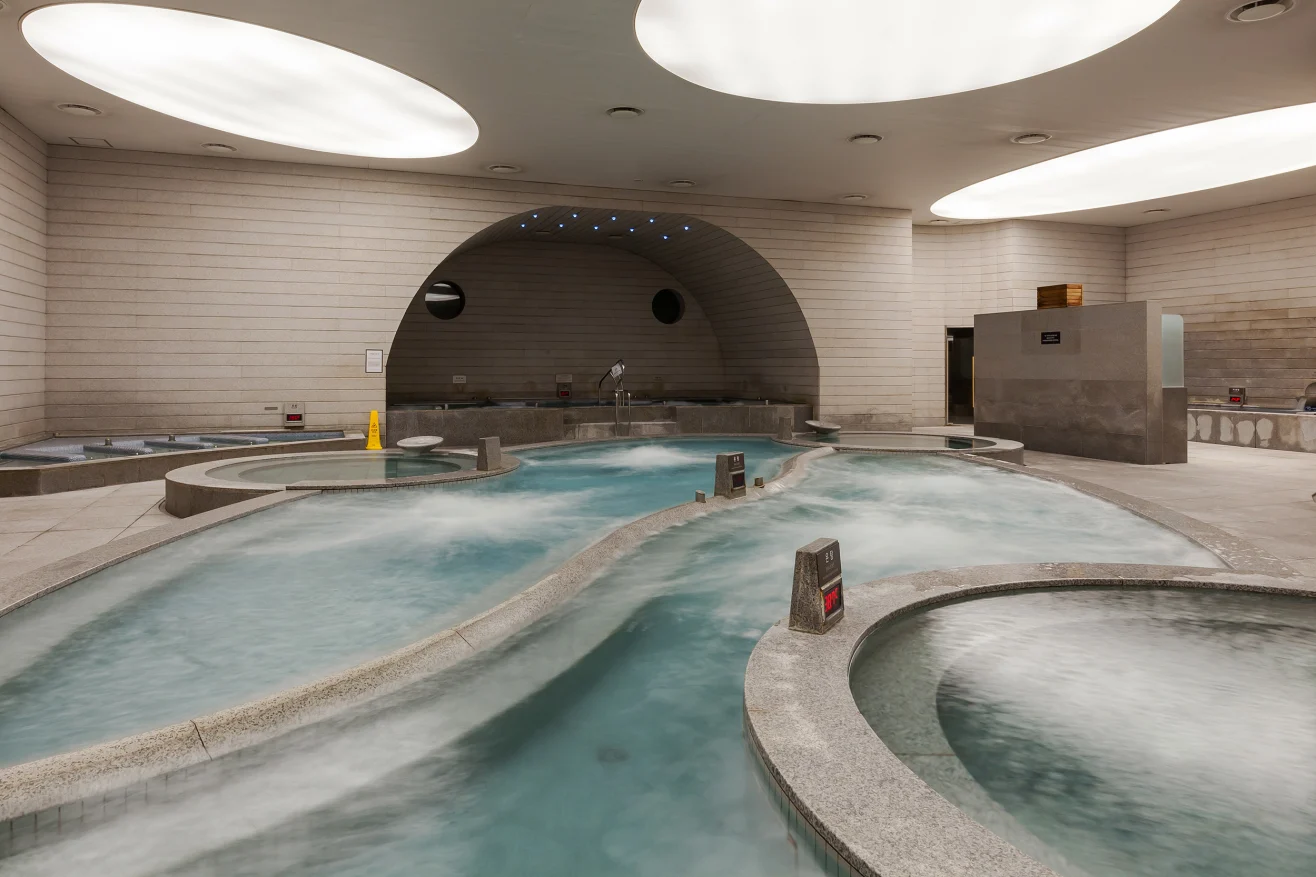 |
A pool with temperature indicated at Spa Land. Photo: Spaland Centum City |
Today, thousands of jjimjilbangs operate nationwide, offering additional services such as beauty treatments, dining, saunas, and rest rooms.
In these establishments, multi-generational groups of women often bathe and converse together. Consequently, the culture of nudity in shared spaces is viewed as quite natural for Koreans.
Spa Land features 22 baths with various temperatures, along with red clay and charcoal saunas, and many relaxation areas. Local and international guests account for a similar proportion on normal days.
"To help visitors experience Korea's unique jjimjilbang and spa culture, we offer distinctive highlights such as the popular 'sheep head towel' area, themed saunas with various temperatures, and an outdoor foot bath area," said Choi Jae-kwang, Spa Land manager.
Visitors are provided with wristbands, lockers, towels, and clothing for common areas. Before entering the baths, guests must wash thoroughly and adhere to hygiene regulations. One important rule is not to film, video call, or record others. Visitors are also asked not to speak too loudly, let hair fall into the baths, or spill water in common areas.
Admission to Spa Land costs approximately 20,000 won (14 USD), allowing guests to enjoy many hours of bathing, saunas, and relaxation right in one of Korea's most famous shopping centers.
"We aim to be more than just a place for relaxation... to become a leading K-spa destination," Choi Jae-kwang said.