Thanh Luong Pagoda in Tuy An ward, located about 15 km north of the former Tuy Hoa city center, is known for the story of a Bodhisattva Quan Am statue washing ashore from the sea. Over the years, oral traditions have dramatized the tale, suggesting that young, strong men initially struggled to lift the statue, and it only yielded when the abbot arrived and made a request.
Venerable Thich Quang Ngo, the abbot of Thanh Luong Pagoda, stated that the event took place during two weeks of tropical depression in December 2004. Nguyen Quan, a local resident, discovered an upright Buddha statue trapped in coral reefs at Hon Dua. He then reported his finding and invited Venerable Thich Quang Ngo and other Buddhists to witness it.
 |
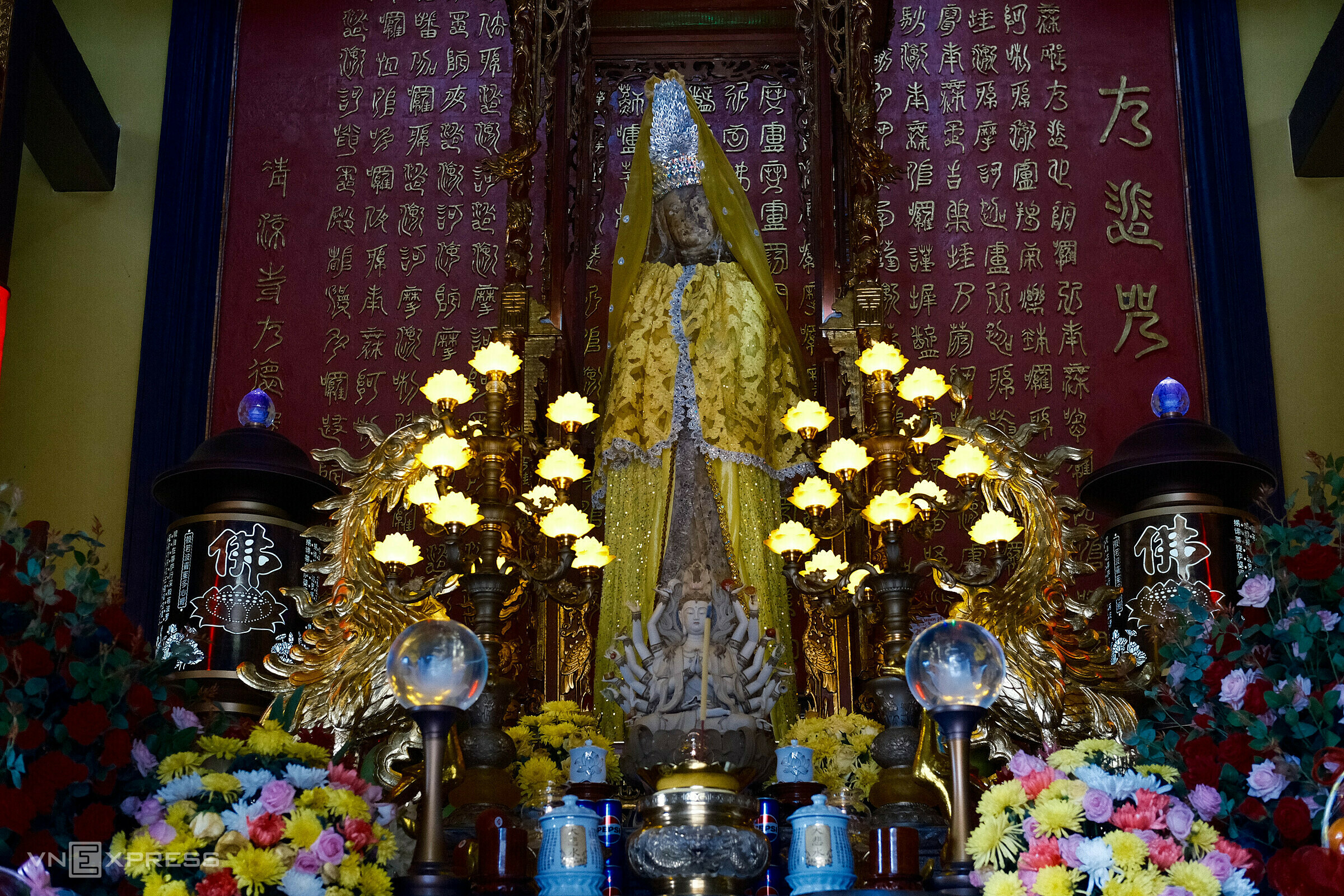
Bodhisattva Quan Am statue washed ashore, enshrined at Thanh Luong Pagoda. Photo: Tu Nguyen |
Venerable Thich Quang Ngo clarified that the actual event was much simpler than the embellished oral traditions. When discovered, Nguyen Quan and his son struggled to retrieve the statue due to powerful waves and its waterlogged weight of over 70 kg. After the entire village offered assistance, the statue was brought ashore and formally enshrined at Thanh Luong Pagoda on 24/12/2004.
Bay Phai, a local who witnessed the 2004 event, shared that the villagers commonly refer to the statue as "Mother Quan Am", believing it brings peace to their community.
In 2018, the Buddhist Information Portal of the Vietnam Buddhist Sangha also documented the story, quoting several Buddhist dignitaries and archaeologists who had visited the site. They described the event as a "unique karmic encounter".
The wooden statue depicts Bodhisattva Quan Am standing on a dragon, measuring 2,2 m in height and 0,6 m in width. Years of exposure to sea waves and wind eroded its face and broke an arm. Venerable Thich Quang Ngo steadfastly chose not to restore it, preserving the statue in its original condition within the Quan Am Linh Ung Hall.
 |
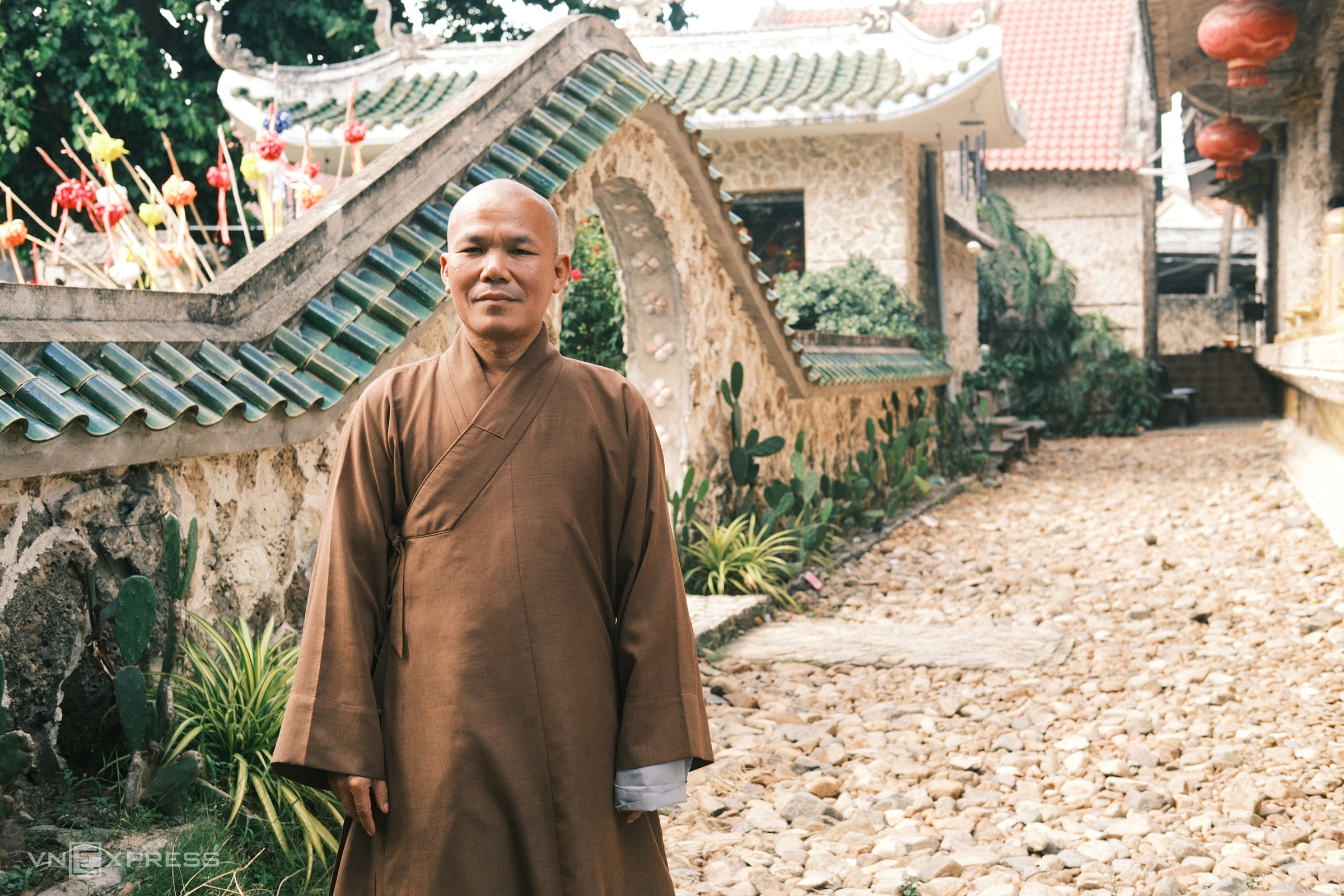
Venerable Thich Quang Ngo, abbot of Thanh Luong Pagoda. Photo: Tu Nguyen |
The abbot shared that he has never sought to uncover the statue's origin. "Unlike historical matters that demand clarity, spiritual matters should be allowed to unfold naturally", he commented.
Thanh Luong Pagoda originated within an ancient fishing village community. It faced a difficult period when Most Venerable Thich Tu Hoa, also a revolutionary activist, died in Ngoc Lang prison in 1956. Following the liberation, with no successor, the pagoda's upkeep and offerings were managed by a rotating group of the Self-Management Board and local Buddhists.
In 2003, responding to the wishes of local Buddhists, Venerable Thich Quang Ngo assumed the role of abbot. He recalled the pagoda at that time as being small, "dilapidated, and gloomy".
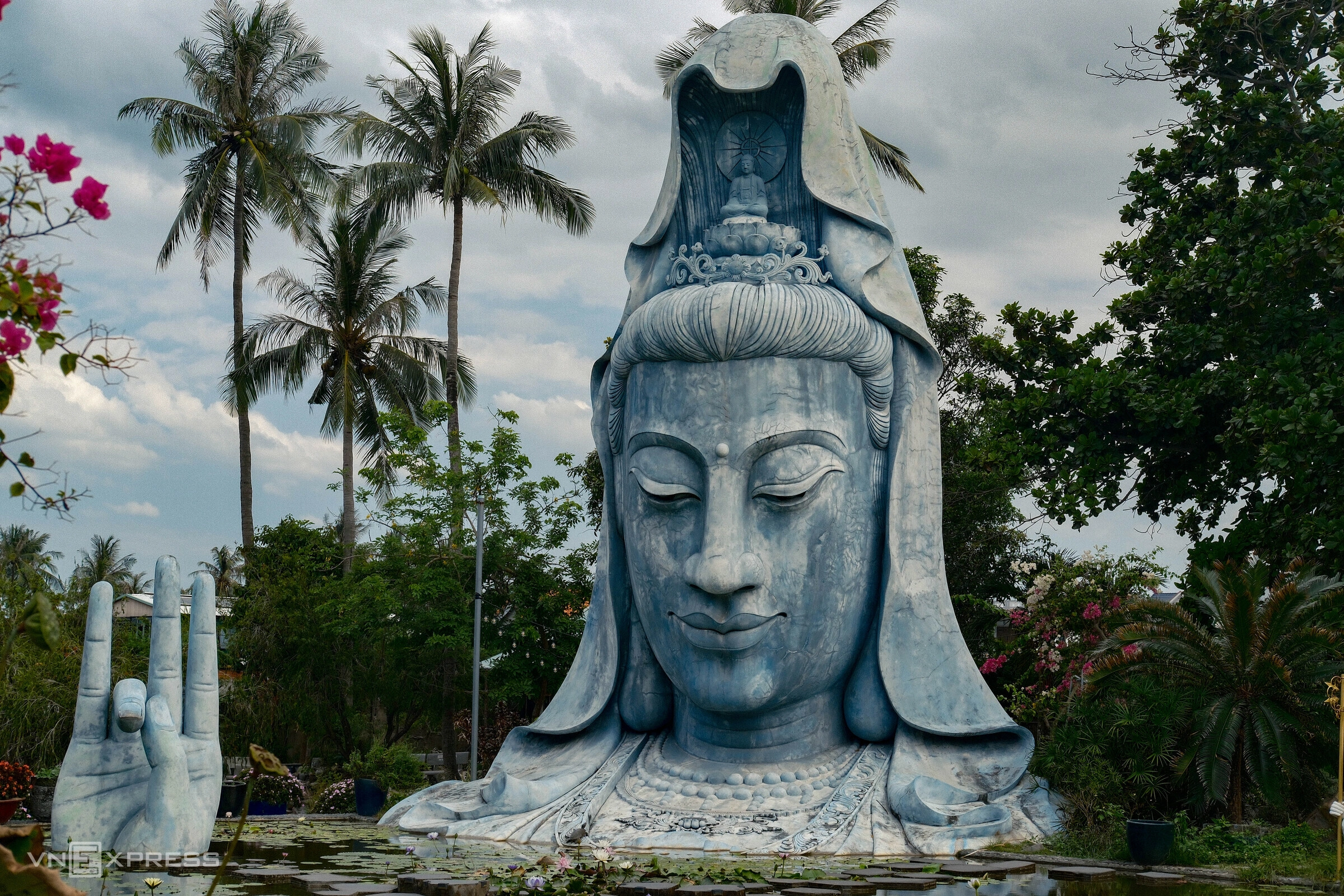
The arrival of the Bodhisattva Quan Am statue from the sea marked a turning point for the pagoda. Venerable Thich Quang Ngo noted that while numerous pagodas dot the Phu Yen coastline, this statue "chose" Thanh Luong. Consequently, all development efforts at the pagoda have since been guided by the Bodhisattva Quan Am's core values of "patience" and "love".
 |
Bodhisattva Quan Am statue inside the pond. Photo: Tu Nguyen
 |
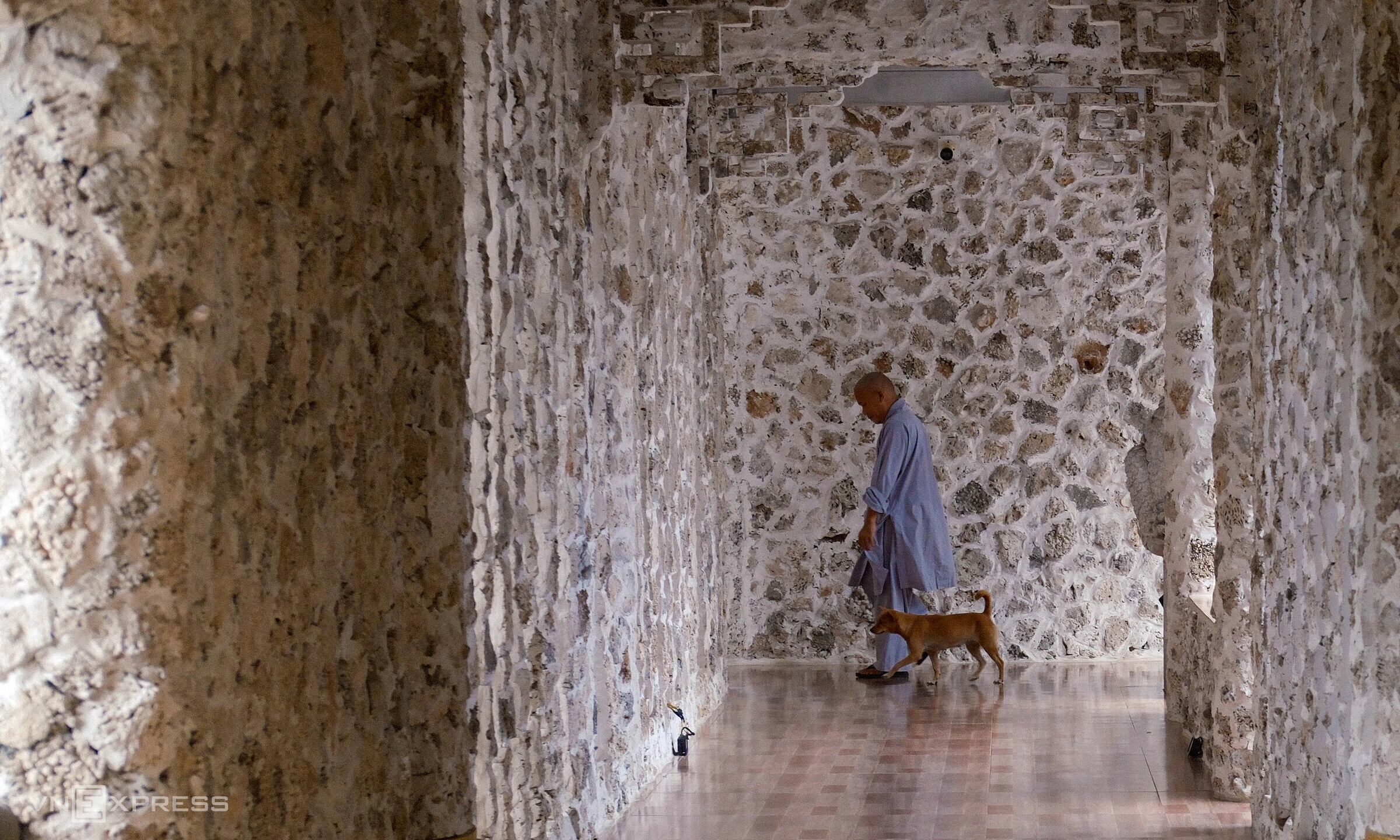
Corridor pillars are clad with coral. Photo: Tu Nguyen.
 |
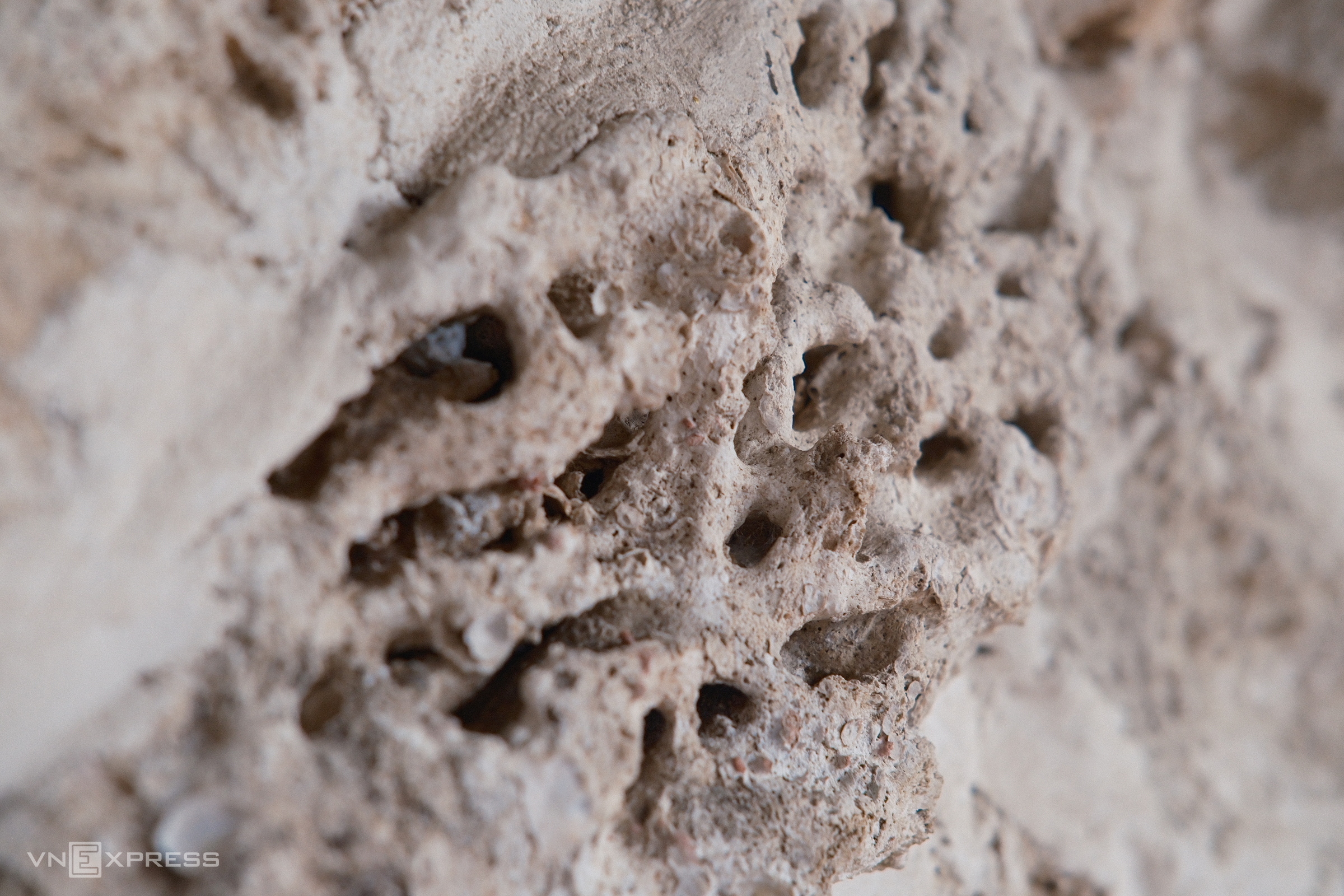
Close-up of coral pieces used for wall cladding. Photo: Tu Nguyen.
 |
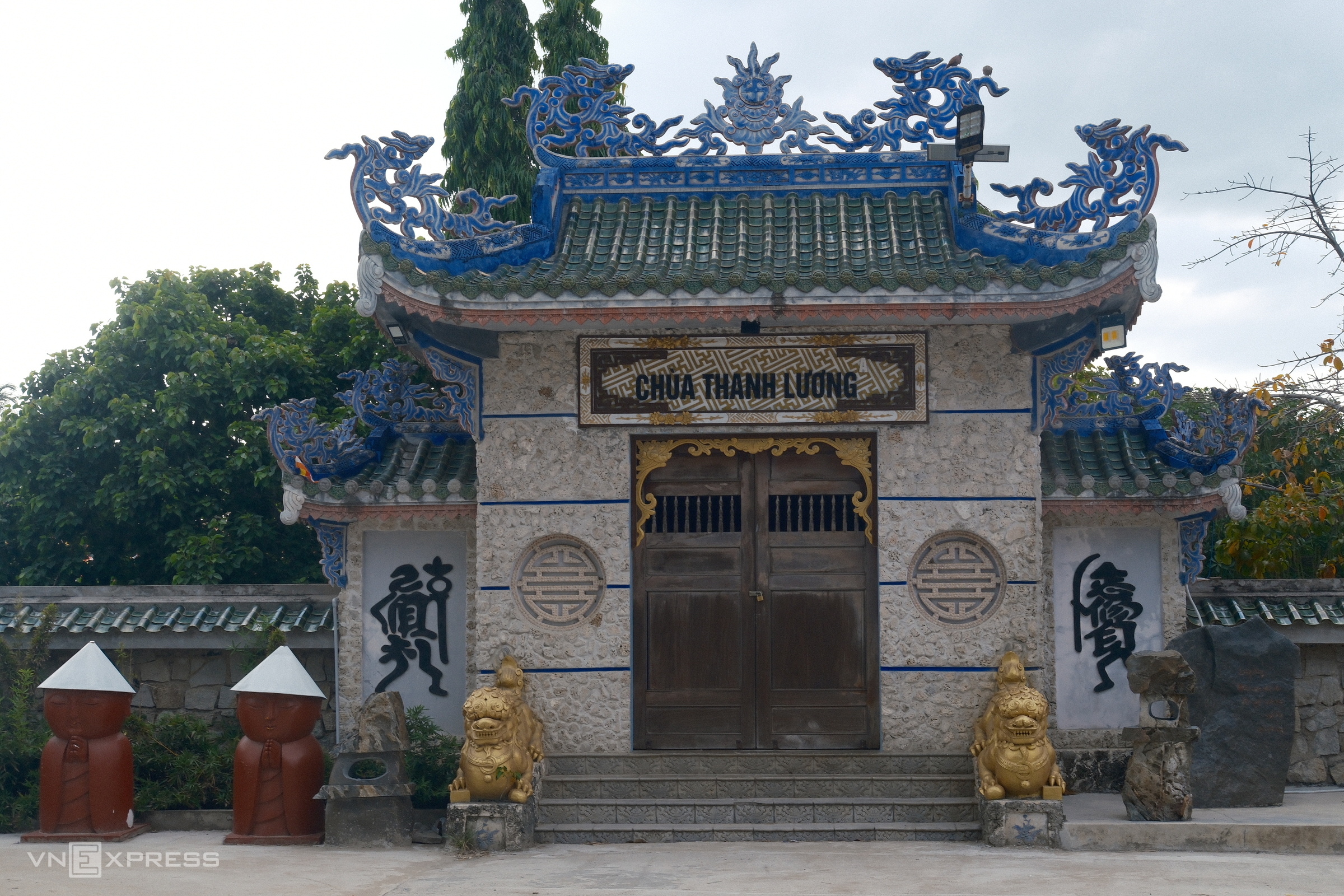
Entrance to Thanh Luong Pagoda. Photo: Tu Nguyen.
The pagoda has undergone gradual renovation and expansion, now covering approximately 13.000 m2. New additions include the Tam Quan Gate, Long Thuy Lake, and a meditation hall. Notably, Thanh Luong Pagoda stands as the first in Vietnam constructed from coral and coconut shells. This innovative concept, conceived by Venerable Thich Quang Ngo, aims to intertwine the pagoda's identity with the lives of the local fishing community. For many years, he and the Buddhists diligently collected discarded coral blocks, shaping them for wall cladding and roofing.
These transformations have gradually established Thanh Luong Pagoda as a significant spiritual tourism destination, attracting numerous visitors and tour groups to Phu Yen.
Tu Nguyen