The Airbus A350-1000ULR, custom-built by Airbus for Qantas, is intended for direct flights between Sydney and London as part of Project Sunrise. The aircraft departed on its inaugural test flight from Toulouse, France, at 7:33 on 23/7, landing in Melbourne on 24/7 after a continuous flight of 19 hours and 12 minutes.
This flight garnered significant attention, with approximately 75,000 people watching the landing live on the Flightradar24 platform. Throughout its journey, the flight attracted nearly 3 million views, ranking as the second most-tracked flight in the platform's history. It was surpassed only by the flight carrying Queen Elizabeth II's coffin in 2022, which saw 5 million views.
By 17:30 on 27/7, the aircraft began its return journey to Europe, continuing to test one of the longest commercial routes this aircraft type can undertake. This leg of the journey attracted over 10,000 online trackers just before takeoff.
A key feature distinguishing the A350-1000ULR is its 20,000-liter rear central fuel tank, a capability not present in standard A350-1000 versions. This design allows for non-stop commercial flights of up to 22 hours, with the total block time for the test flight extending up to 23 hours.
Qantas first announced Project Sunrise in 2017 and officially ordered 12 aircraft in 2022. The initial delivery of the first aircraft, originally expected this year, has been postponed to April 2027; the remaining 11 aircraft will be delivered over the next 2,5 years. Tickets for the Sydney-London route are expected to go on sale in February 2027, with commercial operations beginning in October 2027. The Sydney-New York route will follow shortly after.
Flight times for the Sydney-London route will range from 19 hours 25 minutes to 20 hours 55 minutes, depending on operating conditions; the return journey is estimated to take approximately 18-20 hours. Passengers on this route will cross 9-11 time zones, while the Sydney-New York route could involve 14-16 time zones.
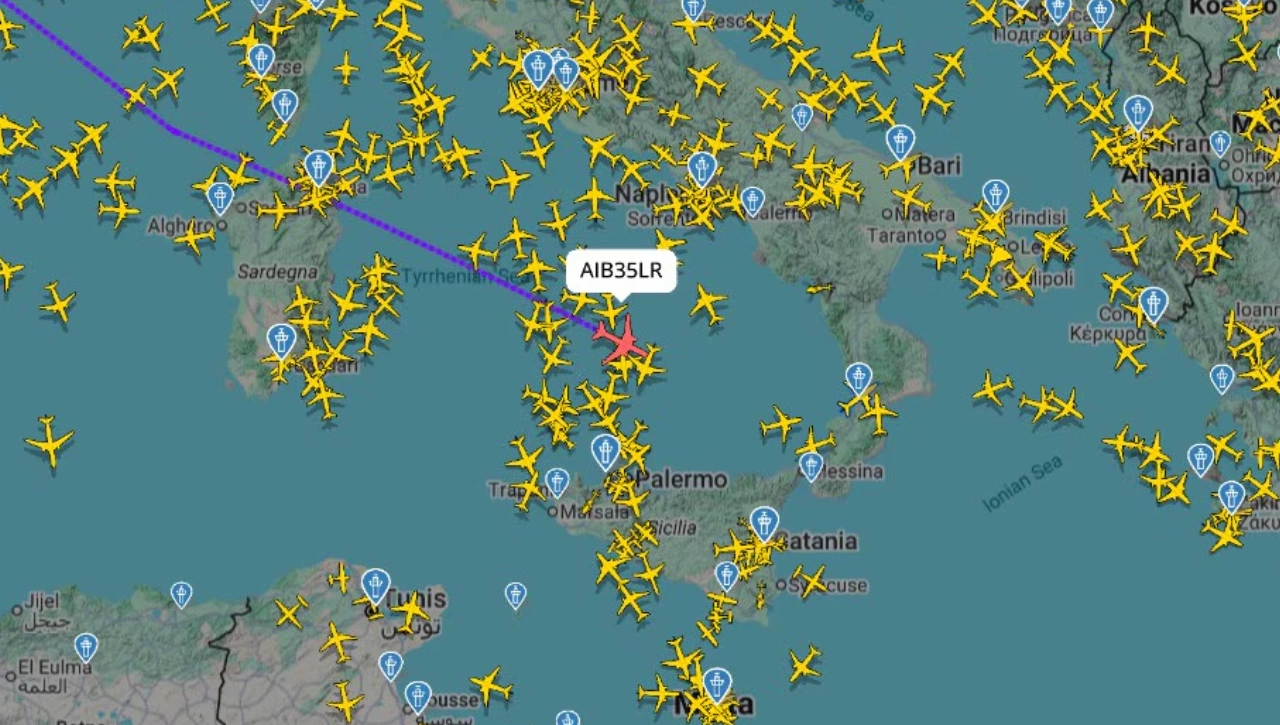 |
Immediately after taking off from Toulouse, it became one of the most tracked flights globally. *Photo: Flightradar24* |
Prolonged flights, lasting nearly 21 hours, combined with rapid time zone changes, can lead to passenger health issues such as sleep deprivation, fatigue, and dehydration. To address this, Qantas collaborated with Professor Peter Cistulli, a sleep expert at the University of Sydney, to design a system of 12 lighting modes. These modes simulate sunrise and sunset according to natural circadian rhythms, and the cabin will remain continuously dark for about 12 hours on the Sydney-London leg to encourage passengers to sleep.
The aircraft also features a Wellbeing Zone located between the premium economy and economy cabins. This area offers exercises designed to reduce fatigue from prolonged sitting, enhancing passenger comfort on these ultra-long-haul journeys.
Anh Minh (According to News)