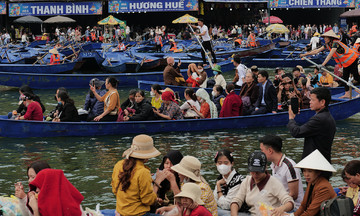
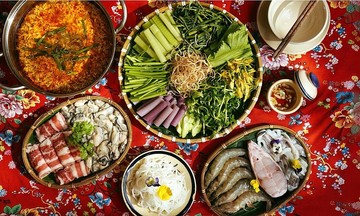
Following administrative boundary mergers, Quang Ngai has become a province with a diverse tourism ecosystem in Central Vietnam. It is renowned for destinations such as Ly Son island, My Khe beach, the Sa Huynh cultural relic site, and the Mang Den eco-tourism area. In 2025, the province is developing tourism based on a destination ecosystem model, rather than exploiting individual sites, focusing on experiential, cultural, and sustainable development.
According to the Quang Ngai Department of Culture, Sports and Tourism, in 2025, total visitors to the province are estimated to reach 5,2 million, an increase of 38% compared to the previous year. Of these, international visitors numbered approximately 98.500, 2,6 times higher than the same period. Tourism revenue reached 3.700 billion VND, a 74% increase; foreign currency earnings were about 22 million USD, a 2,5-fold increase.
These figures indicate positive growth, but also highlight the need for product and market restructuring. Domestic visitors still constitute a large proportion, primarily during short holidays. Extending length of stay, increasing spending, and diversifying experiences remain challenges for Quang Ngai's tourism sector.
Ly Son remains a central destination, but the province is implementing solutions to reduce pressure on the island, aiming for balanced development across regions. Environmental, infrastructure, and carrying capacity issues lead Quang Ngai to prioritize reallocating visitor flows and investing in mainland tourism products. Areas like Sa Huynh, Ba To, Thach Bich, Suoi Chi, and Tra Bong are being planned, with improved infrastructure, to create experiential tours linked to culture, history, and ecology. The goal is to expand tourism areas, enhance service quality, and increase length of stay.
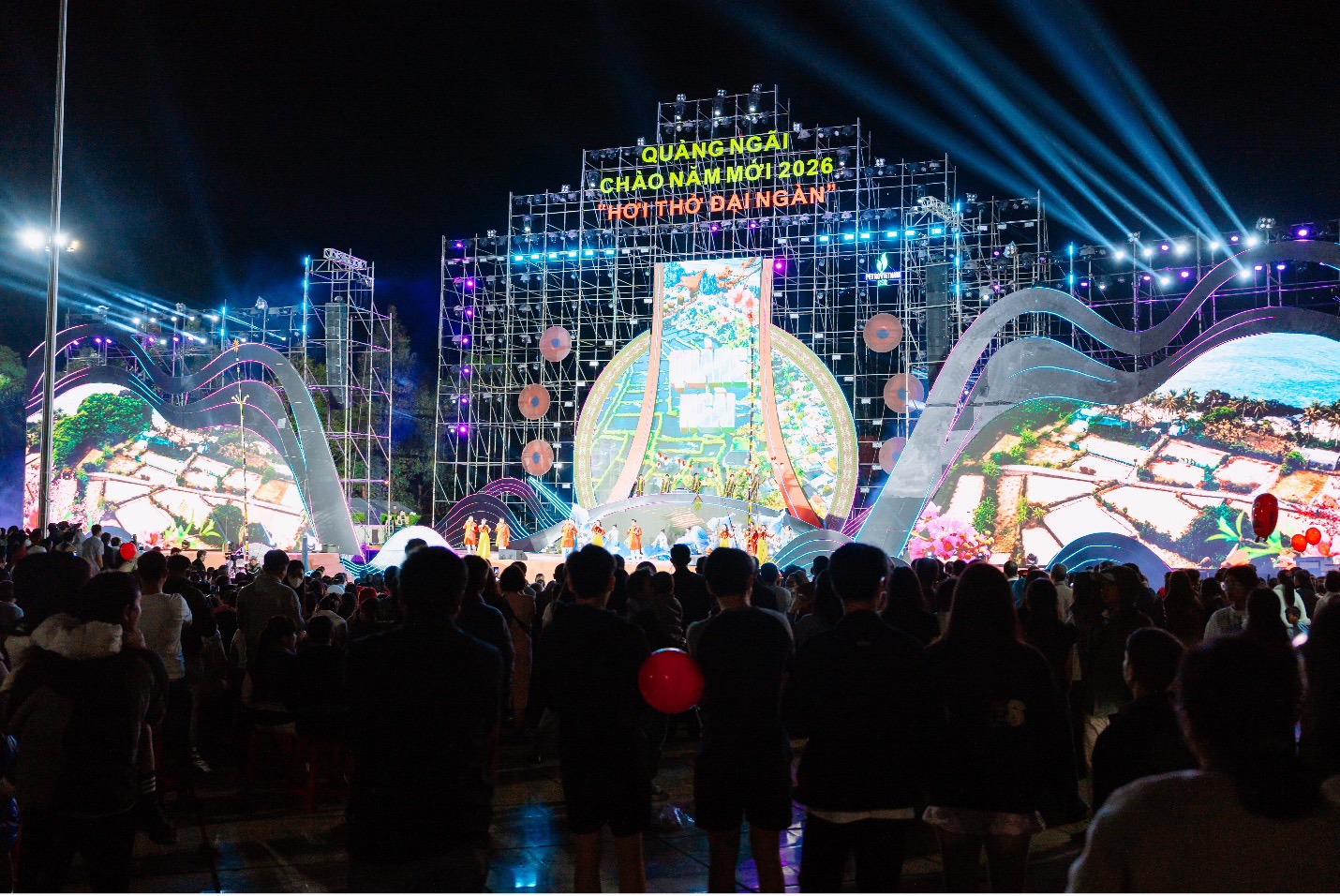 |
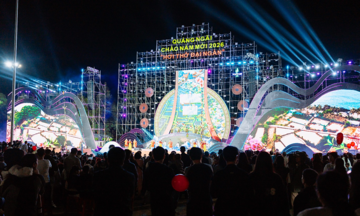
Quang Ngai's new year event. Photo: Quang Ngai Department of Culture, Sports and Tourism
Concurrently, cultural and historical tourism is a potential development direction. Quang Ngai possesses a rich heritage system that has long been underutilized. In 2025, the province is intensifying cooperation with travel agencies to build storytelling, experiential, and interactive products, bringing visitors closer to Sa Huynh cultural values, the Ba To uprising, and the lives of ethnic minorities. Pilot programs, such as handicraft village visits and mountain homestays, have initially made a positive impact.
Ecotourism and community-based tourism are also long-term strategies. Mountainous areas like Tra Bong, Son Ha, and Minh Long are being surveyed and planned for tourism spaces that integrate nature conservation. Authorities require new projects to undergo environmental impact assessments and involve local residents before licensing, to ensure sustainability and prevent uncontrolled development. Direct participation of local people in tourism activities is a key factor for equitable benefit distribution and preserving regional identity.
Destination promotion activities in 2025 are being intensified on digital platforms. Instead of broad, scattered campaigns, Quang Ngai focuses on building a consistent message about its destination image: "pristine nature, unique culture, slow experiences." The province is increasing its use of social media, experiential videos, and user-generated content to spread an authentic, approachable tourism image.
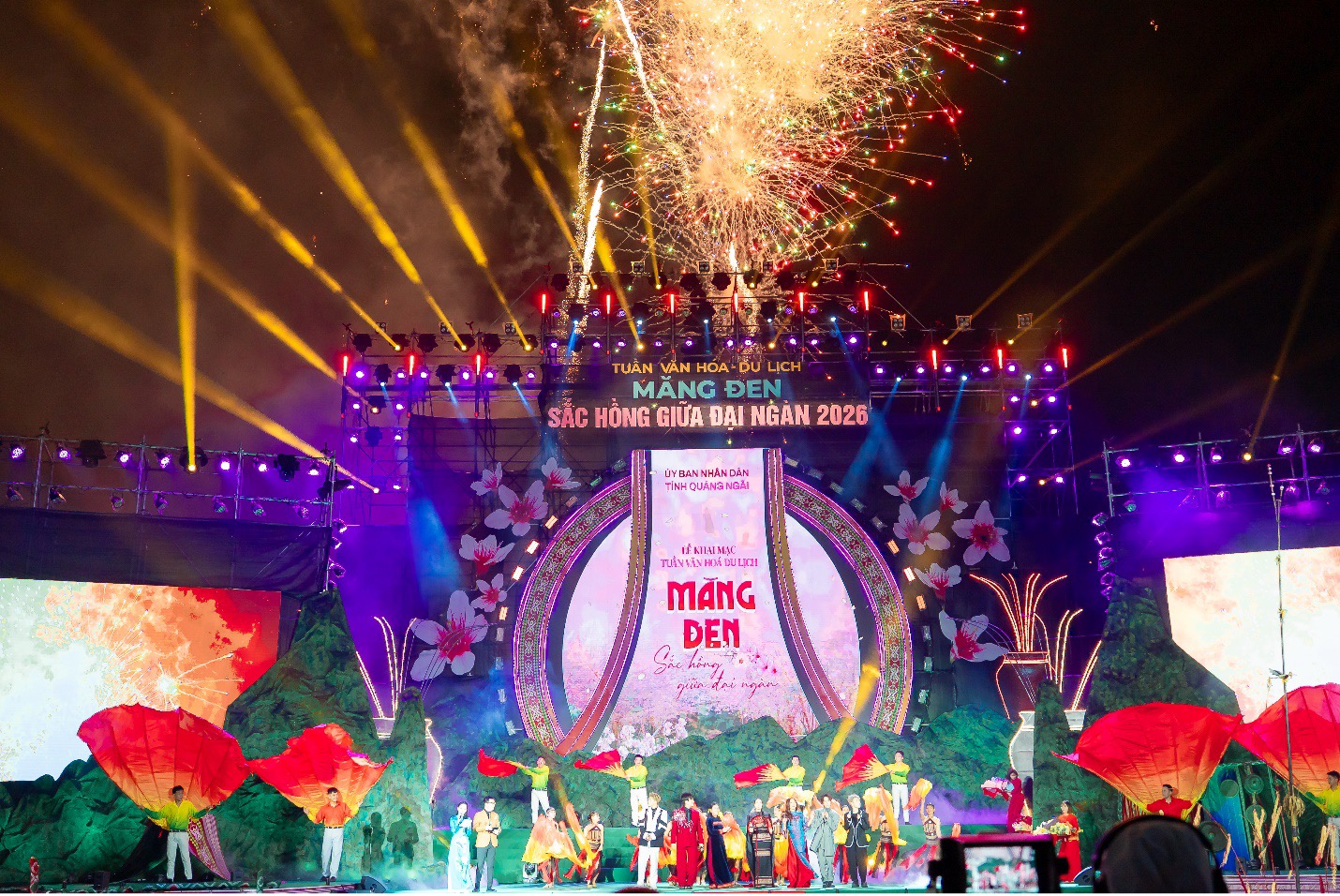 |
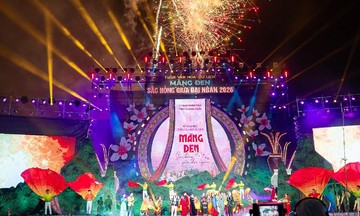
A culture and tourism week event held in Mang Den, supported by Binh Son Refining and Petrochemical Joint Stock Company (BSR). Photo: Quang Ngai Department of Culture, Sports and Tourism
Sustainable development is a pillar in the province's tourism master plan for the 2025-2030 period. Criteria for environmental protection, carrying capacity control, landscape preservation, and cultural identity are integrated into management and investment activities. Binh Son Refining and Petrochemical Joint Stock Company (BSR) partners with the locality through activities such as tree planting, supporting community tourism models, and environmental protection communication.
However, development still faces challenges such as limited tourism infrastructure, a shortage of skilled human resources, and weak regional linkages. To address this, the province is implementing a tourism human resource training plan, encouraging businesses to invest in small and medium-sized accommodation facilities, while enhancing cooperation with Quang Nam, Da Nang, and Binh Dinh to form inter-regional tourism routes.
The shift from mass tourism development to in-depth exploitation, focusing on experiences and sustainability, is expected to help Quang Ngai carve a unique position on Central Vietnam's tourism map. While this path may not yield immediate results, it is a necessary step to build a long-term growth foundation for the local tourism sector.
Thai Anh