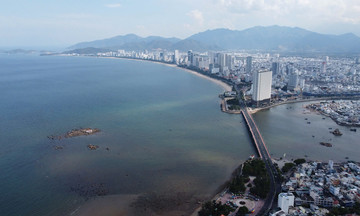
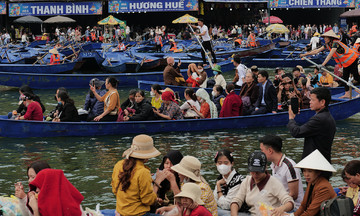
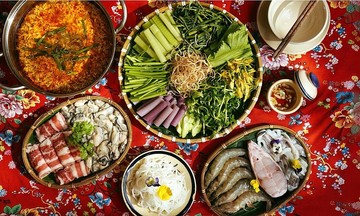
In 2025, tourism is identified as a key economic sector supporting Quang Ngai’s economic restructuring. Beyond contributing to service sector growth, tourism creates jobs, boosts local product consumption, and opens development opportunities for disadvantaged areas, especially in rural and mountainous regions. Instead of focusing on large-scale projects, the province prioritizes suitable tourism models that emphasize community involvement. This approach integrates the tourism sector into social life, making it an organic part of overall development.
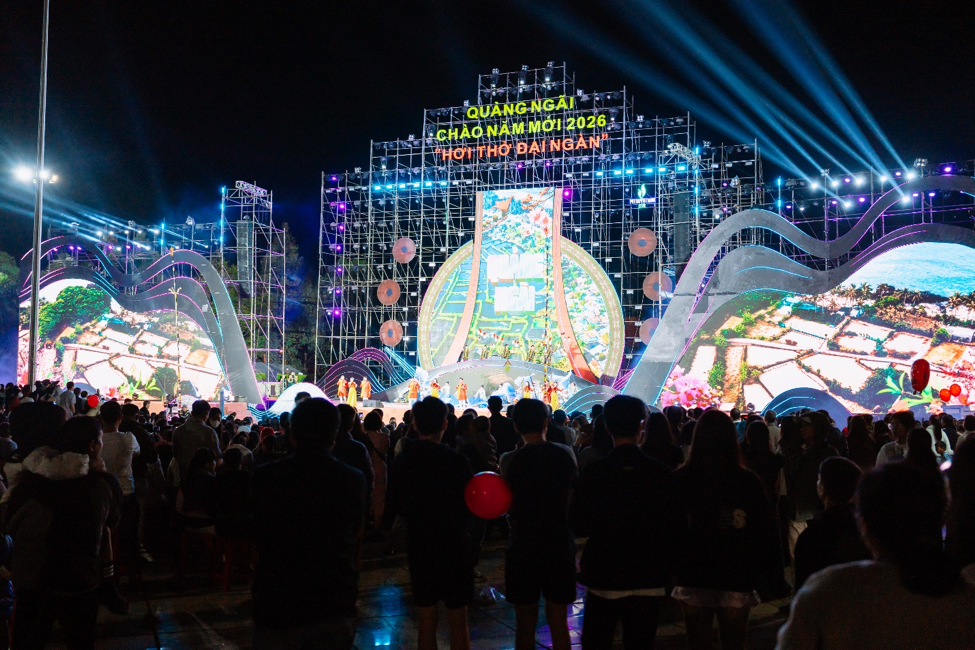 |
Quang Ngai province's event welcoming 2026. Photo: Quang Ngai Department of Culture, Sports and Tourism |
Specifically, Ly Son remains a major tourist attraction, but its popularity presents challenges for balanced development. According to a representative from the Quang Ngai Department of Culture, Sports and Tourism (DCST), environmental pressure, infrastructure strain, and impacts on residents' lives are top concerns for authorities. Therefore, Ly Son's tourism strategy focuses on better managing carrying capacity, promoting responsible tourism awareness, and improving service quality, rather than prioritizing visitor numbers. The representative emphasized, "The goal is for tourism to bring economic benefits without harming the ecosystem and the sustainable livelihoods of island residents."
One prominent direction for Quang Ngai's tourism last year was a deeper exploration of cultural and historical values tied to local communities. Heritage sites like Sa Huynh culture and revolutionary historical relics, especially the Ba To Uprising historical site, are considered crucial resources for developing educational and historical tourism. The Quang Ngai tourism sector representative stated that tourism development in these areas aims not only to attract visitors but also to enhance community awareness of heritage preservation. Many tours and experiences are designed to integrate traditional education, transforming tourism into a channel for disseminating local cultural values.
In mountainous districts, community-based tourism is steadily establishing itself as a suitable direction, capitalizing on natural landscapes and the cultural identity of ethnic minorities. Although these models remain modest in scale, they yield positive social impacts. Local residents directly participate in the service supply chain, from accommodation and cuisine to guiding experiences, thereby increasing their income and fostering greater awareness of environmental and traditional cultural preservation.
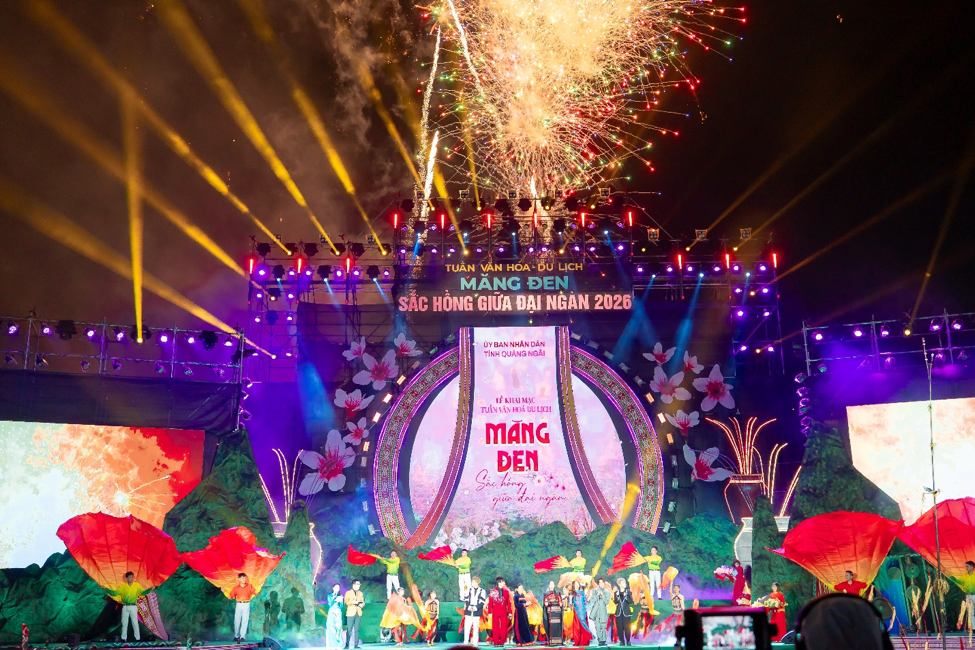 |
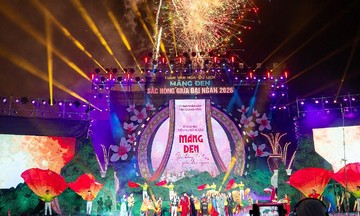
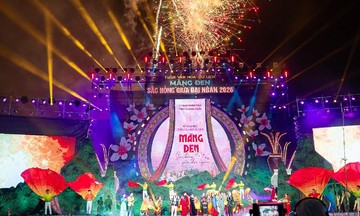
Mang Den tourism and culture week - pink hues amidst the mountains 2025, supported by Binh Son Refining and Petrochemical Joint Stock Company (BSR). Photo: Quang Ngai Department of Culture, Sports and Tourism |
Beyond the roles of government and local people, the involvement of major local enterprises such as Binh Son Refining and Petrochemical Joint Stock Company (BSR) also provides important resources. These companies not only invest in infrastructure but also collaborate on community support activities, environmental protection, and local image promotion.
However, Quang Ngai tourism still faces challenges. According to the Department of Culture, Sports and Tourism representative, infrastructure in some areas remains limited, tourism products are not diverse, and a shortage of professional human resources persists. The representative added, "These issues demand synchronized investment and a long-term strategy, particularly in local human resource training and enhanced regional connectivity to expand development space."
The Quang Ngai tourism sector considers its commitment to sustainable and inclusive development, with people at its core and community as its subject, a solid foundation for the next phase. While not yet yielding groundbreaking numbers, these qualitative changes are expected to help Quang Ngai tourism affirm its unique position on the central region's tourism map, becoming a tool to foster harmonious and long-term socio-economic development.
Thanh Thu