In 2025, Quang Ngai saw notable shifts in tourism development, spanning island and beach, culture, history, and sustainable practices. The province focused on enhancing visitor experience over quantity. Specifically, Quang Ngai develops tourism based on its unique identity, linked to preserving natural resources and cultural heritage, while improving service quality. The locality adopts a cautious approach, prioritizing sustainability over rapid expansion.
Previously, Quang Ngai was known as a stopover between tourism hubs like Da Nang, Hoi An, and Quy Nhon. Now, tourism activities in the province are more vibrant, especially during peak holidays and summer. Beyond domestic visitors, the locality is attracting young tourists who enjoy exploration, local culture, and nature-based experiences. The average length of stay has increased, reflecting a change in tourism behavior.
Ly Son island district remains a key area in the province's tourism development strategy. Beyond its volcanic geological landscapes and pristine beaches, the island is developed with a focus on its cultural depth and Hoang Sa history. The province implements destination management, environmental protection, and service quality enhancement synchronously, aiming for sustainable development. Many tourists return not just for sightseeing but to experience island village life and learn about Vietnam's history of maritime sovereignty.
In parallel with island and beach tourism, Quang Ngai is expanding its cultural and historical offerings. Heritage sites related to Sa Huynh culture, the Ba To uprising, revolutionary relics, traditional craft villages, and community life are developed to connect, tell stories, and enhance experiences. Cultural tourism routes are forming, helping visitors understand local traditions, history, and people.
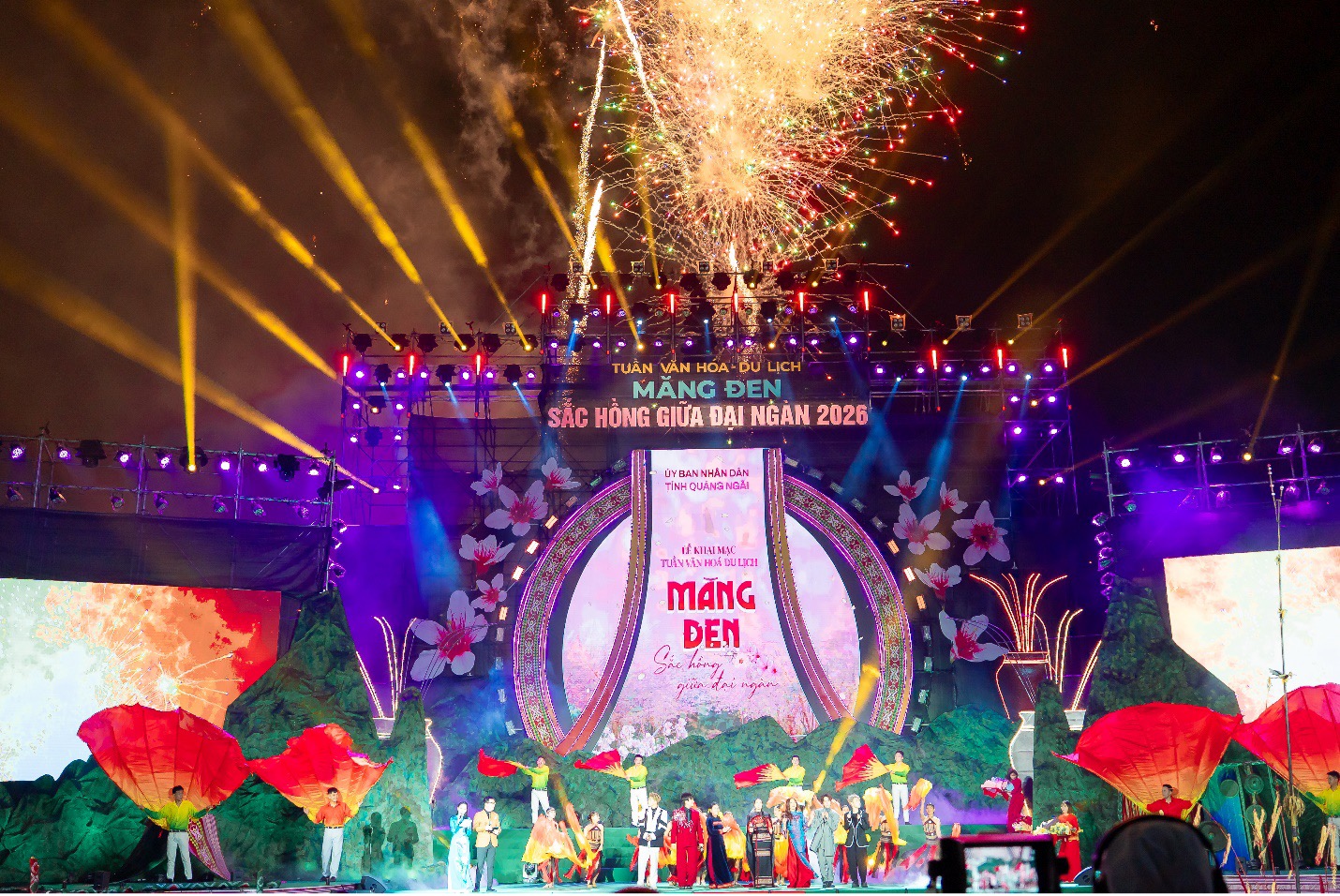 |
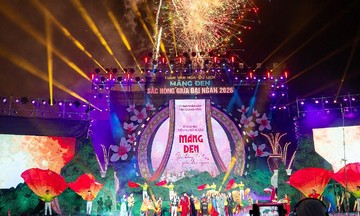
The Culture - Tourism Week event held in Mang Den with the partnership of Binh Son Refining and Petrochemical Joint Stock Company (BSR). *Photo: Quang Ngai Department of Culture, Sports and Tourism*
Community and eco-tourism are also developing, especially in mountainous areas. Leveraging pristine nature and the diverse identities of ethnic minorities, many tourism models linked to local life, agriculture, forests, and streams are emerging. Though not large in scale, a cautious approach helps these destinations retain their authenticity, avoiding rapid development. Local residents participate directly in tourism activities, creating additional livelihoods and contributing to the preservation of traditional culture.
Tourism promotion is being innovated through digital technology, social media, and online platforms. Alongside local efforts, several businesses in the area, such as Binh Son Refining and Petrochemical Joint Stock Company (BSR), are partnering with tourism development programs focused on community, culture, and sustainability. Quang Ngai's image is being cultivated to be approachable, reflecting characteristic values like Ly Son island, Sa Huynh culture, pristine nature, and hospitable people.
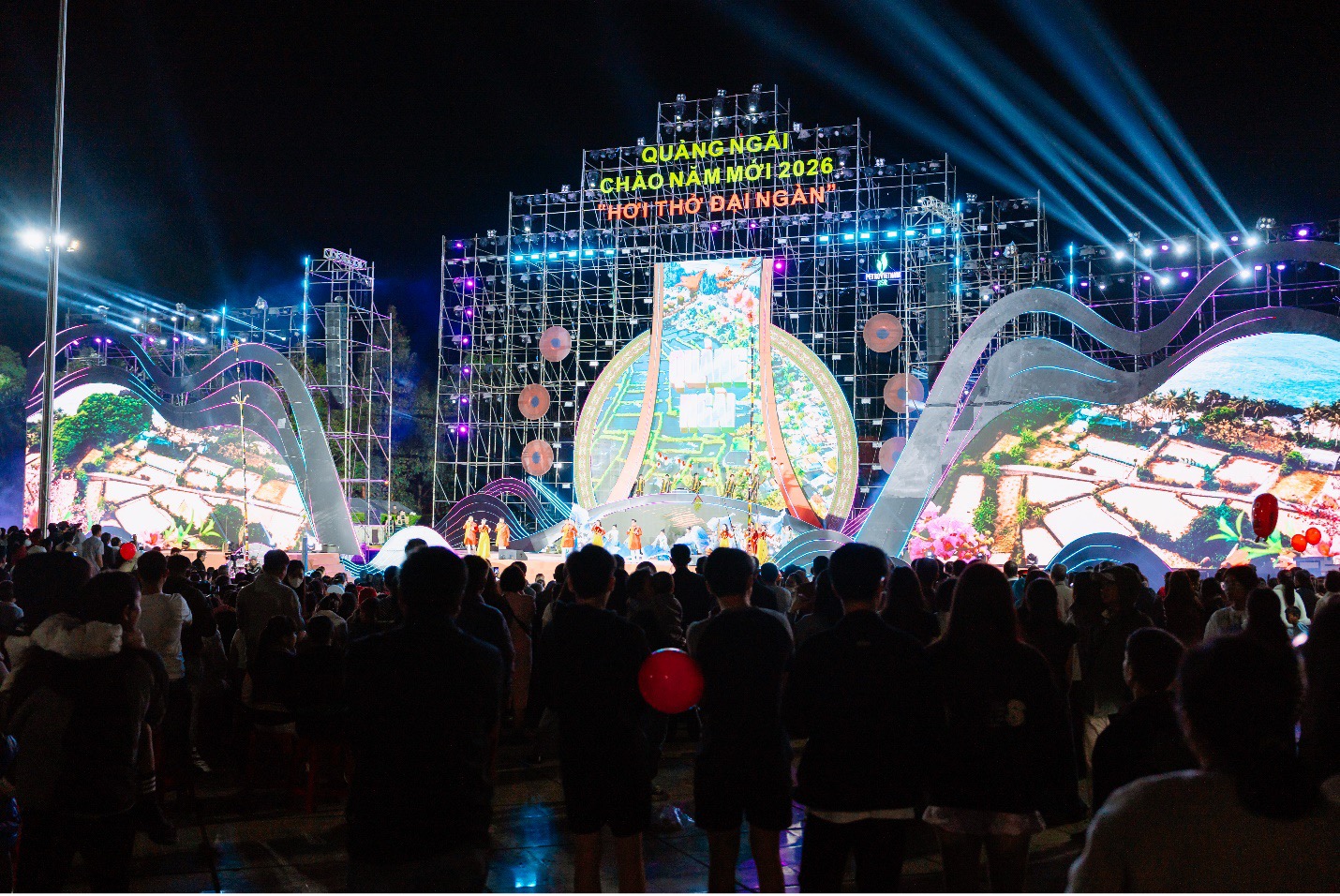 |
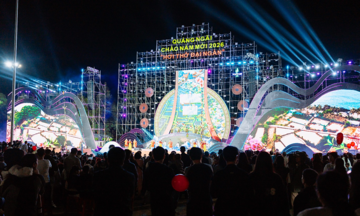
Quang Ngai's New Year event. *Photo: Quang Ngai Department of Culture, Sports and Tourism*
Sustainable development is identified as the overarching direction for Quang Ngai's tourism sector in 2025. Environmental protection, landscape preservation, cultural heritage conservation, and the encouragement of responsible tourism are emphasized in management and operations. The perspective of not trading resources and identity for short-term growth is gradually becoming a shared understanding among local government, businesses, and the community.
By the end of 2025, Quang Ngai tourism may not have been the most vibrant destination in the Central region, but it showed a clear development direction. Product diversification, community engagement, and a focus on sustainability are expected to help the locality gradually establish its position on Vietnam's tourism map in the coming period.
According to the Quang Ngai Department of Culture, Sports and Tourism, in 2025, total visitors to the locality were estimated to reach 5,2 million, an increase of 38% compared to the previous year. Of these, international visitors accounted for approximately 98,500, a 2,6-fold increase over the same period. Revenue from tourism activities reached 3,700 billion VND, an increase of 74%; foreign currency revenue was approximately 22 million USD, a 2,5-fold increase.
Thai Anh