As airlines increasingly tighten carry-on baggage weight regulations, minimizing personal items has become a top priority for travelers. An ideal item must meet two criteria: occupy minimal space and offer maximum functionality. The sarong, a rectangular piece of fabric traditionally worn in many Southeast Asian countries, presents an optimal solution.
Clarissa Cappelletti, a senior manager at the UK-based travel company WeRoad, asserts that a sarong is an item every traveler should pack. Beyond its simple use as beachwear, this versatile fabric boasts a flexibility few modern items can match.
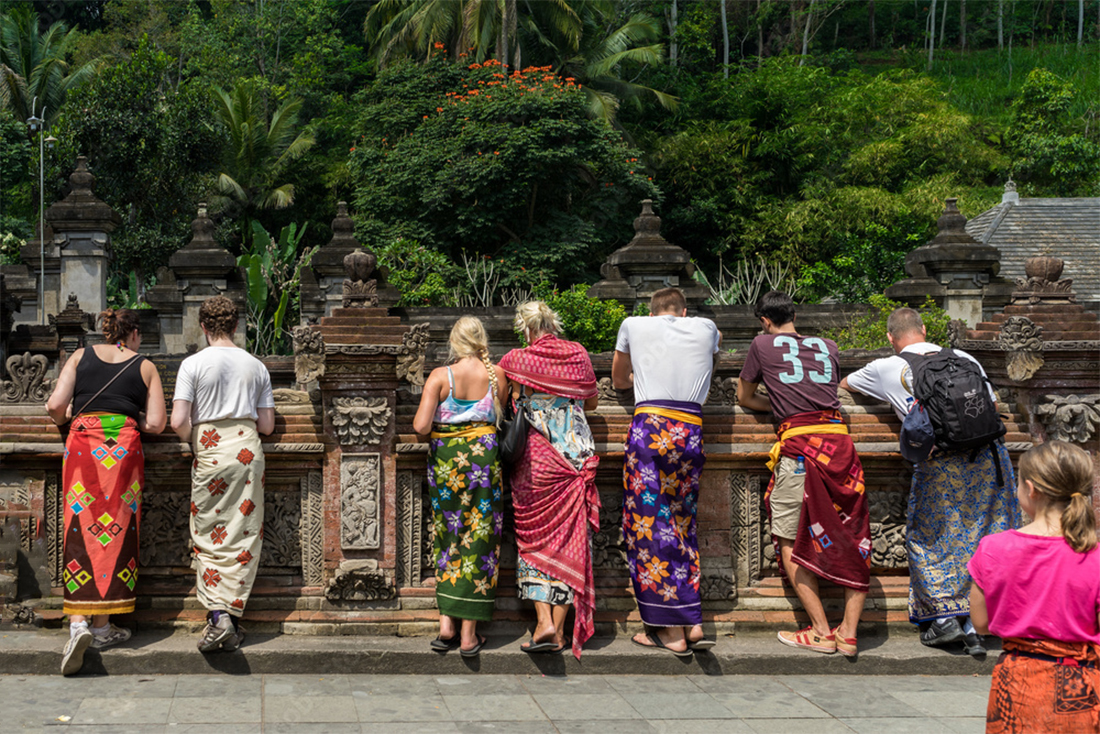 |
Sarongs are used by tourists at temples in Bali. Photo: Bali Holiday Secrets |
Sarongs are used by tourists at temples in Bali. Photo: Bali Holiday Secrets
According to Lonely Planet, the sarong deserves a priority spot in any backpack, far more than thick bath towels. Typically measuring around 1x1.5 meters, sarongs are often made from lightweight rayon or silk, making them easy to roll up into a fist-sized bundle and quick to dry.
The UK travel insurance specialist Worldwide Insure lists over 30 different uses for this fabric. During outdoor excursions, it serves as a clean mat for sitting. When airplane or bus air conditioning is too cold, it transforms into a thin blanket for warmth. At beaches, a sarong acts as a towel, a sunshade, or even a mobile changing room, offering privacy in public spaces.
"A sarong is a lifesaver in emergencies. It can be used as an arm sling for injuries, a luggage tie, or even a temporary baby carrier," Worldwide Insure notes.
Another practical application, suggested by the travel blog Her Packing List, is using a sarong as a "privacy wall." In shared dorm rooms at homestays, hanging a sarong around a bunk bed helps travelers create a personal space, block out light, and feel more secure while sleeping.
Beyond its practicality, the sarong also holds significant cultural value in Asia. Researchers indicate that the word "sarong," originating from Malay/Indonesian, means "to cover." This garment is believed to have arrived in Southeast Asia in the 14th century through Arab and Indian traders.
Today, in many countries such as Thailand, Laos, Indonesia, and India, dress codes at temples and religious sites are strict, prohibiting visitors from wearing shorts or skirts that expose the knees. In these situations, a sarong in a travel bag becomes a "pass." Travelers can simply wrap it into a long skirt, suitable for both men and women, to enter and explore these sacred sites respectfully and legitimately.
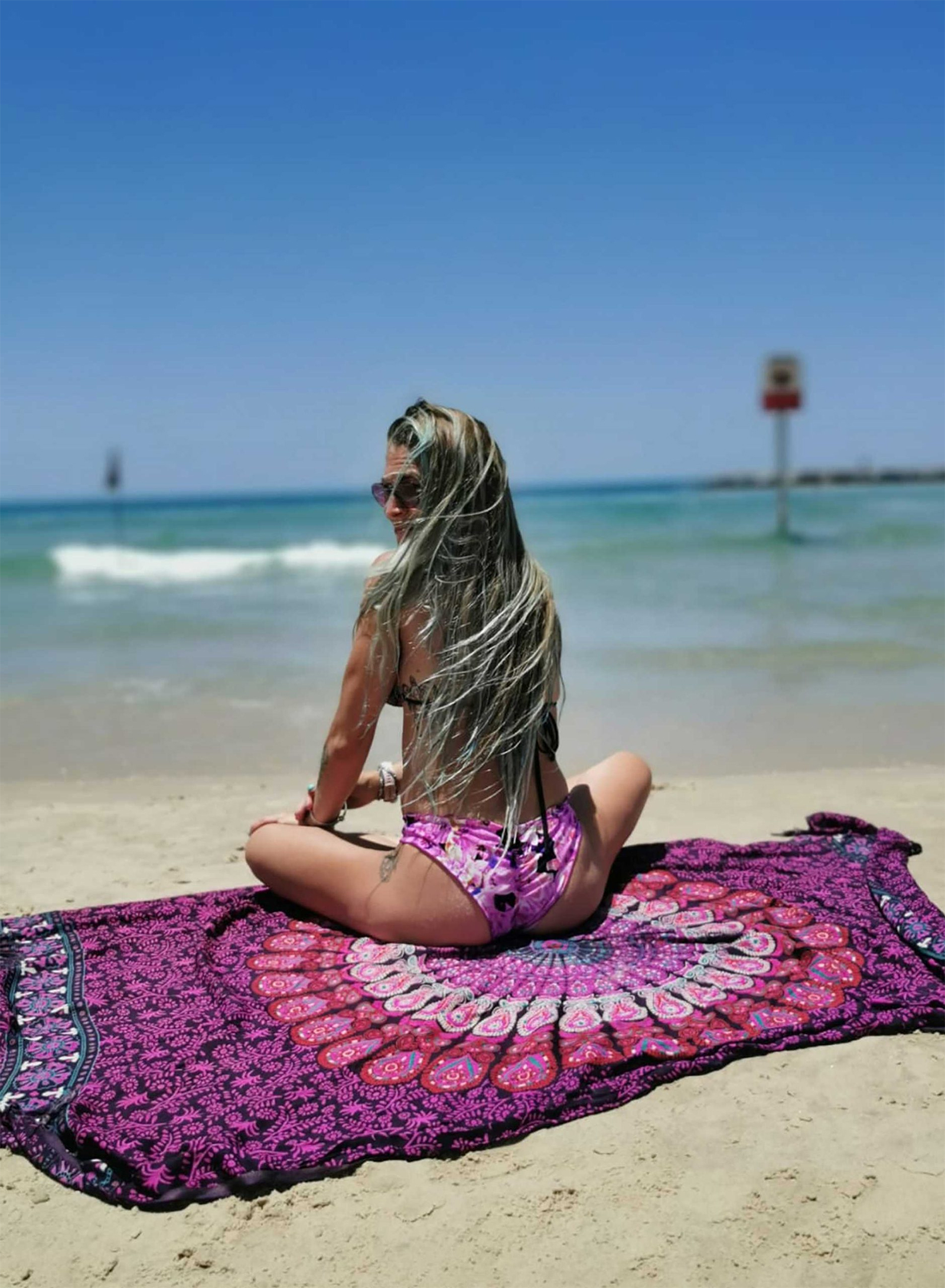 |
A sarong is one of the essential items for a beach trip. Photo: Amazon |
A sarong is one of the essential items for a beach trip. Photo: Amazon
How to transform a sarong
Without needing a needle and thread, just a few basic knots can transform this rectangular fabric into fashionable attire:
The Toga: Wrap the sarong around your body under one arm, holding the two top corners. Pull the left corner over your right shoulder and tie it with the right corner. This creates a simple, modest dress ideal for beach strolls.
Halter Neck: Cross the two corners of the sarong in front of your chest, then loop them around the back of your neck and tie a knot. This style highlights the shoulders and bare back.
Long Skirt: The simplest method is to wrap the sarong around your waist and tie a knot at the hip.
Emergency Bag: Lay the sarong flat, place items in the center, and tie the two opposite corners twice to create a makeshift tote for wet clothes or food.
Tips for choosing a sarong
To maximize your travel experience, consider these criteria when selecting a sarong:
Material: Rayon (artificial silk) is a top choice due to its lightweight, cool, flowing, and wrinkle-resistant properties. Avoid thick polyester fabrics, which absorb poorly, or slippery silk, which makes knots difficult to secure.
Size: Choose a sarong that is at least 110x160 cm to ensure it is long enough for use as a dress or for lying on.
Color: Darker shades or ethnic patterns like Batik are better at concealing stains than lighter colors, making them more suitable for extended trips.
By Tam Anh (according to Mirror, Lonely Planet, Worldwide Insure)