Singapore's culinary landscape is diverse, ranging from vibrant street food to luxurious restaurant dining. However, no dish surpasses chili crab in popularity. This iconic dish, embodying a perfect balance of sour, spicy, salty, and sweet flavors, has been Singapore's "national dish" for seven decades.
Alvin Lim, a food and lifestyle writer who enjoys exploring the stories behind dishes, shared insights about chili crab with Michelin Guide.
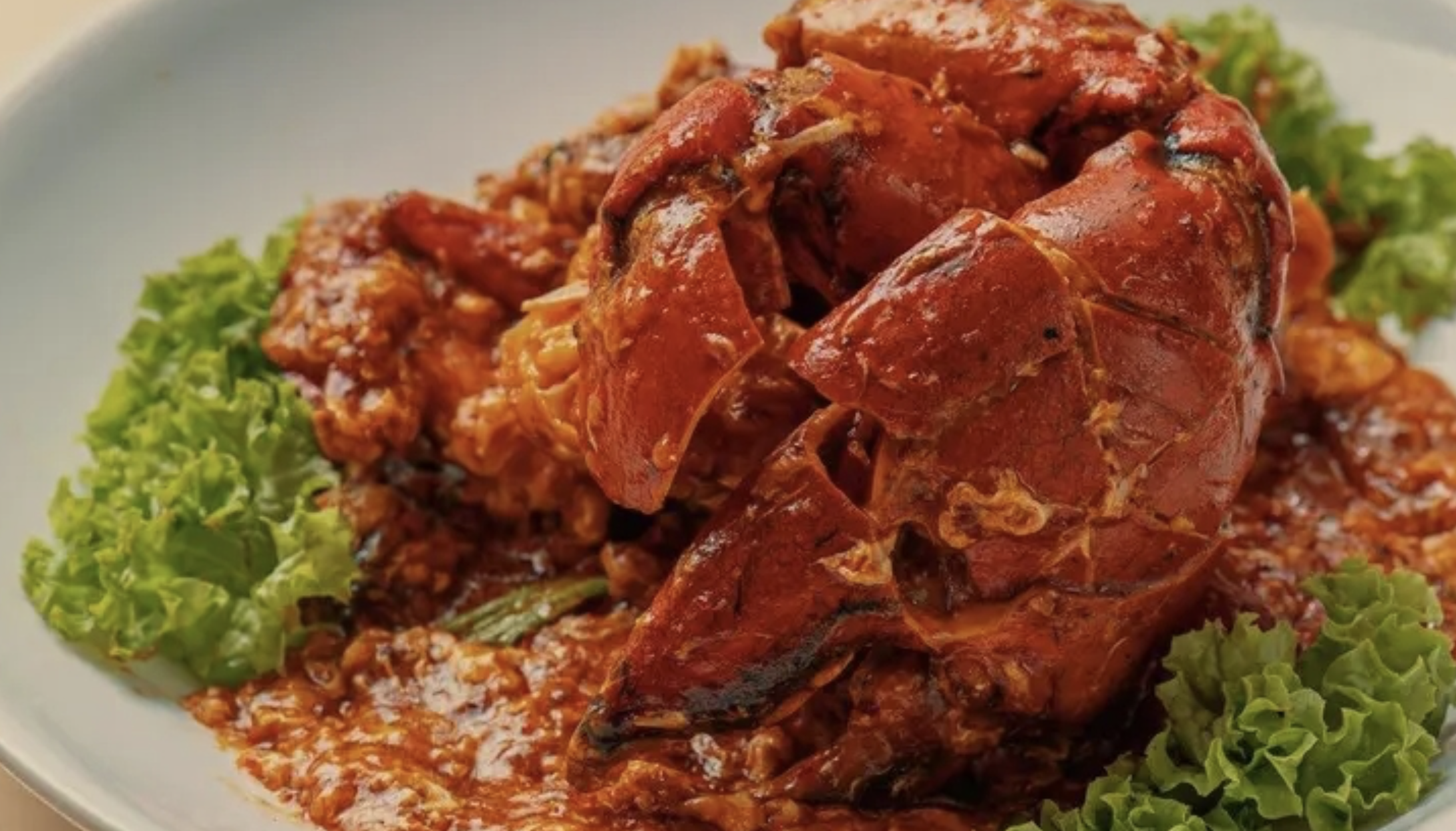 |
The famous chili crab dish of Singapore. Photo: Michelin Guide
A sauce born by accident
Chili crab emerged around the 1950s, created by the husband and wife duo Lim Choon Ngee and Cher Yam Tian. Lim would catch crabs, and Cher would prepare them. To make meals more interesting than just steamed crab, Cher stir-fried the crabs with bottled tomato sauce. When she ran out of tomato sauce, she improvised by adding chili sauce instead.
This spontaneous creation became the signature dish of the riverside seafood stall they later opened. Word spread quickly, and in 1963, Hooi Kok Wah, one of Singapore's four outstanding Chinese chefs at the time, learned the recipe and developed his own version for his restaurant. Hooi's crab featured a rich sauce made from tomato sauce, vinegar, chili sauce, and egg whites. This creamy, spicy, sweet, and sour dish officially became a symbol of Singaporean cuisine.
According to Paul Liew, one of the three third-generation brothers managing Keng Eng Kee (Bukit Merah) restaurant, the allure of chili crab lies in its layers of flavor, shaped by Singapore's multicultural identity.
"Singaporean cuisine is a melting pot because Singapore itself is a melting pot", Paul Liew stated. Since his school days, he has been exposed to many different races and cultures. Chinese food in Singapore is not the same as in mainland China, and Malaysian food is similar, differing from that found in Indonesia or Malaysia. These dishes are adapted to suit the Singaporean palate. Chili crab is no exception, influenced not only by Chinese cuisine but also by Malaysian and Western culinary traditions.
At his restaurant, Liew serves chili crab with plump crabs sourced from Sri Lanka, Indonesia, and the Philippines. "We start with rempah (a finely ground spice paste) inspired by Malaysian and Chinese cultures, including galangal, ginger, and chili, then saute it in a hot pan. After that, we add bottled tomato sauce, which originates from Western cuisine. All these elements blend together to create a dish that is very... Singaporean", he explained.
Before serving, the sauce is thickened with a touch of diluted tapioca starch and enriched with beaten eggs, giving it a smooth, creamy, and aromatic texture. This type of sauce makes diners want to pour generous amounts over rice or, as Singaporeans prefer, dip fried mantou into it.
Preserving heritage through cuisine
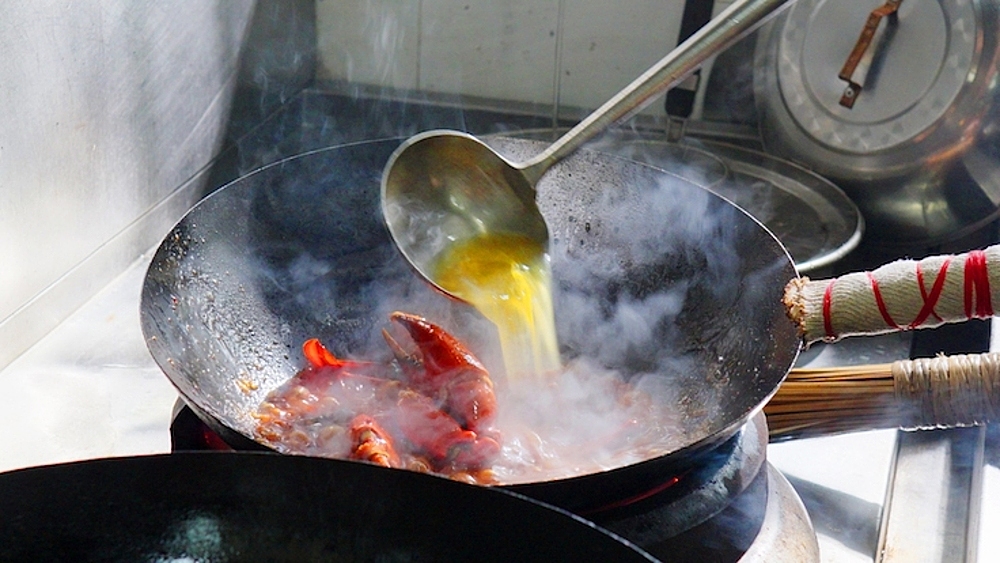 |
Chili crab prepared at Keng Eng Kee restaurant. Photo: Michelin Guide
At 55 years old, the Liew family's restaurant is only a few years younger than Singapore itself (established in 1965). It is no surprise that the owner often compares the restaurant's journey to the evolution of Singaporean cuisine. At Keng Eng Kee, three generations have grown up with Singapore, maintaining these heritage flavors.
Beyond that, Liew also participates in a movement to refresh traditional dishes with his friends, finding it "very interesting". Even quintessential national dishes like chili crab are part of this revitalization wave, with various creative versions such as chili crab-flavored fries, chili crab buns, or even chili crab burgers.
A few years ago, Liew experimented with selling soft-shell crab burgers with chili sauce at a small stall within the restaurant. This temporary offering was short-lived, but for the owner, the flavor remained "top-notch". He holds many childhood memories of eating chili crab cooked by his grandmother, the founder of Keng Eng Kee.
For Liew, family is the heart of zi char restaurants, a philosophy that extends not only to customers but also to the staff. Family helped Liew find a silver lining amidst the difficulties of the Covid-19 pandemic.
"In a family-run restaurant business, we rarely get the chance to sit down and eat together. But when Covid happened, when we couldn't serve dine-in customers and everything was difficult, that was when the whole family could gather and eat together. Looking back now, that time feels truly precious", he reflected.
Perhaps one reason chili crab remains beloved is its ability to connect people, friends, and family, even amidst the fast pace of the modern world.
"This dish is special. Whenever the crab is served, everyone immediately puts down their phones. Chili crab must be eaten by hand; whatever you are doing, you have to stop, and that's when I feel the meal truly begins", he said. That is a true family meal: gathering around the table, eating, chatting lively, and laughing heartily.
By Tam Anh (Source: Michelin Guide)