A flight attendant has revealed the "secret language" that easyJet cabin crew use to communicate on board, including humorous gestures mimicking animal actions. Engine noise, the spacious aircraft cabin, and the need for discreet communication with over 200 passengers necessitate a system of "secret" hand signals.
These signals enable flight attendants to exchange information quickly and quietly, proving especially useful during meal service. For instance, if a passenger requests one ham and cheese sandwich, the flight attendants will mimic a crocodile's mouth by clapping their two hands together. If a guest orders a chicken sandwich, they will flap their hands like chicken wings, then rotate their two hands in a circle.
In the comments section below the video, many people expressed their astonishment. "That's incredible," one person wrote. "I once saw a flight attendant doing this with a colleague; now I know it's an internal sign language," another shared.
"I used to watch them make these gestures and try to guess what they were saying, it's really funny," an easyJet passenger recalled.
Jay Robert, a former senior flight attendant for Emirates and manager of the popular aviation website Fly Guy's Cabin Crew Lounge, noted that cabin crew at other airlines also have their own unique languages.
For example, if they call you a "VIP", it doesn't always mean they consider you a very important person, Jay said. This term often stands for "very irritating person". The code "BOB" (babe on board or best on board) is a signal cabin crew use to describe pleasant or attractive passengers. The term "POS" (passenger of size) describes oversized guests who require a seatbelt extender. The term "mermaid" refers to a passenger lying across an empty row of seats to prevent others from sitting there. "HOB" (hotty on board) has a similar meaning to "VIP", indicating difficult passengers.
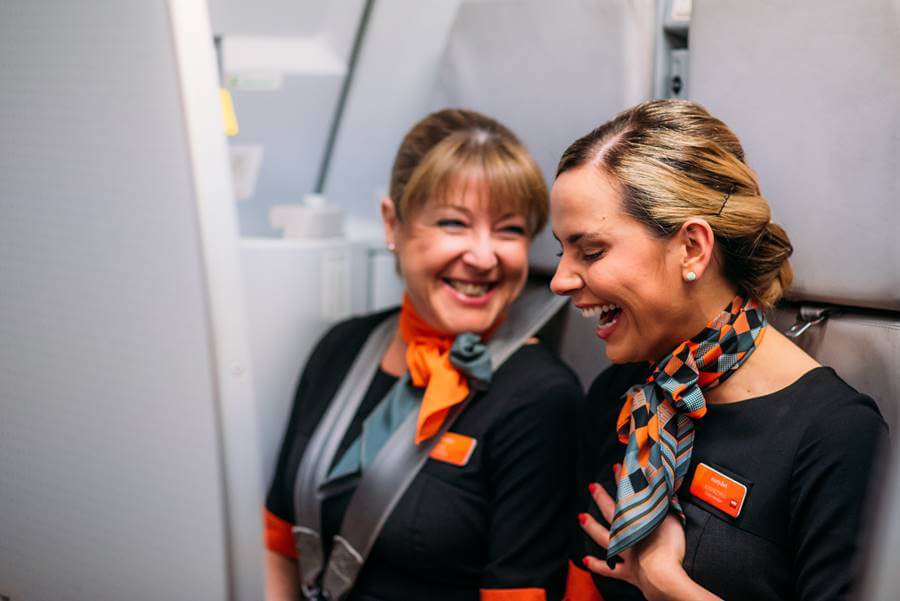 |
Flight attendants conversing on an airplane. Photo: Cabin crew hq |
"SSR" (special services request) refers to special service requests or implies that cabin crew must handle sensitive customer-related situations. When a passenger is being deported, ground staff may use the code "DEPA" or "DEPU" (this passenger is being deported) to discreetly convey information to flight attendants instead of publicly announcing "passenger deported".
"INAD" indicates a passenger denied entry into a country who must take the next flight back. "ABP" (able bodied passenger or person) is a passenger who needs special attention or care during the flight to provide assistance.
Additionally, passengers might also overhear some common words flight attendants use when communicating among themselves:
Red-eye: A familiar term for overnight flights, typically landing in the early morning.
Pink-eye: A late-night flight, earlier than a red-eye, and not an overnight flight.
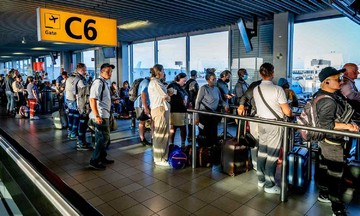
Holding pen: The area around the boarding gate where passengers wait or move about before boarding the aircraft.
Runner: A passenger who is late or has a tight connecting flight and must literally run to catch their plane.
Spinner: A passenger without a seat number or who doesn't know their seat, standing in the aisle and turning around to find it.
Cross-check: One or two flight attendants perform a cross-check to ensure that the aircraft doors are correctly set for departure or before opening the aircraft doors.
All call: Typically, after a cross-check, an "all call" is made where all flight attendants use the intercom system to confirm with each other that the aircraft doors have been properly managed.
Jump seat: A small seat used by flight attendants during takeoff, landing, or when they are required to be seated. This seat automatically folds up when the flight attendant stands.
Specials: A term for passengers requiring special assistance, such as those with mobility challenges or anyone needing additional help.
U.M: Abbreviation for "unaccompanied minor", a child flying alone who is cared for by flight attendants.
Blue room: The flight attendants' term for the aircraft lavatory, referring to the blue solution used in the toilet bowl.
Service: The moment flight attendants prepare the service cart to go down the aisle and offer water, snacks, or meals to passengers.
Galley: The small kitchen on the aircraft where flight attendants prepare food and drinks.
Galley queen: Slang for a flight attendant who is particular or possessive about the galley area and dislikes others touching their space.