The Hoang Gia Royal Tomb, a national relic, is a significant cultural and historical destination in the Go Cong region. Spanning 2,000 square meters, it is located in Long Hung commune, Go Cong town – which became Son Qui ward after the merger – Dong Thap province, approximately 2 km from the former town center. This complex serves as the worship and burial site for the Pham Dang family, most notably Pham Dang Hung (1764-1825), a fourth-generation descendant and the maternal grandfather of Emperor Tu Duc.
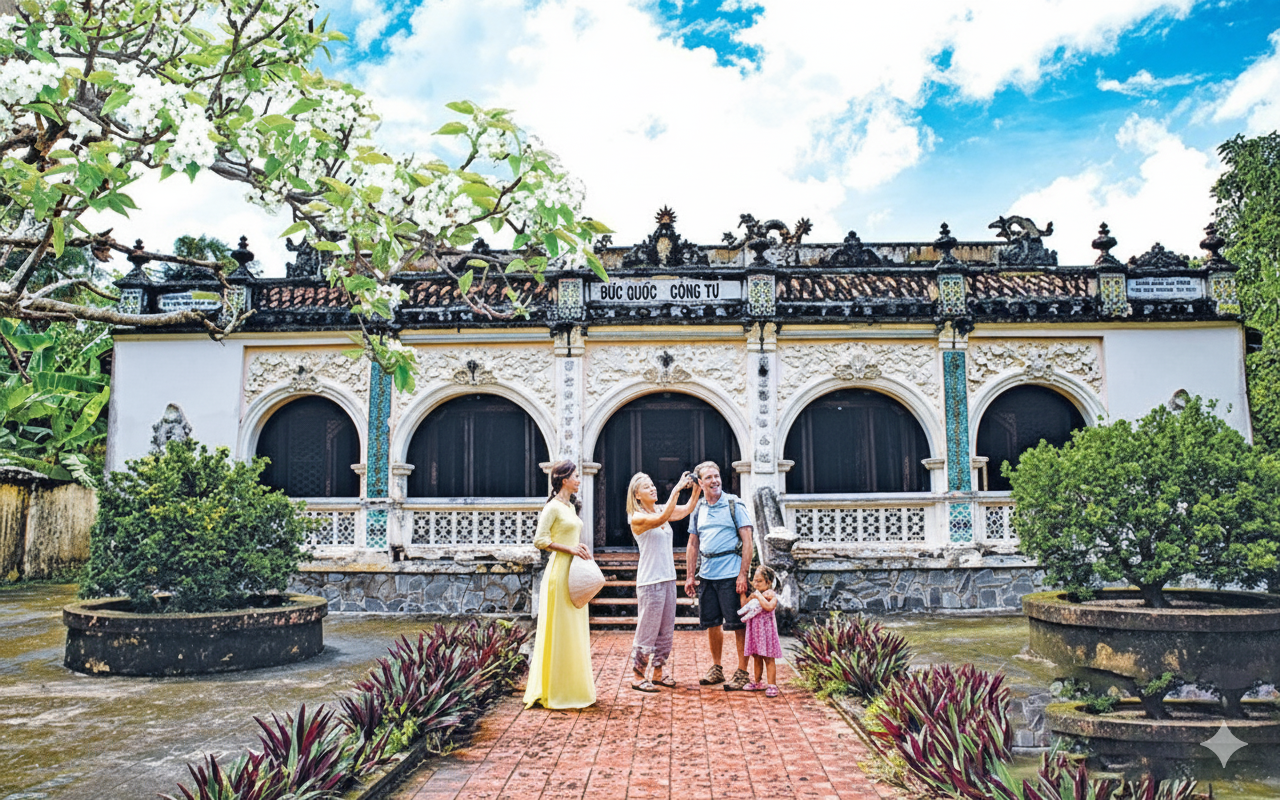 |
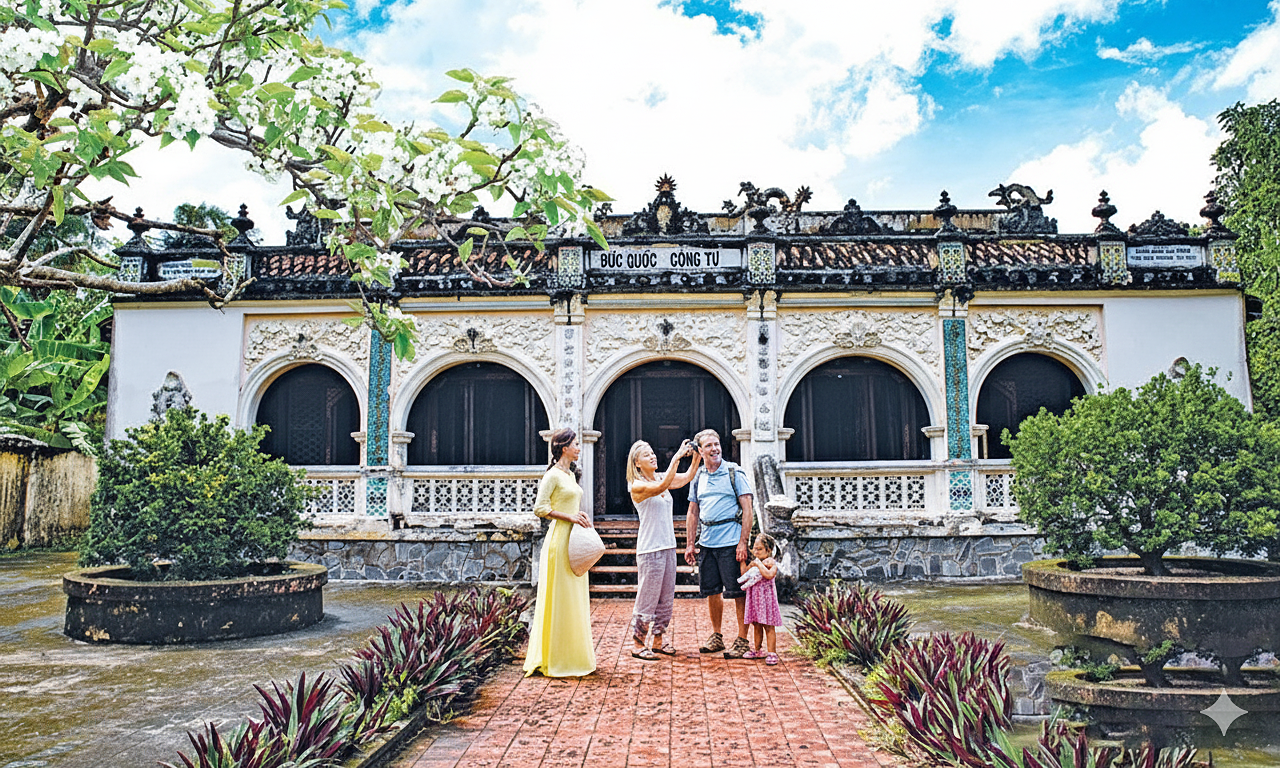
International visitors at the Hoang Gia Royal Tomb. *Ap Bac Newspaper*
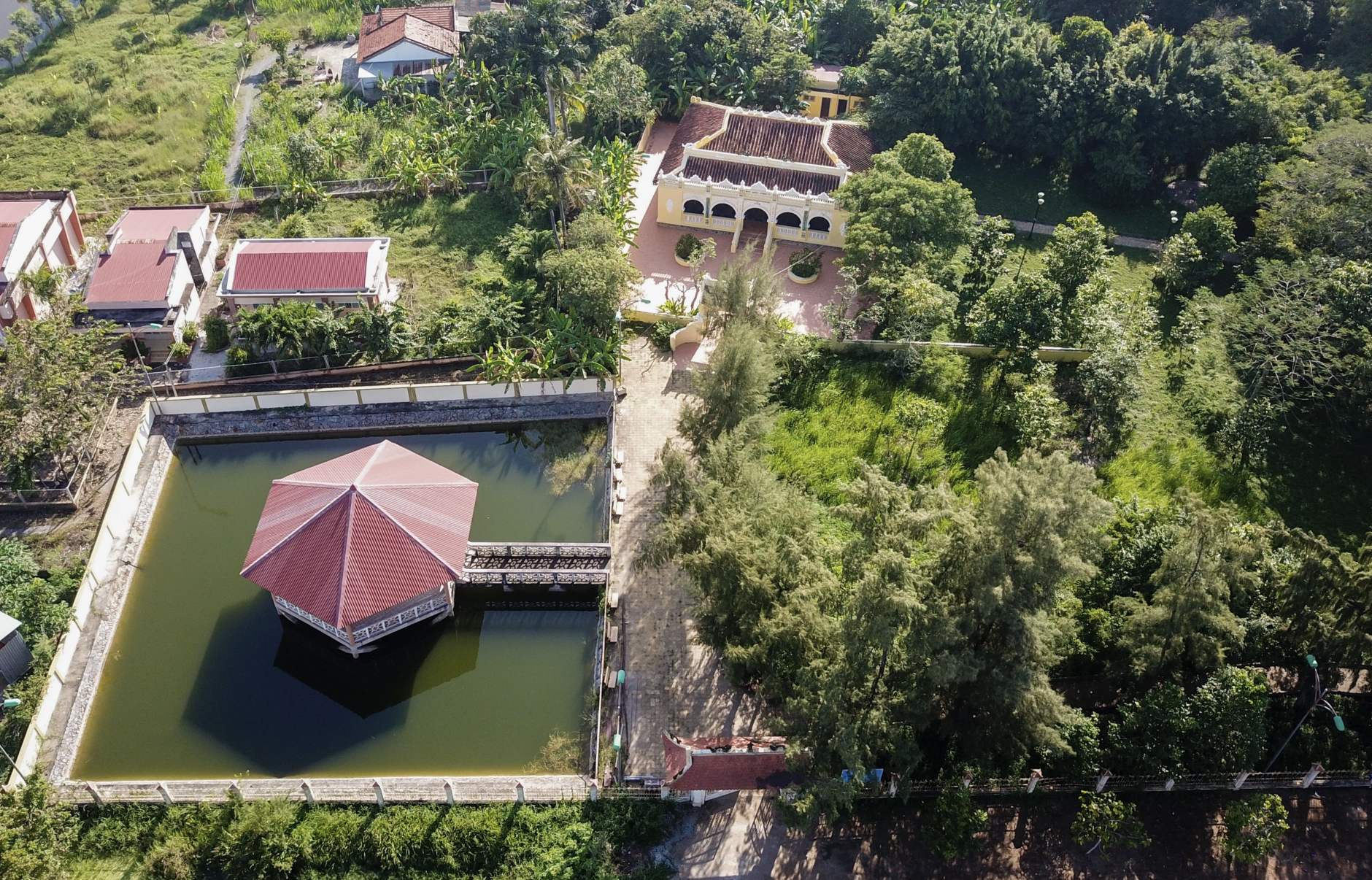 |
The national Hoang Gia Royal Tomb in Go Cong. *Quynh Tran*
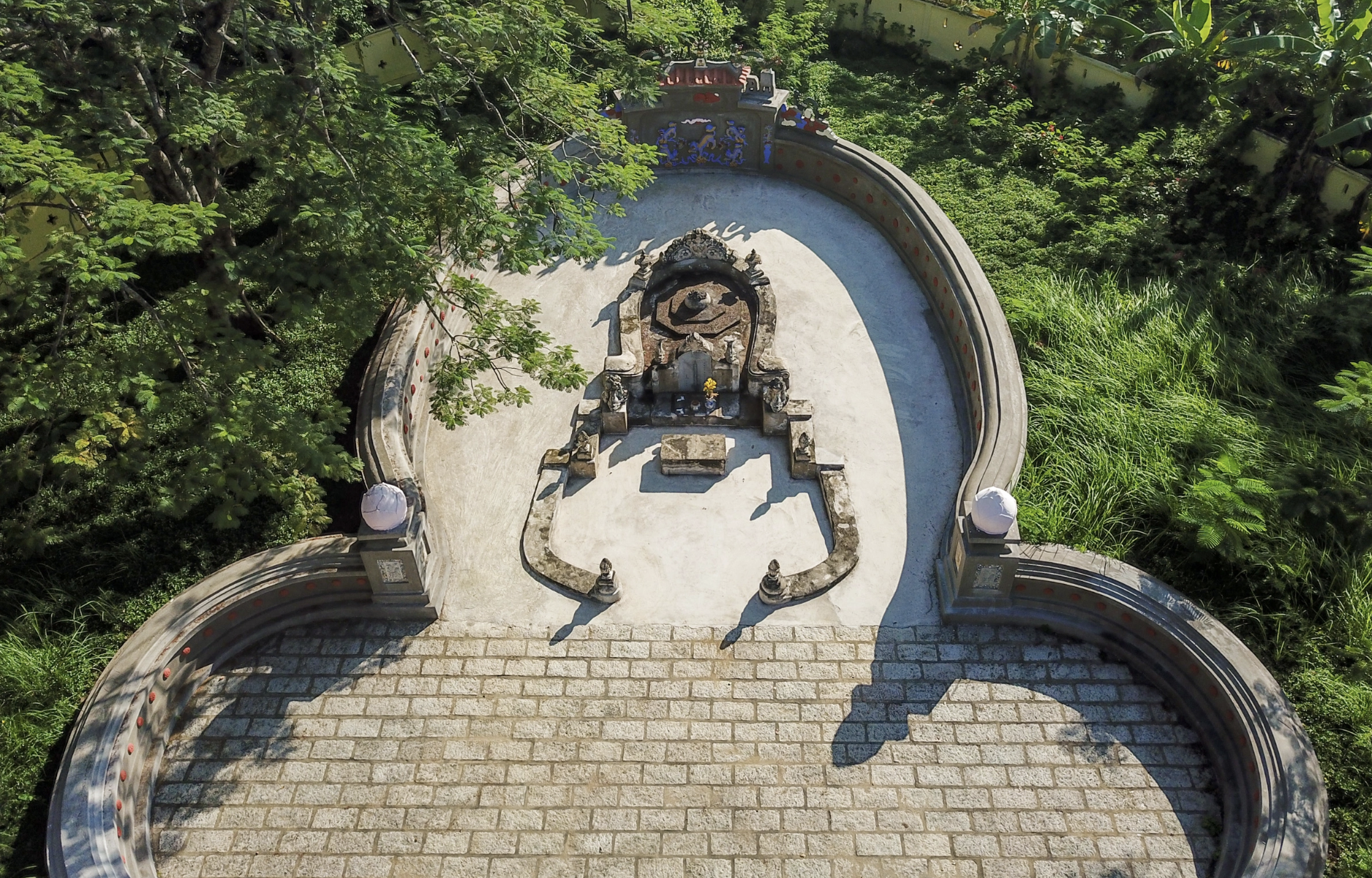 |
The tomb of Duke Quoc Cong is considered the centerpiece of the tomb complex. *Quynh Tran*
Pham Dang Hung was renowned for his intelligence, literary talent, and virtue, serving as an official under Emperors Gia Long and Minh Mang. He was appointed Minister of Rites and posthumously honored as Duke Quoc Cong. He was also widely remembered for his compassion towards the poor, always carrying three bags of grain to distribute wherever he went.
One year after Pham Dang Hung's death, the Nguyen dynasty court constructed a tomb in the style of a royal mausoleum for the esteemed mandarin. The tomb complex was situated on Son Qui mound, a site the Pham Dang family chose to reside after leaving Hue.
Uniquely, while surrounding areas were saline, Son Qui mound possessed a freshwater spring, supporting lush vegetation. This phenomenon was described by Nguyen Lien Phong in "Tu Du Hoang Thai Hau Truyen": "Freshwater brings good omens. Turtle mound cultivates blessed land." Today, an ancient well built with traditional bricks remains within the tomb complex. For hundreds of years, the well's water has stayed full and crystal clear.
Architecturally, the Hoang Gia Royal Tomb is enclosed by an outermost wall known as La Thanh. Inside, visitors find San Chau, Nha Bia, and the burial system of the Pham Dang family. The tombs are arranged along a long axis, constructed from o-duoc mortar, and enclosed by a thick wall, 90 cm high.
The tomb of Duke Quoc Cong is considered the centerpiece of the tomb complex on this mound. Its octagonal shape, resembling an official's hat, distinguishes it from typical tombs in the Southern region. In front of the tomb stand four low pillars styled with lotus buds and hats. The intricately built screen features graceful lines, giving the tomb an ancient and imposing presence.
Within the architectural ensemble of the Hoang Gia Royal Tomb, a significant structure is the temple dedicated to Duke Quoc Cong and the Pham Dang family. Located along the path leading into the tomb complex, this ancestral hall was constructed in 1826 and completed during Emperor Tu Duc's reign. It comprises a main worship hall, a guest house, a storage house, a stable, and auxiliary structures like lotus ponds and ornamental plant pots. All buildings were made of precious wood with tiled roofs, brick walls, and beautifully decorated interiors.
Additionally, the tomb complex features two stele houses, behind which lies a fascinating story of a lost stele. The first stele, completed in the 10th year of Tu Duc's reign (1857), mysteriously disappeared while being transported by boat from Hue to Go Cong. Over four decades later, Emperor Thanh Thai ordered the construction of a second stele house using granite.
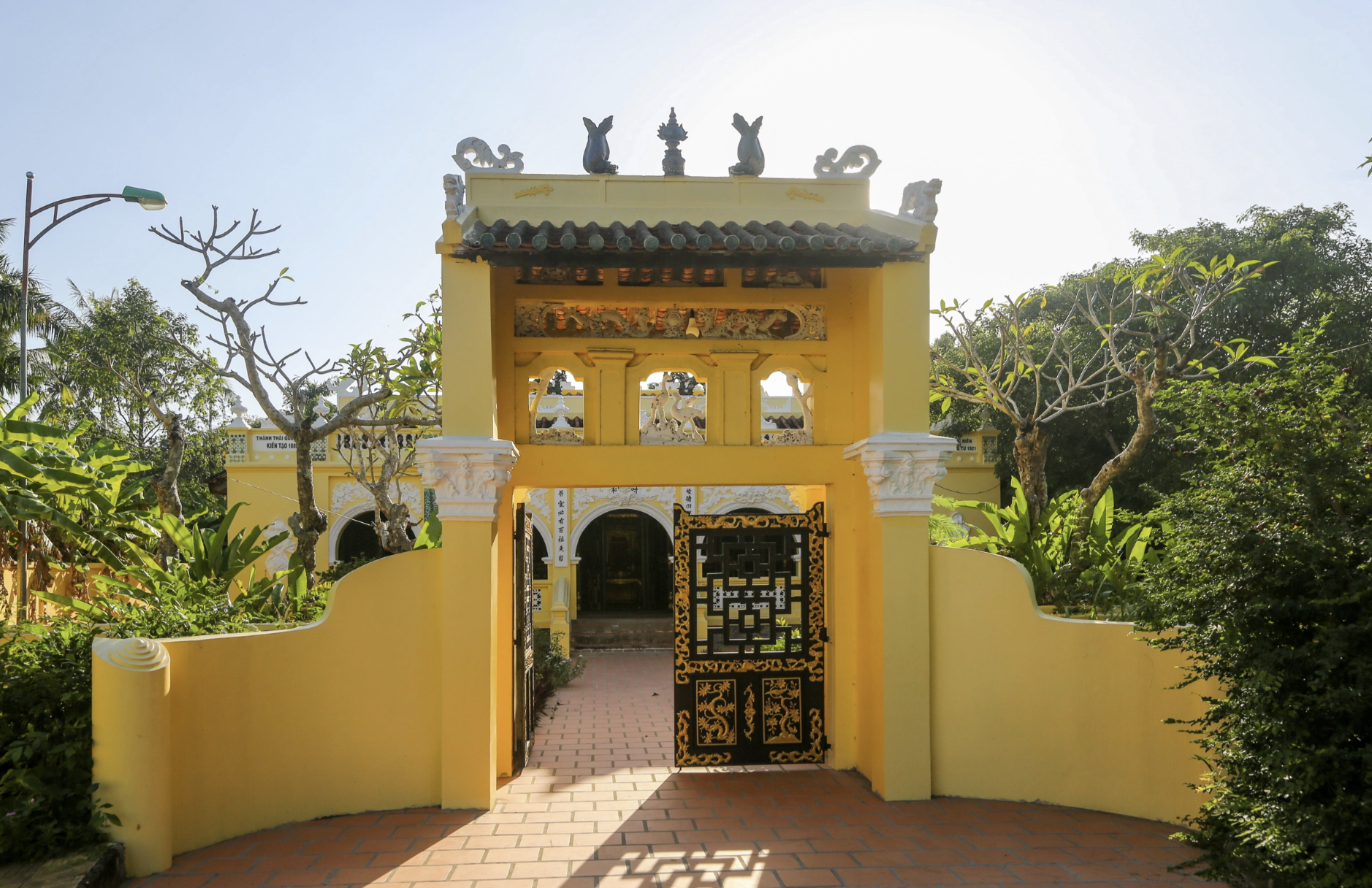 |
The entrance gate is built in a stylized tam quan (three-arched gate) style, with glazed tile roofs and carved statues at the peak. *Quynh Tran*
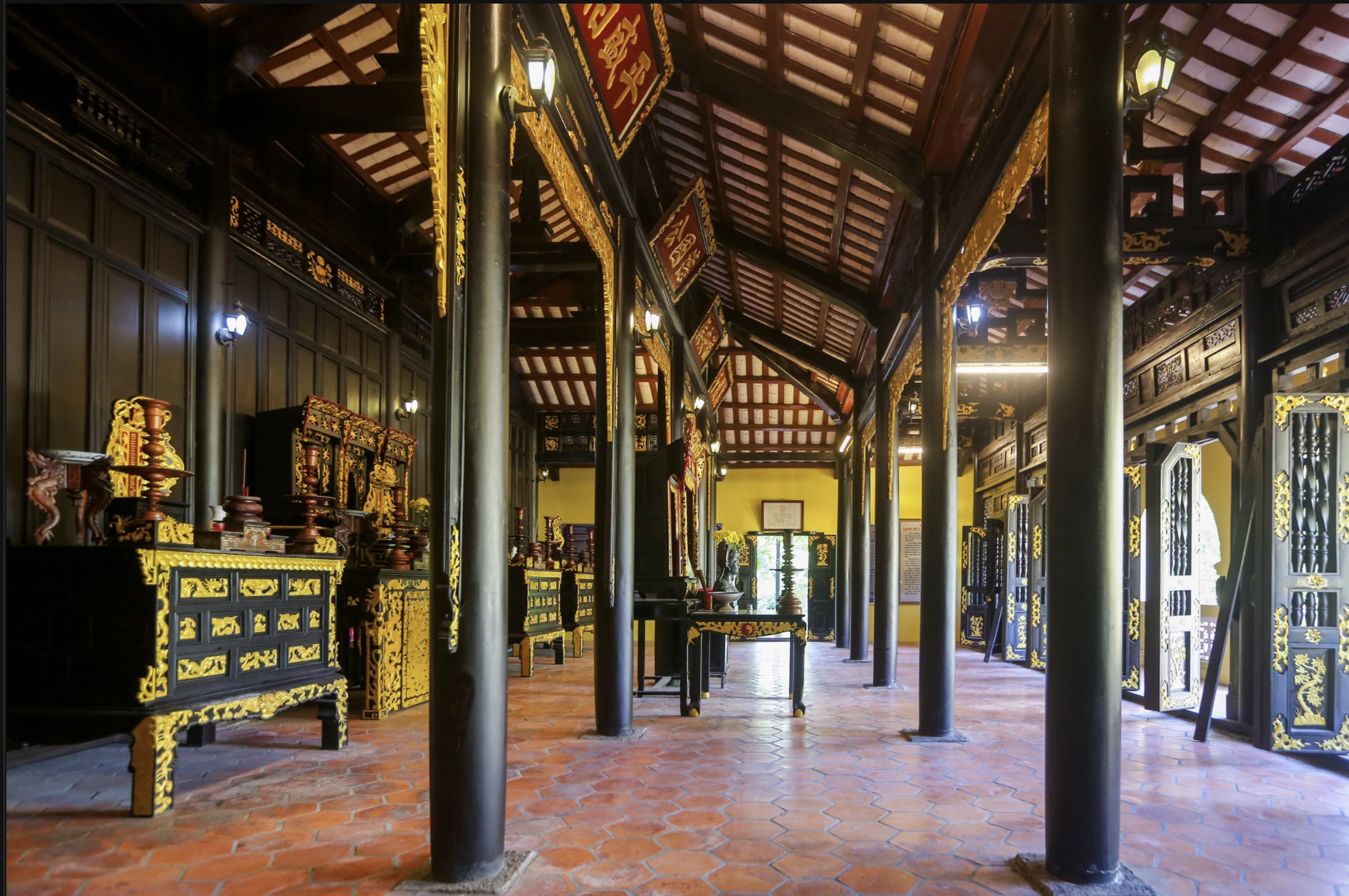 |
Inside, the tomb is built in a three-bay, two-wing architectural style, with parallel supporting columns. *Quynh Tran*
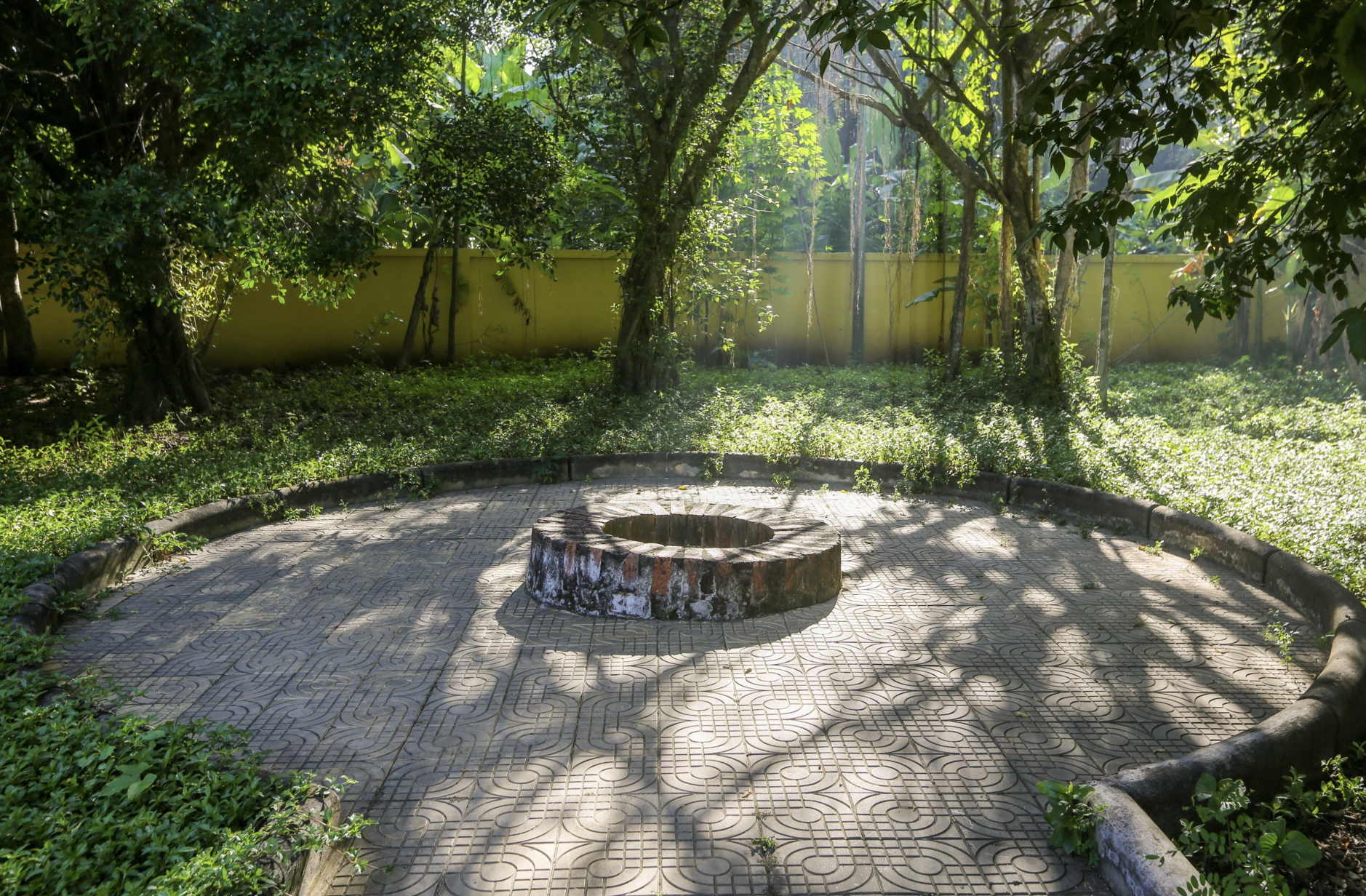 |
Within the tomb complex, an ancient well built with traditional bricks remains. For hundreds of years, the well's water has stayed full and crystal clear. *Quynh Tran*
The mystery of the lost stele was later solved when a cemetery in Ho Chi Minh City was cleared. Residents discovered a stele inscribed with both Chinese characters and French. This unusual stele was sent to the Ho Chi Minh City Museum. After examination, historians determined it was the stele bestowed by Emperor Tu Duc upon his maternal grandfather, Pham Dang Hung, but had been seized by French forces and repurposed as a tombstone for Captain Barbe. The stele was eventually returned to its rightful place after 140 years of being lost.
The Hoang Gia Royal Tomb was classified as a national relic by the Ministry of Culture and Information in 1992. Today, it serves not only as a place to honor ancestors but also as a distinctive cultural and historical destination in the Go Cong region. Amidst its spacious grounds, shaded by ancient trees, the tomb complex exudes solemnity, inviting visitors to step into the memories of the Nguyen dynasty, situated beside the tranquil Tien Giang River.
According to the Department of Culture, Sports and Tourism of Dong Thap province, the province will continue to leverage the historical and cultural value of the Hoang Gia Royal Tomb, alongside preserving its architectural space and the stories associated with the Pham Dang family. Specifically, the department will collaborate with the Institute for Economic and Tourism Development Research to advise the province on developing more distinctive tourism products at the Hoang Gia Royal Tomb complex, including creating night tours to offer new experiences for visitors.
The Hoang Gia Royal Tomb will also be integrated into a connected tour route with nearby destinations such as Doc Phu Hai House and Truong Dinh Hero Temple, forming a unique cultural and historical tourism chain in the Go Cong region. Tourism development activities here are oriented towards sustainability, combining ancestor commemoration, patriotic tradition education, and contributing to the preservation and promotion of local cultural heritage values.
Ngoc Tai
No issues encountered.The Hoang Gia Royal Tomb, a national relic, is a significant cultural and historical destination in the Go Cong region. Spanning 2,000 square meters, it is located in Long Hung commune, Go Cong town – which became Son Qui ward after the merger – Dong Thap province, approximately 2 km from the former town center. This complex serves as the worship and burial site for the Pham Dang family, most notably Pham Dang Hung (1764-1825), a fourth-generation descendant and the maternal grandfather of Emperor Tu Duc.
 |
International visitors at the Hoang Gia Royal Tomb. *Ap Bac Newspaper*
|
The national Hoang Gia Royal Tomb in Go Cong. *Quynh Tran*
[IMG_TAG]
The tomb of Duke Quoc Cong is considered the centerpiece of the tomb complex. *Quynh Tran*
Pham Dang Hung was renowned for his intelligence, literary talent, and virtue, serving as an official under Emperors Gia Long and Minh Mang. He was appointed Minister of Rites and posthumously honored as Duke Quoc Cong. He was also widely remembered for his compassion towards the poor, always carrying three bags of grain to distribute wherever he went.
One year after Pham Dang Hung's death, the Nguyen dynasty court constructed a tomb in the style of a royal mausoleum for the esteemed mandarin. The tomb complex was situated on Son Qui mound, a site the Pham Dang family chose to reside after leaving Hue.
Uniquely, while surrounding areas were saline, Son Qui mound possessed a freshwater spring, supporting lush vegetation. This phenomenon was described by Nguyen Lien Phong in "Tu Du Hoang Thai Hau Truyen": "Freshwater brings good omens. Turtle mound cultivates blessed land." Today, an ancient well built with traditional bricks remains within the tomb complex. For hundreds of years, the well's water has stayed full and crystal clear.
Architecturally, the Hoang Gia Royal Tomb is enclosed by an outermost wall known as La Thanh. Inside, visitors find San Chau, Nha Bia, and the burial system of the Pham Dang family. The tombs are arranged along a long axis, constructed from o-duoc mortar, and enclosed by a thick wall, 90 cm high.
The tomb of Duke Quoc Cong is considered the centerpiece of the tomb complex on this mound. Its octagonal shape, resembling an official's hat, distinguishes it from typical tombs in the Southern region. In front of the tomb stand four low pillars styled with lotus buds and hats. The intricately built screen features graceful lines, giving the tomb an ancient and imposing presence.
Within the architectural ensemble of the Hoang Gia Royal Tomb, a significant structure is the temple dedicated to Duke Quoc Cong and the Pham Dang family. Located along the path leading into the tomb complex, this ancestral hall was constructed in 1826 and completed during Emperor Tu Duc's reign. It comprises a main worship hall, a guest house, a storage house, a stable, and auxiliary structures like lotus ponds and ornamental plant pots. All buildings were made of precious wood with tiled roofs, brick walls, and beautifully decorated interiors.
Additionally, the tomb complex features two stele houses, behind which lies a fascinating story of a lost stele. The first stele, completed in the 10th year of Tu Duc's reign (1857), mysteriously disappeared while being transported by boat from Hue to Go Cong. Over four decades later, Emperor Thanh Thai ordered the construction of a second stele house using granite.
[IMG_TAG]
The entrance gate is built in a stylized tam quan (three-arched gate) style, with glazed tile roofs and carved statues at the peak. *Quynh Tran*
[IMG_TAG]
Inside, the tomb is built in a three-bay, two-wing architectural style, with parallel supporting columns. *Quynh Tran*
[IMG_TAG]
Within the tomb complex, an ancient well built with traditional bricks remains. For hundreds of years, the well's water has stayed full and crystal clear. *Quynh Tran*
The mystery of the lost stele was later solved when a cemetery in Ho Chi Minh City was cleared. Residents discovered a stele inscribed with both Chinese characters and French. This unusual stele was sent to the Ho Chi Minh City Museum. After examination, historians determined it was the stele bestowed by Emperor Tu Duc upon his maternal grandfather, Pham Dang Hung, but had been seized by French forces and repurposed as a tombstone for Captain Barbe. The stele was eventually returned to its rightful place after 140 years of being lost.
The Hoang Gia Royal Tomb was classified as a national relic by the Ministry of Culture and Information in 1992. Today, it serves not only as a place to honor ancestors but also as a distinctive cultural and historical destination in the Go Cong region. Amidst its spacious grounds, shaded by ancient trees, the tomb complex exudes solemnity, inviting visitors to step into the memories of the Nguyen dynasty, situated beside the tranquil Tien Giang River.
According to the Department of Culture, Sports and Tourism of Dong Thap province, the province will continue to leverage the historical and cultural value of the Hoang Gia Royal Tomb, alongside preserving its architectural space and the stories associated with the Pham Dang family. Specifically, the department will collaborate with the Institute for Economic and Tourism Development Research to advise the province on developing more distinctive tourism products at the Hoang Gia Royal Tomb complex, including creating night tours to offer new experiences for visitors.
The Hoang Gia Royal Tomb will also be integrated into a connected tour route with nearby destinations such as Doc Phu Hai House and Truong Dinh Hero Temple, forming a unique cultural and historical tourism chain in the Go Cong region. Tourism development activities here are oriented towards sustainability, combining ancestor commemoration, patriotic tradition education, and contributing to the preservation and promotion of local cultural heritage values.
Ngoc Tai