Ta Xua (Son La), Y Ty, Lao Than, Sa Pa (Lao Cai), Ba Vi National Park (Ha Noi), and many other northern Vietnamese locations are entering their prime cloud hunting season, which runs from late september to early april of the following year. While choosing the right spot is crucial, weather is the deciding factor for a successful trip.
Diep Huu Dat, a tour guide in Ta Xua, notes that there is no way to guarantee the appearance of a sea of clouds as it depends on daily weather conditions. Generally, dense seas of clouds form when air humidity is high, there is a significant temperature difference between day and night, and especially after previous days of rain.
Visitors should monitor the weather forecast for the entire surrounding region, rather than focusing solely on the cloud hunting spot. Key factors to observe include temperature, humidity, and rainfall. For example, a larger day-night temperature difference combined with high humidity and moderate wind increases the likelihood of low-lying cloud formation. Conversely, windy and dry conditions typically make it difficult for dense cloud seas to appear.
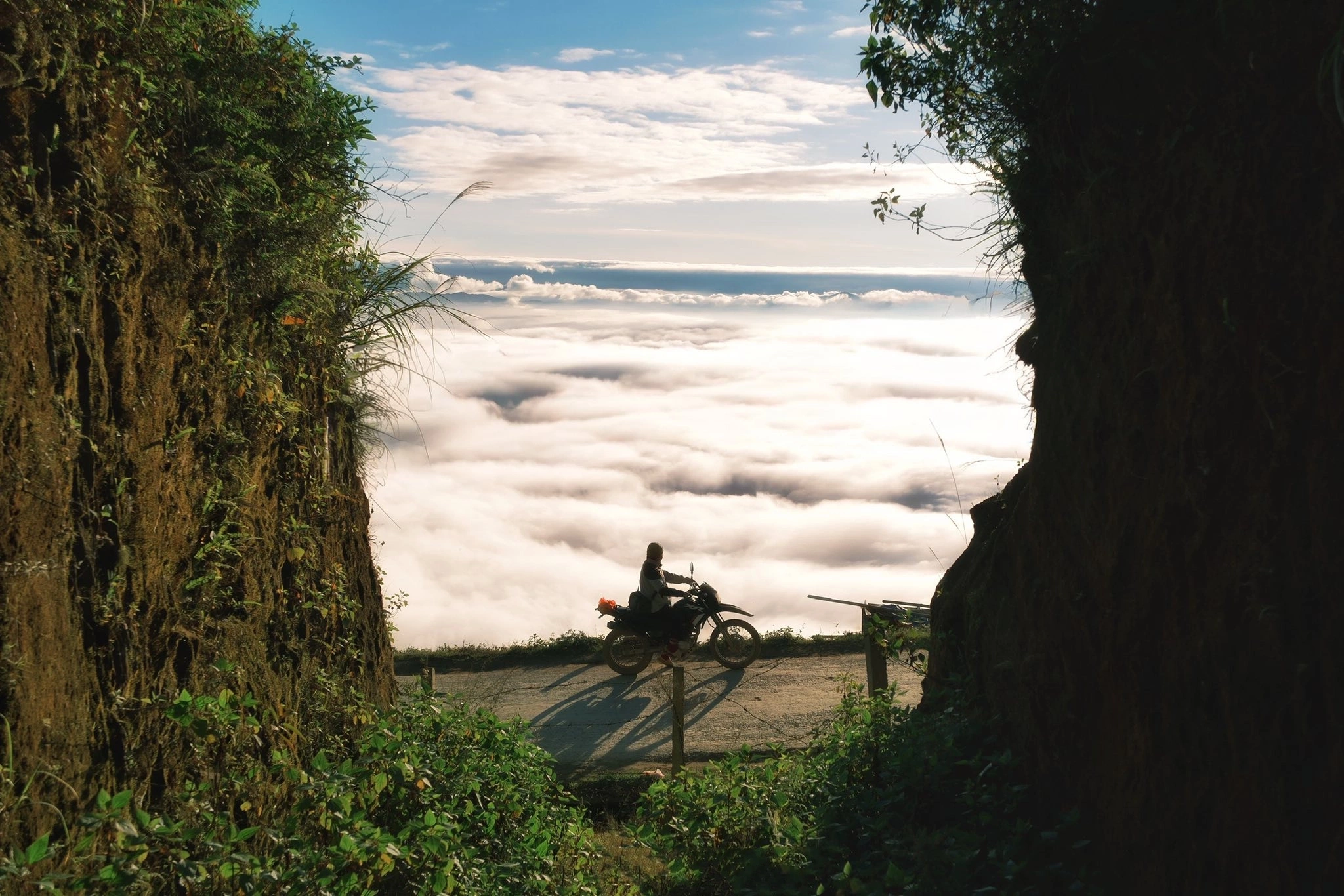 |
Clouds at Gio Peak in Ta Xua. Photo: Diep Huu Dat |
Dinh Cong Tu, a homestay owner in Ta Xua, advises against relying solely on word-of-mouth advice like "this month is cloud hunting season."
"The important thing is still to choose a day with suitable weather," he states. He explains that after a night of light rain, water evaporating from the ground and plants, combined with cold night air, can create a thick layer of clouds or mist in the valleys. If there is heavy rain, and the following day is windy, cloudy, and lacks sunshine, a sea of clouds is unlikely to appear or will often not be beautiful.
A sea of clouds can appear unexpectedly at any time of day, but the ideal window is from 5:30 AM to 7:30 AM. Visitors should arrive at their chosen spot before sunrise, as the clouds are densest then, and the light piercing through creates stunning moments.
As the sun rises higher and temperatures increase, clouds dissipate quickly, particularly in lower valleys. Dusk, around 4 PM to 5 PM, also often sees clouds, but they are typically less abundant than in the morning.
Visitors should manage their expectations and not anticipate a perfectly dense sea of clouds exactly as seen in photos. The most beautiful cloud formations usually last for a short period, sometimes only about 30 minutes.
If cloud hunting is the primary focus of their trip, visitors might consider spending two to three days at the location to increase their chances. It is important to remember that cloud hunting spots become quite cold during this season, so prepare warm clothing, shoes with good grip, and check the weather forecast.
Tam Anh